
vip@mingyuforklift.com
+86-0535-2090977

Introduction
Aerial work platforms (AWPs) have become indispensable equipment in modern construction, maintenance, and industrial operations. These elevated platforms provide safe access to heights that would otherwise be dangerous or impossible to reach using traditional scaffolding or ladders. As industries demand higher working heights, greater load capacities, and improved maneuverability, the structural design of AWPs faces increasingly complex engineering challenges. The intersection of structural stability and dimensional optimization represents a critical frontier in AWP development, where engineers must balance safety margins with performance efficiency, material costs with durability, and compact transport dimensions with extended operational reach.
The evolution of aerial work platforms has been marked by significant technological advancements over the past several decades. From simple scissor lifts to sophisticated articulating boom lifts capable of reaching heights exceeding 50 meters, these machines have transformed how we approach elevated work. However, with increased capabilities come heightened responsibilities regarding structural integrity. The consequences of structural failure in AWPs can be catastrophic, making stability analysis not merely a design consideration but a fundamental safety imperative. Simultaneously, market pressures demand that manufacturers optimize dimensions for transportation efficiency, site accessibility, and operational flexibility. This dual requirement creates a complex optimization problem that requires advanced engineering methodologies and innovative design approaches.
This article examines the structural stability challenges facing modern aerial work platforms and explores dimensional optimization strategies that enable superior performance without compromising safety. By analyzing current design methodologies, material innovations, and computational optimization techniques, we provide a comprehensive overview of this critical engineering domain.
Structural Stability Fundamentals
Structural stability in aerial work platforms encompasses multiple interrelated factors that must be carefully balanced during the design process. The primary stability considerations include overall structural integrity under load, resistance to tipping or overturning, dynamic stability during operation, and stability under adverse environmental conditions. Each of these factors presents unique engineering challenges that require sophisticated analytical approaches and robust design solutions.
The structural framework of modern AWPs typically employs high-strength steel alloys or advanced aluminum composites, selected based on the specific application requirements. Steel offers superior strength and durability for heavy-duty applications, while aluminum provides significant weight advantages for platforms where mobility and transport efficiency are paramount. The material selection process involves detailed analysis of stress distributions, fatigue characteristics, and corrosion resistance, ensuring that the chosen materials can withstand the operational demands over the platform's entire service life.
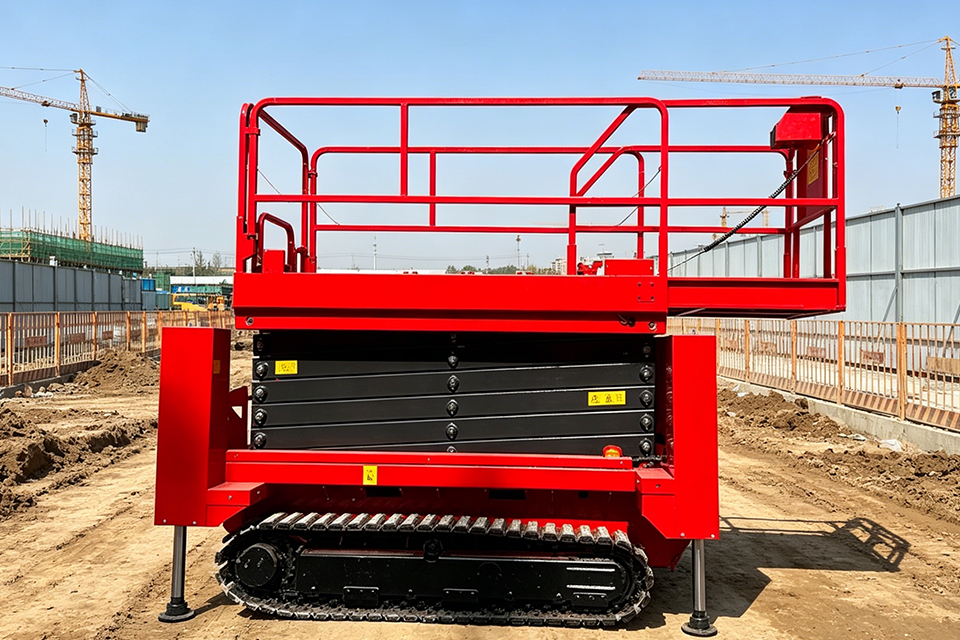
Finite element analysis (FEA) has revolutionized the approach to structural stability assessment in AWP design. This computational methodology allows engineers to simulate complex loading scenarios, identify stress concentrations, and optimize structural configurations before physical prototyping. Modern FEA implementations incorporate nonlinear material behaviors, geometric nonlinearities associated with large deformations, and dynamic loading conditions that accurately represent real-world operational scenarios. The integration of FEA into the design workflow enables iterative optimization processes that significantly enhance structural performance while reducing material usage and overall weight.
Stability against tipping represents perhaps the most critical safety consideration in AWP design. The stability margin, typically expressed as the ratio of stabilizing moment to overturning moment, must exceed regulatory requirements by substantial safety factors. For mobile elevating work platforms (MEWPs), stability calculations must account for various operational configurations, including maximum platform extension, maximum load conditions, and dynamic effects associated with movement and wind loading. The introduction of active stability systems, incorporating sensors and automatic leveling mechanisms, has enhanced safety margins while enabling more compact base dimensions that improve site accessibility.
Dimensional Optimization Strategies
Dimensional optimization in aerial work platform design involves minimizing physical dimensions for transport and storage while maximizing operational reach and platform capacity. This optimization problem is inherently multi-objective, requiring trade-offs between conflicting parameters such as stowed height versus maximum working height, or overall weight versus load capacity. Advanced optimization algorithms, including genetic algorithms, particle swarm optimization, and topology optimization methods, have been increasingly applied to solve these complex design problems.
Transportation dimensions represent a primary constraint in AWP design, particularly for equipment intended for urban construction sites or indoor applications. Highway transportation regulations typically limit vehicle width to 2.5 meters and height to 4.0 meters, constraints that directly influence the folded configuration of boom lifts and the collapsed height of scissor lifts. Designers employ sophisticated folding mechanisms, telescoping sections, and articulated joints to achieve compact transport configurations while maintaining extended operational capabilities. The optimization of these mechanisms requires careful kinematic analysis to ensure smooth deployment, structural integrity in intermediate positions, and reliable locking mechanisms that prevent unintended movement.
Weight optimization through advanced materials and structural topology represents another critical dimension of AWP design. Topology optimization techniques enable the identification of optimal material distributions within design spaces, removing material from low-stress regions while reinforcing high-stress areas. This approach, combined with additive manufacturing technologies for component production, enables the creation of complex geometries that were previously impossible to manufacture. The resulting structures achieve superior strength-to-weight ratios, reducing overall machine weight while maintaining or enhancing structural performance. Reduced weight translates directly to improved fuel efficiency for mobile units, increased payload capacity, and reduced ground pressure for sensitive work surfaces.
The integration of dimensional optimization with stability requirements creates particularly challenging design scenarios. As platforms become more compact and lightweight, maintaining adequate stability margins requires innovative solutions such as extendable outriggers, variable geometry counterweights, and active ballast systems. These mechanisms add complexity to the design but enable significant improvements in operational flexibility. The optimization of such systems involves dynamic modeling of deployment sequences, stability analysis across the full range of configurations, and reliability engineering to ensure consistent performance under diverse operational conditions.
Advanced Design Methodologies
The application of multi-body dynamics simulation has transformed the design and optimization of aerial work platforms, particularly for articulated and telescopic boom configurations. These simulations enable the analysis of complex motion sequences, identification of interference conditions, and optimization of hydraulic or electric actuation systems. By accurately modeling the dynamic behavior of the complete system, including platform elasticity, hydraulic compliance, and control system responses, engineers can optimize dimensional parameters while ensuring smooth, stable operation across the full range of motion.
Wind loading represents a critical environmental factor in AWP structural design and dimensional optimization. Standards such as EN 280 and ANSI A92 specify wind speed limits for safe operation, typically 12.5 m/s for indoor platforms and 28 m/s for outdoor applications. The structural response to wind loading depends significantly on platform dimensions, with taller and wider configurations experiencing greater wind forces. Optimization strategies must therefore incorporate aerodynamic considerations, potentially including streamlined platform designs, wind-shedding features, and active monitoring systems that restrict operation based on real-time wind measurements. Computational fluid dynamics (CFD) simulations enable detailed analysis of wind interactions with platform structures, informing design modifications that minimize wind resistance without compromising operational capabilities.
The incorporation of smart materials and adaptive structures presents emerging opportunities for dimensional optimization. Shape memory alloys, electroactive polymers, and other adaptive materials enable structures that can actively modify their geometry or stiffness in response to operational demands. While these technologies are still emerging in commercial AWP applications, research demonstrates potential for significant improvements in compactness and operational flexibility. Active vibration control systems, utilizing piezoelectric actuators or magnetorheological dampers, can enhance stability without the weight penalty of passive structural reinforcement, contributing to overall weight reduction and dimensional efficiency.
Safety Systems and Regulatory Compliance
Modern aerial work platforms incorporate comprehensive safety systems that influence dimensional and structural design decisions. Load sensing systems, tilt sensors, and height limiters require physical integration into the platform structure, adding components that must be accommodated within optimized dimensions. The layout of these systems must ensure accessibility for maintenance while protecting sensitive components from environmental exposure and mechanical damage. The integration challenge is particularly acute in compact designs where space is at a premium, requiring innovative packaging solutions and miniaturization of sensor technologies.
Regulatory standards governing aerial work platform design have become increasingly sophisticated, incorporating requirements for stability testing, structural validation, and safety system performance. Compliance with standards such as ISO 16368, EN 280, and various national regulations requires extensive documentation of design calculations, testing protocols, and quality assurance processes. The optimization of platform dimensions must therefore occur within the constraints of these regulatory frameworks, ensuring that innovative designs meet or exceed established safety criteria. The trend toward global harmonization of standards, while simplifying international market access, requires designs that satisfy the most stringent requirements across multiple jurisdictions.
Emergency lowering systems represent a critical safety feature that influences dimensional design. These systems must provide reliable platform descent in the event of power failure or primary system malfunction, typically utilizing gravity-fed hydraulic circuits or backup power systems. The integration of emergency systems must not compromise the compact dimensions achieved through primary system optimization, requiring careful component selection and layout planning. Similarly, rescue provisions for platforms that become stranded at height must be accommodated within the overall design, potentially including auxiliary lowering equipment or provisions for external rescue access.
Future Trends and Innovations
The future of aerial work platform design is being shaped by several converging technological trends that promise to further enhance the integration of structural stability and dimensional optimization. Electrification of drive and lift systems enables more compact powertrain packaging compared to internal combustion engines, while also eliminating emissions for indoor applications. The integration of high-capacity battery systems presents new structural considerations regarding weight distribution and crash protection, but also opportunities for utilizing battery mass as counterweight to enhance stability.
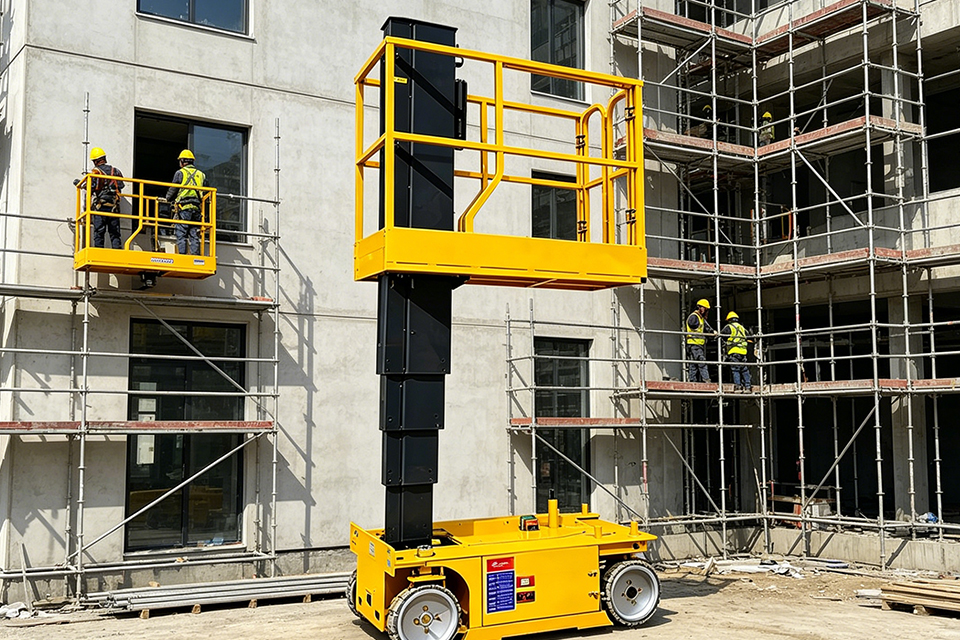
Autonomous and semi-autonomous operation capabilities are increasingly being incorporated into AWPs, enabling remote operation in hazardous environments and automated positioning for repetitive tasks. These capabilities influence dimensional design through the integration of sensors, computing hardware, and communication systems, but also enable new operational modes that may relax certain dimensional constraints. For example, platforms designed specifically for autonomous operation may prioritize workspace efficiency over operator comfort features, potentially enabling more compact designs for specific applications.
The application of artificial intelligence and machine learning to structural optimization represents a frontier with significant potential impact. Generative design algorithms can explore vast design spaces to identify novel structural configurations that human designers might not conceive, potentially achieving superior stability characteristics within tighter dimensional constraints. Machine learning models trained on operational data can predict maintenance requirements and identify potential stability issues before they become critical, enabling condition-based maintenance approaches that optimize equipment availability and lifecycle costs.
Conclusion
The structural stability and dimensional optimization of aerial work platforms represents a sophisticated engineering discipline that balances multiple competing objectives within strict safety constraints. Through the application of advanced computational methods, innovative materials, and intelligent design strategies, modern AWPs achieve remarkable performance capabilities within compact, transportable dimensions. The continued evolution of this field, driven by technological innovation and regulatory development, promises further enhancements in safety, efficiency, and operational flexibility.
As aerial work platforms extend to greater heights, operate in more challenging environments, and incorporate autonomous capabilities, the importance of robust structural design and intelligent dimensional optimization will only increase. The engineering community must continue to advance the methodologies and technologies that enable these capabilities while maintaining the unwavering commitment to safety that defines this critical equipment sector. Through continued research, cross-disciplinary collaboration, and rigorous validation, the next generation of aerial work platforms will meet the evolving demands of construction, maintenance, and industrial applications while setting new standards for performance and safety.
Name: selena
Mobile:+86-13176910558
Tel:+86-0535-2090977
Whatsapp:8613181602336
Email:vip@mingyuforklift.com
Add:Xiaqiu Town, Laizhou, Yantai City, Shandong Province, China
