
vip@mingyuforklift.com
+86-0535-2090977

Published: November 5, 2026
HTML Meta Description: Organize e-commerce returns with electric stackers selected for inspection pallets, quarantine locations, rack geometry and controlled restocking routes.
Keywords: GXO Medini Malaysia hub, electric stacker e-commerce returns, returns grading warehouse, quarantine pallet location, contract logistics Asia Pacific, reverse logistics process, stacker rack capacity, returns inventory control, ZGFORKLIFT, MYZG
GXO Logistics has announced a new strategic hub in Medini, Malaysia, expanding its Asia-Pacific contract-logistics footprint. A modern 3PL operation may handle returns alongside inbound and outbound work, but each client and facility has its own process. Electric stackers can support stable pallet transfers between receiving, inspection, quarantine, grading and approved restock locations where the floor, rack, load and aisle are suitable. Equipment movement must preserve the returns status and chain of custody rather than bypass the inspection record.
Start with a documented task and route survey. Record the narrowest aisle and turn, doorway and gate width, overhead clearance, maximum gradient, dock edges and the worst surface condition. Measure real loads at their actual load centers, including long, offset or irregular items. Nameplate capacity is only a starting point; residual capacity at the required height and with the selected attachment determines practical application fit.
Returns are operationally different from new stock because a received unit may be unopened, damaged, incomplete or subject to client review. Create visibly separated locations and status labels before opening a returns flow. Keep inspected goods distinct from pending items and record each transfer against the client reference. The new Medini hub illustrates regional contract-logistics capacity, not a claim about its specific internal process; see GXO’s official Malaysia hub announcement.
Review the CDD85-R electric pallet stacker as the first product reference, then confirm current specifications with the manufacturer.
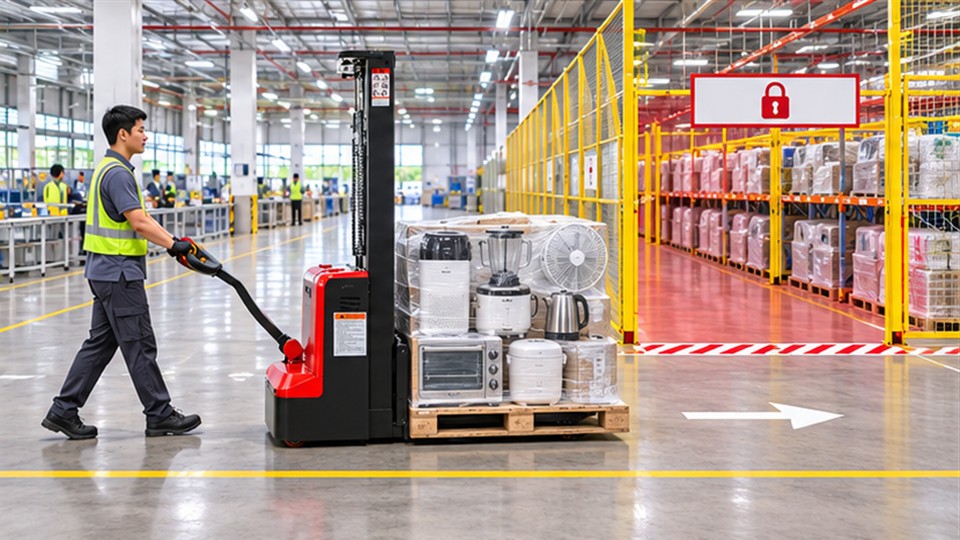
Create distinct receiving, inspection, quarantine, repair, restock and disposal locations with client-approved status codes. Record returns pallet dimensions, maximum mass, rack height, package stability and required lift distance. Measure aisle width, turning clearance, floor quality and charging access. Confirm rated capacity at the actual centre and height. Use an approved container or pallet to prevent loose goods from shifting. Keep damaged batteries or hazardous returns under the facility’s separate handling procedure, not in ordinary stacker lanes.
Visibility and control deserve the same attention as capacity. Review the mast, carriage, tyres or wheels, lighting, mirrors or cameras, restraint, warning devices and speed management as one system. Dust, cold, heat, moisture and corrosion may require extra protection and shorter inspection intervals. Operators must see the travel path and place the load without leaving the protected operating position.
Compare the CDD15G stand-on electric stacker for a second view of capacity, manoeuvrability, energy and service access.
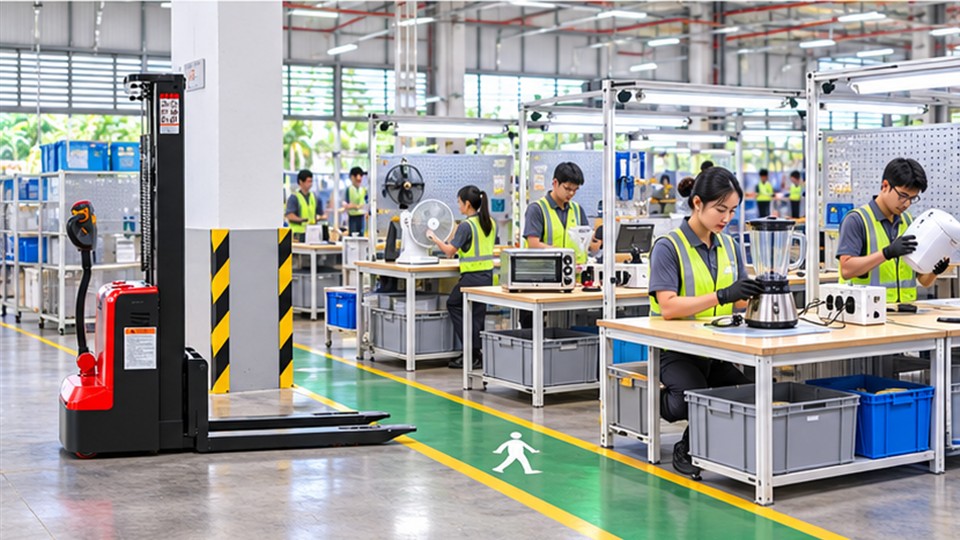
Separate pedestrian walkways from returns traffic and use a spotter at blind rack ends. Secure pallets, travel with forks low and obey rack load plaques. Do not lift a person or allow anyone beneath a raised load. Inspect mast chains, forks, tiller, brakes, wheels, controls and battery connection. Confirm the destination and status label before placing a pallet; do not use the truck to push a load into a rack. Isolate damage or an unstable container immediately.
Create a written operating envelope for every approved route: maximum load and lift height, travel direction, pedestrian exclusion points, slope rules and stop-work conditions. Complete a pre-shift inspection of tyres or wheels, forks, chains, hoses, brakes, steering, alarms and the energy or fuel system. Isolate defects affecting stability, braking or visibility until corrected.
Supervisors should observe real work, record near misses, harsh braking, overload attempts, impacts and recurring service issues, then improve layout, traffic separation and coaching. Build the business case around productive hours rather than purchase price alone. Include operator time, maintenance, energy or fuel, infrastructure, transport, downtime risk and resale value.
The CDDA15 walkie stacker is the third internal product reference for application comparison.
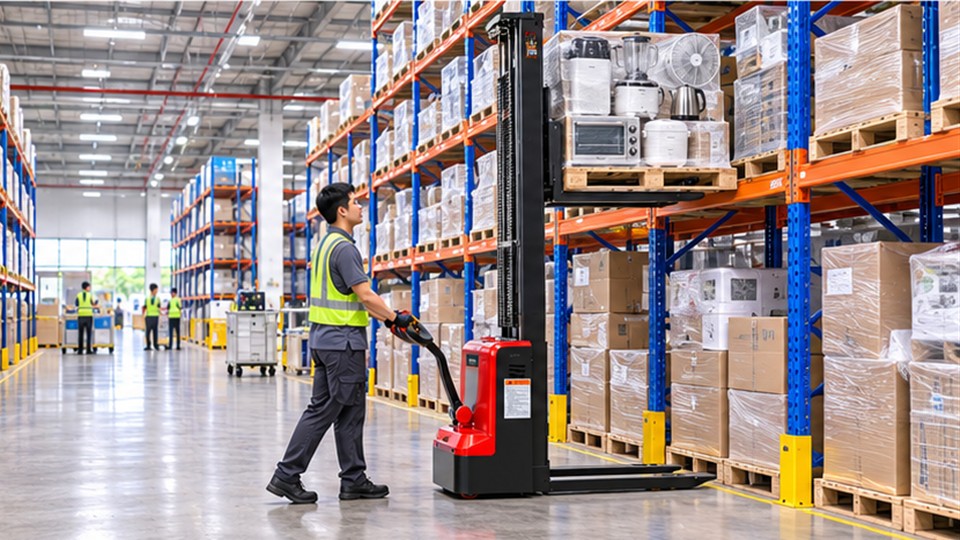
Measure time from return receipt to disposition, location accuracy, restock delay, damage, re-handling, charging and service. Include operator training, racks, approved containers, battery and client-specific reporting. Sample clean, damaged and incomplete returns separately. An electric stacker may reduce the physical effort of vertical pallet movement, but accurate grading still depends on inspection and transaction controls. Scale only after the pilot shows stable status accuracy and safe route separation.
A staged trial is the strongest way to validate a configuration. Select a representative route, define success measures, brief operators and compare throughput, energy use, handling accuracy and maintenance observations. Review results with operations, safety and finance before fleet-wide deployment. This evidence turns a current industry headline into a defensible material-handling plan.
ZGFORKLIFT and MYZG can tailor the final specification after reviewing the application. Product availability varies by market; confirm the latest technical data and comply with local regulations before purchase or operation.
Contact Shandong Zhuogong Machinery equipment Co.,Ltd. Email: vip@mingyuforklift.com. Tel: +86-0535-2090977. WhatsApp: +86 131 8160 2336. Address: Xiaqiu Town, Laizhou, Yantai City, Shandong Province, China.
Send the maximum load, load-center distance, aisle width, gradient, surface condition, daily duty hours and climate so MYZG engineers can recommend a practical configuration instead of a generic catalogue answer.
Name: selena
Mobile:+86-13176910558
Tel:+86-0535-2090977
Whatsapp:8613181602336
Email:vip@mingyuforklift.com
Add:Xiaqiu Town, Laizhou, Yantai City, Shandong Province, China