vip@mingyuforklift.com
+86-0535-2090977

Published: October 30, 2026
HTML Meta Description: LPG forklift planning for shifting dispatch windows, mixed indoor-outdoor docks, flexible consolidation and safe cylinder handling.
Keywords: LPG forklift, volatile dispatch windows, flexible dock logistics, mixed-use warehouse, consolidation dock, ventilation safety, returns handling, fuel transition, ZGFORKLIFT, MYZG
When dispatch appointments move and returns arrive alongside outbound orders, a dock needs equipment that can serve more than one work zone. LPG forklifts are considered for mixed-use applications because fuel replenishment can be planned around the shift and some duties move between outdoor and ventilated indoor areas. Suitability depends on local rules, ventilation, emissions limits, load and the actual work pattern. Shandong Zhuogong Machinery equipment Co.,Ltd can help compare forklift fuel options against a site duty cycle. Confirm local LPG storage, ventilation, emissions and fire-safety rules before ordering.
Start with a documented task and route survey. Record the narrowest aisle and turn, doorway and gate width, overhead clearance, maximum gradient, dock edges and the worst surface condition. Measure real loads at their actual load centers, including long, offset or irregular items. Nameplate capacity is only a starting point; residual capacity at the required height and with the selected attachment determines practical application fit.
Freight market updates for October describe a fragile operating balance in which capacity and pricing can change quickly. Warehouses can respond by making consolidation and returns lanes easier to reconfigure, while protecting safety boundaries. Before choosing a truck, map the full path from receiving to staging and outbound, and identify any indoor area where exhaust, cylinder exchange or fire controls impose restrictions.
Review the CPY15-XR LPG forklift as the first product reference, then confirm current specifications with the manufacturer.
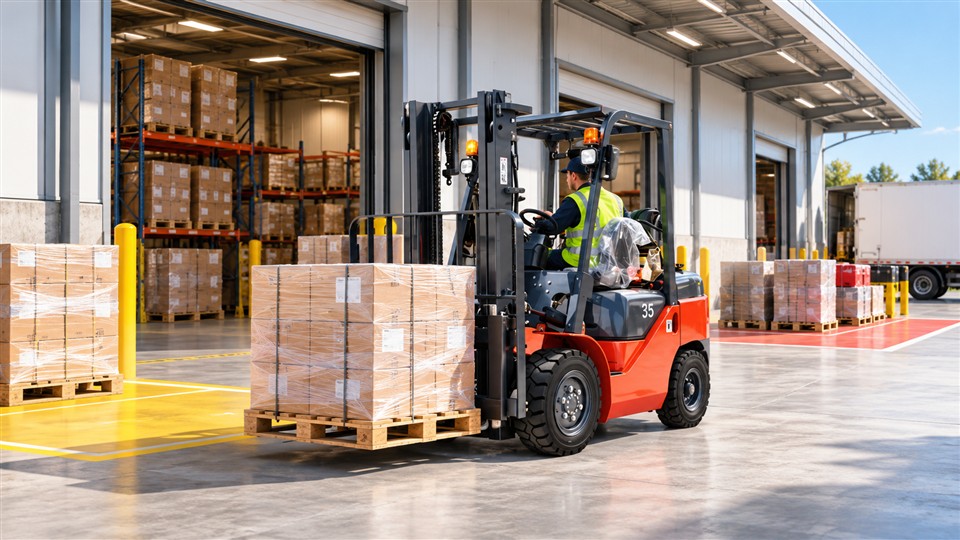
Measure the typical and maximum load, load center, lift height and attachment needs. Check door widths, dock plates, indoor turning areas and outdoor surface conditions. Review ventilation and exhaust requirements for each indoor segment, and identify approved cylinder storage and changeover locations. Confirm spare-cylinder controls, compatible fuel specification and operator training. For mixed environments, compare LPG with electric and diesel against duty hours, emissions policy and charging or refueling infrastructure.
Visibility and control deserve the same attention as capacity. Review the mast, carriage, tyres or wheels, lighting, mirrors or cameras, restraint, warning devices and speed management as one system. Dust, cold, heat, moisture and corrosion may require extra protection and shorter inspection intervals. Operators must see the travel path and place the load without leaving the protected operating position.
Compare the CPY20-50 LPG forklift for a second view of capacity, manoeuvrability, energy and service access.
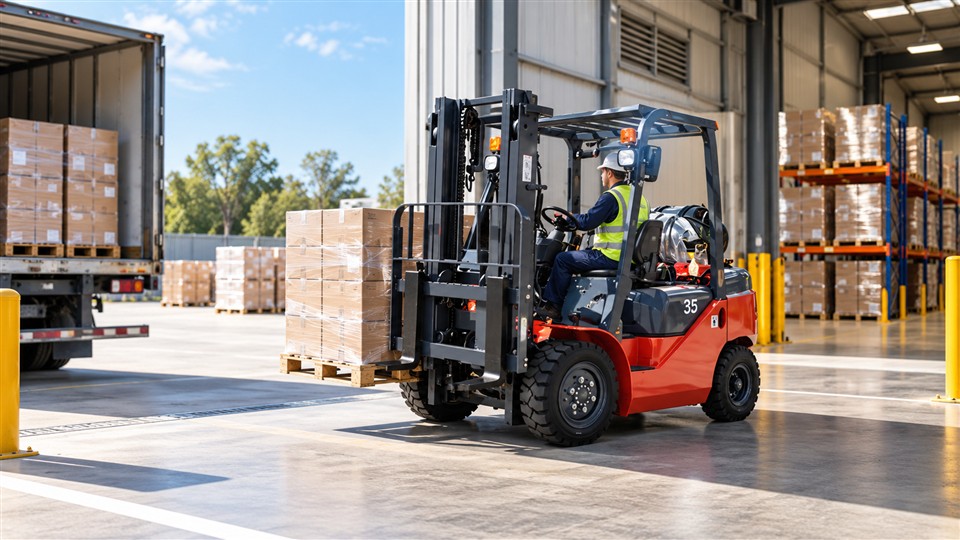
Cylinder exchange should occur in a designated well-ventilated area with trained staff, ignition sources controlled and leak checks completed. Secure the cylinder correctly and follow supplier procedures. Keep forklifts away from pedestrian traffic, and prevent exhaust from accumulating in enclosed spaces. Inspect hoses, regulators, fuel connections, tyres, forks, brakes, steering and alarms before operating. Stop if a leak, odor, poor ventilation or damaged component is suspected.
Create a written operating envelope for every approved route: maximum load and lift height, travel direction, pedestrian exclusion points, slope rules and stop-work conditions. Complete a pre-shift inspection of tyres or wheels, forks, chains, hoses, brakes, steering, alarms and the energy or fuel system. Isolate defects affecting stability, braking or visibility until corrected.
Supervisors should observe real work, record near misses, harsh braking, overload attempts, impacts and recurring service issues, then improve layout, traffic separation and coaching. Build the business case around productive hours rather than purchase price alone. Include operator time, maintenance, energy or fuel, infrastructure, transport, downtime risk and resale value.
The CPY35 LPG forklift is the third internal product reference for application comparison.
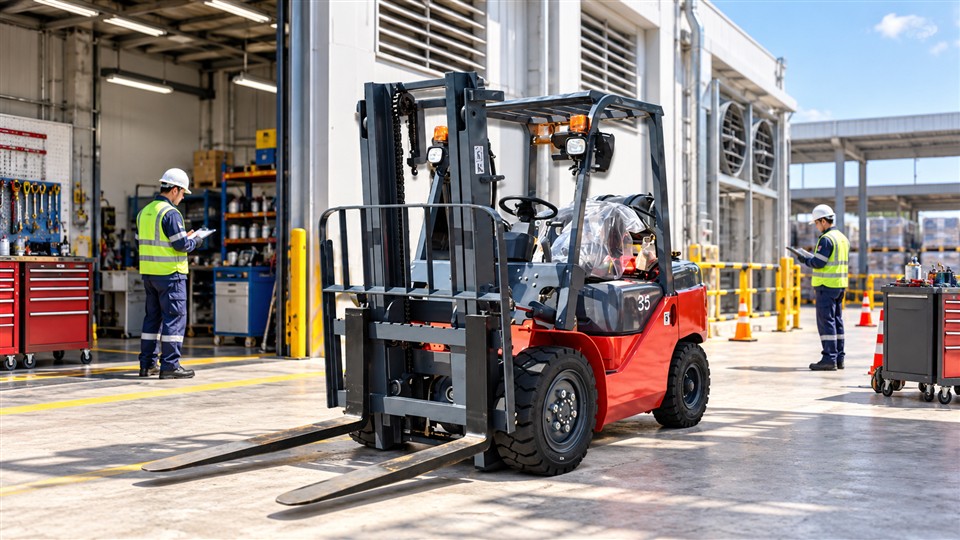
Total cost should include fuel usage, cylinder logistics, ventilation upgrades, maintenance, operator training, downtime and the impact of stricter emissions rules. A route trial can show whether flexible fueling actually reduces interruptions. Track productive hours, refueling duration, congestion at cylinder stores and the number of indoor transitions. Choose an alternative powertrain if site conditions make LPG controls difficult to maintain.
A staged trial is the strongest way to validate a configuration. Select a representative route, define success measures, brief operators and compare throughput, energy use, handling accuracy and maintenance observations. Review results with operations, safety and finance before fleet-wide deployment. This evidence turns a current industry headline into a defensible material-handling plan.
ZGFORKLIFT and MYZG can tailor the final specification after reviewing the application. Product availability varies by market; confirm the latest technical data and comply with local regulations before purchase or operation.
Contact Shandong Zhuogong Machinery equipment Co.,Ltd. Email: vip@mingyuforklift.com. Tel: +86-0535-2090977. WhatsApp: +86 131 8160 2336. Address: Xiaqiu Town, Laizhou, Yantai City, Shandong Province, China.
Send the maximum load, load-center distance, aisle width, gradient, surface condition, daily duty hours and climate so MYZG engineers can recommend a practical configuration instead of a generic catalogue answer.
Name: selena
Mobile:+86-13176910558
Tel:+86-0535-2090977
Whatsapp:8613181602336
Email:vip@mingyuforklift.com
Add:Xiaqiu Town, Laizhou, Yantai City, Shandong Province, China