vip@mingyuforklift.com
+86-0535-2090977

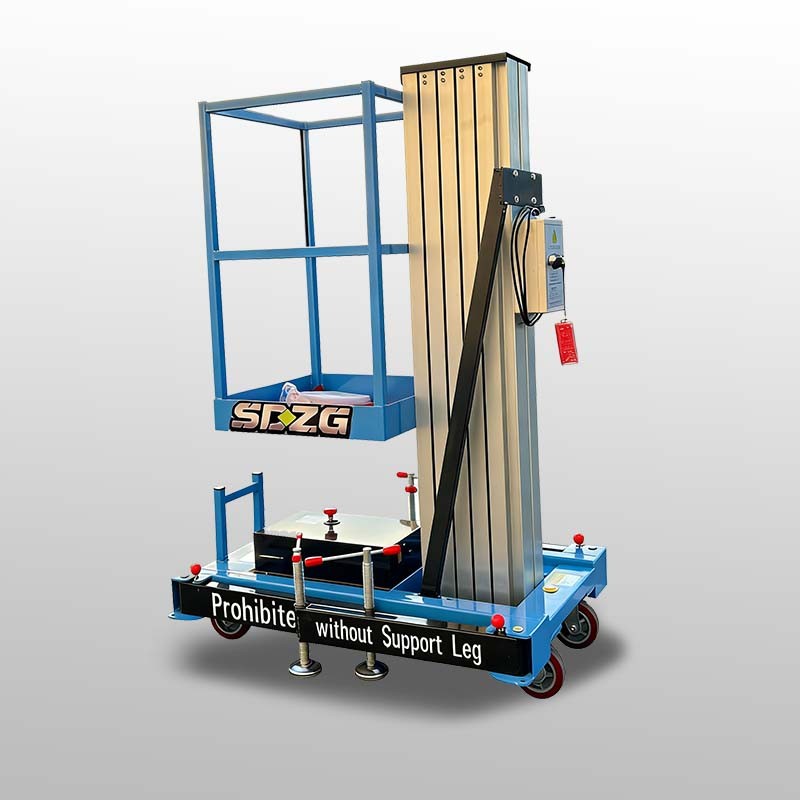
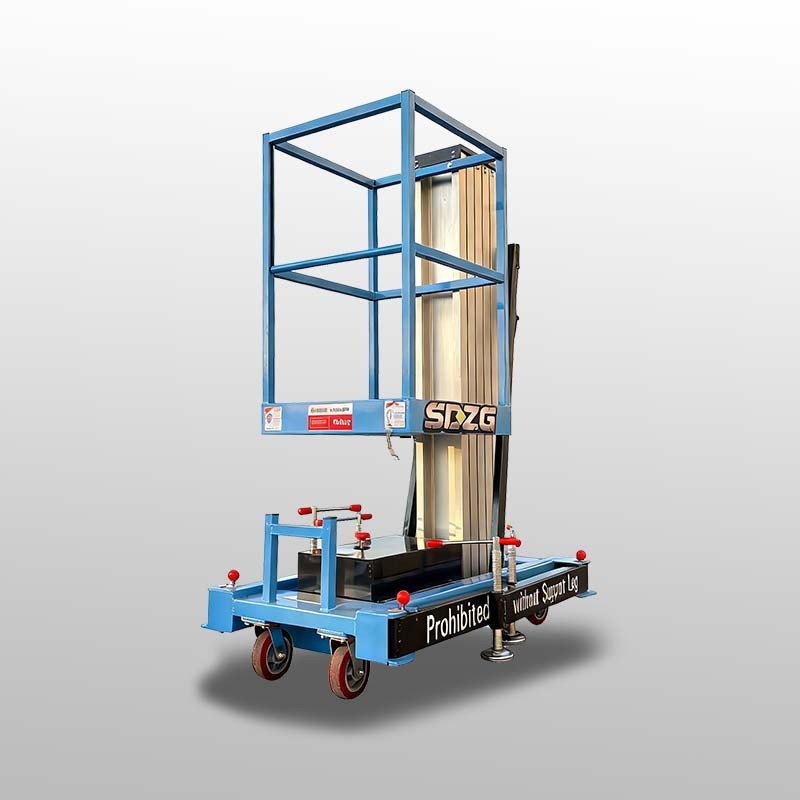
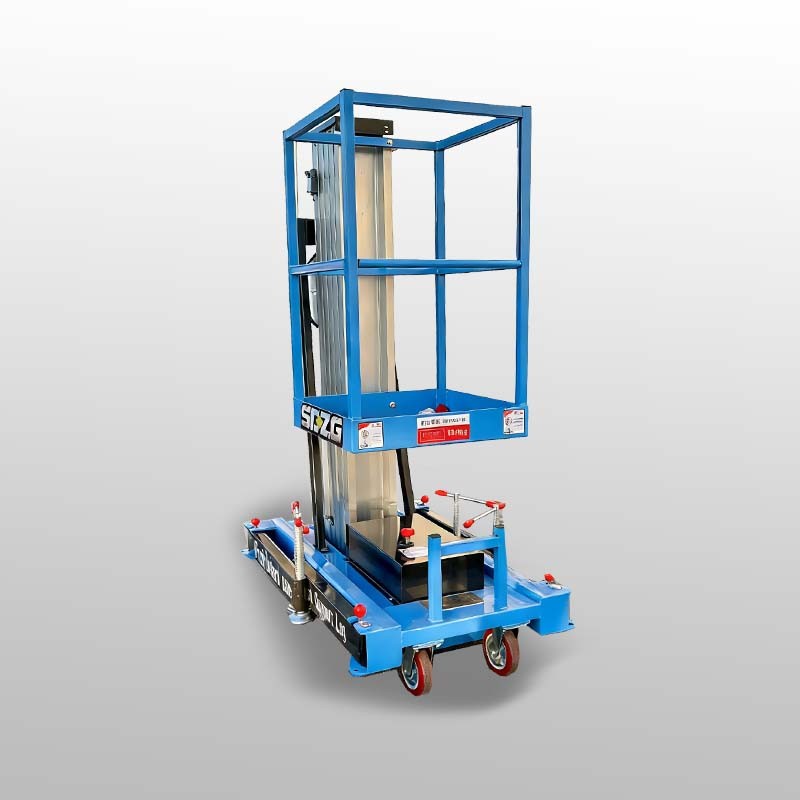
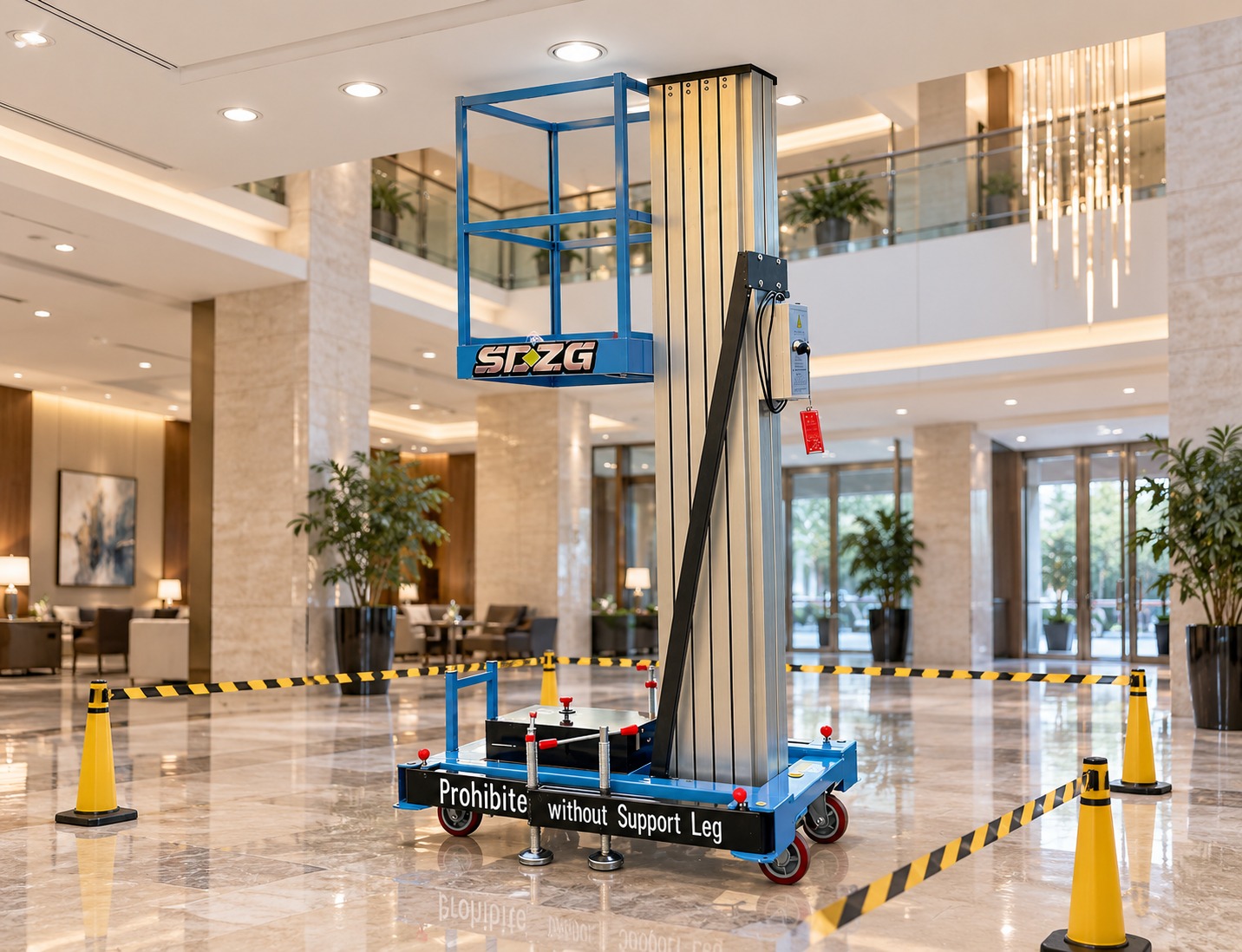
The ZG-DZ-06CD single-mast aluminum-alloy lift is presented for hotel, retail-atrium and commercial-lighting maintenance. ZGFORKLIFT / MYZG recommends selecting the machine from a documented task, access-route, surface, power, environment and rescue review. This application page supports purchasing decisions without replacing the quotation, data plate, instruction manual, site risk assessment or local work-at-height requirements.
Hotels, shopping centers and commercial atriums need compact access for lights, signs, decorations and building services while protecting finished floors and separating maintenance from guests. A manually positioned single-mast aluminum lift can suit controlled indoor tasks where compact storage, doorway access and stable outrigger setup matter more than powered travel.
The buyer should map the complete job rather than selecting only by a headline working height. Record the task point, operator reach, carried tools, route restrictions, floor or ground condition, nearby traffic, overhead hazards, allowable shutdown window and method for emergency lowering. This turns a general product inquiry into a configuration that purchasing, safety, operations and maintenance teams can review together.
The official ZG-DZ-06CD source page identifies a single-mast aluminum-alloy lift with a mobile caster base, support legs, hydraulic elevation and a compact work platform. It lists source-page references including 150 kg load, 1.1 kW power and 220 V supply, but the quotation, data plate and delivered manual must confirm the exact supplied machine and destination-voltage configuration.
Review the Aerial Platforms category, the All Products catalog, and the ZG-DZ-06CD source product page. The source page is used only to identify the real website product family; final specifications and compliance documentation remain order-specific.
Height and work envelope: separate platform height, working height and building height. Include ceilings, beams, racks, pipes, sprinklers, signs and other obstructions. Choose a platform that places the task within a normal working position without ladders, boxes or rail climbing.
Useful platform load: total every occupant, tool, replacement part, test device and consumable. Confirm the main-deck and extension-deck limits separately where an extension is fitted. Do not treat an access platform as a crane or allow suspended, side or rail loads unless an approved configuration and procedure expressly permit them.
Route and setup: measure unloading space, gates, doors, elevators, ramps, turns, floor transitions and the narrowest point. Record the stowed-height restriction and any overhead entrapment point. A lift that reaches the task but cannot safely travel to or set up at the work point is not the correct selection.
Surface and environment: verify floor loading, levelness, traction, drainage, edges, covers and hidden voids. Record temperature, moisture, dust, corrosion, wind exposure and cleaning rules. Obtain competent engineering review where the supporting surface is uncertain.
Energy and duty cycle: provide travel distance, lift cycles, shift length, charging window, ambient temperature and destination power supply. Battery, charger, cable and plug configuration must be confirmed for the ordered unit instead of inferred from a different model or market.
Compare the electric scissor lift platform for firm-floor vertical access and the ZG-YY rough-terrain scissor lift family for a different outdoor duty profile. A boom lift may be more suitable when horizontal outreach or obstacle clearance is essential, while a mast lift can be more compact for controlled point access. Selection must follow the real route and task rather than product appearance.
Compare working and platform height, rated capacity, extension-deck rating, stowed dimensions, total machine mass, point loading, gradeability, turning method, tire or caster type, stabilizer procedure, wind limits, battery endurance, transport requirements, emergency controls and service access. The best value is the smallest suitable machine that safely completes the documented duty, not automatically the largest platform.
Create an exclusion zone around the machine and below the elevated work area. Separate the lift from forklifts, trucks, robots, conveyors, doors and pedestrians. Identify overhead conductors, energized equipment, fragile ceilings, openings and moving machinery. A trained ground person must understand communication, emergency stop, emergency lowering and the site rescue plan before elevation begins.
Before each shift, inspect casters, wheel locks, chassis, aluminum mast sections, guides, fasteners, support legs and pads, hydraulic hoses and cylinder, platform, guardrails, gate, controls, emergency stop, lowering function, power cable and visible structural damage. Confirm that every support leg is installed and bearing on an approved level surface before elevation.
Keep occupants inside the guardrails with both feet on the deck. Secure tools and materials, respect the approved occupant and load limits, and follow the delivered rules for travel or repositioning. Stop work when surface condition, traffic, visibility, weather, temperature, alarms or machine behavior moves outside the approved operating envelope.
For hotel, retail-atrium and commercial-lighting maintenance, schedule elevated work around people, production and vehicle movement. Mark the approach route, setup point, exclusion boundary and emergency-control access. Coordinate isolation of nearby energy sources and equipment before the platform enters the zone, then restore the area only after tools, barriers and the machine are removed.
The article on pre-winter facility checks and lift-platform access provides additional seasonal and facility-planning ideas. It is supporting information only; the exact machine manual, site assessment, trained supervision and applicable local regulations remain controlling.
Keep mast channels and rollers clean and dry, and remove dust or decorative debris without forcing water into electrical components. Inspect caster condition, support-leg locks, mast guides, hydraulic lines, cylinder seals, power cable, controls and fasteners at the intervals stated in the delivered manual. Do not drill, weld, heat, bend or straighten aluminum structural members without approved technical guidance.
Maintain a service record with machine identification, date, operating hours or cycles where available, reported fault, diagnosis, parts used, inspection result and return-to-service approval. Isolate any fault affecting stability, control, braking, lifting, lowering, guarding or emergency functions until qualified repair and release.
Dealers and fleet owners should plan common wear items, charging components and diagnostic support around local duty and lead time. Review the parts and dealer support page and include the model, serial information, configuration, fault history and photographs with every technical or parts request.
Dealers should qualify each inquiry with a standard application questionnaire, then record the offered configuration and exclusions in writing. A controlled demonstration should reproduce the representative route, doorway, turning point, floor and work height without exposing visitors or production. Handover should cover inspection, controls, emergency lowering, charging, parking, defect reporting and the boundaries of the selected configuration.
Rental fleets should track utilization, battery condition, impacts, alarms, hydraulic leaks, repeated faults and customer duty. Standardized inspection forms and serial-number records make equipment rotation and parts planning more reliable. Cooperation cases should be discussed only when customer permission and verifiable details are available; this page does not invent customers, project volumes or performance results.
For export orders, confirm the exact configuration, power system, battery and charger or supply connection, labels, manuals, packing method, shipping dimensions, destination voltage and import rules before contract. Request written packing and document lists so that the consignee, customs broker, dealer and service team are aligned before shipment.
Where CE documentation is required, request and verify the declaration and supporting documents for the exact supplied machine and destination. EPA engine-emissions certification is generally not applicable to an electrically powered lift without a combustion engine, but the actual power configuration must be confirmed. Electrical, machinery, workplace, battery-transport and import requirements may still apply. No unverified certificate, test result, export volume, delivery record or customer case is claimed here.
Shandong Zhuogong Machinery Equipment Co., Ltd. can review buyer-provided application data, discuss the available configuration and coordinate product, documentation, packing, commissioning and parts questions for the proposed order. Final specifications, optional equipment, compliance documents, warranty scope, lead time and commercial terms must be confirmed in the quotation or technical agreement.
Send the required platform and working height, total platform load, doorway and elevator dimensions, finished-floor limits, setup footprint, support-leg clearance, power supply, frequency of relocation, destination and service expectations. Contact Shandong Zhuogong Machinery Equipment Co., Ltd. at vip@mingyuforklift.com or +86-0535-2090977, or use the contact and inquiry page. Include “ZG-DZ-06CD single-mast aluminum-alloy lift” so the complete application can be reviewed together.
Name: selena
Mobile:+86-13176910558
Tel:+86-0535-2090977
Whatsapp:8613181602336
Email:vip@mingyuforklift.com
Add:Xiaqiu Town, Laizhou, Yantai City, Shandong Province, China