vip@mingyuforklift.com
+86-0535-2090977

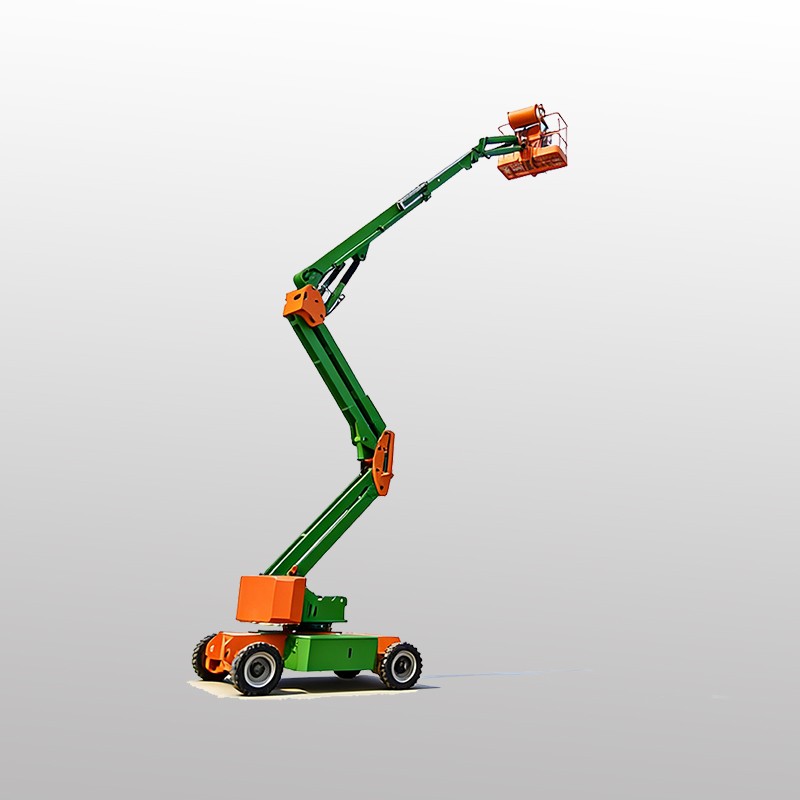
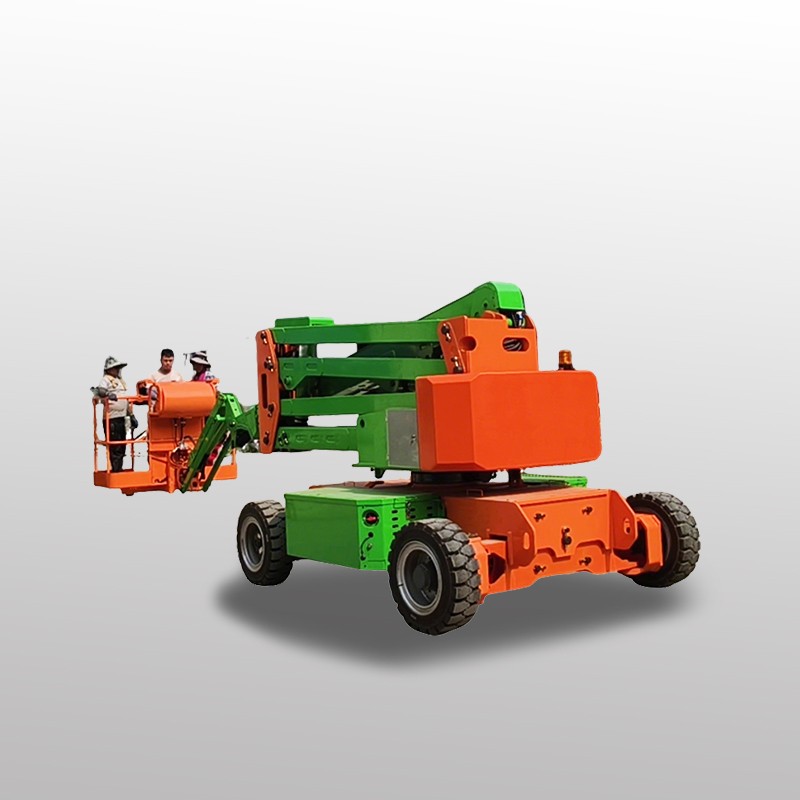
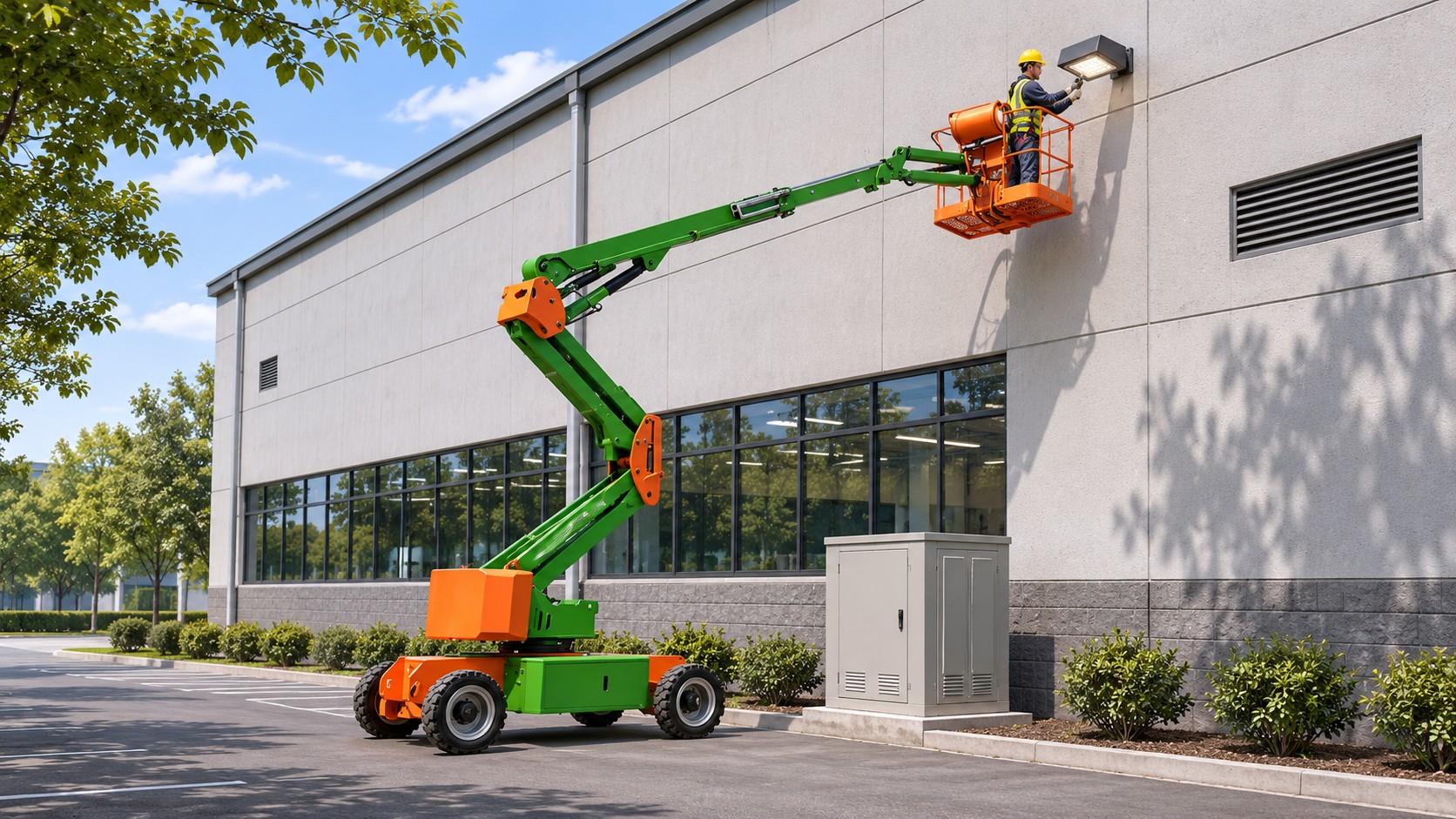
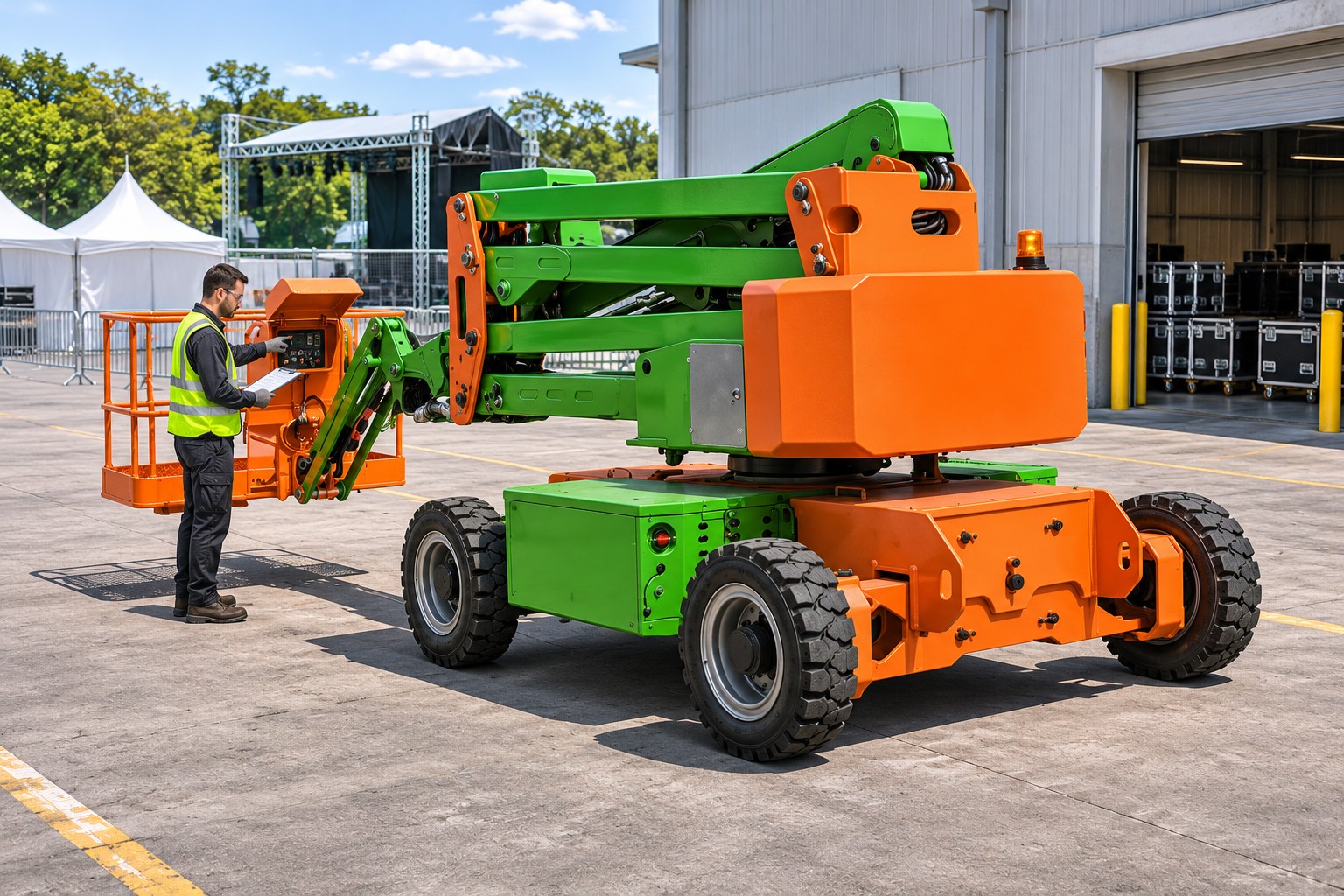
The ZG-QB16 articulating boom lift pictured on this website has a green multi-section boom and chassis, orange turntable covers and work basket, and four rugged tires. Its original product page identifies a self-propelled boom-lift family intended for access over obstacles. This ZGFORKLIFT / MYZG guide focuses on facility façades, outdoor lighting and event-venue maintenance where workers must reach a task beyond a ground-level obstruction. The safe choice depends on reach geometry, platform load, ground bearing, weather, electrical hazards and a planned rescue method, not on headline working height alone.
A facility team may need to reach a light above landscaping, inspect a wall-mounted vent or service a canopy without placing the machine directly beneath the work. An articulated boom can position a basket around some obstacles, but its usable reach changes with height, boom angle, basket load and machine orientation. Draw the actual task point and obstructions, then compare them with the configuration-specific working envelope. Check access width, firm level setup space, pavement or soil bearing, buried utilities and nearby traffic. A machine that reaches the spot on paper may still be unsuitable if it cannot be safely positioned.
The original ZG-QB16 product page establishes the family identity and supplies two genuine model images. It states working and platform-height figures for a particular description, but buyers should request the exact delivered model's load chart, reach diagram, basket capacity, drive limits and manual. Do not extrapolate the maximum reach from one position to every height or basket load. The two additional images on this page are visual application concepts derived from the source machine, not evidence of a completed customer project.
List each task's height, horizontal offset, tools, materials and number of workers. Survey the route from delivery point to setup area, including gates, curbs, slopes, soft ground, overhead branches and electrical clearances. Confirm the truck or trailer needed to move the machine and whether access roads support its weight. Compare the cost of rental or ownership together with inspection, transport, operator training, battery or fuel support, parts and emergency arrangements. A demonstration should use a representative access position on a site approved by a competent person, not an improvised lift near live work.
The aerial-platform category provides other access families, and the All Products range helps contractors compare related site equipment. For a task directly above a wide, clear setup area, a ZG-YY scissor-lift reference illustrates a different vertical-access geometry. The better machine depends on the measured work envelope and ground conditions; do not substitute one model's platform capacity, slope limit or power source for another's.
Before elevating, isolate the work zone from vehicles and pedestrians. Inspect the ground, identify buried voids and establish clearances from energized equipment. Check weather and wind against the delivered manual. Use the prescribed pre-use inspection and function test, including ground controls and emergency lowering. Close the basket gate and keep the total of people, tools and materials within the rated load. Follow local rules and the manufacturer's instructions for fall protection and attach only to approved points. Never climb the guardrail, use a ladder in the basket or push the machine against the building to gain reach.
At a façade job, position the boom so the worker can perform the task from within the basket without leaning beyond its rails. A spotter can manage the exclusion area and watch for changing traffic. At an event venue, coordinate with lighting, rigging and loading teams so no suspended load passes over the basket. If the task point moves, lower and reposition according to the manual; do not drive elevated outside permitted conditions. The rescue plan should identify who can operate ground controls and how a worker will be recovered if the platform stops.
Before each shift, inspect tires, boom structure, pivot points, hydraulic lines, basket gate, controls, alarms, emergency stop, tilt indication and any visible leaks or damage. Test functions within the manufacturer's procedure and remove a defective machine from service. Follow scheduled maintenance and local inspection requirements for the serial-numbered unit. Keep records of hours, faults and repairs. Transport vibration, outdoor corrosion and contaminated joints can affect an access machine even when the previous task ended normally. A dealer should plan critical spares and technician response before a time-sensitive maintenance shutdown.
The parts and service information is a starting point for discussing hydraulic, electrical, control and tire components. Request part references for the actual boom-lift variant, plus warranty, inspection schedule and emergency support contacts. The operator manual should remain with the machine. A site should not rely on an unsupported promise of uninterrupted operation; a backup access method may be needed for essential lighting or facility repairs.
A dealer serving facilities teams can offer a measured access survey, comparison with a scissor lift, operator familiarization and a documented handover. Quote the machine, transport, commissioning, maintenance and support separately. Shandong Zhuogong Machinery Equipment Co., Ltd. can discuss export packing, shipping documents and after-sales arrangements for a specified ZG-QB16 configuration. Ask for relevant customer references if a cooperation case matters; this guide does not claim an unverified installation or export volume.
If a destination requires CE documents, aerial-platform standard evidence or engine-related EPA information, request the documents relevant to the exact delivered machine and destination. The source page includes general compliance language, but this guide does not independently certify a unit. Review the company background and FAQ for initial supplier review, then list every required document, inspection and service commitment in the purchase order.
Send a sketch of the work point, height and horizontal offset, basket load, obstacles, surface photos, access and transport limits, power preference and destination market. Request the exact ZG-QB16 reach diagram, capacity plate, manual and applicable document list before ordering. Contact Shandong Zhuogong Machinery Equipment Co., Ltd. via the contact page, email vip@mingyuforklift.com or phone +86-0535-2090977. A measured access plan and verified configuration are the basis for a safer purchase.
Name: selena
Mobile:+86-13176910558
Tel:+86-0535-2090977
Whatsapp:8613181602336
Email:vip@mingyuforklift.com
Add:Xiaqiu Town, Laizhou, Yantai City, Shandong Province, China