
vip@mingyuforklift.com
+86-0535-2090977

HTML Meta Description: Learn how electric scissor lifts support sensor, network and overhead maintenance in 2026 autonomous warehouses, with planning guidance from ZGFORKLIFT/MYZG.
Keywords: autonomous warehouse, electric scissor lift, sensor maintenance, network maintenance, high-bay access, warehouse robotics, MEWP safety, ZGFORKLIFT, MYZG, industrial lift platform
Published: September 6, 2026
Autonomous warehousing is one of the most visible logistics topics of 2026. Distribution centers are adding mobile robots, machine-vision cameras, wireless access points, smart lighting, fire-protection sensors and data-connected conveyors. These systems reduce repetitive travel and improve operational visibility, but they also create a growing maintenance challenge above the floor. Technicians still need safe, stable and repeatable access to devices mounted on ceilings, columns, cable trays and high rack structures. An electric scissor lift can become an essential support machine when the access plan is designed around people, robots and live warehouse traffic.
ZGFORKLIFT / MYZG recommends beginning with the task rather than choosing equipment only by maximum height. A buyer should identify every overhead service point, the route between those points, the number of people and tools required on the platform, and the conditions under which the warehouse can isolate the work zone. This application-first method helps Shandong Zhuogong Machinery equipment Co.,Ltd match platform size, working height, deck capacity, battery endurance and tire type to the real operating environment.
A conventional warehouse maintenance crew may work during a quiet shift with limited traffic. In an autonomous facility, however, automated mobile robots can continue moving through surrounding aisles, conveyors may restart after short pauses, and warehouse software may reroute equipment without a technician seeing the original plan. The access machine must therefore be part of a coordinated maintenance process. A lift should never simply be driven into a robot route without a controlled exclusion zone, approved isolation procedure and clear communication with the control-room team.
The first equipment reference is the ZG-SPSL1214 self-propelled scissor lift. Its mobile format helps maintenance teams move between inspection points without repeatedly setting up ladders. Before selection, confirm the required platform height, overall width, stowed height, turning space, platform extension needs and allowable floor loading. A machine that reaches the ceiling but cannot pass through the narrowest doorway is not a workable solution.
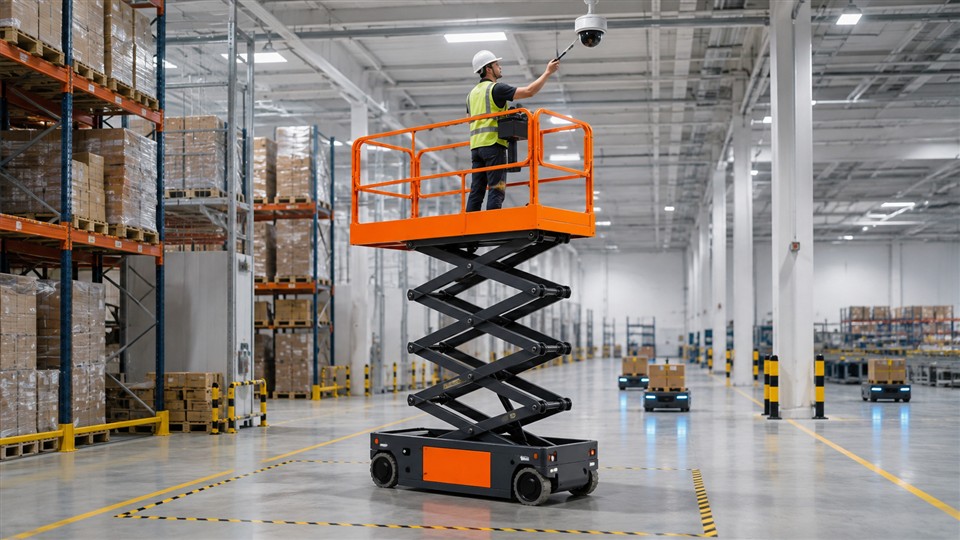
Modern facilities can have hundreds of overhead devices. Build an asset map that records the location and service height of cameras, access points, scanners, antennas, lights, sprinklers and control cabinets. Add the nearest safe setup area, floor condition, overhead obstructions and emergency-lowering access. This information turns a general request for a “warehouse lift” into an operating specification that purchasing, safety and maintenance teams can review together.
Working height should include the technician's practical reach without standing on rails, boxes or improvised steps. Platform capacity must cover all occupants, tools, replacement devices and test equipment. The extension deck load limit should be checked separately when the task requires reaching above conveyors or rack edges. Floor engineers may also need to review point loading for mezzanines, suspended slabs or older surfaces. Non-marking tires are often preferred in clean indoor areas, while ground clearance and traction become more important near loading yards or unfinished extensions.
For fixed access points such as production mezzanines or recurring maintenance stations, compare the ZG-SJY0.5-12 fixed scissor lift platform. A fixed platform and a self-propelled lift solve different problems. The correct choice depends on task frequency, travel distance, landing design, guarding, installation requirements and how the surrounding workflow is controlled.
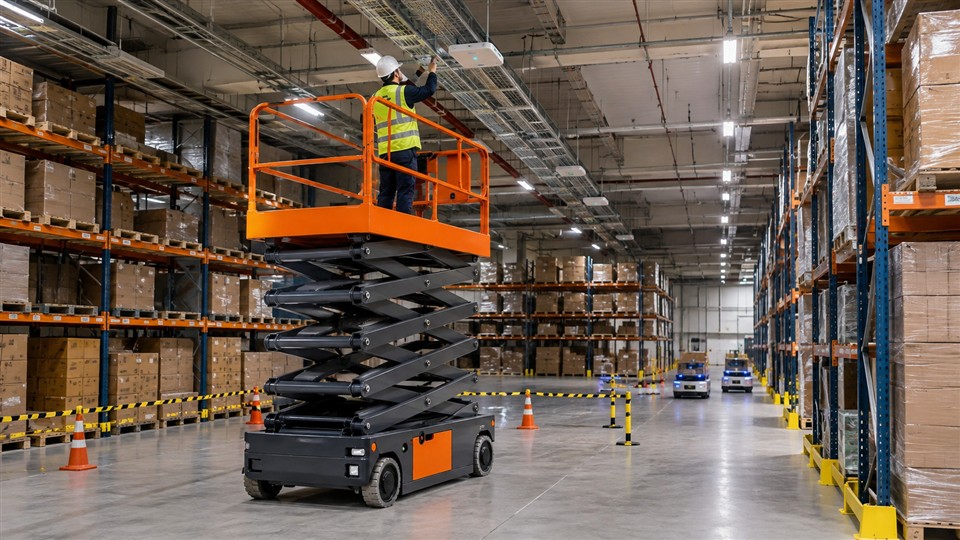
The maintenance permit should connect the lift operator, technician, warehouse supervisor and automation controller. Define the exact zone to be blocked, the time window, who can release the area, and what must happen if a robot enters unexpectedly. Physical barriers, warning lights and software geofencing can reinforce each other, but no single layer should be treated as infallible. The team must know how to stop work and lower the platform if traffic control, communication or power becomes uncertain.
Battery planning is equally important. Estimate travel distance, lifting cycles, platform time and accessory power for a representative shift. Confirm charger voltage, plug type, ventilation and parking location before delivery. Opportunity charging may fit short maintenance windows, while a longer planned charging period can simplify battery care. Keep charging cables outside travel lanes and include battery inspection in the preventive-maintenance schedule. Buyers should request the current manual and technical sheet for the selected configuration because capacities and options can vary by model and destination market.
Daily checks should cover tires, rails, entry gate, platform extension, controls, emergency lowering, alarms, hydraulic components, battery condition and visible structural damage. Any defect affecting stability, guarding, braking or emergency functions should remove the machine from service until evaluated by qualified personnel. Only trained and authorized operators should use the platform, and model-specific familiarization should accompany general work-at-height training.
A good autonomous-warehouse access plan can be measured. Track setup time, time at height, number of completed assets, robot-route interruptions, battery consumption, defects found and repeat visits. The purpose is not to push technicians to work faster while elevated. It is to learn whether asset placement, route planning, spare-parts staging or maintenance windows can be improved. Consistent data helps the operation choose the right fleet size and reduces the temptation to purchase one oversized machine for every possible task.
For higher indoor and outdoor working requirements, the third product reference is the ZG-ZX14 lift operation platform. Compare working height, safe working load, extension-deck capacity, overall dimensions, battery specification, gradeability, allowable working angle and total machine weight against the actual route. Published specifications support early comparison, but the final commercial and technical agreement should confirm the exact unit supplied.
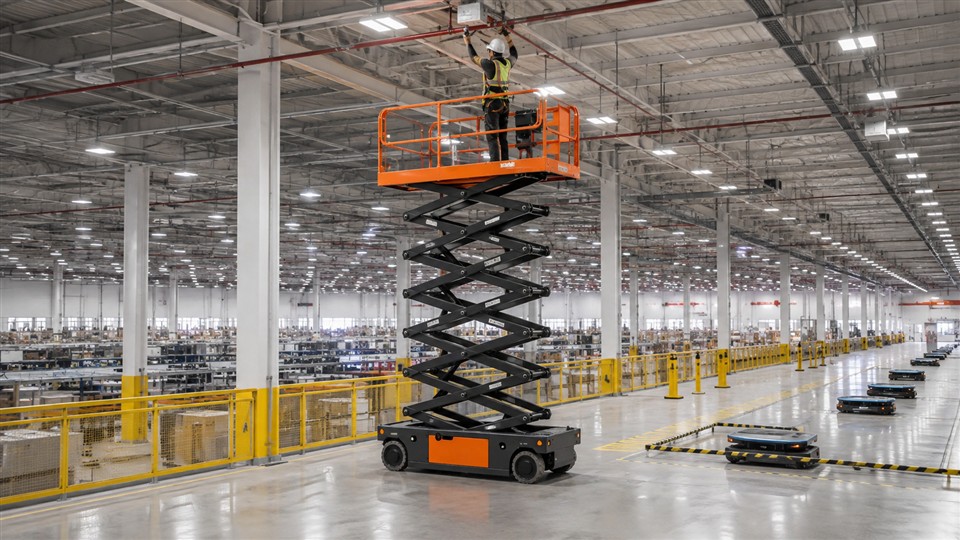
Autonomous warehouses do not eliminate people from maintenance; they make coordination more important. A correctly selected electric scissor lift gives trained technicians a stable work position while the site manages the surrounding digital and physical traffic. ZGFORKLIFT and MYZG can review layout drawings, work heights, route dimensions, floor conditions, duty cycles and destination requirements to recommend a practical access configuration.
Contact Shandong Zhuogong Machinery equipment Co.,Ltd for application review and export support. Email: vip@mingyuforklift.com. Tel: +86-0535-2090977. WhatsApp: +86 131 8160 2336. Address: Xiaqiu Town, Laizhou, Yantai City, Shandong Province, China.
For a tailored quotation, send the required working height, platform capacity, number of occupants, indoor or outdoor ratio, narrowest aisle and doorway, floor condition, daily duty hours, charger voltage, destination country, certification expectations, quantity and target delivery schedule. Always follow the supplied manual, complete a site risk assessment and comply with applicable local regulations before operating any mobile elevating work platform.
Name: selena
Mobile:+86-13176910558
Tel:+86-0535-2090977
Whatsapp:8613181602336
Email:vip@mingyuforklift.com
Add:Xiaqiu Town, Laizhou, Yantai City, Shandong Province, China
