
vip@mingyuforklift.com
+86-0535-2090977

HTML Meta Description: See how compact lift platforms support faster, safer MEP installation on labor-constrained data center projects in 2026, with guidance from ZGFORKLIFT/MYZG.
Keywords: data center construction, skilled labor shortage, compact lift platform, MEP installation, vertical mast lift, cable tray installation, data hall maintenance, ZGFORKLIFT, MYZG, aerial work platform
Published: September 6, 2026
Data-center construction has become one of the most discussed industrial building themes of 2026. Demand for qualified electricians, controls technicians, pipefitters, network installers and commissioning specialists is tightening project schedules. At the same time, mechanical, electrical and plumbing packages are becoming denser. Cable trays, busways, cooling pipes, fire systems, sensors and network routes must be installed and tested above narrow equipment aisles without damaging sensitive systems below. A compact lift platform can help a trained crew position people and tools precisely while reducing repeated ladder setup and unnecessary movement.
This does not mean that equipment can replace qualified labor. It means that the right access method can help scarce skilled workers spend more of the shift performing productive installation and inspection. ZGFORKLIFT / MYZG approaches the decision as an application study. Shandong Zhuogong Machinery equipment Co.,Ltd reviews the true work height, access route, platform load, floor condition, power plan, task frequency and destination requirements before recommending a configuration.
When project teams are short of experienced people, lost minutes compound quickly. A technician may need to move between dozens of overhead points in one data hall. If the access device is too wide for the aisle, difficult to reposition or poorly matched to the working height, the crew spends valuable time on setup rather than installation. An oversized platform can also obstruct other trades, while an undersized unit can create unsafe improvisation. The correct choice supports a predictable work sequence without exceeding the machine's operating limits.
The first internal product reference is the ZGTT06 self-propelled telescopic aerial work platform. Its compact vertical-mast format is relevant to indoor work where a narrow chassis and straightforward vertical access are more useful than long horizontal outreach. Buyers should verify actual working height, platform dimensions, machine width, turning space, stowed height, rated capacity and floor loading for the specified model.
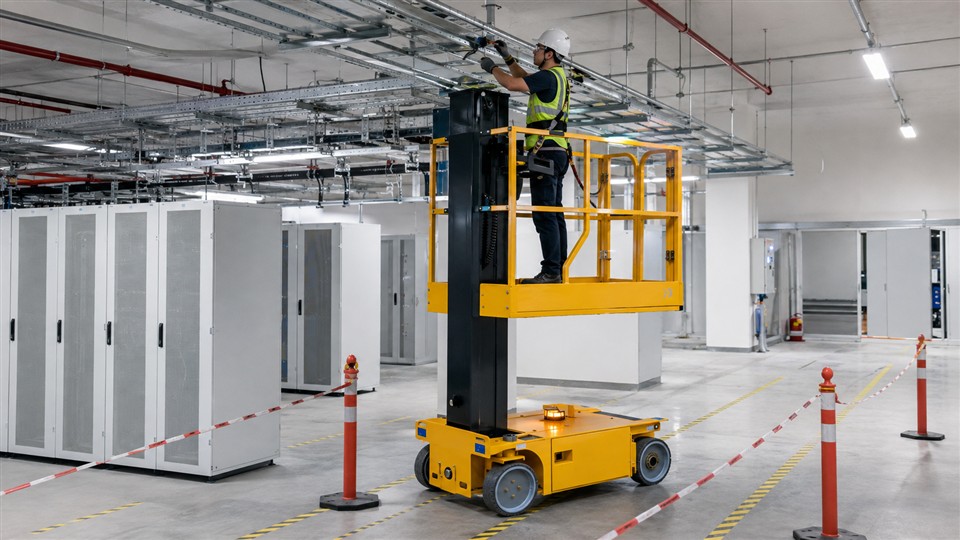
Before requesting a quotation, map every planned overhead task. Record cable tray elevations, busway connections, lighting positions, detector locations, chilled-water controls, network access points and clearance above the future server cabinets. Add doorway widths, turning points, floor joints, temporary ramps, lifts between levels and restricted zones. The survey should distinguish construction-phase routes from the narrower paths that remain after cabinets and containment systems are installed.
The platform load calculation must include the operator, a second worker when required, tools, fasteners, meters, test equipment and the component being installed. Long sections of conduit or tray can create handling problems even when their weight is low. Plan how materials will be lifted and controlled without extending them into adjacent live work areas. Never use guardrails as shelves, never stand on rails to gain extra reach, and never exceed the manufacturer's load or extension-deck limits.
For portable low-altitude work in tight service areas, compare the ZG-DZ-06CD single-mast aluminum alloy lift. A lightweight manually repositioned platform and a powered vertical mast lift serve different duty cycles. The project should evaluate travel frequency, floor transitions, setup time, stabilizer requirements, operator count and the distance between work points rather than selecting only by maximum height.
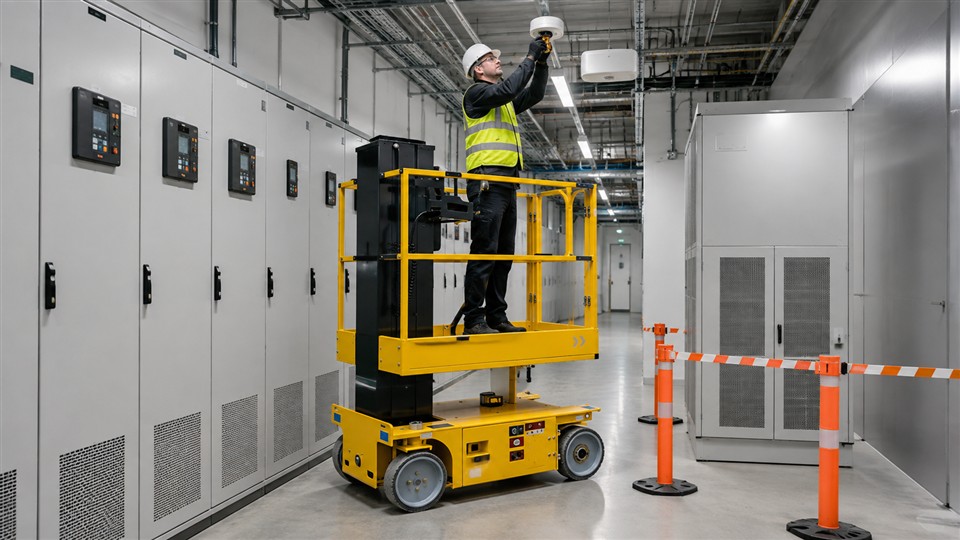
Access equipment should be included in the short-interval construction plan. Identify which overhead zones are released, which systems are energized, and which trades share the aisle. Reserve charging and parking space outside emergency routes. If cabinets, containment panels or temporary materials change the path, update the access plan before sending the machine into the area. The lift operator needs a clear route and a controlled working zone, not a verbal assumption that the aisle will remain open.
Data-center sites also require disciplined protection against contamination and impact. Confirm tire type for finished floors, establish cleaning procedures before entering sensitive areas and protect low-level equipment from contact. Use spotters where visibility is limited, but keep every person outside crush zones. Lockout and electrical isolation must follow the site's procedures when work approaches energized components. The lift provides access; it does not provide electrical protection unless a specifically rated system and procedure apply.
Battery capacity and charger selection should match the real shift. Estimate travel distance, lift cycles, time elevated, accessory loads and available charging windows. Confirm site voltage, plug type, circuit protection and charger location before delivery. Charging leads must not cross pedestrian or equipment routes. A written charging plan is especially important during peak fit-out periods when multiple trades compete for temporary power.
Only trained and authorized people should operate the machine. Daily checks should cover tires, wheels, steering, brakes, guardrails, entry gate, platform floor, controls, emergency lowering, alarms, mast or scissor components, hydraulic parts, battery condition and visible structural damage. Any defect affecting stability, guarding, braking or emergency operation should remove the lift from service until qualified personnel evaluate it.
Establish an exclusion zone below and around elevated work. Confirm overhead clearance before raising, keep the platform on a surface within the allowed slope, and follow indoor or outdoor wind restrictions stated in the manual. Tools and small components should be managed so they cannot fall. Rescue planning must be specific to the machine and location: ground personnel need access to emergency controls, clear communication and a route that remains available even if surrounding equipment is installed later.
For outdoor utility work, heavy installation packages or uneven ground, the third internal reference is the ZG-YY-12-16M off-road scissor lift platform. It should not be treated as interchangeable with a compact indoor mast lift. Terrain, machine weight, platform capacity, working height, drive mode, turning radius and transport requirements must all match the actual application.
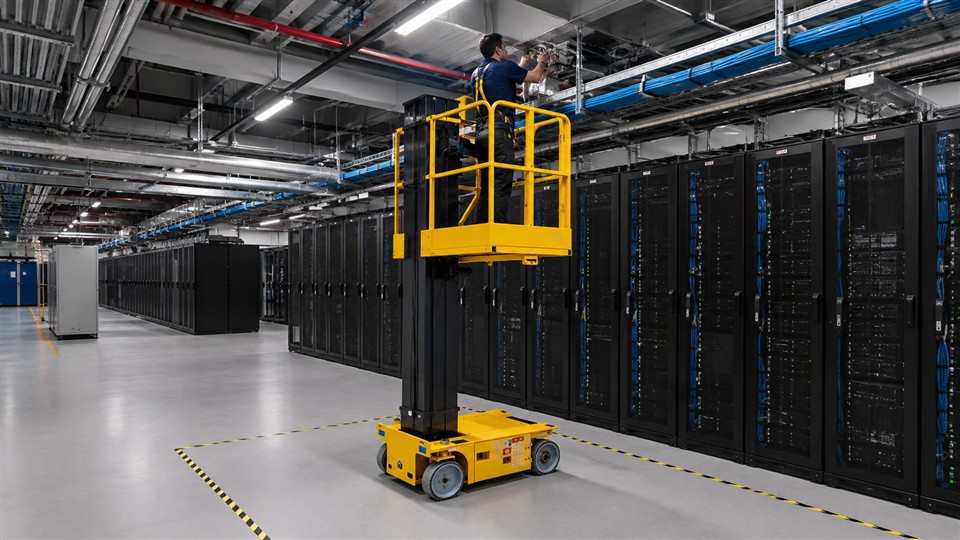
The purpose of productivity measurement is to improve planning, not pressure operators to move faster at height. Track setup time, travel time, completed work points, battery use, aisle closures, interference with other trades and repeat visits. If a crew repeatedly stops because hardware is missing, the solution may be better material staging. If the lift cannot pass a temporary doorway, the route plan should change before the next phase. Data helps the project remove process waste while preserving safe operating limits.
A controlled trial is valuable before fleet expansion. Select a representative area with real aisle widths and ceiling conditions. Load the platform with typical tools, run the approved route, verify emergency-lowering access and record cycle times. Include operators, safety staff, construction management and maintenance personnel in the review. Their combined observations often reveal constraints that are invisible in a catalog comparison.
A compact access platform can help a labor-constrained data-center project use qualified technicians more effectively, but only when equipment selection, construction sequencing and safety controls are designed together. ZGFORKLIFT and MYZG can review drawings, heights, routes, loads, shift patterns and destination requirements to support a practical configuration.
Contact Shandong Zhuogong Machinery equipment Co.,Ltd. Email: vip@mingyuforklift.com. Tel: +86-0535-2090977. WhatsApp: +86 131 8160 2336. Address: Xiaqiu Town, Laizhou, Yantai City, Shandong Province, China.
For a tailored quotation, send the required working height, platform capacity, narrowest aisle and doorway, floor condition, task frequency, indoor or outdoor duty, daily hours, charger voltage, destination country, certification expectations, quantity and delivery schedule. Always follow the supplied manual, site risk assessment and applicable local regulations.
Name: selena
Mobile:+86-13176910558
Tel:+86-0535-2090977
Whatsapp:8613181602336
Email:vip@mingyuforklift.com
Add:Xiaqiu Town, Laizhou, Yantai City, Shandong Province, China
