
vip@mingyuforklift.com
+86-0535-2090977

HTML Meta Description: Plan rough-terrain scissor lifts for warehouse solar and canopy projects in 2026 with practical access, safety and fleet guidance from ZGFORKLIFT/MYZG.
Keywords: warehouse solar, rough-terrain scissor lift, solar carport installation, logistics energy project, rooftop solar maintenance, outdoor aerial platform, MEWP safety, ZGFORKLIFT, MYZG, industrial decarbonization
Published: September 6, 2026
Large warehouse roofs and logistics yards are becoming important energy assets in 2026. Distribution-center owners are evaluating rooftop photovoltaic arrays, solar carports, battery systems and smarter electrical controls to reduce operating costs and use more locally generated power. These projects create extensive work at height around building edges, canopy structures, cable routes, inverters, sensors and lighting. A rough-terrain scissor lift can provide a stable platform for selected installation and maintenance tasks when the machine, ground conditions and work zone are matched carefully.
The lift is only one part of the project plan. Structural approval, electrical design, fall prevention, weather limits, traffic control and qualified personnel remain essential. ZGFORKLIFT / MYZG recommends an application review before equipment selection. Shandong Zhuogong Machinery equipment Co.,Ltd can compare working height, platform capacity, terrain, slope, access width, transport limits and daily duty so the proposed machine supports the actual construction sequence.
Logistics buildings often have broad roof areas and significant daytime electrical demand. Solar carports can add generation while shading vehicles, and rooftop systems can turn unused building area into an operating asset. The opportunity is attractive, but installation is not a simple repetition of indoor maintenance. Crews may work on compacted gravel, unfinished pavement or yard surfaces exposed to wind, rain, vehicle traffic and changing ground conditions. Access equipment must be selected for the route and the environment, not only for nominal platform height.
A first product comparison is the ZG-DDC4-12M vehicle-mounted three-wheel scissor lift platform. A mobile vehicle-mounted format may suit dispersed tasks where frequent transfer is required. Confirm the exact travel method, setup procedure, stabilizer requirements, allowable slope, working envelope and local road or site rules before selection.
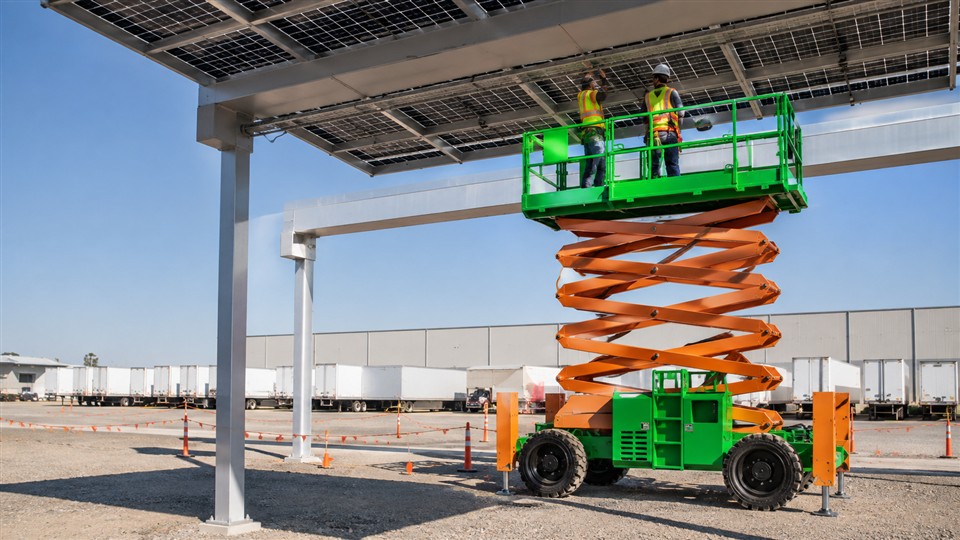
Start with a site walk that follows the machine from unloading to every planned setup position. Measure gates, turns, gradients, drainage channels, curbs, soft shoulders and overhead obstructions. Record pavement strength and identify underground services or utility covers that may not support concentrated wheel or outrigger loads. After rain, the apparent surface can hide reduced bearing capacity. A competent person should confirm whether ground preparation, mats or engineered support is required.
Platform capacity must include occupants, tools, conduit, cable, junction boxes, fasteners and other components. Long or wide solar-related materials can create wind exposure and handling problems even when their weight is modest. The platform should not be used as a crane or material rack unless the manufacturer specifically permits the intended arrangement. Keep every item inside the guarded work area and confirm extension-deck limits separately.
For tasks that require outreach around beams, gutters or installed equipment, buyers can compare the ZG-QB16 articulating boom lift. A boom lift and a scissor platform have different operating envelopes. The correct choice depends on vertical height, horizontal outreach, obstacle clearance, tail swing, platform load, ground conditions and rescue procedures.
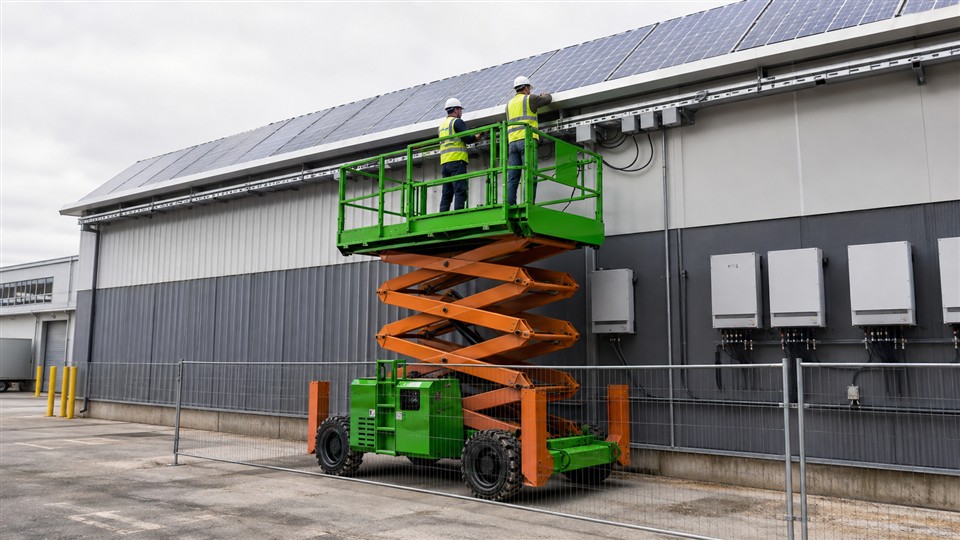
Outdoor work introduces changing conditions. Follow the manufacturer's wind rating and site weather plan, and lower the platform before conditions exceed permitted limits. Solar panels, packaging and long cable sections can catch wind, so do not assume the machine's normal capacity covers every material-handling situation. Stop work during lightning or when visibility, ground stability or communication becomes unreliable.
Solar circuits can remain energized in daylight. Electrical isolation, verification and protective procedures must be designed and performed by qualified personnel. The lift itself does not provide electrical insulation unless the exact machine is designed, rated and maintained for that purpose. Maintain required clearances from power lines and energized components, prevent tools from bridging conductors, and keep inverter or battery areas protected from vehicle impact.
Traffic control is equally important in a live distribution yard. Create a visible exclusion zone that separates the lift from trucks, trailers, forklifts and pedestrians. Coordinate dock schedules so reversing vehicles do not enter the setup area. When the platform is raised, protect the base from impact and maintain a clear route for emergency lowering. Spotters can support movement where visibility is restricted, but no person should stand in a crush zone.
Early steelwork, conduit installation, panel commissioning and long-term maintenance may require different equipment. A high-capacity rough-terrain scissor lift may suit heavy outdoor work over prepared ground, while a compact electric unit may be better after paving and building handover. Rental for peak or unusual tasks can be more economical than purchasing one oversized machine for every phase. Fleet planning should compare productive hours, transport, energy or fuel, inspections, service and expected utilization.
The ZG-TT1011 self-propelled telescopic aerial work platform provides a third internal reference for comparing compact elevated access. Review actual height, rated load, machine dimensions, tire and drive configuration, gradeability, battery or power system and allowable working conditions. Published product data supports early evaluation, but the final technical agreement should confirm the exact supplied configuration.
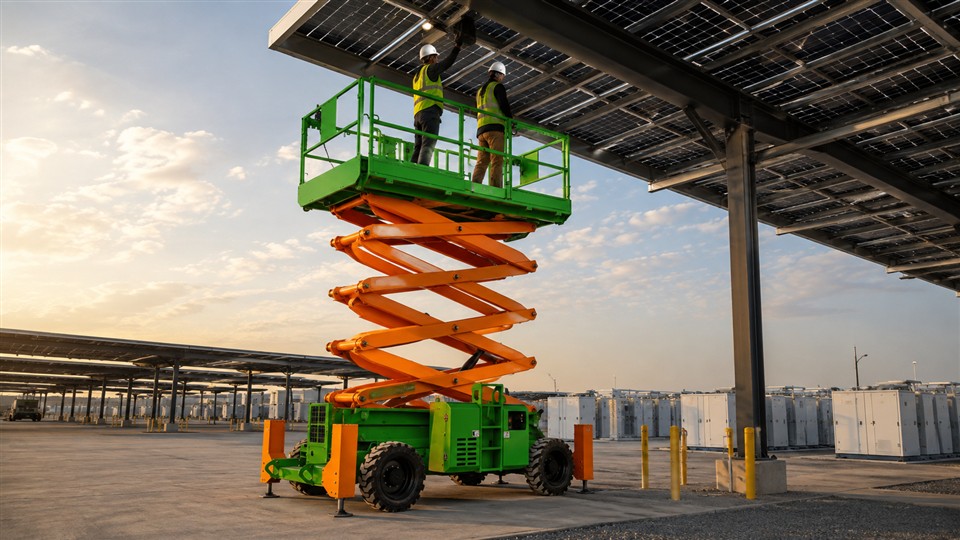
Only trained and authorized operators should use the platform. A daily inspection should include tires, wheel fasteners, steering, brakes, outriggers, guardrails, entry gate, controls, emergency lowering, alarms, hydraulic components, engine or battery system and visible structural condition. Any defect affecting stability, guarding, braking or emergency functions should remove the unit from service until qualified personnel evaluate it.
The project needs a site-specific rescue plan. Ground personnel should know how to use emergency controls, how to communicate with the platform and how to keep the rescue route clear. The plan must address power loss, hydraulic faults, sudden weather changes and an incapacitated occupant. Simply relying on emergency services is not a complete operational procedure.
Warehouse solar and canopy projects can create long-term energy value, but they demand disciplined access planning. The strongest equipment decision combines real task data, verified ground conditions, trained personnel and coordinated site control. ZGFORKLIFT and MYZG can review the application and explain the trade-offs among rough-terrain scissor lifts, compact vertical platforms and articulating boom lifts.
Contact Shandong Zhuogong Machinery equipment Co.,Ltd. Email: vip@mingyuforklift.com. Tel: +86-0535-2090977. WhatsApp: +86 131 8160 2336. Address: Xiaqiu Town, Laizhou, Yantai City, Shandong Province, China.
For a tailored quotation, send the required working height, platform load, personnel count, terrain and slope, access width, daily working hours, destination country, certification expectations, quantity and delivery schedule. Always follow the supplied manual, site risk assessment and applicable local regulations.
Name: selena
Mobile:+86-13176910558
Tel:+86-0535-2090977
Whatsapp:8613181602336
Email:vip@mingyuforklift.com
Add:Xiaqiu Town, Laizhou, Yantai City, Shandong Province, China
