
vip@mingyuforklift.com
+86-0535-2090977

In the high-stakes world of material handling, the choice of motive power isn’t just a procurement decision—it’s a strategic one. For decades, the Liquefied Petroleum Gas (LPG) forklift has been the "workhorse of the industry," positioned between the raw outdoor power of diesel and the indoor cleanliness of electric.
But as lithium-ion technology advances and emissions regulations tighten, many fleet managers are asking: Are LPG forklifts still a viable choice in 2026?
The short answer is yes. However, the long answer requires a look at duty cycles, infrastructure, and the specific physics of internal combustion.
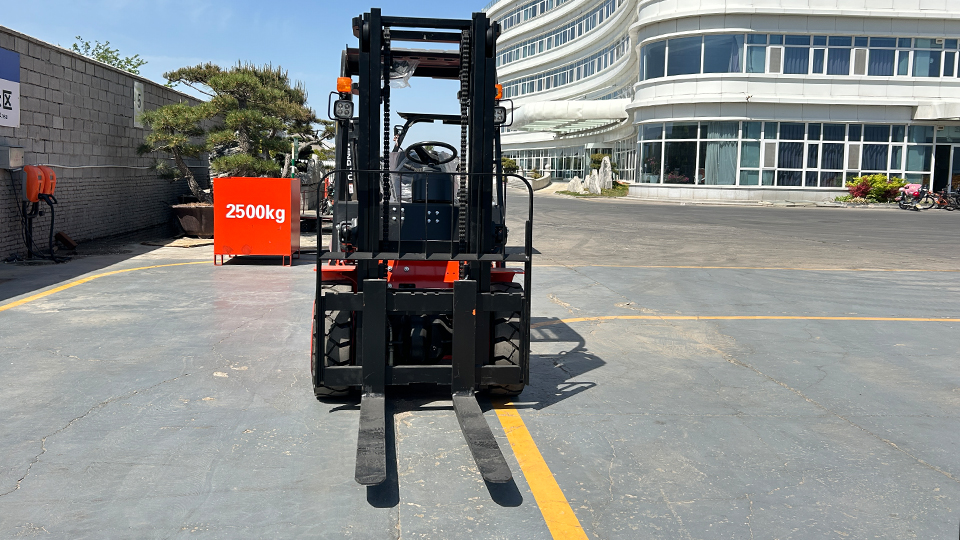
1. The Engineering Behind LPG Power
LPG forklifts utilize a standard internal combustion engine (ICE) modified to run on a mixture of propane and butane. Unlike gasoline engines, which require complex fuel injection or carburation for liquid fuel, LPG enters the engine as a gas.
The Fuel System Lifecycle
Storage: LPG is stored as a liquid under pressure in a steel or aluminum cylinder.
Pressure Regulation: A vaporizer/regulator converts the liquid to a gaseous state using heat from the engine's coolant.
Combustion: The gas is mixed with air and ignited in the cylinders.
Shutterstock
Because LPG is a high-octane fuel, these engines often run smoother and experience less "knocking" than gasoline counterparts. From a technical standpoint, this results in a power curve that is consistent and reliable across a wide RPM range.
2. Performance: Why LPG Still Wins the "Grind"
When comparing LPG to Electric (Lead-Acid or Li-ion), performance isn't just about top speed; it's about persistence.
Consistent Power Delivery
Electric forklifts can sometimes experience a "voltage drop" as the battery nears the end of its discharge cycle. In contrast, an LPG forklift maintains 100% of its torque and lift capacity until the cylinder is bone dry.
Gradeability and Rough Terrain
LPG units generally offer superior gradeability (the ability to climb ramps). For operations with steep inclines or uneven outdoor yards, the mechanical torque provided by an LPG drivetrain is often more robust than the electronic torque management of mid-range electrics.
|
Feature |
LPG Forklift |
Electric (Li-ion) |
Diesel |
|
Initial Cost |
Low |
High |
Moderate |
|
Refueling Time |
2–5 Minutes |
1–2 Hours (Flash) |
5 Minutes |
|
Indoor Use |
Yes (With Ventilation) |
Excellent |
No |
|
Outdoor Use |
Excellent |
Good (Weatherproofed) |
Superior |
3. The Infrastructure Advantage
One of the most overlooked "pros" of LPG is the Infrastructure Barrier to Entry.
To run a fleet of 20 electric forklifts, a facility needs a massive electrical grid upgrade, specialized charging bays, and fire suppression systems. To run 20 LPG forklifts, you simply need a secure outdoor rack for cylinder storage.
No Downtime for Charging: When an LPG unit runs out of fuel, the operator swaps the tank in under 5 minutes.
Remote Locations: If a job site has no power grid, LPG is the only viable "cleaner" alternative to diesel.
4. Emissions and Indoor Safety
A common misconception is that LPG is "dirty." While it is an internal combustion process, LPG is significantly cleaner than diesel. It produces far less particulate matter and lower levels of $NO_x$ (Nitrogen Oxides).
Important Safety Note: While LPG is "indoor-rated," it still emits Carbon Monoxide ($CO$). Facilities using LPG indoors must maintain strict ventilation standards (measured in Air Changes per Hour) and perform regular tailpipe emissions testing to ensure the catalytic converters are functioning correctly.
5. Total Cost of Ownership (TCO)
The financial argument for LPG is a tale of two phases: Low CAPEX, High OPEX.
Capital Expenditure (CAPEX)
LPG forklifts are significantly cheaper to purchase upfront than electric models. For a business with limited liquidity or a startup operation, the lower entry price allows for more units on the floor immediately.
Operational Expenditure (OPEX)
This is where the "good" starts to get complicated.
Fuel Costs: LPG is subject to market price fluctuations. In many regions, the cost per hour of LPG is 3x to 5x higher than the cost of electricity.
Maintenance: An ICE engine has hundreds of moving parts—spark plugs, belts, oil filters, and cooling systems. Electric motors have roughly a dozen.
6. The Verdict: When is LPG "Good"?
LPG forklifts are an excellent choice if your operation fits the following profile:
Multi-Shift Operations: Where you cannot afford the 4–8 hour "soak time" of a lead-acid battery and haven't invested in expensive Li-ion "opportunity charging."
Hybrid Indoor/Outdoor Use: You need a machine that can take a pallet from a rainy loading dock into a ventilated warehouse without skipping a beat.
Extreme Temperatures: LPG handles cold storage and summer heat more predictably than many battery chemistries, which can struggle with thermal management.
The Trade-offs
If your operation is 100% indoor, single-shift, or located in a region with high fuel taxes, LPG is likely a sub-optimal choice compared to modern Lithium-ion electrics.
Summary of Pros and Cons
Pros
Infinite Duty Cycle: Just swap the tank and keep moving.
Versatility: Works in rain, snow, or sunshine.
Power: High torque for heavy lifting and steep ramps.
Cost: Low upfront purchase price.
Cons
Noise: Significantly louder than electric units.
Emissions: Not suitable for confined spaces or food-grade environments without extreme ventilation.
Vibration: Higher operator fatigue due to engine vibration.
Long-term Cost: Higher maintenance and fuel expenses.
LPG forklifts remain a "good" choice because they offer a level of operational flexibility that electric technology hasn't quite matched at a comparable price point. They are the ultimate "backup" and the reliable "all-rounder."
Name: selena
Mobile:+86-13176910558
Tel:+86-0535-2090977
Whatsapp:8613181602336
Email:vip@mingyuforklift.com
Add:Xiaqiu Town, Laizhou, Yantai City, Shandong Province, China