
vip@mingyuforklift.com
+86-0535-2090977

Introduction
The material handling industry is undergoing a significant transformation as warehouses, distribution centers, and manufacturing facilities increasingly transition from internal combustion forklifts to electric alternatives. Electric forklifts offer compelling advantages: zero emissions, reduced noise pollution, lower operating costs, and simplified maintenance requirements. However, as organizations evaluate this transition, they face a critical strategic decision that extends beyond technology selection to financial and operational planning: whether to purchase electric forklifts outright or to utilize rental arrangements.
This decision carries substantial implications for capital allocation, operational flexibility, risk management, and long-term competitiveness. Unlike the relatively straightforward purchase-versus-lease analysis common in consumer markets, the commercial forklift decision involves complex variables including utilization rates, technological obsolescence, maintenance infrastructure, seasonal demand fluctuations, and evolving regulatory landscapes. This article provides a comprehensive technical analysis of the factors that should inform this decision, offering a structured framework for financial and operations managers responsible for material handling equipment strategy.
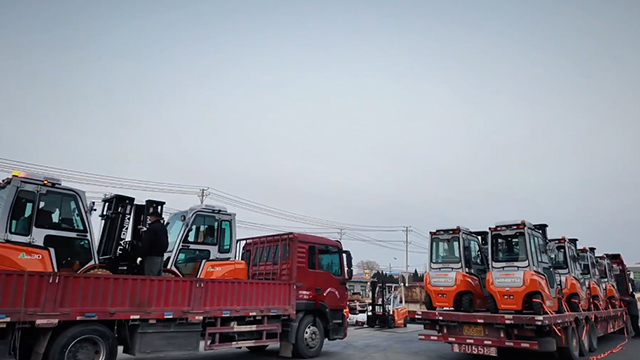
Understanding the Electric Forklift Landscape
Before examining the rent-versus-buy decision specifically, it is essential to understand the current state of electric forklift technology and market dynamics. Modern electric forklifts have largely overcome the historical limitations that constrained their adoption. Lithium-ion battery technology has dramatically improved energy density, reduced charging times, and eliminated the maintenance-intensive requirements of traditional lead-acid batteries. Contemporary electric forklifts can operate continuously through opportunity charging during breaks and shift changes, effectively eliminating the downtime concerns that previously favored propane or diesel alternatives.
The capital cost of electric forklifts remains higher than comparable internal combustion models, though this gap is narrowing as battery costs decline and production scales increase. A standard sit-down electric forklift with a 5,000-pound capacity typically ranges from $25,000 to $40,000 depending on specifications, while equivalent internal combustion models may cost $20,000 to $30,000. However, the total cost of ownership analysis overwhelmingly favors electric forklifts when fuel costs, maintenance savings, and longer operational lifespans are considered.
The rental market for electric forklifts has matured considerably, with major equipment providers offering extensive fleets and flexible terms. Rental rates vary based on equipment specifications, contract duration, geographic location, and market conditions, but typical monthly rates for standard electric forklifts range from $800 to $1,500 for short-term arrangements, with significant discounts available for multi-year contracts.
Financial Analysis Framework
Capital Expenditure Considerations
The purchase decision fundamentally represents a capital investment requiring upfront cash outlay or financing arrangements. For organizations with strong balance sheets and available capital, purchasing electric forklifts offers several financial advantages. Ownership eliminates ongoing rental payments, and the asset can be depreciated for tax purposes, generating valuable deductions. Under current United States tax regulations, businesses may utilize Section 179 expensing or bonus depreciation to accelerate these tax benefits, potentially recovering a significant portion of the investment in the first year of ownership.
However, capital acquisition ties up financial resources that could be deployed elsewhere in the business. The opportunity cost of capital must be carefully evaluated, particularly for growing organizations with abundant investment opportunities. Additionally, purchased equipment appears as an asset on the balance sheet, which may be advantageous or disadvantageous depending on the organization's debt covenants, credit relationships, and strategic financial objectives.
Financing purchases through equipment loans or leases introduces interest costs and may require personal guarantees or liens on business assets. While this preserves working capital, the total cost of financing must be compared against rental alternatives to determine the most economically efficient approach.
Operating Expense Dynamics
Rental arrangements typically structure payments as operating expenses, which may offer accounting and tax advantages depending on organizational circumstances. Operating expenses reduce taxable income immediately without requiring depreciation schedules, potentially simplifying financial planning and improving short-term cash flow metrics.
From a pure cost perspective, rental agreements generally include maintenance and repair services, transferring these operational risks and administrative burdens to the equipment provider. For organizations without established maintenance infrastructure or technical expertise, this represents significant value. However, organizations with capable maintenance departments may find that self-performing maintenance on owned equipment generates substantial savings compared to the embedded maintenance costs in rental rates.
The break-even analysis between renting and buying depends critically on utilization rates and holding periods. For equipment operated intensively over extended periods, ownership typically becomes more economical. Conversely, for seasonal operations, project-based needs, or uncertain demand environments, rental arrangements often prove more cost-effective despite higher per-unit costs.
Total Cost of Ownership Modeling
A rigorous total cost of ownership analysis for electric forklifts must incorporate multiple cost categories beyond the acquisition or rental price. For purchased equipment, these include financing costs, insurance, maintenance and repairs, battery replacement, energy costs, operator training, facility modifications for charging infrastructure, and eventual disposal or resale value. Rental agreements bundle many of these costs, though organizations must still account for energy, insurance, operator training, and any damage charges.
The residual value of owned electric forklifts introduces significant uncertainty into ownership calculations. The rapid pace of technological advancement in battery and control systems may accelerate obsolescence, reducing resale values more dramatically than historical patterns for internal combustion equipment. Conversely, increasing environmental regulations and demand for sustainable operations may enhance the resale market for well-maintained electric equipment. Conservative financial planning should assume modest residual values to avoid overestimating ownership returns.
Operational and Strategic Factors
Fleet Flexibility and Scalability
Operational flexibility represents one of the most compelling arguments for rental arrangements. Business demand fluctuates due to seasonal patterns, economic cycles, product mix changes, and growth initiatives. Rental agreements allow organizations to scale fleet capacity up or down with relatively short notice, avoiding the capital commitment and operational burden of owned equipment during periods of reduced demand.
This flexibility proves particularly valuable in industries with pronounced seasonality, such as retail distribution, agriculture, and construction materials. Rather than maintaining excess capacity year-round to accommodate peak periods, organizations can supplement owned fleets with rental units during high-demand intervals, optimizing capital efficiency while maintaining service levels.
Conversely, organizations with stable, predictable demand patterns may find that ownership provides operational advantages. Owned equipment can be configured specifically for operational requirements, maintained according to internal standards, and deployed without the administrative overhead of rental coordination. Long-term operators develop familiarity with specific equipment characteristics, potentially improving safety and productivity compared to rotating rental units.
Technology Risk and Obsolescence Management
The electric forklift market is experiencing rapid technological evolution, particularly in battery chemistry, energy management systems, and automation integration. Lithium-ion batteries continue to improve in energy density, charging speed, and cycle life, while emerging solid-state technologies promise further advances. Autonomous navigation and telematics integration are transforming operational capabilities and data availability.
Organizations purchasing electric forklifts assume the risk of technological obsolescence. Equipment purchased today may be economically disadvantaged within five to seven years as newer technologies offer superior performance or lower operating costs. While this risk exists for all capital equipment, the pace of innovation in electric powertrains and automation exceeds historical norms for material handling equipment.
Rental arrangements transfer much of this technology risk to equipment providers, who maintain diverse fleets and can upgrade offerings as technology advances. Organizations prioritizing access to cutting-edge capabilities may find that rental or short-term lease arrangements better align with their technology strategy. However, organizations with conservative operational requirements and long equipment holding periods may find that proven, mature technologies purchased outright provide adequate capability at lower cost.
Maintenance Infrastructure and Expertise
Electric forklifts require less maintenance than internal combustion alternatives, eliminating oil changes, engine tune-ups, exhaust system repairs, and fuel system maintenance. However, they introduce new maintenance requirements related to battery management, charging systems, and electronic controls. Organizations must evaluate their existing maintenance capabilities and infrastructure when considering ownership.
Battery maintenance represents a critical consideration, particularly for lead-acid battery systems requiring watering, equalization charging, and specific handling procedures. Lithium-ion systems reduce these requirements but introduce complexities related to battery management systems and thermal management. Charging infrastructure requires electrical upgrades in many facilities, including dedicated circuits, ventilation considerations, and potentially high-voltage fast-charging equipment.
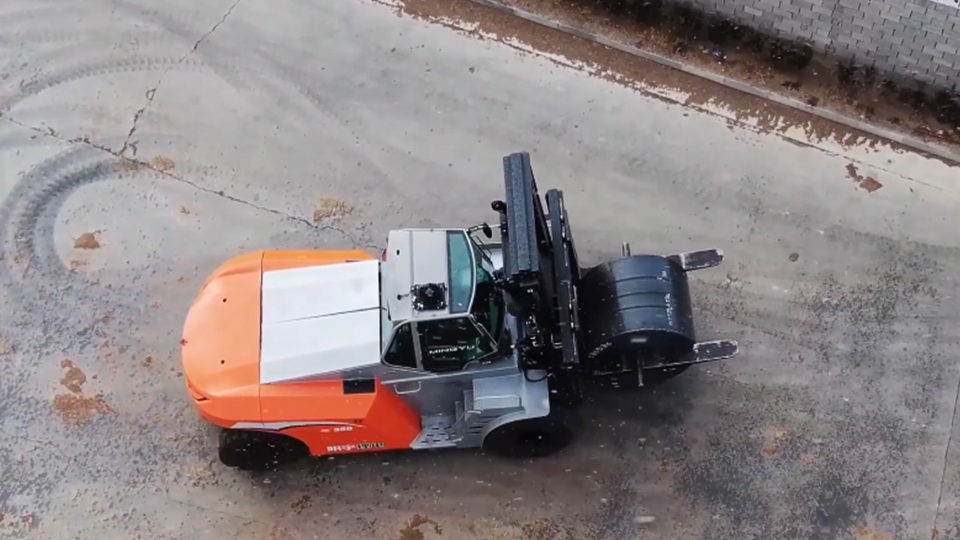
Organizations with established maintenance departments capable of handling these requirements may achieve significant cost savings through ownership. Conversely, organizations lacking technical expertise or preferring to focus internal resources on core competencies may find that rental arrangements, with included maintenance services, offer superior value despite higher apparent costs.
Regulatory and Environmental Considerations
Environmental regulations increasingly favor electric material handling equipment. Indoor air quality standards restrict internal combustion engine operation in many warehouse environments, and emissions regulations continue to tighten for outdoor applications as well. Carbon reduction commitments and sustainability reporting requirements create additional pressure to electrify operations.
Organizations with strong environmental, social, and governance commitments may find that rental arrangements complicate sustainability reporting, as equipment emissions and energy consumption may be attributed differently depending on contract structures. Ownership provides clearer accountability for environmental performance and may facilitate investments in renewable energy integration with charging infrastructure.
Additionally, emerging regulations regarding battery disposal and recycling may impose future costs and compliance obligations on equipment owners. Rental arrangements may transfer these responsibilities to providers with greater expertise and scale in battery lifecycle management.
Risk Assessment and Mitigation
Financial Risk Profiles
The rent-versus-buy decision fundamentally involves different risk allocations between the equipment user and provider. Ownership concentrates risks related to equipment residual value, maintenance cost variability, technological obsolescence, and utilization fluctuations. These risks may be acceptable for organizations with stable operations, strong financial positions, and long-term strategic commitments to material handling capabilities.
Rental arrangements distribute these risks to equipment providers in exchange for premium pricing. However, rental agreements introduce their own risks, including rate escalation at renewal, equipment availability constraints during peak demand periods, and contractual obligations that may prove burdensome if operational requirements change. Organizations must carefully evaluate contract terms, including maintenance responsibilities, damage provisions, early termination clauses, and renewal options.
Business Continuity Considerations
Equipment reliability directly impacts operational continuity and customer service levels. Ownership provides maximum control over maintenance schedules, spare parts inventory, and repair prioritization. Organizations with critical operations may prefer ownership to ensure immediate response to equipment failures and maintain direct relationships with parts suppliers and service technicians.
Rental arrangements may introduce response time risks if equipment failures require provider intervention for repair or replacement. However, major rental providers typically offer guaranteed response times and replacement equipment, potentially providing more reliable service than smaller organizations can self-provide. The geographic proximity of rental provider facilities and the availability of backup equipment should be evaluated as part of vendor selection.
Decision Framework and Implementation
Quantitative Analysis Methodology
Organizations should approach the rent-versus-buy decision through structured quantitative analysis incorporating net present value calculations, sensitivity analysis, and scenario planning. The analysis should establish a baseline comparison using consistent assumptions for utilization rates, holding periods, maintenance costs, energy costs, and discount rates.
Key variables requiring careful estimation include expected equipment lifespan, annual operating hours, maintenance cost trajectories, energy cost trends, and residual values. Sensitivity analysis should examine how changes in these variables affect the relative attractiveness of renting versus buying, identifying threshold values where the optimal decision changes.
Scenario planning should incorporate alternative future states, including demand growth or contraction, technological disruption, regulatory changes, and economic conditions. Decision-makers should evaluate which alternative performs better across multiple scenarios rather than optimizing for a single expected outcome.
Qualitative Strategic Assessment
Beyond quantitative analysis, organizations must evaluate qualitative factors aligned with strategic objectives. These include organizational core competencies, management bandwidth, capital allocation priorities, risk tolerance, and competitive positioning. Organizations prioritizing operational excellence and vertical integration may naturally gravitate toward ownership, while those emphasizing capital efficiency and strategic flexibility may prefer rental arrangements.
The decision should also consider organizational learning and capability development. Owning and maintaining electric forklifts builds internal expertise that may prove valuable as electrification expands to other equipment categories and automation integration deepens. Conversely, rental arrangements allow organizations to observe provider practices and benchmark performance before committing to ownership.
Hybrid Approaches
Many organizations find that pure rental or pure ownership strategies prove suboptimal. Hybrid approaches combining a core owned fleet with supplemental rental capacity often provide the optimal balance of capital efficiency, operational flexibility, and cost control. This approach maintains owned equipment for baseline demand while utilizing rentals for seasonal peaks, new facility startups, equipment failures, and evaluation of new technologies or specifications.
Implementing a hybrid strategy requires sophisticated fleet management capabilities, including demand forecasting, utilization monitoring, and dynamic deployment decisions. Organizations must establish clear criteria for determining which equipment categories and operational roles justify ownership versus rental, with regular review as market conditions and organizational requirements evolve.
Conclusion
The decision between renting and buying electric forklifts lacks a universal correct answer, depending instead on organizational-specific factors including financial position, operational characteristics, strategic priorities, and risk tolerance. Electric forklift technology has matured sufficiently to justify serious consideration of ownership for organizations with stable demand, available capital, and maintenance capabilities. Simultaneously, rental markets have developed the scale and sophistication to offer compelling value for organizations prioritizing flexibility, risk transfer, and capital efficiency.
Successful decision-making requires rigorous quantitative analysis incorporating total cost of ownership, net present value comparisons, and sensitivity testing, complemented by qualitative strategic assessment of organizational capabilities and objectives. As the material handling industry continues its electrification trajectory, organizations must develop systematic approaches to this decision, recognizing that optimal strategies may evolve as technologies advance, markets mature, and business requirements change.
The organizations that thrive will be those treating equipment acquisition strategy not as a one-time procurement decision but as an ongoing capability requiring regular reassessment, performance monitoring, and adaptive adjustment. Whether through ownership, rental, or hybrid arrangements, the ultimate objective remains consistent: deploying material handling resources that enable operational excellence, financial performance, and strategic resilience in an increasingly dynamic business environment.
Name: selena
Mobile:+86-13176910558
Tel:+86-0535-2090977
Whatsapp:8613181602336
Email:vip@mingyuforklift.com
Add:Xiaqiu Town, Laizhou, Yantai City, Shandong Province, China
