
vip@mingyuforklift.com
+86-0535-2090977

Abstract
Small-scale processing plants and e-commerce fulfillment centers operate under fundamentally different economic constraints than large manufacturing conglomerates or national distribution networks. Capital equipment decisions in these environments must balance immediate operational necessity against limited budgets, volatile demand patterns, and space constraints. This article examines economically optimized forklift strategies tailored to small processing facilities and e-commerce warehouses, analyzing acquisition models, equipment specifications, operational workflows, and total cost of ownership frameworks that maximize material handling capability while preserving financial flexibility.
1. The Economic Imperative in Compact Operations
Small processing plants—whether engaged in food preparation, light assembly, metal fabrication, or textile finishing—typically handle diverse SKU mixes with irregular inbound and outbound flows. E-commerce warehouses, by contrast, manage high-velocity, small-cube inventory with extreme seasonality and returns processing complexity. Despite operational differences, both share common economic constraints: limited capital reserves, restricted floor space, multi-role staffing requirements, and sensitivity to cash flow disruption.
In these contexts, forklift procurement cannot follow the fleet standardization models of large enterprises. Instead, economical solutions demand strategic compromise: selecting equipment that handles 80% of tasks adequately rather than optimizing for edge cases, leveraging flexible acquisition structures, and prioritizing reliability over technological sophistication. The goal is not to minimize purchase price alone, but to minimize the total cost of functional material handling over the operational horizon.
2. Operational Profiling: Small Processing Plants
Small processing plants exhibit material handling patterns distinct from bulk manufacturing. Raw material inputs are often heterogeneous—bags of ingredients, drums of chemicals, rolls of fabric, or crates of components—arriving in mixed lot sizes. Production flows are typically batch-oriented rather than continuous, with frequent changeovers that reposition equipment and inventory. Finished goods may range from palletized cartons to irregularly shaped assemblies.
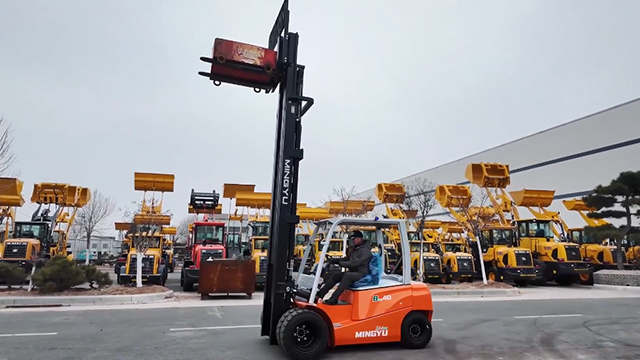
These characteristics impose specific forklift requirements. Maneuverability in congested production areas often outweighs raw lifting capacity. The ability to navigate between processing stations, storage areas, and shipping docks with minimal aisle width becomes critical. Additionally, hygiene and contamination concerns in food or pharmaceutical processing may necessitate washdown-capable equipment or smooth-surface designs that resist particle accumulation, adding cost complexity that must be managed economically.
3. Operational Profiling: E-commerce Warehouses
E-commerce fulfillment operations present a different economic puzzle. Inventory turnover rates are exceptionally high, with some facilities processing entire stock rotations monthly. Order profiles favor piece-picking and case-picking over full-pallet movements, yet palletized inbound receipts and outbound shipping consolidation still require counterbalance or pallet jack capability. Seasonal peaks—such as holiday shopping surges—can increase volume threefold, creating temporary capacity requirements that do not justify year-round fleet expansion.
The economics of e-commerce material handling are further complicated by returns processing. Reverse logistics consumes significant labor and equipment time, often handling individual items rather than palletized loads. This creates demand for low-cost, versatile equipment capable of both bulk pallet movements and loose carton transport. Space efficiency is paramount, as e-commerce operators typically lease warehouse space at premium rates per square meter, making compact equipment and dense storage configurations financially attractive.
4. Equipment Category Selection: Matching Function to Cost
Economical forklift selection begins with honest assessment of actual task requirements rather than aspirational capability.
Manual and Semi-Electric Pallet Jacks: For small processing plants and micro-fulfillment e-commerce operations, manual hydraulic pallet jacks remain the most economically rational solution for horizontal pallet movement over short distances. Load capacities of 2.0 to 2.5 tons handle standard palletized inputs, while acquisition costs remain under a few hundred dollars. Semi-electric variants, incorporating electric drive with manual lift, reduce operator strain for frequent movements at modest cost premiums. These tools eliminate fuel, charging infrastructure, and licensing complexity in many jurisdictions.
Electric Walkie Stackers: When vertical stacking is required but operator riding is unnecessary, walk-behind stackers offer economical lift capability up to 3.0 meters or more. These units suit small processing plants with limited racking and e-commerce operations performing replenishment of pick locations. Compared to rider forklifts, walkie stackers cost significantly less, require narrower aisles, and reduce the training burden. However, their travel speed and endurance limit them to localized operations.
Three-Wheel Electric Counterbalance Forklifts: For operations requiring both horizontal transport and vertical stacking with operator riding, three-wheel electric counterbalance trucks represent the economical sweet spot. Their compact turning radius—often under 2.0 meters—enables operation in aisles as narrow as 3.2 meters, reducing the opportunity cost of warehouse space. Capacities of 1.5 to 1.8 tons suffice for most small plant and e-commerce pallet handling, while electric power eliminates fuel costs and indoor emissions concerns.
Used and Refurbished Equipment: The secondary market offers substantial savings for budget-constrained operations. Late-model refurbished forklifts from reputable dealers typically cost 40-60% less than new equipment while retaining operational life sufficient for moderate-duty applications. For small processing plants with single-shift operations, a well-maintained used forklift may deliver a decade of service. E-commerce warehouses should exercise greater caution with used equipment due to higher utilization rates, but refurbished units with warranty coverage remain viable for secondary or peak-season roles.
5. Acquisition Model Economics
The decision to purchase, lease, or rent forklifts carries profound implications for small operations.
Outright Purchase: Capital purchase maximizes long-term value for stable, single-shift operations with predictable demand. Small processing plants with established customer bases and consistent material flows often benefit from ownership, particularly when acquiring used equipment. Depreciation, maintenance control, and absence of ongoing obligations support this model. However, purchase ties up capital that might otherwise fund inventory or expansion.
Operating Leases: For e-commerce warehouses experiencing growth uncertainty or seasonal volatility, operating leases preserve capital and provide flexibility to upgrade equipment as operations scale. Lease payments are typically tax-deductible operating expenses, improving cash flow presentation. At lease end, the operator returns the equipment without residual value risk. This model suits operations where technological obsolescence or capacity changes are likely within three to five years.
Short-Term Rental: Seasonal e-commerce peaks, temporary processing contracts, or equipment downtime coverage justify short-term rentals. Daily or weekly rates are high on a per-unit basis, but the absence of long-term commitment makes rental the most economical solution for intermittent need. Many small plants maintain a core owned fleet supplemented by rental units during maintenance periods or demand spikes.
6. Power Source Cost Analysis
Electric forklifts have achieved economic dominance in small indoor operations, but the analysis merits nuance.
Lead-Acid Battery Economics: The lowest upfront cost among electric options, lead-acid powered forklifts require significant infrastructure: charging stations, battery changing equipment, and ventilation for charging areas. For single-shift operations, opportunity charging during breaks may suffice, eliminating battery change-out. However, battery replacement every 3-5 years adds substantial lifecycle cost that must be amortized in economic planning.
Lithium-Ion Transition: While lithium-ion batteries command premium upfront pricing, their total cost of ownership is increasingly favorable for high-utilization e-commerce operations. Faster charging, opportunity charging capability, longer cycle life, and elimination of battery maintenance reduce operational disruption. For small processing plants with lower utilization, the economic case for lithium-ion is less compelling unless local electricity rates or maintenance labor costs are particularly high.
Propane Alternatives: In regions with unreliable electrical infrastructure or for operations requiring occasional outdoor use, propane forklifts offer economic flexibility. They eliminate charging downtime and infrastructure investment, though fuel costs and ventilation requirements must be factored. For very small operations with intermittent forklift use, propane may remain the lowest total-cost solution despite declining popularity.
7. Space Optimization and Aisle Economics
Real estate costs represent a significant portion of operating expenses for both small plants and e-commerce warehouses, making space-efficient forklift selection economically consequential.
Narrow Aisle Configurations: By selecting forklifts capable of operating in reduced aisle widths, operators can increase storage density or free floor space for production or picking. Reach trucks and stand-up counterbalance units enable aisle reductions from standard 3.8 meters to 2.7-3.0 meters, potentially increasing storage capacity 20-30% without facility expansion. For leased e-commerce facilities, this translates directly to delayed necessity for larger premises.
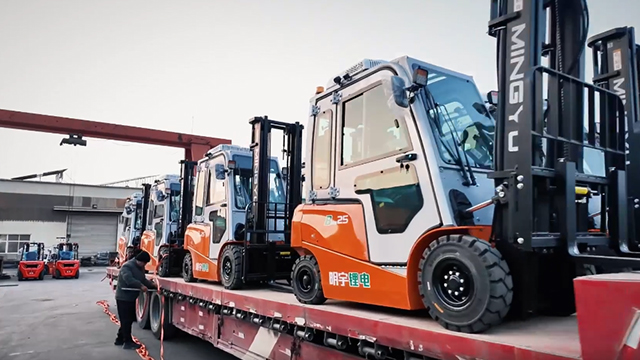
Stacking Height Optimization: Small operations often underutilize vertical space due to inappropriate equipment. Economical reach trucks or mast-equipped stackers that safely utilize 4.5 to 6.0 meter racking heights effectively multiply warehouse capacity. The incremental cost of appropriately specced lifting equipment is typically recovered within months through deferred real estate expansion.
8. Attachment Strategy: Essential vs. Optional
Attachments extend capability but add cost and maintenance complexity. Economical operations must distinguish essential from optional accessories.
For small processing plants, a basic side-shift attachment may justify its cost by reducing pallet repositioning time and product damage. Carton clamps or drum handlers should only be acquired when handling volumes justify dedicated equipment; otherwise, manual methods or rental attachments for specific projects prove more economical.
E-commerce warehouses benefit from fork extensions for handling oversized inbound shipments, but these should be easily removable to avoid maneuverability penalties in standard operations. Layer pickers and push-pull systems represent high-cost attachments that only become economical at substantial volume thresholds.
9. Technology Integration on a Budget
Advanced forklift technologies—telemetrics, automation, fleet management systems—carry costs that may exceed small operation budgets. However, selective integration can yield economic returns.
Basic Fleet Tracking: Low-cost GPS or RFID-based location systems prevent equipment loss in shared facilities and provide utilization data to right-size fleets. Many small operations discover through basic tracking that their perceived need for additional forklifts is actually a need for better equipment location and scheduling.
Impact Monitoring: Simple accelerometer-based impact sensors reduce damage to racking, product, and infrastructure. For e-commerce operations handling high-value consumer goods, a single prevented rack collapse or product damage incident often covers the sensor investment.
Operator Access Controls: Keypad or proximity-card ignition systems prevent unauthorized use and enable operator accountability. These systems are inexpensive to retrofit and reduce insurance premiums, damage rates, and maintenance costs associated with untrained operation.
10. Maintenance Economics and Reliability
Unplanned downtime imposes disproportionate costs on small operations lacking redundant equipment. Economical maintenance strategies prioritize prevention over repair.
Planned Maintenance Contracts: For operations without in-house mechanical expertise, dealer maintenance contracts convert variable repair costs into predictable fixed expenses. These contracts often include priority service response, reducing downtime duration. The economic value is highest for operations where forklift failure would halt production or shipping.
Operator-Driven Maintenance: Daily pre-operation checks, proper battery watering and charging protocols, and immediate reporting of anomalies prevent minor issues from cascading into major repairs. Training operators as equipment stewards rather than mere drivers represents minimal investment with substantial reliability returns.
Parts Standardization: Where possible, standardizing on common forklift platforms simplifies spare parts inventory and technician familiarity. Small operations should avoid exotic or discontinued models regardless of attractive purchase pricing, as parts availability and service expertise directly impact uptime economics.
11. Safety and Regulatory Compliance
Safety violations and accidents generate costs—fines, insurance increases, lost productivity, liability exposure—that far exceed preventive investment. Economical safety solutions focus on high-impact, low-cost measures.
Operator Training and Certification: Proper training is non-negotiable and represents minimal cost compared to accident consequences. Online theoretical components combined with practical evaluation reduce training expenses without compromising safety outcomes. Cross-training employees on forklift operation provides staffing flexibility that supports smaller fleets.
Pedestrian Safety Systems: Blue spotlights, backup alarms, and convex mirrors are inexpensive additions that dramatically reduce collision risk in congested small facilities. Physical barriers separating forklift routes from pedestrian areas, even if implemented as painted lines or removable bollards, provide safety enhancement at negligible cost.
Load Stability and Visibility: Economical solutions such as load backrests, overhead guards, and mirror systems address common accident precursors without premium technology expenditure.
12. Scalability and Future-Proofing
Economic rationality requires considering future operational evolution. Small processing plants may expand product lines or volumes; e-commerce warehouses may add SKUs, channels, or fulfillment models.
Modular Fleet Philosophy: Rather than purchasing maximum-capacity units for projected future needs, economical operators acquire equipment suited to current requirements with resale or trade-in pathways. Electric forklifts with upgradeable battery systems or software-configurable performance settings adapt to changing demands without full replacement.
Rental Relationships: Establishing relationships with rental providers before peak seasons ensures equipment availability and preferential rates. For e-commerce operations, pre-negotiated seasonal rental agreements provide capacity elasticity without capital commitment.
13. Conclusion
Economical forklift solutions for small processing plants and e-commerce warehouses reject the premise that material handling excellence requires premium expenditure. Instead, they embrace strategic constraint: selecting equipment that matches actual rather than imagined requirements, acquiring through financial structures that preserve operational flexibility, and maintaining through protocols that maximize uptime over glamour.
The most economically successful small operations treat forklifts as tools of cash flow rather than symbols of scale. They invest in reliability and operator competence rather than excessive capacity. They leverage vertical space and narrow aisles to defer real estate costs. And they recognize that in environments where every capital dollar competes with inventory, marketing, and payroll, the best forklift is not the most powerful or technologically advanced, but the one that moves materials reliably at the lowest total cost of ownership.
As e-commerce continues to fragment into micro-fulfillment models and small processing plants adapt to batch-of-one customization trends, the economic logic of right-sized, flexible material handling equipment only intensifies. The winners in these spaces will be those who master the discipline of economical capability—handling exactly what they need to handle, exactly when they need to handle it, at exactly the cost their business model can sustain.
Name: selena
Mobile:+86-13176910558
Tel:+86-0535-2090977
Whatsapp:8613181602336
Email:vip@mingyuforklift.com
Add:Xiaqiu Town, Laizhou, Yantai City, Shandong Province, China