
vip@mingyuforklift.com
+86-0535-2090977

The material handling industry stands at a decisive crossroads in 2026. With electric forklifts now capturing approximately 67.73% of global shipments, lithium-ion battery technology achieving unprecedented energy densities, and environmental regulations tightening across major markets, fleet managers face increasingly complex procurement decisions. For operations where fuel efficiency directly impacts the bottom line, the choice between diesel, electric, and propane powertrains demands rigorous technical analysis beyond manufacturer specifications. This article examines the thermodynamic, operational, and economic realities that determine which powertrain truly serves fuel-conscious operations.
The Thermodynamic Hierarchy: Why Physics Favors Electrification
To evaluate fuel efficiency objectively, one must first understand the fundamental energy conversion efficiencies governing each powertrain technology. These efficiencies are not marketing claims but physical limits imposed by thermodynamic laws and engineering realities.
Diesel internal combustion engines achieve peak brake thermal efficiencies of approximately 25-30%. This means 70-75% of the chemical energy in diesel fuel is lost as waste heat through exhaust, cooling systems, and internal friction before any useful work reaches the wheels or hydraulic pump. The Diesel thermodynamic cycle imposes a hard Carnot efficiency ceiling that no engineering refinement can overcome. In forklift applications, where engines operate predominantly at partial load and endure frequent transient cycles, real-world efficiency typically falls below 25%.
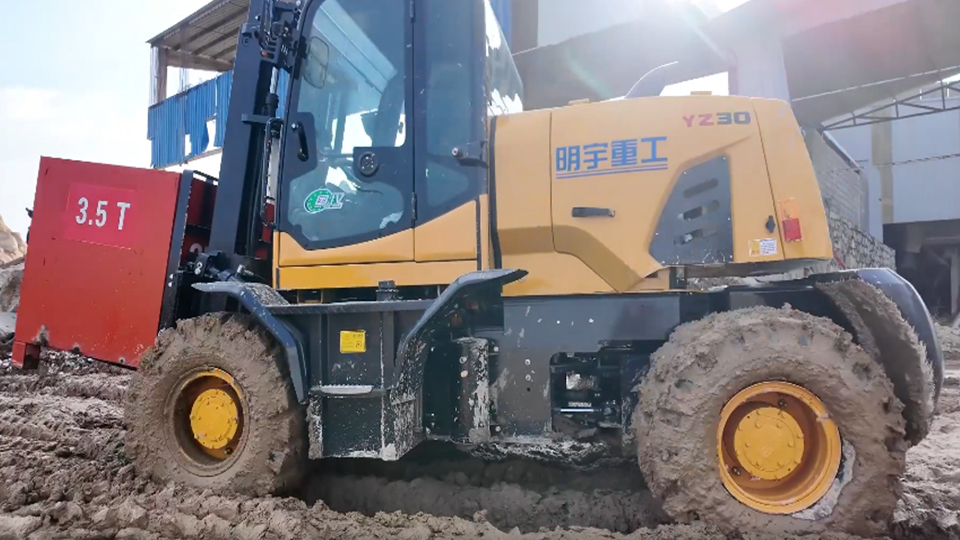
Propane (liquefied petroleum gas) engines operate on the Otto cycle and achieve even lower peak efficiencies of 20-25%. Propane's lower energy density per unit volume and the spark-ignition cycle's lower compression ratios result in inherently less efficient combustion compared to diesel compression ignition. Additionally, propane engines in forklifts are typically derived from gasoline engine architectures with modifications for gaseous fuel, rather than purpose-built designs optimized for efficiency.
Electric drivetrains utilizing AC induction or permanent magnet synchronous motors routinely achieve 90-95% efficiency across their operating range. The energy conversion involves direct electromagnetic interaction without combustion, exhaust heat rejection, or cooling system thermal losses. When combined with modern lithium-ion battery systems charging at 90-95% efficiency and power electronics achieving 95-98% efficiency, the cumulative energy chain efficiency dwarfs that of any internal combustion alternative.
The disparity becomes stark when quantified under standardized VDI 2198 test conditions simulating realistic warehouse duty cycles. Diesel forklifts consume approximately 9.92 times more energy per operational cycle than equivalent battery-electric models when measured in watt-hours. Propane forklifts fare even worse due to their lower thermodynamic efficiency and the additional energy required for fuel vaporization. On a cost basis, diesel forklifts are approximately 9.65 times more expensive per cycle to operate than electric equivalents.
Propane: The Overlooked Inefficient Alternative
Propane forklifts occupy a curious position in the material handling market—often marketed as a "clean" alternative to diesel while simultaneously suffering from even greater energy inefficiency. The propane forklift's fuel system requires energy to maintain fuel in liquid state under pressure, and the fuel must be vaporized before combustion, consuming additional thermal energy that would otherwise contribute to useful work.
Propane contains approximately 25.3 MJ per liter of energy, compared to diesel's 35.8 MJ per liter. While propane combustion produces fewer particulate emissions than diesel, the lower energy density means more fuel volume must be consumed to accomplish equivalent work. A propane forklift typically consumes 1.2 to 1.5 times more fuel by energy content than a diesel equivalent performing the same task. When combined with the propane engine's lower thermal efficiency, the total energy consumption disadvantage versus electric forklifts exceeds 12:1.
The operational characteristics of propane forklifts further amplify their inefficiency. Like diesel engines, propane engines suffer from poor partial-load efficiency, complete energy loss during deceleration (no regenerative braking), and substantial idle fuel consumption. A propane forklift idling for 2-3 hours per shift consumes 2-4 liters of propane per hour with zero productive output—energy expenditure that electric forklifts simply do not incur.
The Duty Cycle Reality: Where Inefficiencies Multiply
Material handling operations follow inherently intermittent duty cycles characterized by frequent acceleration, deceleration, lifting, lowering, and idle periods. These patterns expose the fundamental weaknesses of internal combustion engines while highlighting the inherent strengths of electric drivetrains.
Acceleration losses represent a critical efficiency differential. Diesel and propane engines operate at low RPM and high torque demand during startup—a regime characterized by incomplete combustion, elevated fuel consumption, and increased emissions. All kinetic energy invested in acceleration is subsequently dissipated as heat through friction brakes during deceleration, representing 100% energy loss. Electric motors deliver maximum torque from zero RPM, eliminating the inefficient startup regime, and regenerative braking systems recover 20-30% of kinetic energy during deceleration, returning it to the battery for reuse.
Idle consumption constitutes perhaps the most egregious waste in internal combustion forklifts. Diesel engines consume 0.5-1.5 liters per hour at idle; propane engines consume 1.5-3 liters per hour. Over a typical 8-hour shift with 2-3 hours of idle time, this represents 1-4.5 liters of diesel or 3-9 liters of propane consumed with absolutely no material handling output. Electric forklifts consume negligible energy during idle periods—only the minimal power required for control electronics, typically less than 100 watts.
Hydraulic parasitic loads further differentiate the technologies. Diesel and propane forklifts typically employ engine-driven hydraulic pumps that operate continuously whenever the engine runs, regardless of whether lifting occurs. This constant parasitic load consumes fuel even when forks are stationary. Electric forklifts utilize on-demand electric hydraulic pumps activating only when lifting or lowering is required, eliminating parasitic energy consumption during non-lifting periods.
Quantified Energy Economics: A Three-Way Comparison
Real-world energy consumption data reveals the magnitude of efficiency differences across powertrain technologies. Consider a standard 3.5-ton capacity forklift operating 2,000 hours annually in a distribution center environment:
表格
Powertrain Hourly Energy Input Annual Energy Input Energy Cost (2026) Annual Energy Cost
Diesel 6.35 L/hr (68 kWh chemical) 12,700 L (136,000 kWh) $1.20-2.80/L $15,240-35,560
Propane 7.5 L/hr (52 kWh chemical) 15,000 L (318,000 kWh) $0.80-1.50/L $12,000-22,500
Electric 6.88 kWh electrical 13,760 kWh electrical $0.08-0.15/kWh $1,100-2,060
The propane forklift's apparent cost advantage over diesel stems from lower fuel pricing rather than superior efficiency. By energy content, propane forklifts consume approximately 2.3 times more primary energy than electric models, compared to diesel's 9.9-fold disadvantage. However, when total cost of ownership is considered—including maintenance, downtime, and infrastructure—electric forklifts maintain overwhelming economic advantages.
Propane forklifts incur maintenance costs comparable to diesel models—$1.50-3.00 per operating hour—due to engine oil changes, spark plug replacements, fuel system maintenance, and exhaust system servicing. Electric forklift maintenance costs range from $0.50-1.00 per hour, primarily involving brake inspections, hydraulic system checks, and periodic battery management system updates.
The Weight and Packaging Penalty
Energy consumption per task correlates directly with the mass that must be accelerated and moved. Diesel powertrains add 300-500 kg of engine, fuel tank, exhaust aftertreatment, and cooling system weight compared to electric equivalents. Propane systems add 200-400 kg including the fuel tank, pressure regulator, and vaporizer. This additional mass must be accelerated during every travel cycle and lifted during grade traversal, increasing energy required per task.
The fuel itself represents a variable weight penalty. A full diesel tank (60-100 liters) adds 50-80 kg; a full propane tank (40-60 liters) adds 20-35 kg. While these weights decrease during shift operation, they impose energy costs during initial hours. Electric forklift battery weight remains constant throughout the discharge cycle, and modern lithium iron phosphate systems can be distributed low in the chassis, improving stability and reducing maneuvering energy.
Infrastructure and Hidden Energy Costs
Evaluating fuel efficiency requires examination beyond the forklift itself to the complete energy infrastructure. Diesel fuel must be refined from crude oil—an energy-intensive process consuming 15-20% of the crude's energy content—transported to distribution points, stored on-site, and pumped into vehicles. Each step introduces energy losses and environmental externalities.
Propane requires compression and liquefaction at approximately 1.7 MPa, consuming substantial energy for processing and storage. The fuel must be transported under pressure, stored in certified tanks, and vaporized before combustion. These infrastructure energy costs are typically externalized from operational accounting but represent real energy expenditures that diminish propane's apparent efficiency.
Electric forklifts benefit from direct grid connection. Even when grid electricity derives from fossil fuel generation, large-scale power plants achieve 40-60% thermal efficiency—substantially higher than small forklift engines. As renewable energy penetration increases globally, the upstream energy efficiency of electric forklifts improves automatically without equipment modification. Diesel and propane forklifts remain permanently tethered to the carbon intensity and energy losses of liquid and gaseous fossil fuel supply chains.
Edge Cases and Dimishing Exceptions
Specific operational scenarios might superficially favor internal combustion powertrains, though these exceptions are rapidly diminishing as technology advances.
Extreme cold environments historically disadvantaged electric forklifts due to lithium-ion battery capacity reduction at sub-zero temperatures. However, modern battery thermal management systems with integrated heating circuits maintain optimal operating temperatures down to -20°C and below. The energy required for battery heating is minimal compared to the fuel consumed by diesel engines idling for warmth or propane systems struggling with fuel vaporization in cold conditions.
Continuous 24/7 operations without charging infrastructure might appear to favor diesel or propane due to rapid refueling. A diesel or propane forklift refuels in approximately 5 minutes versus 30-60 minutes for substantial battery charging. However, this operational convenience masks massive energy inefficiency. The appropriate solution is battery swap systems or opportunity charging infrastructure that maintains electric operation without accepting the energy penalty of internal combustion.
Remote locations with unreliable grids might necessitate propane as a pragmatic choice where diesel emissions are problematic and electricity is unavailable. However, this represents an infrastructure limitation rather than a genuine efficiency advantage. Solar-powered charging stations and portable battery systems increasingly enable electric operation in off-grid environments.
Maintenance-Related Efficiency Degradation
Energy consumption of internal combustion forklifts increases substantially over their service life due to engine wear, whereas electric forklifts maintain consistent efficiency. Diesel engines with 5,000 operating hours typically consume 10-15% more fuel per task than when new due to cylinder bore wear, ring sealing degradation, injector nozzle wear, and turbocharger performance decline. Propane engines suffer similar degradation plus valve seat recession and spark plug fouling unique to gaseous fuel operation.
Electric motors, having no combustion process and minimal wear mechanisms, maintain 90-95% efficiency over hundreds of thousands of hours. Battery capacity fade reduces range but does not affect motor efficiency per task. Modern lithium-ion batteries retain 80% of original capacity after 3,000-5,000 equivalent cycles, ensuring consistent performance over 5-7 year service life.
Environmental Externalities and Regulatory Economics
While focused on fuel efficiency, the environmental implications increasingly affect operational economics through regulatory mechanisms. Diesel forklifts produce approximately 17 kg CO₂ per operating hour; propane forklifts produce approximately 15 kg CO₂ per hour (lower carbon content but higher consumption). Electric forklifts produce 3-6 kg CO₂ per hour depending on grid emission factors, with this figure declining as grids decarbonize.
Carbon pricing, emissions trading schemes, and indoor air quality regulations are internalizing these externalities into operational costs. Many jurisdictions now impose substantial penalties on diesel emissions or outright bans on diesel equipment in enclosed environments. Propane, while producing fewer particulates than diesel, generates comparable CO₂ emissions and faces increasing regulatory scrutiny as methane leakage concerns mount.
The Verdict for Fuel-Conscious Operations
For operations where fuel efficiency is a genuine priority, the technical evidence establishes an unambiguous hierarchy: electric forklifts dominate, propane forklifts offer marginal cost advantages at substantial efficiency penalties, and diesel forklifts represent the least efficient option despite their historical market dominance.
The 9.9-fold energy consumption advantage of electric over diesel, and the 12-fold advantage over propane by primary energy content, reflect fundamental physical realities that no marketing claims or operational adaptations can overcome. The intermittent duty cycles, frequent idle periods, and stop-start operational patterns characteristic of material handling amplify the inherent thermodynamic advantages of electric drivetrains while exposing the inefficiencies of internal combustion.
Propane forklifts occupy a particularly problematic position—marketed as a cleaner alternative to diesel while actually consuming more energy per task and incurring comparable maintenance costs. Their only genuine advantage lies in indoor emissions profiles superior to diesel, but this benefit is increasingly irrelevant as electric forklifts eliminate emissions entirely while delivering superior efficiency.
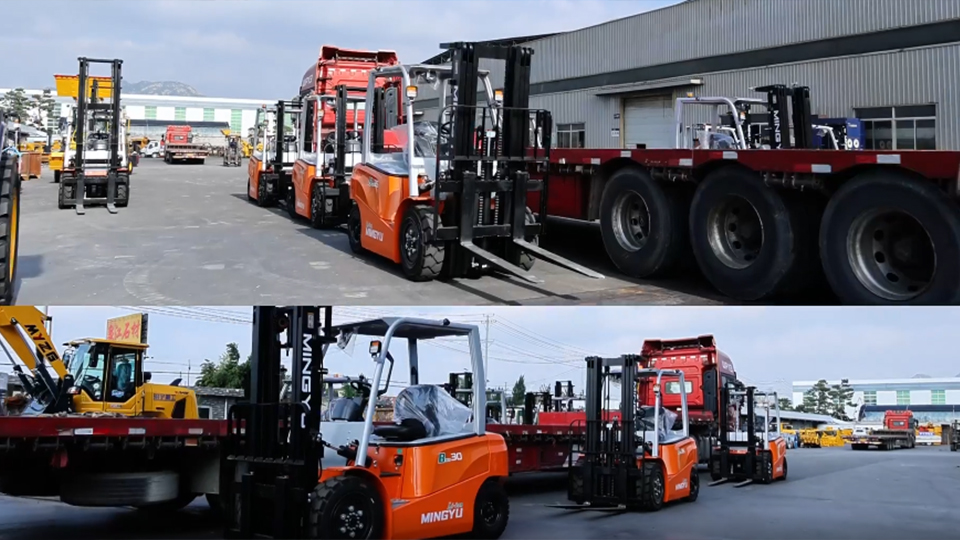
Fleet managers evaluating powertrain options in 2026 must recognize that fuel efficiency is not merely an operational cost consideration but a strategic competitive advantage. The substantial energy cost differential—$6,000-16,000 annually per forklift for diesel versus electric, and $4,000-12,000 for propane versus electric—compounds rapidly across multi-vehicle fleets operating multiple shifts. For a twenty-forklift fleet, annual energy savings from electrification range from $120,000 to $320,000, excluding maintenance cost reductions and productivity improvements from reduced downtime.
The material handling industry's accelerating shift toward electrification is not a regulatory compliance exercise or environmental virtue signaling. It is a rational economic response to thermodynamic realities that make diesel and propane forklifts permanently and inherently less fuel-efficient than electric alternatives. For fuel-conscious operations, the question is no longer which powertrain is most efficient, but how quickly the transition to electric can be completed to capture the substantial and growing efficiency advantages that electrification provides.
Name: selena
Mobile:+86-13176910558
Tel:+86-0535-2090977
Whatsapp:8613181602336
Email:vip@mingyuforklift.com
Add:Xiaqiu Town, Laizhou, Yantai City, Shandong Province, China
