
vip@mingyuforklift.com
+86-0535-2090977

Introduction
For fleet managers, warehouse supervisors, and procurement officers, one of the most critical operational questions is deceptively simple: How many shifts can a diesel forklift run on a full tank? Yet the answer is anything but straightforward. It depends on a matrix of variables—engine displacement, tank capacity, load intensity, operator behavior, and environmental conditions—that interact in complex ways to determine operational autonomy. Understanding these dynamics is essential not only for shift planning and refueling logistics but also for total cost of ownership (TCO) calculations, carbon footprint assessments, and competitive benchmarking against electric alternatives.
This article provides a comprehensive technical analysis of diesel forklift fuel autonomy, examining the engineering principles behind fuel consumption, the operational variables that extend or curtail runtime, and the mathematical models fleet managers can use to predict shifts-per-tank with precision. We will explore everything from VDI 2198 standardized testing protocols to real-world duty cycles, from 2.5-ton compact models to 10-ton heavy-duty workhorses, and from temperate warehouse floors to unforgiving construction sites.
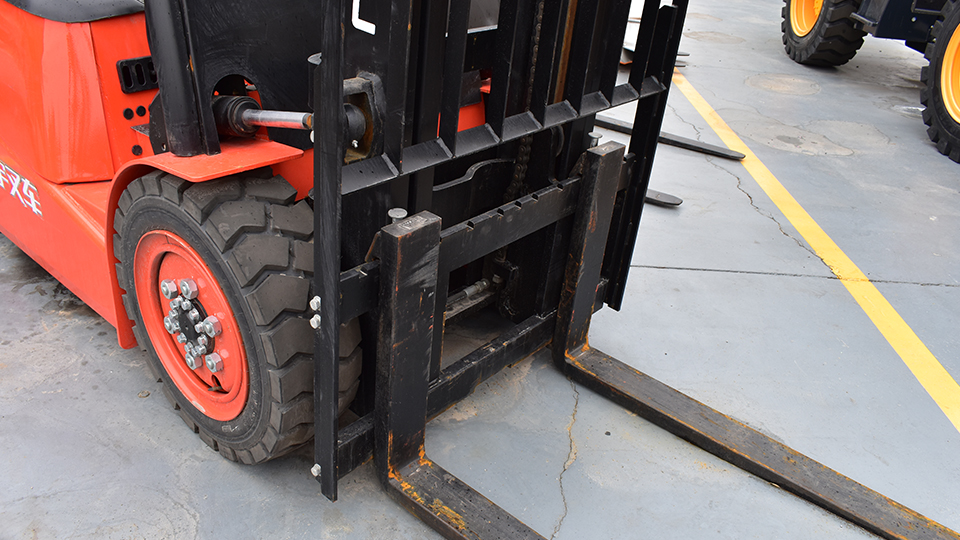
The Fundamentals: Fuel Tank Capacity and Engine Architecture
Before calculating shifts, we must understand the hardware. Diesel forklifts are equipped with fuel tanks sized to match their intended operational profile. According to industry data, standard diesel forklifts feature tanks ranging from 60 to 150 liters, with compact models (1.5–2.5 tons) typically at the lower end and heavy-duty industrial units (7+ tons) at the upper end []. For context, a standard 3.5-ton diesel forklift—the most common class in manufacturing and logistics—usually carries a 60–80 liter tank [].
Engine architecture fundamentally dictates how quickly that tank depletes. Modern diesel forklifts employ either naturally aspirated or turbocharged inline-four diesel engines, typically displacing 2.0 to 4.5 liters and producing 35–120 kW of power []. Turbocharged engines, while delivering higher torque for heavy lifting, can actually improve fuel efficiency under load through better combustion chamber scavenging. Common rail direct injection systems, now standard on Tier 4 Final and Euro 5/6 compliant models, optimize fuel atomization and injection timing, reducing specific fuel consumption (SFC) to approximately 190–220 g/kWh at rated power—comparable to automotive diesel engines but achieved under far more variable load conditions.
The fuel system itself is designed for industrial durability. Steel tanks predominate in heavy-duty applications for impact resistance, though some manufacturers use high-density polyethylene for corrosion resistance in chemical environments. Locking fuel caps have become standard to prevent theft—a non-trivial concern when diesel prices exceed $1.20/liter in many markets []. Fuel lines are typically routed through protected chassis channels, and water separators with integrated heaters prevent fuel gelling in sub-zero operations.
Fuel Consumption Rates: The VDI 2198 Standard vs. Reality
To compare forklifts objectively, the industry relies on VDI 2198, the German Engineering Association's standardized duty cycle test. In this protocol, a forklift completes 60 intensive cycles per hour—traveling 30 meters, lifting a rated load to 2 meters, reversing, and returning to start—while fuel consumption is precisely measured []. The resulting "VDI 60" figure appears on every manufacturer's specification sheet.
However, the VDI 60 figure represents a worst-case intensity that few real-world operations match. Research and field data reveal the following consumption ranges by capacity class under standard working conditions:
Forklift Class Capacity Fuel Consumption (L/h) Typical Tank (L) VDI 60 Runtime (h)
Compact 1.5–2.5 tons 2.5–3.8 50–60 13–24
Light Duty 2.5–3.5 tons 2.5–4.0 60–70 15–28
Medium Duty 3.5–5.0 tons 3.5–6.0 70–90 12–26
Heavy Duty 5.0–7.0 tons 4.5–8.0 90–120 11–27
Industrial 10+ tons 10–15+ 120–150 8–15
A 3.5-ton model consuming 4.0 L/h with a 70-liter tank achieves approximately 17.5 hours of VDI-equivalent operation—nearly three 6-hour shifts or two 8-hour shifts []. Yet real-world consumption rarely aligns with VDI figures. Field studies indicate that actual duty cycles average only 60% of VDI intensity, meaning a forklift operates at full intensity for roughly 4.8 hours within an 8-hour shift [].
This "utilization factor" is critical. A 3-ton diesel forklift with a VDI 60 rating of 3.2 L/h might only consume 1.9 L/h when averaged across a full shift including idle time, travel without loads, and operator breaks []. Under these realistic conditions, that same 70-liter tank could theoretically deliver 36+ hours of operation—over four shifts. But this optimistic scenario assumes ideal conditions that rarely persist across multiple shifts.
The Shift Calculation: A Multi-Variable Model
To determine shifts per tank with engineering rigor, we must build a consumption model that accounts for operational variables. The fundamental equation is:
Shifts per Tank=
Consumption Rate (L/h)×Shift Duration (h)×Intensity Factor
Tank Capacity (L)
Where:
Tank Capacity is the usable fuel volume (typically 95% of nominal capacity to avoid sediment ingestion)
Consumption Rate is the hourly fuel burn at the operating load
Shift Duration is the clock hours per shift (typically 8–12 hours)
Intensity Factor is the ratio of actual work intensity to VDI 60 baseline (typically 0.5–0.8)
Consider a Toyota 8FDU30 (3-ton capacity) with a 70-liter tank, operating in a distribution center:
VDI 60 consumption: 3.2 L/h
Real-world intensity factor: 0.65 (moderate throughput warehouse)
Effective consumption: 3.2 × 0.65 = 2.08 L/h
8-hour shift consumption: 2.08 × 8 = 16.64 liters
Shifts per tank: 70 / 16.64 = 4.2 shifts
In this scenario, the forklift completes four full 8-hour shifts with a small reserve. However, introduce variables like cold weather (increasing consumption by 15–20%), frequent high-rack retrieval (adding hydraulic load), or a less experienced operator (increasing idle time and aggressive acceleration), and the calculation shifts dramatically:
Cold weather adjusted: 2.08 × 1.18 = 2.45 L/h → 3.6 shifts
High-intensity operation (intensity factor 0.85): 2.72 L/h → 3.2 shifts
Poor operator habits (+10% consumption): 2.29 L/h → 3.8 shifts
For a heavy-duty 5-ton Hyundai model with a 90-liter tank and 5.0 L/h VDI rating, operating on a construction site with rough terrain:
Intensity factor: 0.75 (high demand, uneven surfaces)
Terrain penalty: +20% rolling resistance
Effective consumption: 5.0 × 0.75 × 1.20 = 4.5 L/h
10-hour shift consumption: 45 liters
Shifts per tank: 90 / 45 = 2.0 shifts
Here, the forklift requires daily refueling for continuous operation—a significant logistics consideration for remote job sites.
Operational Variables: The Hidden Multipliers
Load Characteristics
Load weight is the single largest consumption variable. A 3-ton forklift lifting 1-ton pallets consumes approximately 2.5 L/h, while lifting 2.8-ton loads near capacity pushes consumption to 4.0+ L/h []. Load center distance also matters; loads with centers of gravity beyond the rated 500mm load center create mast instability, requiring counterweight compensation through increased engine power during lifting.
Lift height introduces hydraulic energy demands that translate directly to fuel burn. Each meter of additional lift height increases cycle energy by approximately 8–12%, depending on mast geometry and hydraulic system efficiency. High-bay warehouses with 6-meter racking therefore impose significant fuel penalties compared to ground-level cross-docking operations.
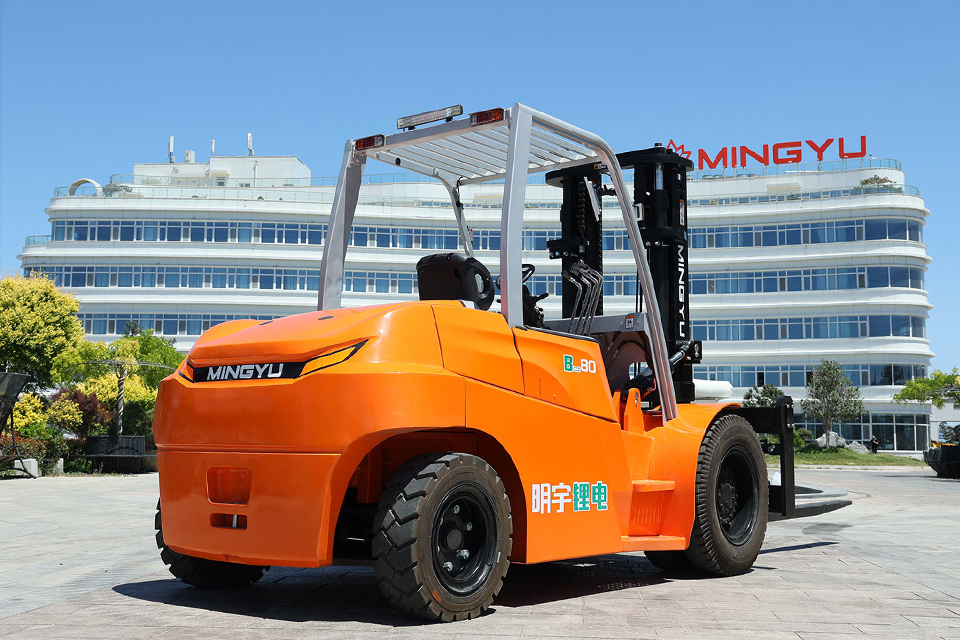
Operator Behavior
The human factor cannot be overstated. Studies consistently show that operator training reduces fuel consumption by 15–25% []. Key behavioral impacts include:
Idle time: A diesel forklift idling consumes 0.8–1.2 L/h. Over an 8-hour shift, 90 minutes of cumulative idle time wastes 1.2–1.8 liters—7–11% of a 70-liter tank. Modern telematics systems now track and report idle time, enabling targeted coaching.
Acceleration patterns: Rapid acceleration from standstill can spike instantaneous consumption to 3× steady-state levels. Smooth, progressive throttle application maintains engine operation in the optimal torque band (typically 1,400–2,200 RPM for industrial diesels).
Route optimization: Inefficient travel patterns—backtracking, unnecessary detours, poor slotting coordination—can increase travel distance by 30% or more, directly linearly increasing fuel consumption.
Environmental Conditions
Ambient temperature affects diesel forklifts through multiple mechanisms. Cold starts require richer fuel mixtures and longer warm-up periods. Below 10°C, fuel consumption increases approximately 2% per degree Celsius due to increased oil viscosity, reduced battery cranking efficiency (affecting starter motor load), and longer engine warm-up phases. In sub-zero conditions, fuel heaters and block heaters become necessary, adding parasitic electrical loads that indirectly increase fuel consumption through alternator demand.
Terrain dramatically affects rolling resistance. Concrete warehouse floors offer a coefficient of rolling resistance (CRR) of approximately 0.010–0.015, while compacted gravel surfaces increase CRR to 0.030–0.050, and soft mud or sand can exceed 0.100. On rough terrain, a forklift may require 40–60% more fuel to travel the same distance at the same speed [].
Altitude reduces air density, decreasing naturally aspirated engine power output by approximately 3% per 1,000 feet above sea level. Turbocharged engines compensate more effectively but still experience reduced mass airflow and combustion efficiency at elevation, typically increasing specific fuel consumption by 5–8% at 5,000 feet.
Maintenance State
A poorly maintained forklift can consume 20–30% more fuel than a well-maintained equivalent []. Critical maintenance factors include:
Air filter restriction: A clogged filter increases intake vacuum, reducing volumetric efficiency and forcing richer mixtures. Pressure drop across the filter should not exceed 25 inches of water.
Fuel injection timing: Retarded injection timing (common in worn pumps) reduces combustion efficiency and increases exhaust temperatures, both indicators of wasted fuel energy.
Tire condition: Underinflated pneumatic tires increase rolling resistance; worn cushion tires on smooth floors can develop flat spots that create vibration and resistance. Proper inflation maintains the design CRR.
Hydraulic system integrity: Internal leakage in lift cylinders or control valves forces the hydraulic pump to work harder, increasing engine load during lifting operations.
Comparative Context: Diesel vs. Electric and LPG
To fully appreciate diesel forklift autonomy, we must contextualize it against alternative powertrains. Electric forklifts, while offering zero emissions and lower energy costs, face battery runtime limitations. A standard 48V/625Ah lead-acid battery provides approximately 6–8 hours of operation—one standard shift—requiring 8–10 hours of charging plus cool-down time []. Lithium-ion alternatives extend this to 10–12 hours and enable opportunity charging, but at significantly higher capital cost.
LPG forklifts offer intermediate autonomy. A standard 33-pound (7.9-gallon) propane tank typically lasts 6–8 hours under normal operation, comparable to electric but with rapid tank exchange capability []. However, LPG energy density is lower than diesel, and per-hour fuel costs are typically higher.
Diesel's advantage lies in energy density and refueling speed. With 11.8 kWh/kg of energy content versus propane's 12.8 kWh/kg (but lower system efficiency) and lithium-ion's 0.15–0.25 kWh/kg, diesel provides unmatched range per unit of stored energy. A 70-liter diesel tank contains approximately 640 kWh of chemical energy; even at 30% thermal efficiency, this yields 192 kWh of mechanical work—sufficient for multiple shifts under most conditions.
Fleet Management Implications
Understanding shifts-per-tank enables precise operational planning. For a fleet of 20 diesel forklifts operating two 8-hour shifts daily:
Scenario A: High-efficiency warehouse
3-ton forklifts, 70L tanks, 2.2 L/h effective consumption
Per-shift consumption: 17.6 liters
Shifts per tank: 4.0
Refueling frequency: Every 2 days
Weekly diesel requirement per truck: 70 liters × 3.5 refuels = 245 liters
Fleet weekly diesel: 4,900 liters
Scenario B: Intensive manufacturing
5-ton forklifts, 90L tanks, 4.5 L/h effective consumption
Per-shift consumption: 36 liters
Shifts per tank: 2.5
Refueling frequency: Daily
Weekly diesel per truck: 90 × 3.5 = 315 liters
Fleet weekly diesel: 6,300 liters
These calculations inform fuel storage tank sizing, delivery scheduling, and budget forecasting. They also highlight where operational improvements—operator training, route optimization, maintenance programs—can yield the highest returns.
Modern telematics systems have transformed fuel monitoring from estimation to precision. GPS tracking, engine CAN bus integration, and fuel level sensors provide real-time consumption data, enabling per-operator and per-shift benchmarking. Fleet managers can now identify outliers—a truck consuming 30% more fuel than fleet average likely has a maintenance issue or operator training need—and intervene before costs compound.
Conclusion
So, how many shifts can a diesel forklift run on a full tank? The technically accurate answer is: it depends, but typically 2 to 4 eight-hour shifts for standard industrial models, and 1 to 2 shifts for heavy-duty applications under intensive conditions.
A 3.5-ton diesel forklift with a 70-liter tank, operating under moderate warehouse conditions with trained operators, will reliably deliver three to four shifts before requiring refueling. A 5-ton model on a construction site may need fuel every shift. A 10-ton heavy-lift truck in continuous port operation might require mid-shift refueling during extended 12-hour rotations.
The precision of this answer matters because it directly impacts operational logistics, capital allocation, and competitive positioning. As electric alternatives advance and emission regulations tighten, diesel forklifts must justify their place through demonstrated productivity and TCO advantages. Fuel autonomy—shifts per tank—is a core component of that value proposition.
For fleet managers, the imperative is clear: measure actual consumption, benchmark against VDI standards, train operators for efficiency, maintain equipment rigorously, and use the resulting data to optimize shift planning. In an era of volatile fuel prices and intensifying environmental scrutiny, the difference between 2.5 shifts and 3.5 shifts per tank is not merely operational convenience—it is a measurable competitive advantage.
Name: selena
Mobile:+86-13176910558
Tel:+86-0535-2090977
Whatsapp:8613181602336
Email:vip@mingyuforklift.com
Add:Xiaqiu Town, Laizhou, Yantai City, Shandong Province, China
