
vip@mingyuforklift.com
+86-0535-2090977

Introduction
In the contemporary landscape of material handling operations, financial precision has become as critical as operational efficiency. Fleet managers, procurement officers, and business owners continuously seek granular understanding of the cost drivers that shape their bottom line. Among these drivers, fuel expenditure for diesel-powered forklifts represents a substantial and highly variable operational cost component. Unlike fixed costs such as equipment depreciation, insurance, or facility leasing, fuel costs fluctuate with market dynamics, operational intensity, equipment condition, and environmental factors—making accurate forecasting and control essential for competitive operations.
This article provides an exhaustive technical and economic examination of daily fuel costs associated with diesel forklift operation. By dissecting the engineering principles that govern fuel consumption, analyzing regional price variations, evaluating operational variables, comparing alternative power sources, and presenting optimization frameworks, this analysis equips stakeholders with the knowledge necessary to manage, predict, and reduce daily fuel expenditures in their material handling operations.
Baseline Daily Fuel Cost Framework
Standard Cost Ranges by Equipment Category
Daily fuel costs for diesel forklifts exhibit significant variation based on equipment capacity, duty cycle intensity, and regional fuel pricing. Based on comprehensive industry data and operational studies, typical daily costs for an 8-hour standard shift are as follows:
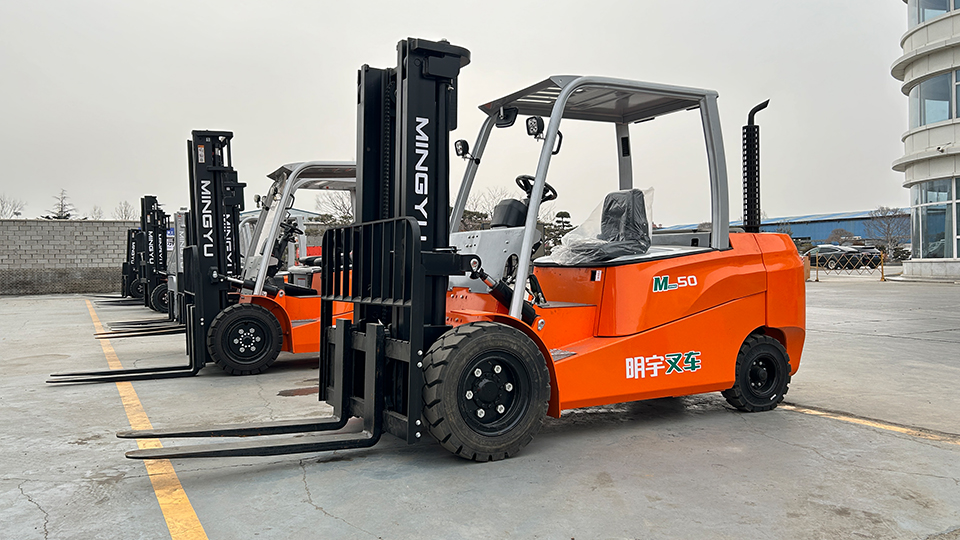
Compact Forklifts (1.5–2.5 Ton Capacity):
Fuel consumption: 14–22 liters per 8-hour shift
At $1.20/liter: $16.80–$26.40 per day
At $1.50/liter: $21.00–$33.00 per day
At $1.80/liter: $25.20–$39.60 per day
Standard Industrial Forklifts (3.0–5.0 Ton Capacity):
Fuel consumption: 20–32 liters per 8-hour shift
At $1.20/liter: $24.00–$38.40 per day
At $1.50/liter: $30.00–$48.00 per day
At $1.80/liter: $36.00–$57.60 per day
Heavy-Duty Forklifts (6.0–10.0 Ton Capacity):
Fuel consumption: 28–44 liters per 8-hour shift
At $1.20/liter: $33.60–$52.80 per day
At $1.50/liter: $42.00–$66.00 per day
At $1.80/liter: $50.40–$79.20 per day
Specialized High-Capacity Models (12.0+ Tons):
Fuel consumption: 40–64 liters per 8-hour shift
At $1.20/liter: $48.00–$76.80 per day
At $1.50/liter: $60.00–$96.00 per day
At $1.80/liter: $72.00–$115.20 per day
These ranges assume moderate duty cycles with typical idle-to-work ratios. Intensive operations involving continuous loading, travel, and lifting may increase consumption by 30–50%, proportionally elevating daily costs.
Extended Shift Considerations
Operations running extended shifts of 10 or 12 hours experience correspondingly higher daily fuel costs, though not always linearly due to factors such as operator fatigue, thermal management requirements, and potential mid-shift refueling inefficiencies:
10-Hour Shift Multiplier: Approximately 1.25–1.35× the 8-hour cost
12-Hour Shift Multiplier: Approximately 1.45–1.60× the 8-hour cost
For a standard 5-ton forklift consuming 26 liters over 8 hours at $1.50/liter ($39.00), a 12-hour shift might consume 38–42 liters, costing $57.00–$63.00—representing a 1.46–1.62× increase rather than a simple 1.5× linear scaling.
Regional Diesel Price Variations and Market Dynamics
Global Price Disparities
Diesel fuel prices vary dramatically across geographic regions due to taxation policies, refining capacity, crude oil sourcing, subsidies, and distribution infrastructure. As of 2026, representative industrial diesel prices per liter include:
North America:
United States: $0.95–$1.25/liter (highly variable by state taxation)
Canada: $1.10–$1.45/liter
Mexico: $0.85–$1.10/liter
Europe:
Germany: $1.65–$1.95/liter
United Kingdom: $1.70–$2.05/liter
France: $1.60–$1.90/liter
Eastern Europe (Poland, Czech Republic): $1.30–$1.60/liter
Asia-Pacific:
China: $1.00–$1.30/liter
Japan: $1.20–$1.50/liter
Australia: $1.30–$1.60/liter
India: $0.90–$1.20/liter
Middle East and Africa:
Saudi Arabia: $0.35–$0.50/liter (heavily subsidized)
South Africa: $1.10–$1.40/liter
Nigeria: $0.70–$1.00/liter
South America:
Brazil: $0.90–$1.20/liter
Argentina: $0.80–$1.10/liter
Chile: $1.10–$1.40/liter
These disparities create profound differences in daily operating economics. A standard 5-ton forklift costing $30.00 per day to fuel in the United States might cost $48.00 in Germany or merely $15.00 in Saudi Arabia—assuming identical consumption patterns.
Price Volatility and Budgeting Implications
Diesel prices exhibit significant volatility driven by crude oil market fluctuations, geopolitical events, refining capacity constraints, and seasonal demand patterns. Historical data indicates annual price swings of 15–40% are common, with extreme events (such as supply disruptions or global crises) potentially doubling prices within months.
For operational budgeting, fleet managers should:
Establish fuel cost contingencies of 15–25% above baseline projections
Consider fuel price hedging instruments for large fleets consuming substantial volumes
Negotiate bulk purchasing agreements with fuel suppliers to secure volume discounts (typically 3–8% below retail)
Monitor price trends and adjust operational strategies accordingly
Engineering Determinants of Daily Fuel Cost
Engine Technology and Efficiency
Modern diesel forklift engines incorporate technologies that directly influence fuel consumption and, consequently, daily operating costs:
Turbocharging and Intercooling: Turbocharged engines achieve 10–20% better fuel efficiency than naturally aspirated equivalents by forcing denser air into combustion chambers, enabling more complete fuel combustion. For a forklift consuming 30 liters daily, turbocharging reduces consumption to 24–27 liters, saving $3.60–$9.00 per day at $1.50/liter.
Electronic Fuel Injection: Common-rail direct injection with piezoelectric injectors enables precise control over injection timing and pressure, improving fuel economy by 5–15% compared to mechanical systems. Daily cost savings range from $2.25–$6.75 for a standard forklift.
Engine Displacement Optimization: Right-sizing engine displacement to application requirements prevents the inefficiency of consistently under-utilizing oversized engines. A 5-ton application requiring 45 kW operates more efficiently with a 3.0-liter engine than a 4.5-liter unit, potentially reducing daily fuel costs by 8–12%.
Hydraulic System Efficiency
The hydraulic system represents the primary energy consumer in forklift operations, and its design significantly impacts daily fuel expenditure:
Pump Configuration: Variable-displacement piston pumps adjust output to match actual hydraulic demand, improving efficiency by 15–25% during partial-load operation compared to fixed-displacement gear pumps. For a forklift with mixed-duty operations, this translates to daily savings of $4.50–$11.25.
System Pressure Management: Pressure-compensated systems that reduce hydraulic pressure during non-lifting operations minimize pump power requirements. Implementing load-sensing hydraulic systems can reduce daily fuel consumption by 10–15% in applications with significant idle-to-work ratios.
Hydraulic Fluid Condition: Degraded hydraulic fluid with increased viscosity or contamination elevates system resistance, requiring greater engine power input. Maintaining proper fluid cleanliness and viscosity through regular service prevents 5–10% efficiency degradation.
Duty Cycle Economics
The temporal distribution of work, travel, and idle periods fundamentally shapes daily fuel costs:
Intensive Duty Cycle: Continuous operation with minimal idle time maximizes hourly consumption but also maximizes productive output per unit of fuel. While daily costs are highest, cost per pallet moved or ton lifted may be optimized due to reduced non-productive fuel burn.
Moderate Duty Cycle: Typical of general warehousing with intermittent tasks and regular idle periods. Baseline consumption figures align with this pattern, representing the most common operational scenario.
Light Duty Cycle: Extended idle periods with sporadic work result in lower absolute daily costs but poor fuel economy per unit of productive output. Excessive idling—consuming 0.5–1.5 liters per hour without productive work—represents pure economic waste. Eliminating 3 hours of unnecessary daily idling saves $2.25–$6.75 per forklift per day.
Ancillary Cost Components
Refueling Labor and Downtime
Each refueling event incurs indirect costs beyond the fuel itself:
Operator Time: 5–10 minutes per refueling event, including travel to fuel station, dispensing, documentation, and return to operational area. At $25/hour labor cost, each refueling costs $2.08–$4.17 in labor.
Operational Disruption: Refueling interrupts productive workflows, potentially creating bottlenecks in synchronized operations. The opportunity cost of lost production during refueling varies by application but can equal or exceed direct labor costs.
Mid-Shift Refueling: Forklifts with insufficient tank capacity for a full shift require mid-shift refueling, effectively doubling refueling costs and disruption. Equipment selection ensuring single-shift range eliminates this inefficiency.
Fuel Storage and Infrastructure
On-site diesel storage introduces capital and operational costs that should be amortized into daily fuel costs:
Storage Tank Systems: Above-ground or underground tanks with leak detection, spill containment, and overfill protection represent capital investments of $5,000–$25,000 depending on capacity and regulatory requirements.
Regulatory Compliance: Environmental regulations mandate periodic tank integrity testing, spill plan documentation, and potential financial assurance mechanisms. Annual compliance costs range from $500–$2,000 per facility.
Fuel Management Systems: Automated fuel dispensing and tracking systems prevent theft, ensure accurate allocation, and enable consumption monitoring. Systems cost $3,000–$15,000 but typically yield 3–8% savings through accountability and data-driven optimization.
Maintenance and Insurance: Tank maintenance, corrosion protection, and environmental liability insurance add $1,000–$3,000 annually to storage costs.
For a facility storing 10,000 liters with annual throughput of 100,000 liters (approximately 10 standard forklifts), storage infrastructure costs amortize to approximately $0.03–$0.08 per liter, adding $0.60–$2.56 to daily fuel costs per forklift.
Emissions-Related Costs
Progressive environmental regulations introduce additional daily cost components:
Diesel Exhaust Fluid (DEF): Selective catalytic reduction systems require DEF consumption at approximately 2–4% of diesel volume. At $0.80–$1.20/liter for DEF, this adds $0.48–$1.92 to daily costs for a standard forklift.
Particulate Filter Maintenance: Diesel particulate filters require periodic cleaning or replacement. Amortized maintenance costs add approximately $0.50–$1.50 per operating day.
Carbon Pricing: Jurisdictions with carbon taxes or cap-and-trade systems impose costs based on CO₂ emissions. At $50/ton CO₂, a forklift emitting 70 kg CO₂ daily incurs $3.50 in carbon costs. At $100/ton, this rises to $7.00 daily.
Comparative Economic Analysis: Daily Operating Costs
Diesel vs. Electric Forklifts
Electric forklifts present fundamentally different daily cost structures:
Energy Costs:
5-ton electric forklift: 25–35 kWh per 8-hour shift
At $0.10/kWh: $2.50–$3.50 per day
At $0.15/kWh: $3.75–$5.25 per day
At $0.20/kWh: $5.00–$7.00 per day
Compared to diesel at $1.50/liter ($30.00–$48.00 daily), electric operation offers 85–90% lower daily energy costs.
Total Daily Cost Considerations:
However, electric forklifts incur:
Battery depreciation: $8–$15 per day (assuming $15,000 battery, 5-year life, 250 operating days/year)
Charging infrastructure amortization: $3–$8 per day
Potential battery swap labor (multi-shift operations): $5–$10 per day
Total daily operating costs for electric forklifts range $18–$38—still favorable compared to diesel but with narrower margins than energy costs alone suggest.
Application-Specific Economics:
For single-shift operations with overnight charging, electric power demonstrates clear economic advantage. For multi-shift continuous operations requiring battery swaps or fast charging, diesel's rapid refueling advantage and lower capital costs may offset higher daily fuel costs.
Diesel vs. LPG Forklifts
LPG forklifts occupy an intermediate economic position:
Fuel Consumption and Cost:
5-ton LPG forklift: 3.5–5.5 kg propane per 8-hour shift
At $1.00/kg: $3.50–$5.50 per day
At $1.30/kg: $4.55–$7.15 per day
LPG offers 80–85% lower daily fuel costs than diesel, with refueling speed comparable to diesel (cylinder exchange). However, cylinder management, storage safety requirements, and potentially shorter engine life introduce costs that narrow the economic gap.
Total Cost of Ownership Perspective
While daily fuel costs favor electric and LPG alternatives, total cost of ownership analysis must incorporate:
Acquisition Cost Differential: Diesel forklifts typically cost 15–25% less than equivalent electric models, representing $5,000–$15,000 per unit. Amortized over 10,000 operating hours, this adds $3–$8 to daily costs for diesel advantage.
Maintenance Cost Differential: Electric forklifts eliminate engine-related maintenance (oil changes, filter replacements, exhaust system service), reducing daily maintenance costs by $5–$12 compared to diesel.
Resale Value: Diesel forklifts often retain higher resale values in outdoor/heavy-duty markets, partially offsetting higher operating costs.
Infrastructure Requirements: Electric charging infrastructure requires substantial capital investment, while diesel fueling infrastructure is often already present or less expensive to establish.
Optimization Strategies for Daily Fuel Cost Reduction
Operational Excellence
Idle Time Elimination: Implementing automatic engine shutdown systems and operator training programs to eliminate unnecessary idling can reduce daily fuel costs by 10–20%. For a standard forklift costing $39.00 daily, this represents $3.90–$7.80 savings.
Route and Task Optimization: Warehouse management systems and optimized slotting reduce travel distances. A 20% reduction in travel distance typically yields 12–18% fuel savings, or $4.68–$7.02 daily.
Load Optimization: Maximizing loads per trip (within rated capacity) reduces cycle frequency. However, consistently operating at maximum capacity increases hydraulic demand and hourly consumption—optimization requires balancing these factors.
Maintenance Discipline
Air Filter Management: Regular replacement prevents restriction that increases consumption by 5–15%. In dusty environments, proactive filter maintenance saves $1.95–$5.85 daily.
Fuel System Service: Injector cleaning and timing adjustment maintain optimal combustion efficiency. Deferred maintenance can elevate daily costs by 10–20% through degraded efficiency.
Tire and Rolling Resistance: Proper inflation and tread condition maintenance prevent excess fuel consumption. Under-inflated tires increase rolling resistance by 10–15%, adding $3.90–$5.85 to daily costs.
Technology Integration
Telematics and Monitoring: Real-time fuel consumption tracking identifies inefficiencies and enables targeted interventions. Fleet-wide implementations typically achieve 10–15% fuel cost reductions through data-driven management.
Engine Control Optimization: Reprogramming electronic control units to prioritize fuel economy over peak power for appropriate applications improves efficiency by 5–8% without operational compromise.
Hybrid and Alternative Technologies: Emerging diesel-electric hybrid systems demonstrate 20–30% daily fuel cost reductions in high-cyclic applications, though capital cost premiums extend payback periods to 3–5 years.
Forecasting and Budgeting Methodologies
Historical Data Analysis
Accurate daily fuel cost forecasting requires robust historical data:
Consumption Tracking: Recording liters dispensed per forklift per operating day establishes baseline consumption patterns. Minimum 90 days of data captures operational variability and seasonal effects.
Regression Analysis: Correlating consumption with operational metrics (pallets moved, tons lifted, travel distance) enables predictive modeling. Multiple regression models incorporating load factor, ambient temperature, and operator identity can explain 70–85% of consumption variance.
Anomaly Detection: Statistical process control identifies equipment malfunctions or operator inefficiencies manifesting as consumption spikes. Early intervention prevents sustained excess costs.
Budgeting Frameworks
Baseline Plus Contingency: Establish baseline daily costs from historical averages and add 15–25% contingency for price volatility and operational variability.
Activity-Based Budgeting: Link fuel budgets to operational forecasts (units produced, shipments processed) using established consumption rates per unit of activity.
Zero-Based Review: Annually re-evaluate all assumptions, incorporating new technologies, price trends, and operational changes rather than simply inflating prior budgets.
Conclusion
Daily fuel costs for diesel forklifts—ranging from approximately $20 to $100 per day depending on equipment capacity, regional pricing, and operational intensity—represent a significant and variable operational expense requiring systematic management. While baseline energy costs dominate this expenditure, ancillary components including refueling labor, storage infrastructure, regulatory compliance, and emissions-related charges contribute substantially to total daily fuel economics.
The comparative analysis reveals that diesel forklifts face significant cost disadvantages relative to electric alternatives in single-shift indoor applications, while maintaining competitive positions in heavy-duty outdoor operations and continuous multi-shift scenarios. LPG presents an intermediate option with favorable fuel costs but operational complexity.
Effective daily fuel cost management demands a multifaceted approach encompassing operational optimization, maintenance discipline, technology integration, and strategic energy procurement. Organizations that master these elements achieve not only direct cost savings but also enhanced operational predictability, reduced environmental impact, and improved competitive positioning in an increasingly cost-conscious marketplace.
As energy markets evolve, emissions regulations tighten, and alternative technologies mature, the daily fuel cost equation for diesel forklifts will continue transforming. Proactive fleet managers who understand these dynamics and implement adaptive strategies will navigate this evolution successfully, maintaining operational excellence while controlling the fuel costs that fundamentally shape material handling economics.
Name: selena
Mobile:+86-13176910558
Tel:+86-0535-2090977
Whatsapp:8613181602336
Email:vip@mingyuforklift.com
Add:Xiaqiu Town, Laizhou, Yantai City, Shandong Province, China
