
vip@mingyuforklift.com
+86-0535-2090977

Falling Loads, Tip-Overs, Collisions — How to Mitigate the Three Biggest Forklift Risks
Forklifts are the workhorses of modern industry. In warehouses, distribution centers, manufacturing plants, and construction sites, these powered industrial trucks move millions of tons of material every day. Yet for all their utility, forklifts remain among the most dangerous pieces of equipment in the workplace. In the United States alone, forklifts cause approximately 7,500 injuries and nearly 100 fatalities annually. The most common accidents fall into three categories: falling loads, tip-overs, and collisions. Understanding the mechanics behind each hazard—and implementing layered, evidence-based mitigation strategies—is essential for any organization serious about protecting its workforce.
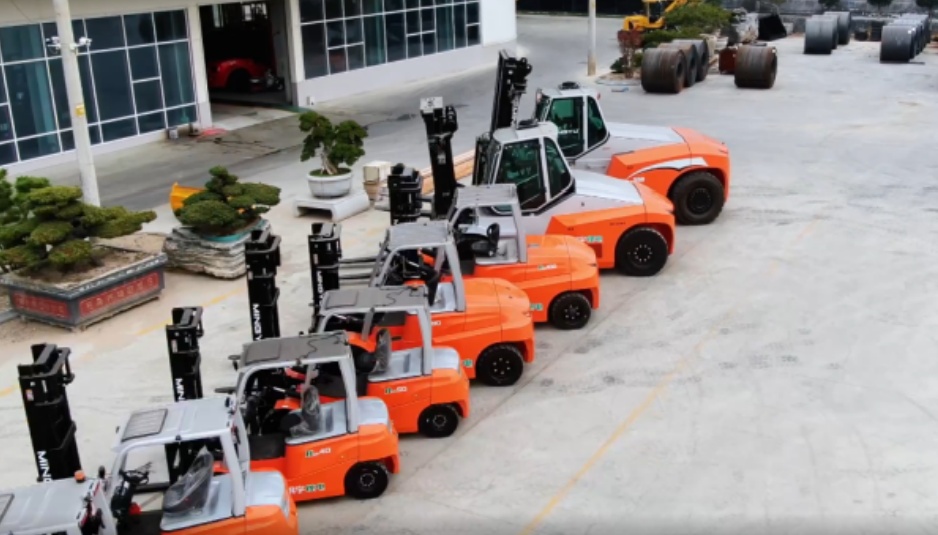
The Stability Triangle: The Physics Behind Every Forklift Hazard
Before addressing individual risks, it's critical to understand the fundamental physics that govern forklift stability. Every forklift operates within a conceptual "stability triangle" formed by lines connecting the front and rear wheels. When the combined center of gravity of the forklift and its load remains within this triangle, the machine stays upright. When external forces—speed, slope, uneven terrain, or an elevated load—shift that center of gravity outside the triangle, the forklift becomes unstable. This single principle explains why the three major hazards are so deeply interconnected: a falling load often begins with instability, a tip-over is the catastrophic result of exceeding stability limits, and collisions frequently occur when operators lose control while trying to recover from an unstable situation.
Hazard One: Falling Loads
Falling loads represent one of the most visually dramatic and immediately dangerous forklift hazards. Nearly 8% of all forklift-related fatalities occur when workers are struck by falling material or loads. The consequences range from crushed limbs and traumatic brain injuries to fatalities, particularly when pedestrians are caught beneath falling pallets, containers, or loose materials.
Root Causes of Falling Loads
The primary driver of falling loads is improper load securing and positioning. Loads that are unevenly distributed, positioned too far forward on the forks, or inadequately secured with banding or wrapping can shift during transport. When a forklift accelerates, brakes, or turns, the inertia acting on an unsecured load can cause it to slide, tilt, or topple entirely. Another significant factor is exceeding the forklift's rated capacity. Every forklift carries a data plate specifying maximum load limits at defined load centers. When operators ignore these ratings—whether due to time pressure, inadequate training, or overconfidence—the risk of load failure increases dramatically.
Environmental conditions compound the problem. Operating on wet, oily, or uneven surfaces can cause sudden jolts that destabilize loads. Similarly, raising a load too high before it is properly stabilized against the backrest creates a top-heavy condition where even minor bumps can send materials tumbling.
Mitigation Strategies for Falling Loads
Pre-Lift Load Assessment: Operators must inspect every load before lifting. This includes verifying weight against the capacity plate, checking that pallets are intact and properly loaded, and ensuring that loose items are banded or wrapped to prevent shifting. If a load's weight is uncertain, it should be weighed before transport. When handling irregular or long loads, operators should use appropriate attachments such as fork positioners, load backrest extensions, or specialized clamps rather than attempting to improvise with standard forks.
Proper Fork Positioning and Load Centering: Both forks must be inserted fully under the load, with weight evenly distributed. The load should be positioned as close to the mast as possible, resting firmly against the backrest. Before moving, operators should tilt the mast back just enough to stabilize the load—excessive tilt can create rearward instability, while insufficient tilt allows forward slippage.
Travel Protocols: The golden rule of load transport is to keep the load low. Forks should travel approximately 4–6 inches above the ground, with the mast tilted back to secure the load. Raising a load during transport elevates the center of gravity and increases the risk of both tipping and load shedding. Operators should avoid sudden acceleration, abrupt braking, and sharp turns, all of which generate inertial forces that can overcome friction and restraint.
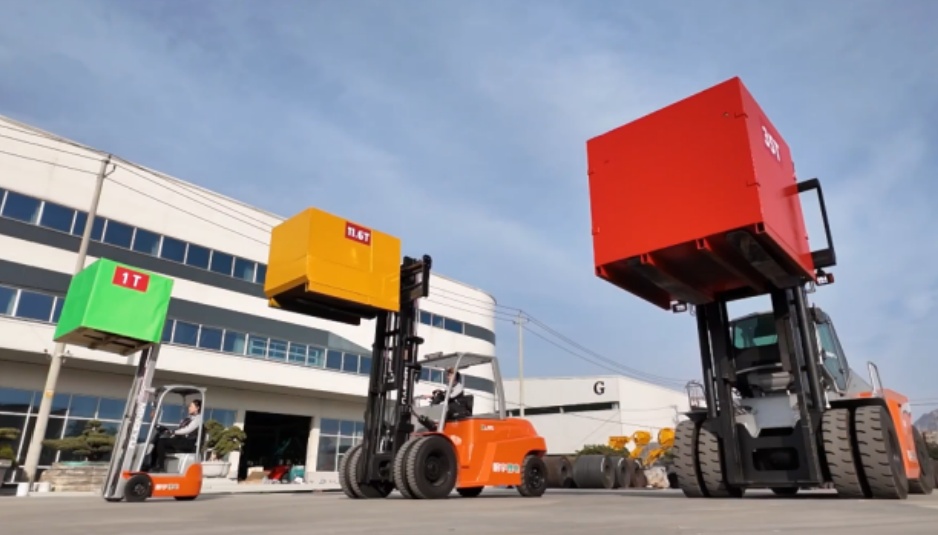
Fall Zone Awareness: Every raised load creates a "fall zone" extending well beyond the physical footprint of the forks. Pedestrians must be trained to recognize these zones and never walk beneath raised forks or stand near a forklift during lifting operations. Operators bear responsibility for clearing the area before raising any load and using horns or spotters when visibility is limited.
Hazard Two: Tip-Overs
Tip-overs are the single most common fatal event for forklift operators. Whether tipping forward, backward, or sideways, these incidents often result in the operator being crushed by the overhead guard or another rigid part of the truck. The fatality risk is compounded when operators attempt to jump from a tipping forklift—a natural instinct that NIOSH and OSHA have identified as one of the most dangerous responses possible.
Root Causes of Tip-Overs
Overloading and Elevated Loads: Carrying loads that exceed rated capacity shifts the center of gravity forward, beyond the front axle fulcrum. Similarly, traveling with an elevated load—especially while turning—moves the combined center of gravity upward and outward, dramatically reducing lateral stability. HSE statistics have identified turning with elevated loads as the single biggest cause of forklift fatalities in the UK.
Excessive Speed and Sudden Maneuvers: High-speed turns generate centrifugal force that pushes the forklift's center of gravity outward. Combined with an elevated or offset load, this force can easily exceed the stability triangle's boundaries. Abrupt braking shifts weight forward, while rapid acceleration shifts it rearward—both conditions that can precipitate a tip-over if the forklift is already near its stability limits.
Slopes and Uneven Surfaces: Operating on inclines, ramps, or damaged surfaces introduces a tilted chassis into the stability equation. Driving diagonally across a slope, turning on an incline, or lifting loads while on a grade can all shift the center of gravity outside the stability zone. Even small potholes, debris, or uneven dock plates can create destabilizing jolts.
Mechanical Deficiencies: Worn tires, damaged axle stops, slack steering mechanisms, or compromised hydraulic systems can all undermine a forklift's stability. A forklift with damaged rear axle stops, for example, may experience excessive lateral sway during turns, directly contributing to sideways tip-overs.
Mitigation Strategies for Tip-Overs
Operator Training on Stability Principles: OSHA estimates that 70% of forklift accidents are preventable with proper training. Comprehensive programs must go beyond basic controls to teach operators the physics of the stability triangle, the relationship between load height and center of gravity, and the specific hazards of their operating environment. Training should include hands-on practice with load assessment, slope negotiation, and emergency response procedures.
Speed Management and Smooth Operation: Facilities must establish and enforce speed limits appropriate to their layout and traffic density. Operators should be trained to accelerate, brake, and turn gradually. A good rule of thumb: if an operator cannot bring the forklift to a complete stop within the visible distance ahead, they are traveling too fast.
Slope Protocols: When ascending or descending ramps, operators should drive straight—never diagonally or while turning. The load should always face uphill, and the mast should be tilted back only enough to stabilize the load. Forks should remain low, and operators should never raise or lower loads while on an incline.
Pre-Shift Inspections: Daily inspections are not merely a regulatory requirement—they are a critical safety practice. Operators should check tire condition and inflation, brake responsiveness, steering precision, hydraulic function, and the integrity of safety features including seatbelts and overhead guards. Any deficiency must be reported and repaired before the forklift returns to service.
Emergency Response Training: Perhaps the most important tip-over survival strategy is counterintuitive: stay with the truck. For sit-down forklifts, operators must be trained to grip the steering wheel firmly, brace their feet against the floor, lean away from the direction of the tip, and protect their head with their arms. Jumping from an overturning forklift exposes the operator to crushing injuries from the overhead guard—a hazard that has killed dozens of operators who might have survived had they remained in the compartment. For stand-up forklifts with rear-entry access, operators should step backward out of the compartment. These procedures must be drilled regularly until they become automatic responses.
Hazard Three: Collisions
Collisions between forklifts and pedestrians, between multiple forklifts, or between forklifts and fixed objects account for a significant portion of forklift-related injuries. Approximately 25% of forklift accidents involve pedestrians, and these incidents often result in severe trauma due to the mass and limited maneuverability of the equipment.
Root Causes of Collisions
Visibility Limitations: Large loads can obstruct an operator's forward view. Blind corners, intersecting aisles, and areas behind the forklift during reversing create zones where pedestrians may be invisible to the operator until it is too late. In high-density warehouses, pallet racks and stacked materials further constrict sightlines.
Mixed Traffic Environments: Warehouses and loading docks are inherently chaotic spaces where forklifts, pedestrians, delivery truck drivers, and other equipment share limited space. Without clear traffic management, the probability of intersection conflicts rises exponentially.
Inadequate Separation Controls: Many facilities rely on painted floor lines or signage alone to separate pedestrian and forklift traffic. While these measures are necessary, they are insufficient in high-traffic areas where physical separation is not feasible.
Operator Distraction and Complacency: After hours of routine operation, even experienced operators may become less vigilant. Distraction—whether from mobile devices, conversations, or mental fatigue—reduces reaction times at critical moments.
Mitigation Strategies for Collisions
Physical Separation and Traffic Engineering: The most effective collision prevention strategy is to eliminate interaction points entirely. Where possible, facilities should establish physically separated pedestrian walkways with barriers, guardrails, or gates. Forklift-only lanes should be marked and enforced. At intersections and blind corners, convex mirrors and warning lights should be installed to extend visibility. Floor markings should be maintained clearly, and speed limits should vary by zone—slower speeds in pedestrian-proximate areas, higher speeds only on dedicated forklift thoroughfares.
Technological Layers: Modern collision prevention technology offers multiple layers of protection. Blue pedestrian warning spotlights projected onto the floor ahead of moving forklifts give pedestrians advance notice of approaching equipment without adding to ambient noise. AI-powered camera systems can detect pedestrians in blind spots and alert operators with audible and visual alarms. Proximity sensors using UWB (ultra-wideband) technology can trigger automatic speed reduction when pedestrians enter defined risk zones. These technologies augment—but never replace—operator vigilance and training.
Communication Protocols: Operators must use horns at blind intersections, doorways, and when approaching areas with limited visibility. Two-way radios or hand signals should be used when spotters guide operators through congested areas. Pedestrians should be trained to make eye contact with operators before crossing forklift paths and to never assume they have been seen.
High-Visibility Apparel and Signage: Pedestrians in forklift zones should wear high-visibility vests to improve detectability. Warning signs, floor markings, and LED indicators at intersections reinforce awareness for both operators and pedestrians.
Comprehensive Training for All Workers: Collision prevention is not solely an operator responsibility. Pedestrians who work near forklifts must understand forklift blind spots, stopping distances, and right-of-way rules. Regular refresher training for both operators and pedestrians keeps safety protocols top-of-mind and addresses complacency before it leads to incidents.
Building a Culture of Forklift Safety
Technical controls and training programs are necessary but not sufficient. Sustainable forklift safety requires an organizational culture where every employee—from the newest warehouse associate to the facility manager—understands that safety is a shared responsibility. This culture is built through visible leadership commitment, open reporting of near-misses without fear of blame, regular safety meetings that address real operational challenges, and continuous improvement driven by data on incidents, inspections, and near-miss trends.
OSHA's Powered Industrial Trucks standard (29 CFR 1910.178) provides the regulatory foundation, mandating operator training, equipment maintenance, and safe work practices. But compliance alone is a floor, not a ceiling. Organizations that treat forklift safety as a dynamic, evolving discipline—incorporating new technologies, refining procedures based on incident data, and investing in ongoing education—are the ones that drive their injury rates toward zero.
Conclusion
Falling loads, tip-overs, and collisions are not inevitable costs of doing business. They are predictable, preventable events that respond to disciplined engineering, training, and cultural interventions. By understanding the physics of forklift stability, enforcing rigorous load handling protocols, maintaining equipment to manufacturer standards, engineering traffic flows that separate people and machines, and embracing modern detection technologies, organizations can protect their most valuable assets: their people. The statistics are sobering, but the solution is clear—safety is not an accident. It is a choice made every shift, every lift, and every journey across the warehouse floor.
Name: selena
Mobile:+86-13176910558
Tel:+86-0535-2090977
Whatsapp:8613181602336
Email:vip@mingyuforklift.com
Add:Xiaqiu Town, Laizhou, Yantai City, Shandong Province, China
