
vip@mingyuforklift.com
+86-0535-2090977

1. Forklift Leaf Chains: The Lifelines of Lifting
Forklift chains (typically leaf chains) are designed to handle high loads with minimal stretch. However, because they consist of hundreds of individual pins and plates, they are highly susceptible to internal wear.
The Mechanism of Chain Wear
Unlike drive chains, leaf chains do not run over sprockets; they move over sheaves.2 Wear occurs primarily at the articulation points—where the pin surfaces rub against the link plates as the chain flexes. This friction thins the pins and creates "elongation," commonly referred to as "chain stretch."
Lubrication Schedule and Best Practices
Lubrication is the single most effective way to prevent premature wear. It serves two purposes: reducing friction and preventing corrosion (which leads to "tight joints").
Frequency: Chains should be lubricated every 200 to 250 hours of operation. In corrosive or dusty environments (like cold storage or chemical plants), this should be increased to every 100 hours or daily.
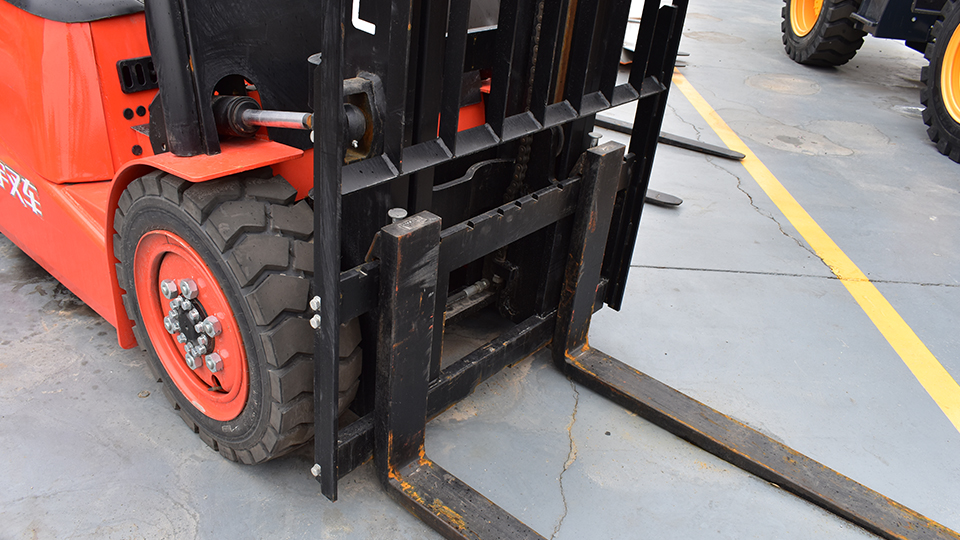
The "Pin Penetration" Rule: Surface greasing is insufficient. The lubricant must reach the inner pin-to-link interface.
Recommended Lubricant: Use a high-quality, non-detergent petroleum-based oil or a specialized synthetic chain lube with molybdenum disulfide (MoS2) or PTFE. These additives allow the lubricant to cling to the metal under high pressure.3
Application Method: Lubricate the chain while it is slack (mast lowered).4 This opens the clearances between the plates, allowing the oil to capillary into the pins.
2. Chain Inspection and Replacement Standards
The American National Standards Institute (ANSI) and OSHA have strict guidelines regarding chain integrity. A chain that has elongated by even a small percentage has lost a significant portion of its rated strength.5
Measuring Elongation
You cannot judge a chain's health by sight. You must use a Chain Gauge or a precision ruler.
Select a Wear Zone: Measure the portion of the chain that passes over the sheaves most frequently, as this experiences the most articulation.
The 3% Rule: If a leaf chain has elongated by 3% or more over its original pitch, it is legally "dead" and must be replaced immediately.
The Math: If you measure 12 pitches of a chain with a 0.75-inch pitch, the nominal length is 9 inches. If the measurement exceeds 9.27 inches, the chain is exhausted.
Other Critical Red Flags
Cracked Link Plates: Often caused by "stress corrosion cracking" from exposure to cleaning chemicals or battery acid.
Turned Pins: If a pin has rotated, the locking fit is gone. This is a precursor to a catastrophic snap.
Mushroomed Pin Heads: Caused by the chain rubbing against the mast channels.
3. Fork Tines: Understanding the "10% Rule"
Forklift forks are forged from high-grade alloy steel and heat-treated to balance hardness with ductility.6 Despite their rugged appearance, they are precision tools with strict wear tolerances.
Wear Protection at the Heel
The "heel" (the radius where the vertical shank meets the horizontal blade) is the most stressed point. As forks slide across concrete floors, the bottom of the heel wears down.
The 10% Standard (ISO 5057): Once a fork blade has worn down by 10% of its original thickness, its load capacity is reduced by 20%. At this point, the fork must be removed from service.
Measurement: Use a Fork Caliper. Measure the thickness of the vertical shank (which does not wear) and compare it to the thickness of the horizontal blade.
4. Deformation: Can You Repair a Fork?
One of the most common questions in maintenance is: "Can we heat and bend a fork back into shape?"
The answer is a definitive NO.
Why Repair is Prohibited
Forks are heat-treated.7 Applying a blowtorch to "soften" the metal for straightening destroys the molecular grain structure and the heat-treat tempering. This creates a "soft spot" or a brittle point that will fail under load.
Limits of Deviation
According to ANSI/ITSDF B56.1, forks must be withdrawn if:
Blade Angle: The angle between the shank and the blade exceeds 93 degrees (or the original manufactured angle).8
Tip Height Difference: If the tips of a pair of forks differ in height by more than 3% of the blade length, they are out of alignment. For a 48-inch fork, this is only 1.44 inches.
Surface Cracks: Any visible crack, especially in the heel area or the mounting hooks, is grounds for immediate scrapping.
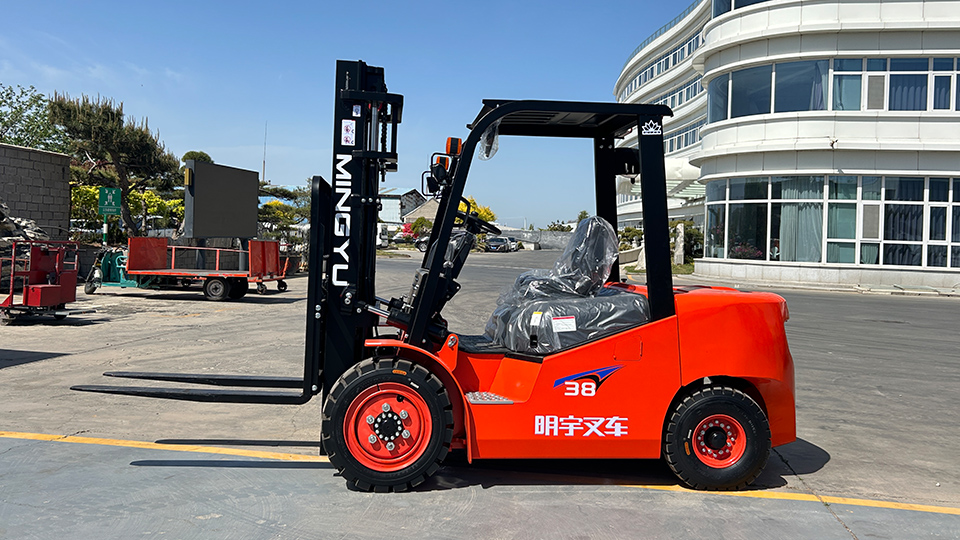
5. Summary Table: Maintenance Checklist
|
Component |
Maintenance Action |
Warning Sign |
Replacement Threshold |
|
Leaf Chain |
Lubricate every 250 hrs |
Red dust (fretting), turned pins |
3% Elongation |
|
Fork Heel |
Measure thickness annually |
Scraping sounds on floor |
10% thickness loss |
|
Fork Hooks |
Inspect for gaps/cracks |
Fork "wobbles" on carriage |
Any visible cracking |
|
Mast Sheaves |
Check for bearing play |
Chain jumping or uneven wear |
Deep grooving in sheave |
6. Conclusion: The Cost of Neglect
Maintenance of forklift chains and forks is not merely a "best practice"—it is a regulatory requirement. A snapped chain or a snapped fork heel results in dropped loads, damaged racking, and potential loss of life. By adhering to a strict 3% elongation limit for chains and a 10% thickness limit for forks, operations managers can ensure their fleet remains safe and efficient.
Remember: When in doubt, swap it out. The cost of a new set of forks is negligible compared to the liability of a structural failure.
Name: selena
Mobile:+86-13176910558
Tel:+86-0535-2090977
Whatsapp:8613181602336
Email:vip@mingyuforklift.com
Add:Xiaqiu Town, Laizhou, Yantai City, Shandong Province, China