
vip@mingyuforklift.com
+86-0535-2090977

As the main handling equipment in the fields of industrial production and warehousing logistics, the engine of an internal combustion forklift can be called the "power heart" of the equipment, and its operating status is directly related to operational efficiency, equipment life and operational safety. According to industry operation and maintenance data, nearly 65% of internal combustion forklift failures are related to improper engine maintenance, and standardized daily engine maintenance can reduce the risk of sudden failures by more than 70%. Combined with the core requirements of daily pre-shift forklift inspections, this article focuses on two key links of daily maintenance of internal combustion forklift engines—oil change interval control and filter cleaning and replacement skills—and sorts out practical operation guidelines to help enterprises standardize maintenance processes and ensure stable operation of equipment.
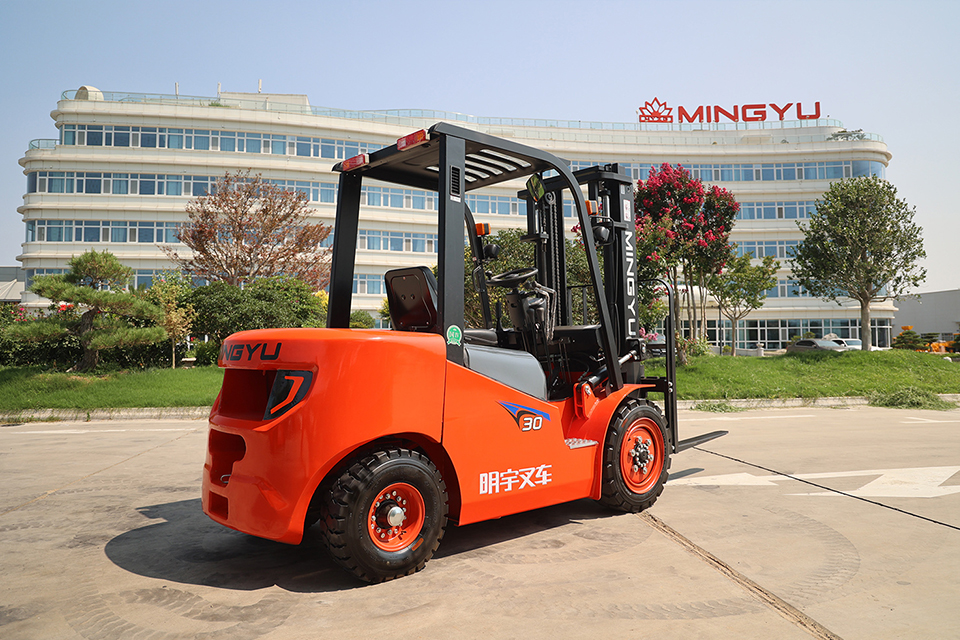
During the use of internal combustion forklifts, the engine operates under high load for a long time. The performance of core protection systems such as oil lubrication and filter filtration directly affects the engine life. However, some enterprises have the misunderstanding of "valuing use over maintenance", ignoring the oil change interval and omitting key steps such as filter cleaning, which leads to serious engine failures such as increased wear, decreased power, increased fuel consumption and even cylinder scuffing. This not only increases maintenance costs, but also may cause operational safety accidents. Professional equipment operation and maintenance engineers emphasize that incorporating daily engine maintenance into the daily pre-shift inspection process is a key measure to timely find potential hazards and extend the service life of equipment. The following is a detailed operation guide for oil change and filter maintenance.
1. Precisely control the oil change interval and build a solid lubrication line for the engine. As the "blood" of the engine, engine oil undertakes core functions such as lubrication, cooling, cleaning and sealing. Its performance attenuation will directly affect the normal operation of engine components. The oil change interval of internal combustion forklifts should be scientifically determined according to the use scenario and fuel type: under normal working conditions (such as indoor warehousing, light-load operation), the oil change interval for diesel internal combustion forklifts is recommended to be every 250-300 operating hours; for gasoline internal combustion forklifts, it is recommended to be every 200-250 operating hours; if the operating environment is harsh (such as high temperature, dusty, heavy-load operation), the replacement interval needs to be shortened by 20%-30%. During the daily pre-shift inspection, focus on checking whether the oil level is between the upper and lower scale lines of the oil dipstick. If the oil level is lower than the minimum scale line, timely add engine oil of the same model and specification. Mixing different brands or models of engine oil is strictly prohibited. At the same time, observe the oil condition. If the oil turns black, has impurities or peculiar smell, the oil must be replaced immediately to avoid deteriorated oil aggravating engine wear. In addition, the oil filter should be checked simultaneously when changing the oil to ensure that the filter is working normally and avoid poor oil circulation caused by filter blockage.
2. Standardize filter cleaning and replacement to ensure the purity of engine intake air and fuel. The engine filters of internal combustion forklifts mainly include air filters and fuel filters. Their core function is to filter impurities in air and fuel to avoid impurities entering the engine and causing wear. During the daily pre-shift inspection, the filter should be basically cleaned and checked: for the air filter, if it is a paper filter, gently tap to remove surface dust; if the filter is damaged, blocked or heavily dusted, it needs to be replaced in time; if it is a sponge filter, it can be cleaned with clean diesel, dried, and then installed after applying a small amount of engine oil (to enhance the filtering effect). For the fuel filter, check whether there is leakage in the filter during the daily pre-shift inspection, and check whether the filter housing is intact. If the filter is blocked, fuel circulation is not smooth or the filter is aging, it must be replaced immediately. Attention should be paid to operational specifications when replacing the filter: before replacement, turn off the engine and wait for the engine body to cool down; ensure good sealing when installing a new filter to avoid air or impurities entering; after replacement, start the engine to check for leakage and ensure the filter is working normally. In addition, it is recommended to establish a filter maintenance account, record in detail the cleaning and replacement time, filter model and other information to facilitate subsequent tracing and management.

Professional personnel remind that daily maintenance of internal combustion forklift engines must be performed by professionally trained operators. If abnormalities such as engine oil leakage, abnormal noise, and decreased power are found during the daily pre-shift inspection, the use of the equipment must be stopped immediately, and maintenance personnel should be contacted for comprehensive inspection and repair. "Operation with faults" is strictly prohibited. Enterprises should regularly organize operators to carry out equipment maintenance training to standardize operating procedures, and establish a sound equipment maintenance account, regularly review maintenance data, and optimize maintenance plans. Through scientific and standardized daily engine maintenance, it can not only reduce the incidence of equipment failures and maintenance costs, but also improve equipment operation efficiency and provide a strong guarantee for the stable operation of enterprises.
Name: selena
Mobile:+86-13176910558
Tel:+86-0535-2090977
Whatsapp:8613181602336
Email:vip@mingyuforklift.com
Add:Xiaqiu Town, Laizhou, Yantai City, Shandong Province, China