
vip@mingyuforklift.com
+86-0535-2090977

In warehousing logistics and industrial production scenarios where electric forklifts are widely used, the battery, as the core power source, directly determines operational efficiency and equipment service life. According to industry operation and maintenance data, about 70% of electric forklift failures are caused by improper battery maintenance, and scientific battery maintenance can extend the battery service life by more than 30%. Combined with the core requirements of daily pre-shift forklift inspections, this article focuses on three key dimensions of electric forklift battery maintenance—charging duration control, electrolyte replenishment specifications, and storage condition control—and sorts out practical guidelines to help enterprises standardize the battery maintenance process and reduce operation and maintenance costs.
With the advancement of the green and low-carbon concept, electric forklifts have become the mainstream equipment in the warehousing and handling field due to their advantages of zero emission, low noise, and easy operation. However, as the "heart" of electric forklifts, battery maintenance is often ignored by some enterprises. Problems such as overcharging, lack of electrolyte, and improper storage environment will not only lead to battery capacity attenuation and performance degradation, but also may cause potential safety hazards such as battery bulging and leakage. Professional operation and maintenance engineers emphasize that incorporating battery maintenance into the daily pre-shift inspection process is a key measure to ensure the stable operation of electric forklifts. The following is a detailed guide on charging duration, electrolyte replenishment, and storage precautions.
1. Precisely control charging duration to avoid overcharging and undercharging. Electric forklift batteries should be charged in accordance with the "shallow charge and shallow discharge" principle, and charging after over-discharging is strictly prohibited. Check the remaining battery power before work every day; if the power is lower than 20%, it is necessary to recharge in time to avoid damage to the plates due to deep battery discharge. In terms of charging duration, the charging time for conventional lead-acid batteries is recommended to be controlled at 8-10 hours. After the charger shows "fully charged", the power supply should be disconnected in time. Do not float charge for a long time (more than 12 hours), otherwise it will cause the battery to heat up, the electrolyte to evaporate too quickly, and accelerate battery aging. In addition, before charging, clean the dust and debris on the battery surface, check whether the charging interface is loose or oxidized, ensure good charging contact, and avoid short circuits, overheating and other problems during charging.
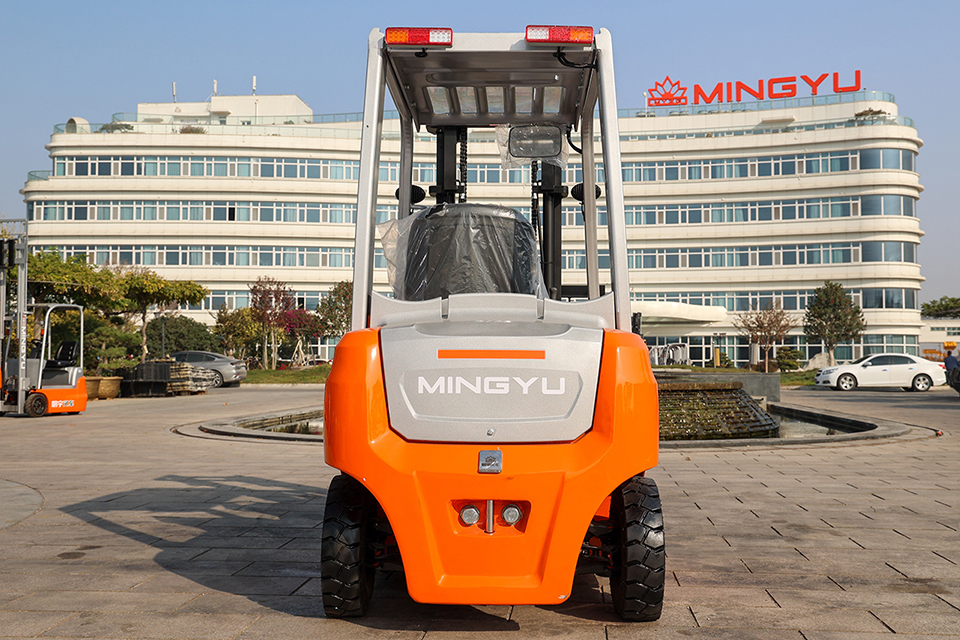
2. Standardize electrolyte replenishment operations and control liquid level and purity. For lead-acid batteries, the electrolyte level is a key factor affecting battery performance. It is necessary to focus on checking whether the electrolyte level is between the specified scale lines (10-15mm above the plates) before work every day. If the liquid level is lower than the minimum scale line, add distilled water in time (tap water, mineral water or dilute sulfuric acid is strictly prohibited) to avoid oxidation and damage of the plates exposed to the air. When replenishing electrolyte, pay attention to operational safety, wear protective gloves and goggles, and avoid electrolyte splashing on the skin or clothes; at the same time, tighten the battery cover after replenishment to prevent electrolyte leakage. In addition, it is necessary to regularly check the purity of the electrolyte; if the electrolyte is found to be turbid or have sediment, contact professional personnel for treatment in time to avoid affecting the battery charging and discharging performance.
3. Strictly control storage conditions to avoid damage from environmental factors. When electric forklifts are idle for a long time or batteries are stored separately, a dry, ventilated and cool environment should be selected to avoid direct sunlight, high temperature and humidity or low temperature freezing. The storage temperature is recommended to be controlled at 5-25℃. Too high temperature will accelerate the internal chemical reaction of the battery, leading to capacity attenuation; too low temperature will reduce battery activity, affecting charging efficiency and discharge performance. Before storage, ensure that the battery is fully charged (about 50%-70%), and avoid storage with full charge or insufficient charge; during long-term storage, it is recommended to recharge every 1-2 months to maintain battery activity. At the same time, avoid collision and extrusion of the battery during storage, keep away from fire sources and flammable and explosive materials, and ensure storage safety.

Professional personnel remind that electric forklift battery maintenance is a core part of the daily pre-shift inspection, which must be performed by professionally trained operators. If abnormalities such as battery leakage, bulging, heating, and sudden capacity drop are found during the inspection, the use must be stopped immediately and maintenance personnel should be contacted for inspection and repair. "Operation with faults" is strictly prohibited. Enterprises should establish a battery maintenance account, record in detail the charging time, electrolyte replenishment status, storage status and other information, regularly test the battery performance, and timely eliminate aging and damaged batteries. Through a scientific and standardized battery maintenance process, it can not only extend the battery service life, reduce equipment operation and maintenance costs, but also ensure operational safety and improve overall operational efficiency.
Name: selena
Mobile:+86-13176910558
Tel:+86-0535-2090977
Whatsapp:8613181602336
Email:vip@mingyuforklift.com
Add:Xiaqiu Town, Laizhou, Yantai City, Shandong Province, China
