
vip@mingyuforklift.com
+86-0535-2090977

As a core handling equipment in warehousing logistics and industrial production scenarios, the operating status of forklifts is directly related to operational efficiency, personnel safety and operating costs. According to industry data, more than 60% of forklift safety accidents are related to the lack of daily equipment inspections, and standardized pre-shift inspections can reduce the incidence of sudden failures by more than 80%. To help enterprises standardize operating procedures and avoid safety risks, this article sorts out 10 core must-check items for daily pre-shift forklift inspections, covering key parts such as tires, battery/fuel level, and brake system, building the first line of defense for operational safety.
In the fields of industrial production and logistics warehousing, the stable operation of forklifts is crucial to ensuring the continuity of operations. However, many enterprises have the misunderstanding of "valuing use over inspection", ignoring pre-shift equipment inspections, which ultimately leads to problems such as equipment breakdown and shutdown, safety accidents, resulting in unnecessary losses. Professional equipment operation and maintenance personnel emphasize that spending 10-15 minutes conducting a comprehensive inspection of the forklift before work every day can not only find potential faults in time, but also extend the service life of the equipment and reduce long-term operation and maintenance costs. The following are 10 must-check items verified by practice, which enterprises can directly incorporate into daily operation specifications.
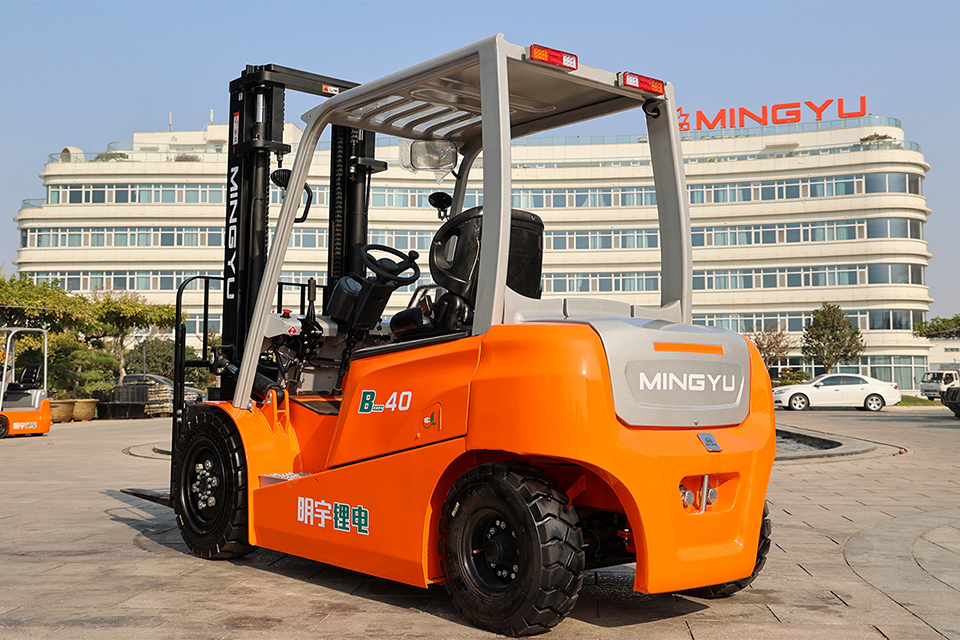
1. Tire Inspection. Focus on checking whether the tire pressure is normal (pneumatic tires), whether the tread has wear, cracks or foreign objects embedded, and at the same time check whether the wheel hub bolts are tight. For solid tires, pay attention to the surface wear degree; if the wear reaches the limit mark, it needs to be replaced in time; if the pneumatic tire has insufficient air pressure, it is necessary to check for air leakage to avoid tire blowout during operation.
2. Battery/Fuel Level Inspection. For electric forklifts, check whether the battery power is sufficient, check the value of the power display meter to ensure it meets the daily operation needs, and at the same time check whether the battery connection wires are firm, loose or oxidized, and whether the battery case is damaged or leaking. For internal combustion forklifts, check the fuel tank level and whether the engine oil level is within the specified range; if the engine oil is insufficient, it needs to be supplemented in time to avoid damage to the engine due to poor lubrication.
3. Brake System Inspection. First, test the driving brake performance: drive slowly in an open area, step on the brake pedal, and check whether the brake is sensitive and the braking distance is normal; second, check the parking brake (handbrake): park the forklift on a slope, pull the handbrake, and check whether it can park stably without sliding. At the same time, check the brake pedal stroke; if the stroke is too large or too small, it needs to be adjusted in time.
4. Hydraulic System Inspection. Check whether the hydraulic oil tank level meets the standard, and check whether the hydraulic pipelines and joints have oil leakage; if leakage is found, repair and replace the seals in time. Operate the hydraulic lifting handle to test whether the fork lifting and tilting actions are smooth without jamming or abnormal noise, and ensure that the hydraulic system pressure is normal.
5. Fork Inspection. Check whether the fork surface is deformed, cracked or worn, and whether the fork positioning pin is intact and tight to avoid fork falling during operation. At the same time, check whether the fork lifting chain is evenly tensioned, rusted, broken or worn, and whether the chain is sufficiently lubricated; if the lubrication is insufficient, add lubricating oil in time.
6. Light and Warning Device Inspection. Check whether the forklift's headlight, turn signal, brake light and warning light work normally to ensure they can play a normal role in dark environments or operation warnings. At the same time, check whether the horn volume is clear to avoid collision accidents caused by failure of warning devices.
7. Steering System Inspection. Turn the steering wheel to check whether the steering is flexible without jamming, and whether the steering mechanism has looseness or abnormal noise. Check whether the steering tie rod and ball joint are intact; if there is looseness, fasten them in time to avoid steering failure.
8. Safety Protection Device Inspection. Check whether the safety belt is intact without damage and whether the buckle can be firmly locked; check whether the overhead guard is intact without deformation or fracture to ensure it can effectively protect the driver's safety. For forklifts with side shift devices, check whether the side shift mechanism works normally.
9. Instrument Panel Inspection. After starting the forklift, check whether all indicator lights on the instrument panel are normal and no fault lights are on (such as engine fault light, hydraulic system fault light, etc.). Check whether the speed, temperature, pressure and other values displayed on the instrument panel are within the normal range; if there is any abnormality, investigate and deal with it in time.
10. Operating Environment Inspection. Although it is not an inspection of the forklift itself, it is a necessary pre-shift process. It is necessary to check whether there are obstacles in the operation area, whether the ground is flat, whether there are slippery factors such as oil stains and water accumulation, and at the same time check whether the lighting and ventilation conditions in the operation area are good to ensure the safety of the operation environment.
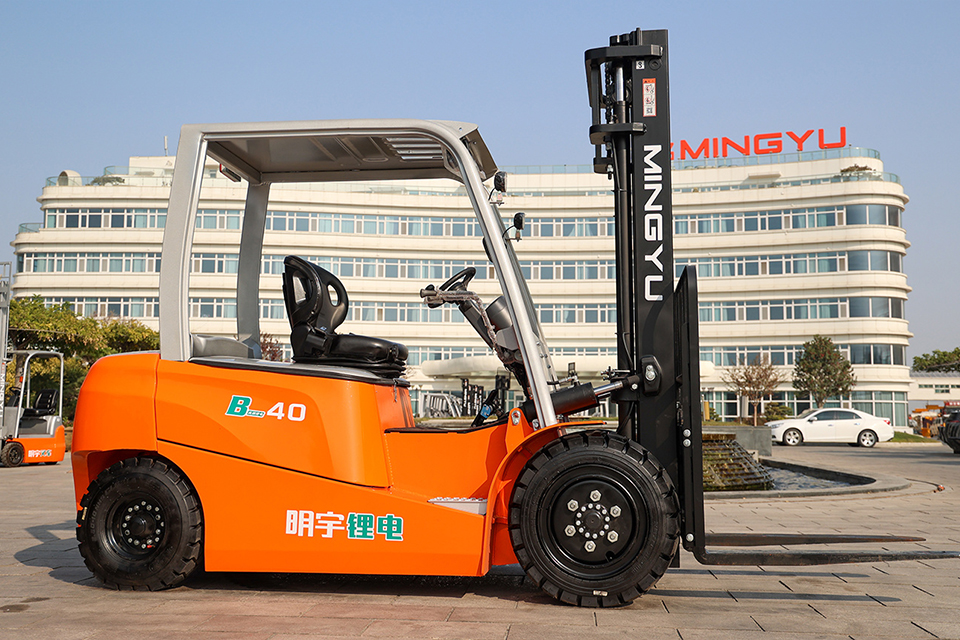
Professional personnel remind that pre-shift forklift inspections must be performed by professionally trained operators. If any abnormality is found during the inspection, the use of the forklift must be stopped immediately, and maintenance personnel should be contacted for maintenance. It is strictly prohibited to "operate with faults". Enterprises should establish a sound equipment inspection account, record the daily inspection situation, review the inspection data regularly, and optimize the equipment operation and maintenance plan. By standardizing the implementation of the pre-shift inspection process, the incidence of safety accidents can be effectively reduced, the efficiency of equipment operation can be improved, and a strong guarantee can be provided for the stable operation of enterprises.
Name: selena
Mobile:+86-13176910558
Tel:+86-0535-2090977
Whatsapp:8613181602336
Email:vip@mingyuforklift.com
Add:Xiaqiu Town, Laizhou, Yantai City, Shandong Province, China
