
vip@mingyuforklift.com
+86-0535-2090977

1. The Engineering Shift: IP Ratings and Weatherproofing
The primary obstacle to using electric forklifts outdoors has historically been moisture. Electronics and water are a volatile mix, but modern manufacturing has addressed this through rigorous Ingress Protection (IP) standards.
Understanding IP Ratings
For a forklift to be considered "outdoor-rated," its core components (motors, controllers, and battery connectors) must meet specific IP codes.
IP54: Protects against dust splash and water spray from any direction.1
IP65/66: Protects against low and high-pressure water jets, allowing the machine to operate in heavy rain or be hosed down for cleaning.
Manufacturers like Linde, Hyster-Yale, and Jungheinrich now design their outdoor electric lines with sealed controllers and waterproofed wiring harnesses, effectively neutralizing the risk of electrical shorts during inclement weather.
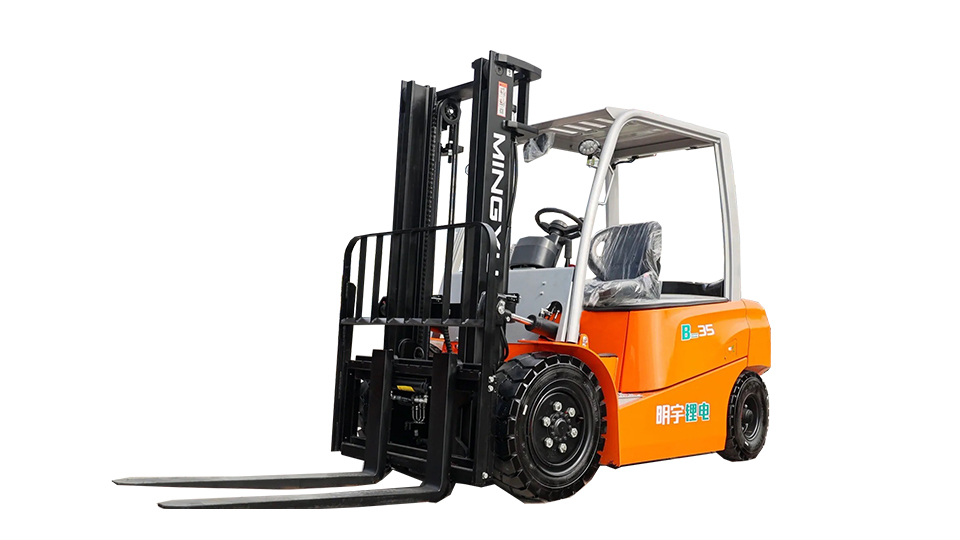
2. Battery Technology: Lead-Acid vs. Lithium-Ion
The type of battery powering the forklift dictates its outdoor performance, particularly regarding temperature extremes.
Lead-Acid Batteries (Traditional)
Outdoor Limitation: Lead-acid batteries are sensitive to temperature.2 In extreme cold, they can lose up to 30-50% of their effective capacity.
Charging Constraints: They cannot be "opportunity charged" easily and often require a climate-controlled charging room, which complicates outdoor workflows.
Lithium-Ion (The Modern Standard)
Lithium-ion (Li-ion) technology has revolutionized outdoor electric use.
Thermal Management: Modern Li-ion packs often include internal heaters and cooling systems, allowing them to operate in temperatures ranging from -25°C to 55°C.
Sealed Systems: Unlike lead-acid, Li-ion batteries are completely sealed, preventing electrolyte leakage and protecting against the corrosive effects of outdoor humidity and salt air.
3. Structural Design: Pneumatic vs. Cushion Tires
Even if the electronics are waterproof, an electric forklift cannot work outdoors if its chassis isn't designed for the ground conditions.
Cushion Tire Electrics: These are strictly for indoor use on smooth concrete. They have low ground clearance and zero traction on gravel or wet asphalt.
Electric Pneumatic Forklifts: These models feature larger, air-filled or solid-pneumatic tires and higher ground clearance.3 They are specifically engineered to handle the transitions between warehouse bays and asphalt loading docks, even in rain or light snow.
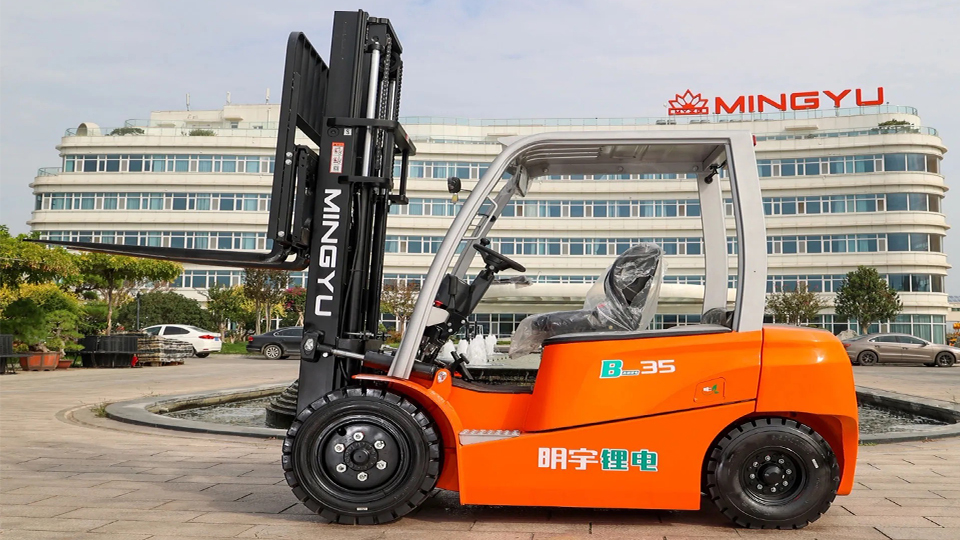
Technical Note: Many 80V and 96V electric forklifts now feature dual-motor front-wheel drive, which provides traction control comparable to an automotive limited-slip differential—often outperforming LPG trucks on slick, outdoor ramps.
4. Comparing Performance: Electric vs. IC Outdoors
To understand the viability of electric forklifts outdoors, we must look at the performance metrics side-by-side.
|
Feature |
Diesel/LPG Forklift |
Modern Outdoor Electric (80V) |
|
Initial Torque |
High, but requires engine "rev" |
Instantaneous (100% torque at 0 RPM) |
|
Gradeability |
High (20-25% grade) |
Equivalent or better with dual motors |
|
Noise Pollution |
High (80-100 dB) |
Minimal (60-70 dB) |
|
Emissions |
Tailpipe CO2/Particulates |
Zero at point of use |
|
Maintenance |
High (Oil, filters, belts) |
Low (No engine/transmission service) |
The "Torque Advantage"
Electric motors provide peak torque immediately.4 In an outdoor setting where a forklift might need to start on a gravel incline or push through thick mud, the instant power of an electric motor often provides a more stable and controlled lift than an IC engine that has to wait for a torque converter to engage.
5. Total Cost of Ownership (TCO) in Outdoor Applications
While an outdoor-rated electric forklift typically has a 20-40% higher purchase price than a diesel model, the long-term economics are compelling for outdoor fleets.
Fuel Savings: Electricity is significantly cheaper than diesel or propane per hour of operation.5 In a high-utilization outdoor environment (2,000+ hours/year), fuel savings alone can pay back the price premium in 24-36 months.
Reduced Downtime: Outdoor environments are "dirty." IC engines require air filters and radiators that frequently clog with dust. Electric forklifts have no air intake for the motor, drastically reducing maintenance stops in dusty environments like lumber yards or grain terminals.
Longevity: Electric motors have fewer moving parts.6 An outdoor electric forklift can often last 12,000 to 15,000 hours, whereas a diesel engine may require a major overhaul at 8,000 to 10,000 hours.
6. Real-World Applications
Where are electric forklifts currently replacing IC trucks outdoors?
Lumber Yards: Where the lack of exhaust protects the "clean" appearance of finished wood.
Food and Beverage: Moving pallets from refrigerated storage (cold) to outdoor loading docks (hot) without the condensation issues that plague internal combustion engines.
Urban Construction: Where strict noise ordinances prevent the use of loud diesel engines early in the morning or late at night.
Conclusion
The question is no longer "Can electric forklifts be used outdoors?" but rather "Is your infrastructure ready for them?" For businesses with the ability to install high-speed charging stations, the modern outdoor electric forklift offers a cleaner, quieter, and more cost-effective alternative to traditional fuel.
Name: selena
Mobile:+86-13176910558
Tel:+86-0535-2090977
Whatsapp:8613181602336
Email:vip@mingyuforklift.com
Add:Xiaqiu Town, Laizhou, Yantai City, Shandong Province, China
