
vip@mingyuforklift.com
+86-0535-2090977

1. Introduction: The Importance of Stacker Maintenance
Before delving into specific maintenance techniques, it is essential to understand why stacker maintenance is crucial. Stackers, as mechanical and electrical integration equipment, are composed of multiple systems such as mechanical structures, hydraulic systems, electrical systems (for electric stackers), and transmission systems. During long-term use, factors such as friction, wear, vibration, and environmental impacts (such as dust, humidity, and temperature changes) will inevitably cause gradual aging and damage to components. Neglecting maintenance will lead to the following consequences:
First, frequent failures affect operational efficiency. Unexpected failures such as difficulty in lifting, unsmooth steering, and power system malfunctions will interrupt the material handling process, resulting in delayed delivery, reduced warehouse throughput, and increased labor costs. Second, the service life of the equipment is significantly shortened. Scientific maintenance can slow down the wear rate of components, while lack of maintenance will accelerate the aging of key parts such as hydraulic pumps, motors, and gears, forcing enterprises to replace equipment in advance and increasing capital investment. Third, potential safety hazards threaten personnel and property safety. Stacker failures during operation, such as sudden lifting mechanism failure leading to goods falling, or brake failure causing equipment collision, may cause casualties and damage to goods. Fourth, the maintenance cost increases exponentially. Minor faults that are not handled in a timely manner will gradually develop into major faults, requiring expensive replacement of components and even overall overhauls, which is far more costly than regular preventive maintenance.
On the contrary, regular and standardized maintenance can bring multiple benefits: extending the service life of the equipment by 30%-50%, reducing failure rates by more than 60%, improving operational efficiency and stability, ensuring the safety of operators and goods, and reducing long-term maintenance and replacement costs. Therefore, establishing a sound stacker maintenance system and mastering core maintenance techniques are essential for every enterprise using stackers.
2. Pre-Maintenance Preparation: Basic Principles and Safety Norms
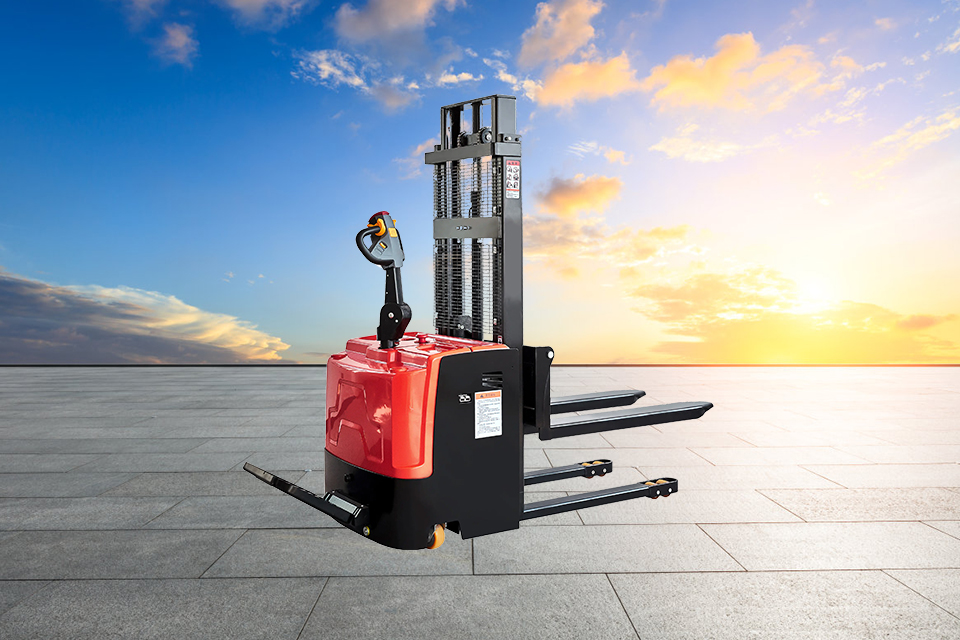
Before carrying out stacker maintenance work, it is necessary to abide by relevant safety norms and make adequate preparations to ensure the safety of maintenance personnel and the integrity of equipment. The basic principles and safety requirements of maintenance are as follows:
2.1 Basic Principles of Maintenance
The maintenance of stackers should follow the principles of "prevention first, combination of prevention and treatment". Specifically, it includes: regular inspection and maintenance to detect and eliminate potential faults in advance; targeted maintenance according to the type of stacker (manual/electric), working environment, and usage frequency; adherence to the maintenance standards and requirements specified in the equipment manual; and the use of genuine or compatible spare parts to avoid secondary damage to the equipment due to inferior parts.
2.2 Safety Norms for Maintenance
Safety is the top priority of maintenance work. Operators must strictly abide by the following safety norms:
Park the stacker in a flat, stable, and well-ventilated area, away from busy passages, flammable and explosive materials. Pull the parking brake, block the wheels with wheel chocks to prevent the equipment from sliding accidentally.
For electric stackers, first turn off the power switch, unplug the charging plug, and wait for the residual voltage in the electrical system to dissipate before maintenance. For manual stackers, ensure that the lifting mechanism is in a locked state to prevent accidental lowering.
Wear personal protective equipment (PPE) such as safety shoes, gloves, safety glasses, and protective clothing. When operating in high places (such as checking the top of the stacker), use safety ladders or platforms and fasten safety belts.
Do not carry out maintenance work alone. There should be at least two people to cooperate, so that they can help each other in case of emergencies.
When disassembling and assembling components, use special tools correctly and avoid violent disassembly to prevent damage to parts and components. After maintenance, carefully check whether all components are installed correctly and firmly, and whether there are any missing parts.
Keep the maintenance site clean and tidy, and properly dispose of waste oil, waste parts, and other pollutants to avoid environmental pollution.
3. Core Maintenance Techniques for Different Types of Stackers
Stackers are mainly divided into two categories: manual stackers and electric stackers. Their structural principles and core components are different, so the maintenance focus and techniques also vary. The following will elaborate on the core maintenance techniques for these two types of stackers respectively.
3.1 Maintenance Techniques for Manual Stackers
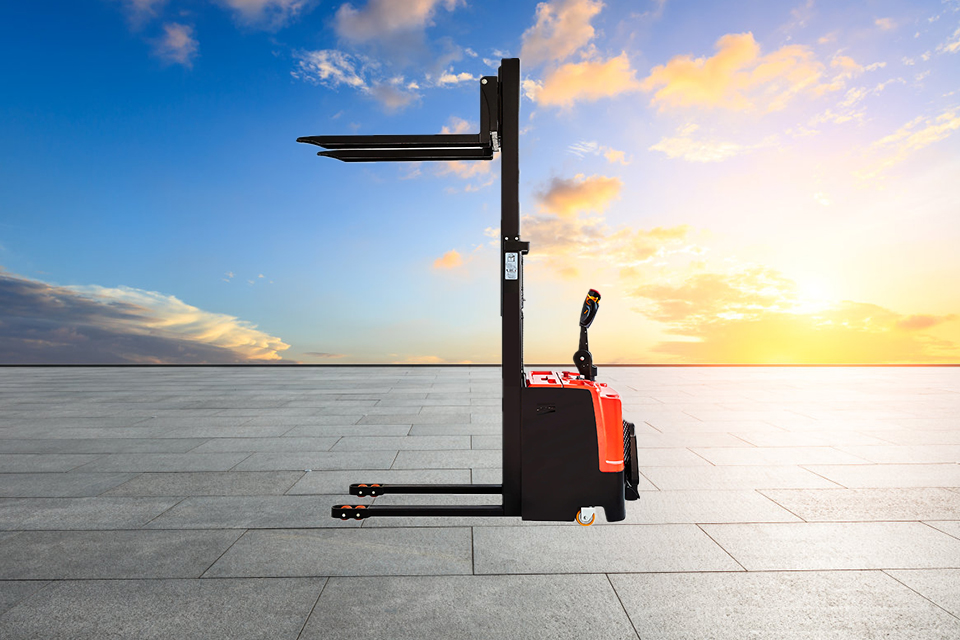
Manual stackers rely on human power to operate the hydraulic system to achieve lifting and lowering of goods. Their structure is relatively simple, mainly consisting of a hydraulic system, frame, fork, wheels, and operating handle. The core maintenance focus is on the hydraulic system and moving parts.
3.1.1 Maintenance of Hydraulic System
The hydraulic system is the core power component of the manual stacker, and its performance directly affects the lifting capacity and stability of the equipment. Key maintenance points include:
Oil Level Inspection and Replacement: Regularly check the oil level of the hydraulic oil tank. The oil level should be between the upper and lower scale lines specified in the equipment manual. If the oil level is too low, it will cause insufficient lifting force or difficulty in lifting. At the same time, check the hydraulic oil for contamination (such as discoloration, turbidity, or the presence of impurities). If the oil quality deteriorates, it should be replaced in time. The replacement cycle of hydraulic oil is generally 6-12 months, depending on the usage frequency and working environment. When replacing, first drain the old oil completely, clean the oil tank and filter, then add new hydraulic oil that meets the specifications (usually 32# or 46# anti-wear hydraulic oil).
Leakage Inspection: Check all hydraulic pipelines, joints, hydraulic cylinders, and hydraulic pumps for oil leakage. If oil leakage is found, first check whether the joint is loose. If it is loose, tighten it; if the seal ring is damaged, replace the seal ring in time. When replacing the seal ring, select the same model and specification to ensure the sealing effect.
Operation Performance Check: Operate the lifting handle to check whether the lifting is smooth, whether there is jamming or slow lifting. If there is a problem, first check whether the hydraulic pump is faulty (such as internal wear) or whether the oil filter is blocked. Clean or replace the filter, and repair or replace the hydraulic pump if necessary. At the same time, check the lowering speed of the fork. If the lowering speed is too fast or uncontrollable, it may be due to the failure of the one-way valve in the hydraulic system. Disassemble and inspect the one-way valve, clean the valve core, or replace the valve core and spring.
3.1.2 Maintenance of Moving Parts
The moving parts of manual stackers include wheels (load wheels, steering wheels), bearings, and connecting shafts. These parts are prone to wear due to long-term friction and load-bearing. Maintenance points are as follows:
Wheel Inspection and Maintenance: Regularly check the wear of the wheels. If the wheel surface is severely worn, cracked, or deformed, replace the wheels in time. At the same time, check whether the wheel bearings are loose or stuck. If the rotation is inflexible, disassemble the wheels, clean the bearings, and apply lubricating grease (such as lithium-based grease) to ensure smooth rotation. The lubrication cycle of wheels is generally 1-2 months.
Connecting Shaft and Hinge Maintenance: Check the connecting shafts and hinges of the frame, fork, and operating handle for looseness, wear, or deformation. If loose, tighten the bolts; if worn severely, replace the connecting shafts or bushings. Apply lubricating grease to the hinges regularly to reduce friction and prevent rust.
3.1.3 Frame and Fork Maintenance
Check the frame and fork for cracks, deformation, or corrosion. If cracks are found, stop using the equipment immediately and contact professional maintenance personnel for welding and reinforcement. For corroded parts, clean the rust and apply anti-rust paint to prevent further corrosion. At the same time, check whether the fork is loose or bent. If the fork is bent, it should be corrected or replaced to avoid the risk of goods falling.
3.2 Maintenance Techniques for Electric Stackers
Electric stackers are driven by motors and batteries, with more complex structures, including electrical systems, battery systems, hydraulic systems, transmission systems, and mechanical structures. Compared with manual stackers, their maintenance involves more aspects, and the core focuses on electrical systems, battery systems, and hydraulic systems.
3.2.1 Maintenance of Electrical System
The electrical system of electric stackers includes batteries, motors (driving motor, lifting motor), controllers, sensors, switches, and wiring harnesses. It is the "nerve center" of the equipment, and its stability directly affects the normal operation of the equipment. Key maintenance points are:
Motor Maintenance: Regularly check the driving motor and lifting motor for abnormal noise, overheating, or vibration during operation. If abnormal phenomena are found, stop using the equipment immediately and inspect the motor. Clean the motor surface and heat dissipation fins to ensure good heat dissipation. Check the motor windings for insulation damage. Use a multimeter to measure the insulation resistance. If the resistance is too low, it indicates insulation damage, and the motor needs to be repaired or replaced. At the same time, check the motor brushes (for brushed motors) for wear. If the brush length is less than the minimum limit specified in the manual, replace the brushes in time. For brushless motors, check the encoder and rotor for faults.
Controller Maintenance: The controller is the core component of the electrical system, responsible for controlling the operation of the motor and the coordination of various systems. Regularly check the controller for loose connections, overheating, or water ingress. Clean the dust inside the controller with compressed air (note the pressure should not be too high to avoid damaging components). If the controller displays an error code, refer to the equipment manual to troubleshoot and solve the problem in time.
Wiring Harness and Connector Maintenance: Check all wiring harnesses for wear, aging, or damage. If the insulation layer of the wiring harness is damaged, wrap it with insulating tape or replace the wiring harness. Check the connectors for looseness, oxidation, or corrosion. For oxidized or corroded connectors, clean them with a wire brush or contact cleaner, and apply anti-oxidation paste if necessary. Ensure that all connectors are plugged in firmly to avoid poor contact.
Sensor and Switch Maintenance: Check the limit sensors (such as lifting limit, lowering limit), steering sensors, and safety switches (such as emergency stop switch, foot brake switch) for normal operation. Test the emergency stop switch to ensure that the equipment can stop immediately when the switch is pressed. If a sensor or switch fails, replace it in time to ensure the safety and reliability of the equipment.
3.2.2 Maintenance of Battery System
The battery is the power source of the electric stacker, and its service life and performance directly affect the working time and efficiency of the equipment. At present, the batteries used in electric stackers are mainly lead-acid batteries and lithium-ion batteries, and their maintenance methods are slightly different.
Maintenance of Lead-Acid Batteries: Regularly check the electrolyte level of the battery. The electrolyte level should be 10-15mm above the electrode plate. If the level is too low, add distilled water (not tap water or mineral water) to the specified level. Check the battery terminals for oxidation, corrosion, or loose connections. For oxidized terminals, clean them with a wire brush dipped in dilute sulfuric acid (or baking soda solution), then dry them and apply anti-corrosion grease. Follow the correct charging method: use a special charger matching the battery, do not overcharge or undercharge. After the battery is fully charged, disconnect the charger in time. Avoid charging the battery in a high-temperature or low-temperature environment (the suitable charging temperature is 15-30℃). The battery should be charged at least once every 1-2 weeks even if it is not used for a long time to prevent sulfation of the electrode plate.
Maintenance of Lithium-Ion Batteries: Compared with lead-acid batteries, lithium-ion batteries require less maintenance, but they also need to pay attention to the following points: use a special charger for lithium-ion batteries to avoid overcharging and over-discharging. Do not expose the battery to high temperatures (such as direct sunlight) or low temperatures for a long time, which will affect the battery life and performance. Check the battery case for damage or deformation. If damage is found, stop using it immediately and contact professional personnel for maintenance. Avoid collision or impact on the battery during use and maintenance.
3.2.3 Maintenance of Hydraulic System for Electric Stackers
The hydraulic system of electric stackers is similar to that of manual stackers, but it is driven by a hydraulic pump motor. On the basis of the maintenance points of manual stackers' hydraulic systems, the following points should be added:
Hydraulic Pump Motor Maintenance: Check the hydraulic pump motor for abnormal noise, overheating, or vibration during operation. Clean the motor surface and heat dissipation fins. Check the connection between the motor and the hydraulic pump for looseness. If loose, tighten the coupling or fixing bolts.
Hydraulic System Pressure Check: Regularly check the working pressure of the hydraulic system with a pressure gauge. The pressure should be within the range specified in the equipment manual. If the pressure is too high or too low, adjust the relief valve. If the relief valve fails, replace it in time.
3.2.4 Maintenance of Transmission System
The transmission system of electric stackers includes gearboxes, drive axles, and chains (for some models). Maintenance points are as follows:
Gearbox Maintenance: Regularly check the oil level and oil quality of the gearbox. The oil level should be between the upper and lower scale lines. If the oil quality deteriorates (such as discoloration, turbidity, or the presence of metal debris), replace the gear oil in time. The replacement cycle of gear oil is generally 6-12 months. Check the gearbox for oil leakage. If oil leakage is found, tighten the bolts or replace the seal ring.
Drive Axle Maintenance: Check the drive axle for abnormal noise or overheating during operation. Check the connection between the drive axle and the frame for looseness. Clean the drive axle surface and check for oil leakage. Lubricate the drive axle bearings regularly.
Chain Maintenance (if applicable): Check the tension and wear of the chain. If the chain is too loose, adjust the tensioning device; if the chain is severely worn or broken, replace the chain. Lubricate the chain with chain oil regularly to reduce friction and prevent rust.
4. Stacker Maintenance Cycle and Schedule
Scientific maintenance cycle is the guarantee of effective maintenance. According to the frequency of use and working environment of the stacker, the maintenance cycle can be divided into daily maintenance, weekly maintenance, monthly maintenance, quarterly maintenance, and annual maintenance. The following is a detailed maintenance schedule:
4.1 Daily Maintenance (Before and After Use)
Daily maintenance is the most basic maintenance work, which should be completed by the operator before and after using the stacker. The main contents include:
Before use: Check the appearance of the equipment for damage; check the tire pressure and wear; check the hydraulic system for oil leakage; check the battery power (for electric stackers); test the lifting, lowering, steering, and braking functions to ensure they are normal; check whether the safety devices (such as emergency stop switch, warning light) are working properly.
After use: Clean the equipment surface to remove dust, debris, and oil stains; park the equipment in the designated area, pull the parking brake, and block the wheels; for electric stackers, charge the battery in time (if the power is low); record the equipment operation and any abnormal phenomena.
4.2 Weekly Maintenance
Weekly maintenance is completed by maintenance personnel or operators with professional training. The main contents include:
Comprehensive inspection of the hydraulic system: check the oil level, oil quality, and leakage; clean the oil filter.
Inspection of moving parts: check the wheels, bearings, connecting shafts, and hinges; lubricate the relevant parts.
Inspection of electrical system (for electric stackers): check the wiring harness, connectors, and sensors; clean the motor and controller surface
Inspection of the frame and fork: check for cracks, deformation, or corrosion.
4.3 Monthly Maintenance
Monthly maintenance is completed by professional maintenance personnel. The main contents include:
Deep inspection of the hydraulic system: disassemble and clean the one-way valve, relief valve, and other components; check the wear of the hydraulic pump and hydraulic cylinder.
Inspection of the electrical system: check the motor windings, brushes (for brushed motors), and controller; test the performance of the safety switches and sensors.
Inspection of the battery system: check the electrolyte level (for lead-acid batteries), terminals, and charging system; clean the battery surface.
Inspection of the transmission system: check the gearbox oil level and oil quality; check the chain tension and wear (if applicable).
4.4 Quarterly Maintenance
Quarterly maintenance is a more in-depth maintenance work, completed by professional maintenance personnel. The main contents include:
Replace the hydraulic oil and clean the oil tank and filter.
Replace the gear oil of the gearbox (for electric stackers).
Comprehensive inspection of the drive axle and bearings; replace the lubricating grease.
Check the wear of the fork and frame; perform anti-rust treatment on corroded parts.
Calibrate the sensors and safety devices to ensure their accuracy and reliability.
4.5 Annual Maintenance
Annual maintenance is a comprehensive overhaul of the stacker, completed by professional maintenance personnel or the manufacturer's after-sales team. The main contents include:
Disassemble key components such as the hydraulic system, electrical system, and transmission system for comprehensive inspection and maintenance.
Replace severely worn components such as motors, hydraulic pumps, gearboxes, and wheels.
Check the overall structure of the equipment for deformation or cracks; perform welding reinforcement if necessary.
Comprehensive calibration and testing of the equipment to ensure that all performance indicators meet the factory standards.
Form a maintenance report, record the maintenance content, replaced parts, and equipment status, and put forward suggestions for subsequent use and maintenance.
5. Common Faults and Troubleshooting Methods for Stackers
Despite regular maintenance, stackers may still experience faults due to various reasons. Mastering common fault troubleshooting methods can help quickly solve problems and reduce downtime. The following are common faults and corresponding troubleshooting methods for manual and electric stackers:
5.1 Common Faults of Manual Stackers
Fault 1: Difficulty in lifting or inability to lift. Troubleshooting: Check the hydraulic oil level; if it is too low, add hydraulic oil. Check if the hydraulic pump is faulty; disassemble and inspect the pump core, and replace if necessary. Check if the oil filter is blocked; clean or replace the filter. Check if the one-way valve is stuck; clean the valve core and spring.
Fault 2: The fork lowers too fast. Troubleshooting: Check if the one-way valve is leaking; disassemble and inspect the valve core and seal ring, and replace if necessary. Check if the hydraulic cylinder has internal leakage; repair or replace the hydraulic cylinder.
Fault 3: Oil leakage in the hydraulic system. Troubleshooting: Check the connectors for looseness; tighten the connectors. Check if the seal ring is damaged; replace the seal ring. Check if the hydraulic pipeline is damaged; replace the pipeline.
Fault 4: Unsmooth steering. Troubleshooting: Check if the steering wheel is worn or stuck; replace the steering wheel or clean and lubricate the bearings. Check if the connecting shaft of the steering mechanism is loose or worn; tighten the bolts or replace the connecting shaft.
5.2 Common Faults of Electric Stackers
Fault 1: The equipment cannot start. Troubleshooting: Check if the battery is fully charged; if not, charge it. Check if the power switch is faulty; replace the switch if necessary. Check if the emergency stop switch is pressed; reset the switch. Check the wiring harness and connectors for poor contact; re-plug or repair the connectors.
Fault 2: Weak lifting or inability to lift. Troubleshooting: Check the hydraulic oil level and oil quality; add or replace hydraulic oil. Check if the lifting motor is faulty; inspect the motor windings and brushes, and repair or replace if necessary. Check if the hydraulic pump is faulty; replace the hydraulic pump if necessary. Check if the relief valve is faulty; adjust or replace the relief valve.
Fault 3: Abnormal noise during operation. Troubleshooting: Check if the motor is faulty; inspect the motor and repair or replace if necessary. Check if the gearbox is short of oil or has worn gears; add gear oil or replace the gears. Check if the wheels or bearings are worn or stuck; replace the wheels or lubricate the bearings.
Fault 4: The battery is not charging or charging is slow. Troubleshooting: Check if the charger is faulty; replace the charger if necessary. Check if the battery terminals are oxidized or loose; clean and tighten the terminals. Check if the battery is severely worn or damaged; replace the battery if necessary.
6. Conclusion: Establish a Scientific Maintenance System
Stacker maintenance is a systematic project that requires the joint efforts of enterprises, operators, and maintenance personnel. Enterprises should establish a sound maintenance management system, formulate detailed maintenance plans and schedules, and ensure that maintenance work is carried out in a standardized and regular manner. Operators should enhance their sense of responsibility, do a good job in daily maintenance and inspection, and promptly report any abnormal phenomena. Maintenance personnel should master professional maintenance techniques, conduct in-depth maintenance and troubleshooting according to the maintenance cycle, and ensure the stability and reliability of the equipment.
By adhering to scientific maintenance methods and core techniques, enterprises can effectively extend the service life of stackers, reduce failure rates and maintenance costs, improve operational efficiency, and ensure the safety of personnel and goods. In the context of increasingly fierce market competition, scientific equipment maintenance has become an important part of improving the core competitiveness of enterprises. Therefore, it is essential for every enterprise using stackers to attach great importance to stacker maintenance and implement it in practice.
Name: selena
Mobile:+86-13176910558
Tel:+86-0535-2090977
Whatsapp:8613181602336
Email:vip@mingyuforklift.com
Add:Xiaqiu Town, Laizhou, Yantai City, Shandong Province, China
