
vip@mingyuforklift.com
+86-0535-2090977

In the fast-paced logistics and warehousing industry, stackers are the backbone of material handling operations. Their operational stability directly determines warehouse throughput, labor costs, and overall supply chain efficiency. However, many enterprises face persistent challenges: frequent stacker failures leading to unplanned downtime, increased maintenance expenses, and reduced operational efficiency. The root cause often lies in the lack of a professional and systematic maintenance system. This technical guide focuses on professional stacker maintenance strategies, detailing targeted maintenance methods for key components, scientific maintenance cycles, and practical fault prevention measures. By implementing these professional maintenance practices, enterprises can effectively reduce equipment failure rates, extend service life, and achieve continuous improvement in operational efficiency.
1. The Correlation Between Professional Maintenance, Failure Rate, and Operational Efficiency
To understand the value of professional stacker maintenance, it is first necessary to clarify the intrinsic connection between maintenance quality, equipment failure rate, and operational efficiency. Stackers, as integrated mechanical and electrical equipment, rely on the coordinated operation of multiple systems—including hydraulic, electrical (for electric models), transmission, and mechanical structures. During long-term use, factors such as friction, load-bearing, environmental dust, and temperature changes inevitably cause component wear, aging, and performance degradation. Unprofessional or irregular maintenance will allow these minor issues to accumulate into major faults, resulting in consequences such as sudden equipment shutdowns, reduced lifting capacity, and unsmooth steering.
From an operational efficiency perspective, unplanned downtime caused by stacker failures can disrupt the entire material handling process. For example, a failed stacker in a busy warehouse may lead to backlogs of inbound and outbound goods, delayed order fulfillment, and increased labor idle time. Statistics show that enterprises without systematic maintenance experience stacker failure rates 2-3 times higher than those with professional maintenance systems, and their annual maintenance costs account for 15%-20% of the equipment purchase price—far exceeding the 5%-8% cost ratio for enterprises with standardized maintenance.
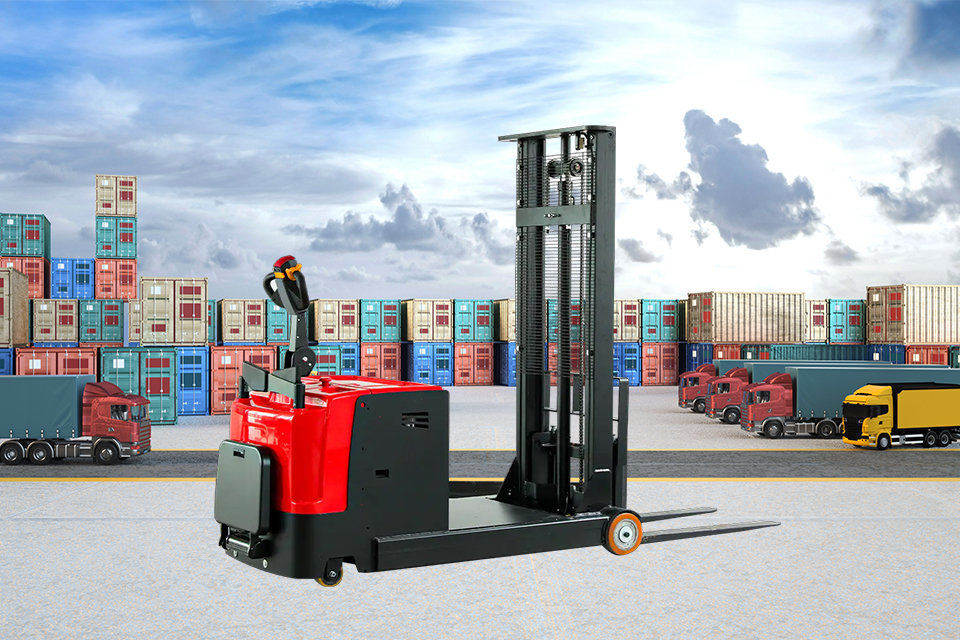
In contrast, professional maintenance achieves three core goals: first, proactive fault prevention. By regularly inspecting and maintaining key components, potential issues are identified and resolved before they develop into failures, reducing unplanned downtime. Second, optimizing equipment performance. Timely lubrication, adjustment, and component replacement ensure that the stacker operates at peak performance, maintaining stable lifting and moving speeds. Third, extending service life. Scientific maintenance slows down component wear, reducing the frequency of equipment replacement and lowering long-term capital investment. These three goals directly translate to reduced failure rates and improved operational efficiency, creating tangible economic benefits for enterprises.
2. Pre-Requisites for Professional Maintenance: Safety Norms and Preparation
Professional stacker maintenance must be based on strict safety norms and adequate preparation. Improper maintenance operations not only fail to protect the equipment but may also cause safety accidents such as equipment sliding, component detachment, or electric shock. The following are the core safety requirements and preparation steps for professional maintenance:
2.1 Core Safety Norms
Equipment parking: Park the stacker on a flat, solid, and well-ventilated ground, away from busy operation channels, flammable, and explosive materials. Firmly engage the parking brake and place wheel chocks under the front and rear wheels to prevent accidental sliding. For electric stackers, ensure the lifting fork is lowered to the lowest position before maintenance.
Power and pressure release: For electric stackers, turn off the main power switch, unplug the charging connector, and wait 5-10 minutes to allow residual voltage in the electrical system to dissipate. For manual or electric stackers with hydraulic systems, slowly release the hydraulic pressure by operating the lifting/lowering lever to avoid sudden pressure release causing component damage.
Personal protective equipment (PPE): Maintenance personnel must wear professional PPE, including anti-impact safety shoes, acid-resistant gloves, safety goggles, and protective clothing. When working at height (e.g., inspecting the top of the stacker), use a stable platform and fasten a safety belt.
Operational collaboration: Avoid solo maintenance operations. At least two personnel should cooperate to handle complex tasks such as component disassembly and lifting, ensuring mutual assistance in case of emergencies.
2.2 Maintenance Preparation
Tool preparation: Prepare special tools matching the stacker model, such as torque wrenches, hydraulic pressure gauges, multimeters, and bearing pullers. Avoid using mismatched tools that may damage components.
Spare parts and materials: Prepare genuine or certified compatible spare parts (e.g., seal rings, bearings, motor brushes) and maintenance materials (e.g., specified hydraulic oil, gear oil, lubricating grease, anti-rust paint) according to the maintenance plan.
Documentation preparation: Review the stacker's operation and maintenance manual, previous maintenance records, and fault reports to understand the equipment's historical performance and focus on potential problem areas.
3. Professional Maintenance Techniques for Key Components (Manual & Electric Stackers)
The core of professional maintenance lies in targeted care for key components. Stackers are mainly divided into manual and electric types, with differences in their core systems. Below are professional maintenance techniques for key components of both types, focusing on fault prevention and performance optimization.
3.1 Maintenance of Hydraulic System (Common to Both Types)
The hydraulic system is the power core of stackers, responsible for lifting and lowering goods. Its failure (e.g., oil leakage, insufficient lifting force) is one of the main causes of stacker downtime. Professional maintenance techniques for the hydraulic system include:
Oil quality and level management: Regularly check the hydraulic oil level (ensuring it is between the upper and lower scale lines of the oil tank) and oil quality. If the oil appears discolored, turbid, or contains metal particles, it must be replaced immediately. Use hydraulic oil that meets the manufacturer's specifications (usually 32# or 46# anti-wear hydraulic oil). For manual stackers, replace hydraulic oil every 6-12 months; for electric stackers with high usage frequency, shorten the replacement cycle to 4-8 months. When replacing oil, fully drain the old oil, clean the oil tank and filter element with a neutral cleaning agent, and add new oil slowly to avoid air bubbles.
Leakage prevention and treatment: Conduct a comprehensive leakage inspection of hydraulic pipelines, joints, hydraulic cylinders, and pumps. For loose joints, use a torque wrench to tighten them to the specified torque (avoid over-tightening damaging threads). For oil leakage caused by damaged seal rings, replace them with seal rings of the same model and material (preferably genuine parts to ensure sealing performance). After replacement, conduct a pressure test to confirm no leakage.
Valve and pump maintenance: Regularly disassemble and inspect key valves (one-way valve, relief valve) to remove internal impurities and check for valve core wear or spring fatigue. For the hydraulic pump, check for abnormal noise or vibration during operation. Use a pressure gauge to test the working pressure of the hydraulic system (ensuring it matches the manufacturer's specified range). If the pressure is unstable or insufficient, inspect the pump's internal components (e.g., plunger, cylinder block) for wear and replace them if necessary.
3.2 Maintenance of Mechanical Transmission Components
Mechanical transmission components (wheels, bearings, forks, frame) are subject to long-term friction and load-bearing, and their wear directly affects the stacker's stability and safety. Professional maintenance techniques include:
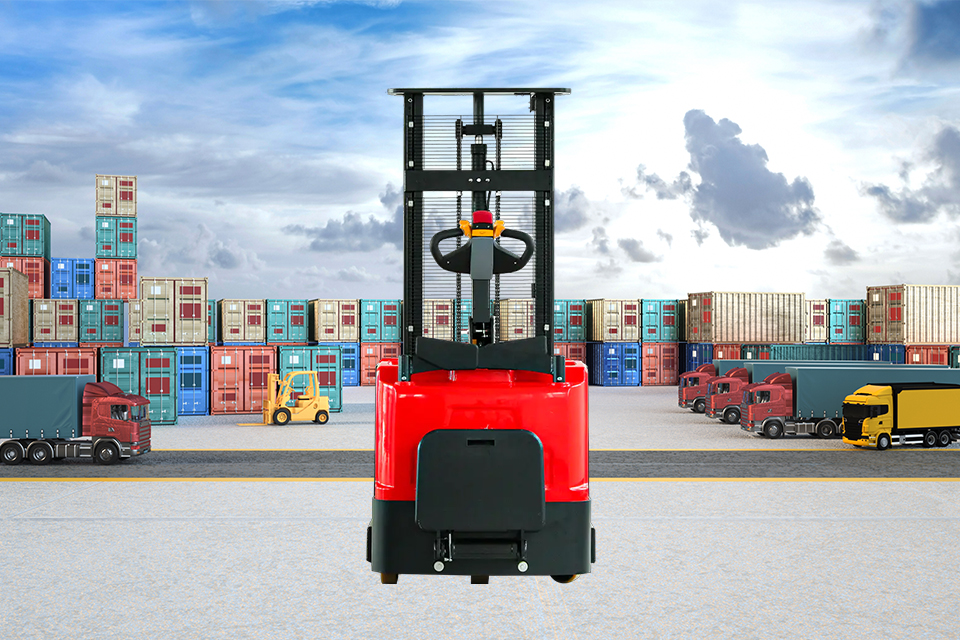
Wheel and bearing maintenance: Check the wear of load wheels and steering wheels. If the wheel surface wear exceeds 3mm, or if there are cracks or deformation, replace the wheels immediately. Disassemble the wheels quarterly to clean the bearings, apply lithium-based lubricating grease, and check for bearing looseness or damage. For electric stackers, also inspect the drive wheel's connection to the motor and tighten loose fasteners.
Fork and frame inspection: Check the fork for bending, deformation, or cracks (focus on the root of the fork). Use a straightedge to measure the fork's straightness; if the deviation exceeds 2mm/m, correct it or replace the fork. Inspect the frame for corrosion or welding seam cracks; remove rust with a wire brush and apply anti-rust paint. For electric stackers, check the connection between the frame and the drive axle to ensure no looseness.
Lubrication management: Regularly lubricate moving parts such as hinges, connecting shafts, and chains (for some electric models) with appropriate lubricants. For example, apply lithium-based grease to hinges and connecting shafts every 1-2 months; for chains, use special chain oil and adjust the chain tension to ensure it can be lifted by 10-15mm by hand (too tight increases wear, too loose causes jumping).
3.3 Maintenance of Electrical System (Electric Stackers Only)
The electrical system is unique to electric stackers, consisting of batteries, motors, controllers, sensors, and wiring harnesses. Its failure (e.g., power loss, motor failure) directly affects operational efficiency. Professional maintenance techniques include:
Battery maintenance (lead-acid & lithium-ion): For lead-acid batteries, regularly check the electrolyte level (ensuring it is 10-15mm above the electrode plate; add distilled water if insufficient), clean the battery terminals (remove oxidation with a baking soda solution, dry and apply anti-corrosion grease), and use a dedicated charger for charging (avoid overcharging or undercharging). For lithium-ion batteries, avoid charging in high-temperature (above 40℃) or low-temperature (below 0℃) environments, check the battery case for deformation or damage, and replace the battery if its capacity drops below 80% of the rated capacity. Regardless of battery type, store it in a dry, ventilated environment when not in use and charge it at least once every two weeks.
Motor and controller maintenance: Inspect the driving and lifting motors for abnormal noise, overheating, or vibration during operation. Clean the motor's heat dissipation fins with compressed air (pressure ≤0.4MPa) to ensure heat dissipation. For brushed motors, check the brush wear; if the brush length is less than 5mm, replace it immediately. For the controller (the "brain" of the electrical system), clean dust inside regularly, check the wiring terminals for looseness or oxidation, and use a multimeter to test the input and output voltage to ensure it is within the normal range. If an error code appears, refer to the manual for troubleshooting or contact professional technicians.
Wiring harness and sensor maintenance: Check the wiring harness for wear, aging, or insulation damage; wrap damaged areas with insulating tape or replace the harness. Inspect sensors (lifting limit, steering sensor) and safety switches (emergency stop, foot brake) for normal operation. Test the emergency stop switch monthly to ensure the equipment shuts down immediately when activated.
4. Scientific Maintenance Cycle Plan for Reducing Failure Rate
Professional maintenance requires a scientific cycle plan to avoid "over-maintenance" (wasting resources) or "under-maintenance" (failing to prevent faults). Based on industry experience and manufacturer recommendations, the maintenance cycle is divided into five levels: daily, weekly, monthly, quarterly, and annual. Each level has clear focuses and standards, ensuring comprehensive equipment coverage.
4.1 Daily Maintenance (Completed by Operators)
Focus: Quick inspection to ensure safe operation. Content includes: checking the equipment's appearance for damage; inspecting tire pressure and wear; checking for hydraulic oil leakage; testing lifting, lowering, steering, and braking functions; verifying that safety devices (warning lights, emergency stop) work normally; and cleaning the equipment surface of dust and debris. Record any abnormalities found and report them to maintenance personnel.
4.2 Weekly Maintenance (Completed by Maintenance Personnel)
Focus: Comprehensive inspection of key systems. Content includes: checking the hydraulic oil level and cleaning the oil filter; lubricating hinges, connecting shafts, and wheels; inspecting the wiring harness and connectors of the electrical system; checking the fork and frame for deformation; and testing the battery's charging status (electric stackers).
4.3 Monthly Maintenance (Completed by Professional Maintenance Personnel)
Focus: In-depth inspection and performance testing. Content includes: disassembling and cleaning hydraulic valves and filters; inspecting motor brushes and windings; checking the gearbox oil level and quality (electric stackers); calibrating sensors and safety switches; and testing the hydraulic system's working pressure.
4.4 Quarterly Maintenance (Completed by Professional Team)
Focus: Component maintenance and replacement. Content includes: replacing hydraulic oil and cleaning the oil tank; replacing gearbox oil (electric stackers); replacing worn bearings and seal rings; adjusting chain tension; and performing anti-rust treatment on the frame and fork.
4.5 Annual Maintenance (Completed by Manufacturer or Professional Team)
Focus: Comprehensive overhaul and performance calibration. Content includes: disassembling key components (motor, hydraulic pump, gearbox) for inspection and replacement of severely worn parts; checking the overall structure for deformation and reinforcing welding seams if necessary; calibrating the entire equipment to meet factory performance standards; and compiling a maintenance report with recommendations for subsequent use.
4. Professional Fault Diagnosis and Rapid Handling
Even with professional maintenance, occasional faults may occur. Rapid and accurate fault diagnosis is key to minimizing downtime. Below are common stacker faults, professional diagnosis methods, and handling measures:
Fault 1: Insufficient lifting force (both types). Diagnosis: Use a pressure gauge to test the hydraulic system pressure; if pressure is low, check for oil leakage, clogged filters, or faulty relief valves. Handling: Tighten joints or replace seal rings for leaks; clean or replace filters; adjust or replace relief valves.
Fault 2: Electric stacker fails to start. Diagnosis: Check battery voltage (with a multimeter), power switch status, and emergency stop switch. If the battery voltage is normal but the equipment does not start, inspect the wiring harness for poor contact or controller failure. Handling: Charge the battery if under-voltage; reset or replace switches; repair wiring harnesses or replace controllers.
Fault 3: Fork lowers too fast (both types). Diagnosis: Inspect the one-way valve for wear or blockage; check if the hydraulic cylinder has internal leakage. Handling: Disassemble and clean the one-way valve; replace the valve core or spring; repair or replace the hydraulic cylinder if internal leakage is detected.
Fault 4: Abnormal noise during electric stacker operation. Diagnosis: Distinguish noise sources (motor, gearbox, or wheels). If noise comes from the motor, check for bearing wear or brush damage; if from the gearbox, check oil level and gear wear. Handling: Replace worn bearings or brushes; add or replace gear oil; replace worn gears.
5. Case Study: The Impact of Professional Maintenance on Reducing Failure Rate and Improving Efficiency
A large e-commerce warehouse in China previously faced frequent stacker failures: 8-10 unplanned downtime incidents per month, with an average downtime of 2 hours per incident, seriously affecting order fulfillment efficiency. After implementing the professional maintenance system outlined in this guide—including establishing a regular maintenance cycle, training professional maintenance personnel, and optimizing hydraulic and electrical system maintenance—the warehouse's stacker failure rate dropped by 75% (to 2-3 incidents per month), and average downtime was shortened to 30 minutes per incident. Additionally, the annual maintenance cost decreased by 40%, and the average service life of stackers extended from 3 years to 5 years. The warehouse's material handling efficiency increased by 25%, and order fulfillment cycle time was reduced by 18%, fully verifying the value of professional maintenance in reducing failure rates and improving operational efficiency.
6. Conclusion
Professional stacker maintenance is not just a "repair work" but a strategic measure to reduce failure rates and improve operational efficiency. By adhering to strict safety norms, implementing targeted maintenance for key components, following a scientific maintenance cycle, and mastering professional fault diagnosis skills, enterprises can effectively reduce unplanned downtime, optimize equipment performance, and extend service life. In the context of increasingly intense logistics competition, establishing a professional stacker maintenance system is an important way to reduce costs, improve efficiency, and enhance core competitiveness. Enterprises should attach importance to maintenance work, invest in professional personnel training and genuine spare parts, and integrate maintenance into daily operations to maximize the value of stacker equipment.
Name: selena
Mobile:+86-13176910558
Tel:+86-0535-2090977
Whatsapp:8613181602336
Email:vip@mingyuforklift.com
Add:Xiaqiu Town, Laizhou, Yantai City, Shandong Province, China