
vip@mingyuforklift.com
+86-0535-2090977

As the only part of the forklift in contact with the ground, tires are the core foundation for ensuring stable equipment operation and operational safety. According to industry safety data statistics, about 40% of forklift driving failures are directly related to tire problems, and standardized tire wear judgment, timely replacement and targeted maintenance can reduce more than 60% of driving safety hazards. Combined with the core requirements of daily pre-shift forklift inspections, this article focuses on forklift tire wear judgment methods and replacement standards, and details the maintenance differences between solid tires and pneumatic tires, sorting out practical guidelines to help enterprises accurately grasp tire maintenance key points, extend tire service life, and ensure safe and efficient operations.
In high-frequency forklift operation scenarios such as warehousing logistics and industrial production, tires are long-term under the dual effects of equipment self-weight, cargo weight and ground friction, making wear, aging and other problems inevitable. However, some enterprises and operators have inaccurate judgment of tire wear, delayed replacement, or ignore the maintenance differences between solid tires and pneumatic tires, adopting a unified maintenance method, which not only accelerates tire damage, but also may lead to safety problems such as forklift deviation and extended braking distance. Professional equipment operation and maintenance engineers emphasize that tire inspection is a key link in daily pre-shift inspections. Accurately mastering wear judgment methods, replacement standards and differentiated maintenance skills is crucial to ensuring stable equipment operation. The following is a detailed operation guide.
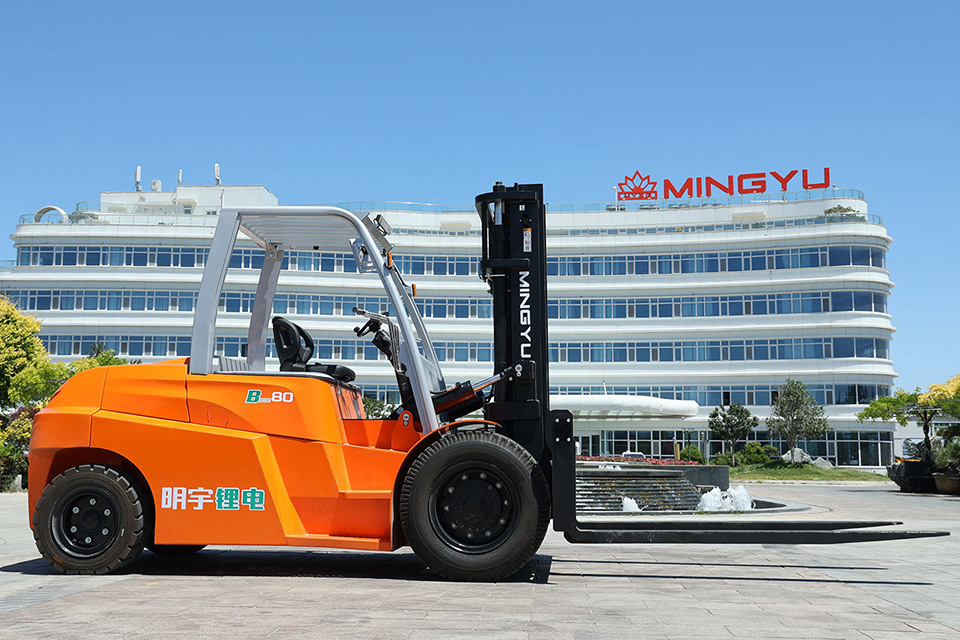
1. Forklift Tire Wear Judgment: 3 Core Dimensions to Accurately Identify Hidden Dangers. During daily pre-shift inspections, operators need to judge the tire wear status from the following three dimensions to find potential problems in time: First, check the wear limit mark. Regular forklift tires are equipped with wear limit lines (usually at the bottom of the tread pattern grooves). When the tread wears down to be flush with the limit line, it indicates that the tire has reached the scrap standard and must be replaced immediately; Second, check the tread damage. If the tread has cracks, edge chipping, foreign objects embedded (such as iron nails, gravel) or local severe wear, even if it does not reach the limit line, it needs to be repaired or replaced in time to avoid aggravated damage leading to tire blowout; Third, observe the overall tire condition. For pneumatic tires, check whether there are bulges or damage on the sidewalls to avoid safety accidents caused by damaged internal cords; For solid tires, pay attention to whether the tread has uniform wear. If there is uneven wear on one side, there may be faults in the forklift steering system or suspension system, which need to be repaired simultaneously.
2. Forklift Tire Replacement Standards: Clear Thresholds to Eliminate "Operation with Faults". Combined with industry standards and equipment usage requirements, forklift tire replacement must follow the following clear standards: 1. When the tread wear reaches or exceeds the wear limit mark, the tire must be replaced immediately regardless of the service life; 2. When the tread has cracks longer than 20mm and deeper than 10mm, or the sidewall is damaged or bulged and cannot be repaired, it needs to be replaced; 3. If the pneumatic tire frequently has insufficient air pressure and air leakage, and the problem cannot be solved after repair, a new tire must be replaced; 4. If the tire has severe uneven wear, deformation, or the wheel hub is damaged due to collision or rolling, the tire and wheel hub must be replaced simultaneously; 5. If the tire has been used for more than 3 years (even if the wear does not meet the standard), if there are signs of aging and hardening, decreased elasticity, etc., it is also recommended to replace it to avoid aging tires breaking during operation. In addition, when replacing tires, attention should be paid to selecting specifications matching the forklift model, ensuring that the old and new tires have the same model, and avoiding mixing different types and specifications of tires, which will affect driving stability.
3. Solid Tires vs Pneumatic Tires: Detailed Maintenance Differences, Targeted Maintenance is More Efficient. Due to differences in materials and structures between solid tires and pneumatic tires, there are obvious differences in maintenance focuses, and targeted maintenance work is required:
(1) Key Maintenance Points for Solid Tires. Solid tires are made of wear-resistant rubber material and do not need to pay attention to air pressure. The core of maintenance is to reduce wear and avoid abnormal damage: 1. Check whether there are foreign objects embedded, cracks or uneven wear on the tread during daily pre-shift inspections, clean up foreign objects in time, and handle damage in a timely manner; 2. Avoid the forklift operating on sharp objects or uneven ground for a long time to reduce tread scratches and impact damage; 3. Regularly check whether the connection between the wheel hub and the tire is firm to avoid loosening leading to tire deviation and accelerated wear; 4. If there is uneven wear on one side, adjust the steering system in time and correct the wheel alignment to solve the wear problem from the root cause.
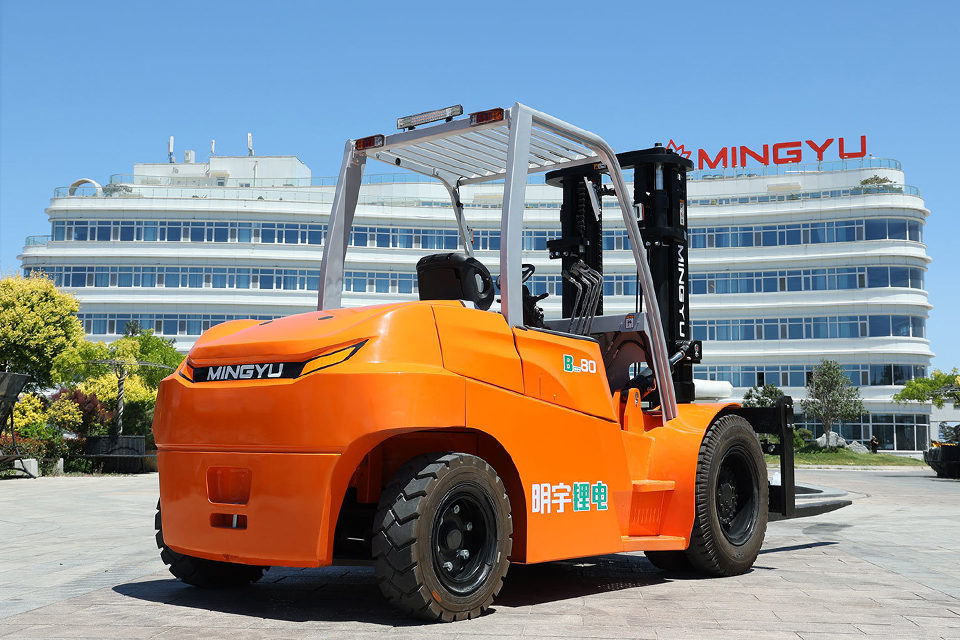
(2) Key Maintenance Points for Pneumatic Tires. Pneumatic tires rely on air pressure to ensure performance, and the core of maintenance is to control air pressure, prevent air leakage and conduct regular inspections: 1. Check the air pressure must be checked during daily pre-shift inspections to ensure that the air pressure meets the requirements of the equipment manual (usually 2.5-3.0MPa). Insufficient air pressure will accelerate tread wear, and excessive air pressure will reduce tire buffering performance and increase the risk of tire blowout; 2. Regularly clean foreign objects on the tread to avoid sharp objects piercing the tire, and check whether the valve core is intact to prevent air leakage; 3. Avoid long-term overloaded operations to prevent accelerated tread wear and tire body heating due to excessive pressure on the tire; 4. For forklifts that are idle for a long time, adjust the air pressure of the pneumatic tire to 80% of the standard value in advance to avoid tire deformation due to long-term pressure, and restore it to the standard air pressure before use.
Professional personnel remind that forklift tire maintenance is an important part of daily equipment management, which must be included in the daily pre-shift inspection process, and a special person is responsible for recording the inspection results. Enterprises should regularly organize operators to carry out tire maintenance training to ensure that they master wear judgment, replacement standards and differentiated maintenance skills. Through standardized tire maintenance, it can not only extend the tire service life and reduce operation and maintenance costs, but also ensure forklift driving safety and improve operational efficiency. If abnormal tire problems are found, the use of the equipment must be stopped immediately, and professional maintenance personnel should be contacted for processing. "Operation with faults" is strictly prohibited to eliminate safety accidents.
Name: selena
Mobile:+86-13176910558
Tel:+86-0535-2090977
Whatsapp:8613181602336
Email:vip@mingyuforklift.com
Add:Xiaqiu Town, Laizhou, Yantai City, Shandong Province, China
