
vip@mingyuforklift.com
+86-0535-2090977

In the modern industrial landscape, a forklift is more than just a tool; it is a multi-ton kinetic force operating in close proximity to workers and infrastructure. While operator training is often the focus of safety programs, the mechanical integrity of the machine is the silent foundation of workplace safety.
Improper maintenance is a leading contributor to catastrophic accidents, ranging from brake failure to structural mast collapses.1 This article explores the technical link between rigorous maintenance protocols and the prevention of workplace accidents, highlighting how specific mechanical failures translate into life-threatening hazards.
1. The Anatomy of a Maintenance-Induced Accident
A "safety accident" rarely has a single cause.2 In the context of forklifts, accidents are often the result of a latent mechanical defect meeting a dynamic operational challenge. For example, a slightly worn brake pad may go unnoticed on flat ground but lead to a fatal collision when the operator attempts to stop on a ramp with a 5,000-lb load.
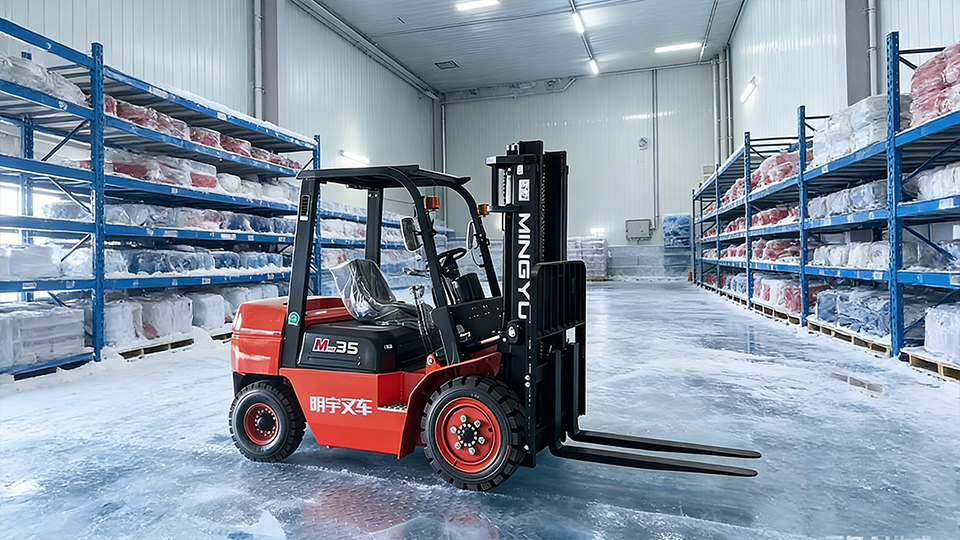
Critical Failure Points and Their Safety Outcomes:
Brake System Failure: Worn shoes or air in the hydraulic lines significantly increase stopping distance. In a crowded warehouse, an extra three feet of travel can be the difference between a "near miss" and a pedestrian fatality.
Hydraulic Drift: If seals are leaking internally, the forks may slowly descend ("drift") while the operator is driving. If the forks catch a crack in the floor or a pallet edge, the forklift can come to an abrupt, violent stop, potentially ejecting the operator or causing a tip-over.
Chain Failure: As discussed in previous standards, a snapped leaf chain causes the carriage and load to drop instantly. This creates a lethal "crush zone" beneath the forks and can destabilize the entire truck.
2. Stability and the "Maintenance Triangle"
Forklifts operate on a stability triangle, with the three points of support being the two front wheels and the center of the rear axle. Maintenance directly impacts this delicate balance.3
Tire Integrity and Rollovers
Forklift tires (solid or pneumatic) are the only points of contact with the floor.
Uneven Wear: If one drive tire is more worn than the other, the "stability triangle" tilts. During a high-lift operation, this slight tilt is magnified, shifting the center of gravity outside the base and causing a lateral rollover.
Chunking: Large pieces of rubber missing from tires cause vibrations that fatigue the axle and steering components, eventually leading to a loss of control.
Steering Linkage
Forklifts steer with the rear wheels, allowing for a tight turning radius.4 Worn tie rods or loose steering cylinders create "play" in the wheel. A beginner operator may overcorrect for this play, leading to an erratic path that strikes racking or pedestrians.
3. Regulatory Compliance: The OSHA/ANSI Framework
Under OSHA Standard 1910.178(q)(7), forklifts must be examined daily before being placed in service.5 This isn't just a paperwork exercise; it is a legal requirement to ensure that "any vehicle found to be in need of repair, defective, or in any way unsafe" is immediately removed from service.6
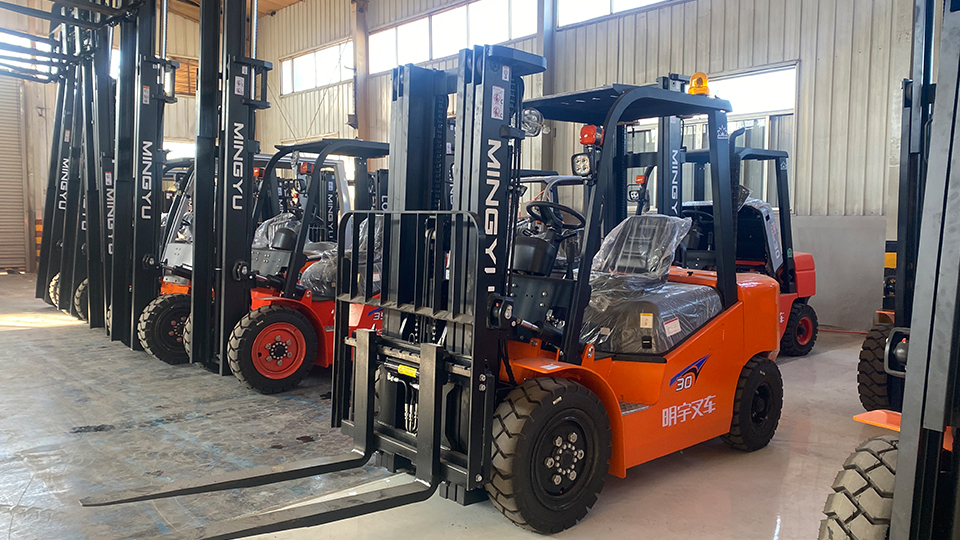
The Legal Cost of Neglect
When an accident occurs, the first document an investigator requests is the Maintenance Log.
Direct Liability: If an accident was caused by a mechanical failure that was documented but not repaired, the company faces "Willful Violation" fines, which can exceed $150,000 per instance.
Negligence Claims: In personal injury lawsuits, a lack of a lubrication schedule or chain inspection records is used to prove corporate negligence, often resulting in multi-million dollar settlements.7
4. Preventing Accidents through the "Three Pillars of Maintenance"
To prevent safety incidents, a maintenance program must move beyond "fixing what is broken" and toward a proactive safety culture.8
I. The Daily Pre-Shift Inspection (The Frontline)
The operator is the first line of defense.9 A standard pre-shift check must include:
Functional Tests: Checking the horn, backup alarm, and lights.10 These are the forklift's "voice"—without them, pedestrians are unaware of the hazard.
Visual Leaks: Identifying puddles of hydraulic fluid which create slip hazards for other workers and indicate failing lift systems.
II. Scheduled Preventative Maintenance (PM)
Technicians should perform deep-dive inspections every 200-500 hours.
Chain Tensioning: Ensuring both lift chains carry equal weight to prevent carriage twisting.
Fork Inspection: Using calipers to ensure the 10% wear limit hasn't been exceeded.11
III. Predictive Maintenance (The Future)
Modern telematics systems now monitor "impact events."12 If an operator hits a rack, the system can lock the forklift until a technician inspects the frame for structural damage. This prevents a minor "bump" from turning into a structural failure during the next heavy lift.
5. Summary: Maintenance as a Safety Strategy
|
Mechanical Issue |
Potential Accident |
Prevention Measure |
|
Worn Brakes |
Pedestrian Collision / Dock Fall |
Weekly brake pressure tests |
|
Loose Steering |
Racking Impact / Tip-over |
Greasing steer axle & checking tie rods |
|
Chain Elongation |
Falling Load / Mast Collapse |
12-month chain gauge measurement |
|
Clogged Radiator |
Engine Fire / Blowout |
Monthly air-compressed cleaning |
6. Conclusion: A Culture of Safety
The connection between forklift maintenance and workplace safety is absolute. A well-maintained machine behaves predictably, allowing the operator to focus on their surroundings rather than fighting a malfunctioning steering wheel or worrying about a drifting load.
By treating maintenance as a safety intervention rather than an operational expense, companies can drastically reduce the frequency and severity of workplace accidents.13
Name: selena
Mobile:+86-13176910558
Tel:+86-0535-2090977
Whatsapp:8613181602336
Email:vip@mingyuforklift.com
Add:Xiaqiu Town, Laizhou, Yantai City, Shandong Province, China
