
vip@mingyuforklift.com
+86-0535-2090977

Introduction
In the material handling industry, selecting the right equipment is critical to operational efficiency, safety, and cost management. Among the most commonly used powered industrial trucks are counterbalance forklifts and reach trucks. While both serve the fundamental purpose of lifting and transporting loads, they are engineered for distinctly different environments and applications. Understanding their technical differences is essential for warehouse managers, logistics engineers, and procurement professionals who must align equipment capabilities with operational requirements.
Counterbalance forklifts represent the traditional workhorse of material handling, characterized by their straightforward design and versatile functionality. Reach trucks, by contrast, are specialized machines optimized for high-density storage applications where vertical space utilization is paramount. This article provides an in-depth technical analysis of the differences between these two categories of equipment, examining their design principles, operational characteristics, and optimal use cases.
Fundamental Design and Construction
The most immediately apparent difference between counterbalance forklifts and reach trucks lies in their chassis architecture and weight distribution philosophy.
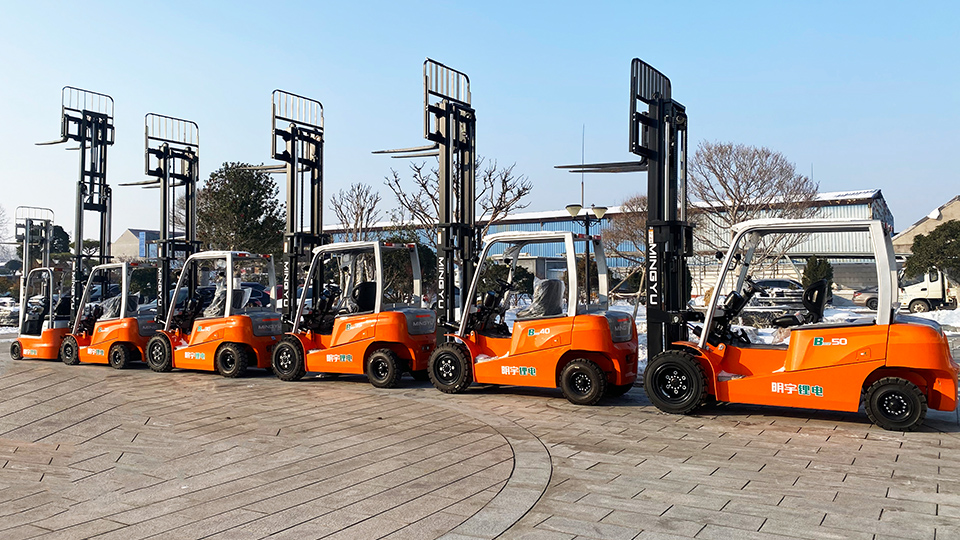
Counterbalance Forklifts derive their name from the fundamental engineering principle that governs their stability: a substantial counterweight, typically cast iron, mounted at the rear of the vehicle. This counterweight offsets the moment created by the load at the front of the forklift, preventing the machine from tipping forward. The mast—the vertical assembly responsible for lifting—is fixed rigidly to the chassis, and the entire vehicle must be driven directly to the load location. The counterbalance design results in a longer overall wheelbase, with the load center typically positioned 24 inches (600 mm) forward of the front axle. This configuration provides inherent stability but demands significant aisle width for maneuvering.
Reach Trucks employ a fundamentally different approach to stability. Rather than relying on a rear counterweight, reach trucks distribute the battery mass across the chassis to serve as the primary stabilizing element. The defining feature of a reach truck is its telescoping mast mechanism: the mast assembly is mounted on a carriage that can extend forward to retrieve or deposit loads, then retract to position the load within the wheelbase during travel. This "reach" capability allows the truck to operate in aisles as narrow as 7 to 9 feet (2.1 to 2.7 meters), compared to the 11 to 13 feet (3.3 to 4 meters) typically required for counterbalance forklifts. The load is carried within the wheelbase during transit, significantly reducing the risk of forward tipping.
Mast Configuration and Lift Height
Mast design represents one of the most significant technical distinctions between these two equipment types.
Counterbalance forklifts typically feature a simplex, duplex, or triplex mast configuration, with maximum lift heights generally ranging from 15 to 20 feet (4.5 to 6 meters) for standard models, though specialized high-lift variants can achieve greater heights. The mast is fixed to the chassis, meaning the forklift must position itself directly in front of the racking. As lift height increases, counterbalance forklifts experience proportionally greater stability challenges because the load moment arm increases while the counterweight moment remains constant. This relationship imposes practical limits on how high a counterbalance forklift can safely lift a given load.
Reach trucks are engineered specifically for high-rise storage applications. Standard reach trucks routinely achieve lift heights of 30 to 40 feet (9 to 12 meters), with some specialized models capable of operating at heights exceeding 45 feet (13.7 meters). The telescoping mast system typically incorporates a scissor mechanism or pantograph reach assembly that extends the forks forward while the truck itself remains stationary in the aisle. This design decouples the truck's position from the load placement, enabling precise deposit and retrieval at extreme heights. Furthermore, because the load retracts within the wheelbase for travel, the center of gravity remains optimally positioned even when transporting loads at maximum height.
Stability and Load Center Dynamics
Stability analysis reveals fundamentally different engineering approaches between these two machine types.
In counterbalance forklifts, stability is governed by the "stability triangle"—an imaginary triangle formed between the front drive wheels and the rear steer axle pivot point. The combined center of gravity of the forklift and load must remain within this triangle to prevent tipping. Because the load is carried forward of the front axle, the counterweight must generate a substantial rearward moment. The rated capacity of a counterbalance forklift is directly tied to the load center distance; a standard 24-inch load center rating means the machine can safely handle the rated load when the center of mass is 24 inches from the carriage face. Moving the load center forward by even a few inches can dramatically reduce safe lifting capacity.
Reach trucks achieve stability through a combination of battery mass distribution and load positioning. When the reach mechanism is extended to retrieve a load, the battery acts as a counterbalance. When the load is retracted for travel, it sits directly above the baselegs (outrigger arms) that extend forward from the chassis. These baselegs provide additional stability and prevent the truck from tipping forward. The load center on a reach truck is effectively managed by the reach mechanism itself; the operator extends the forks only the necessary distance to engage the load, then immediately retracts them. This dynamic load management results in superior stability at height compared to counterbalance forklifts.
Maneuverability and Aisle Requirements
Aisle width requirements represent one of the most operationally significant differences between these equipment types.
Counterbalance forklifts require relatively wide aisles because the entire vehicle must turn to position the load. The turning radius is determined by the wheelbase and the steering geometry. A typical 3-wheel electric counterbalance forklift requires an aisle width of approximately 11 to 12 feet (3.3 to 3.6 meters) for standard pallet handling, while 4-wheel variants may require 12 to 13 feet (3.6 to 4 meters) or more. This requirement directly impacts warehouse design, as wider aisles reduce available storage density.
Reach trucks are purpose-built for narrow aisle operation. The combination of rear-wheel steering, compact chassis, and the reach mechanism allows these machines to operate in aisles as narrow as 7.5 feet (2.3 meters) for standard applications, and as narrow as 6.5 feet (2 meters) for specialized very narrow aisle (VNA) configurations. The operator does not need to turn the truck perpendicular to the racking; instead, the truck travels straight down the aisle, and the reach mechanism extends to place or retrieve loads. This operational paradigm fundamentally changes warehouse layout possibilities, often increasing storage capacity by 30 to 40 percent compared to layouts designed for counterbalance forklifts.
Operator Position and Ergonomics
Operator interface design differs significantly between these two categories, reflecting their distinct operational environments.
Counterbalance forklifts traditionally feature a seated operator position, though stand-up configurations exist for certain applications. The operator faces forward, driving into the load position, and must frequently turn their head to observe fork engagement and load placement. Visibility can be compromised when handling tall loads, as the mast and load obstruct the forward view. Modern counterbalance designs incorporate various visibility enhancements, including lowered counterweight profiles, transparent roof panels, and camera systems.
Reach trucks almost universally employ a stand-up operator compartment, with the operator positioned sideways (facing the racking) or at a slight angle. This sideways stance is ergonomically optimized for the primary task: traveling down aisles and engaging loads at height. The operator's natural line of sight aligns with the racking and load engagement point, providing superior visibility for high-level placement and retrieval. The stand-up configuration also facilitates rapid entry and exit, which is advantageous in applications requiring frequent dismounts. Many reach trucks include a tilting operator compartment that leans backward during high-lift operations, improving upward visibility and reducing neck strain.
Power Systems and Energy Efficiency
Both equipment categories have transitioned predominantly to electric power, but their energy consumption profiles differ.
Counterbalance forklifts are available in electric (battery-powered), internal combustion (diesel, gasoline, or LPG), and hybrid configurations. Electric counterbalance forklifts typically utilize lead-acid or lithium-ion battery systems, with capacities ranging from 24V to 80V depending on the truck size. The energy consumption is influenced by the frequent acceleration, deceleration, and turning associated with their operational pattern. Battery change or charging infrastructure must accommodate the operational demands, particularly in multi-shift environments.
Reach trucks are exclusively electric, as their indoor, narrow-aisle application precludes internal combustion engines due to emissions and space constraints. They typically operate on 24V or 36V battery systems. The operational profile of reach trucks—long straight travel runs in aisles with minimal turning—can be more energy-efficient per pallet moved than counterbalance forklift operations. Regenerative braking systems are commonly employed to recover energy during deceleration. The battery also serves a structural purpose as a counterweight element, meaning battery specifications directly influence truck stability and capacity.
Application Environments and Use Cases
The selection between these equipment types is largely determined by the operational environment.
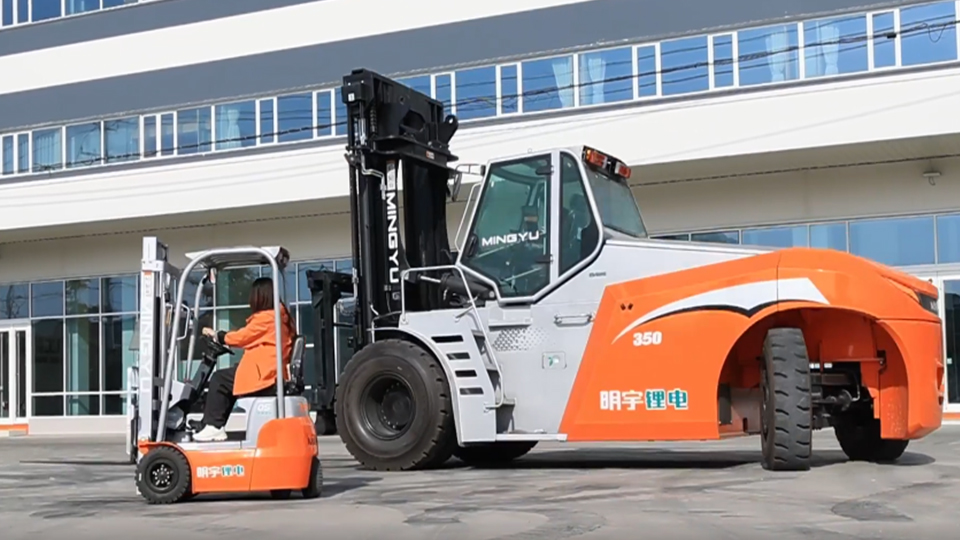
Counterbalance forklifts excel in versatile, general-purpose applications. They are the preferred choice for loading and unloading trucks, outdoor material handling (particularly internal combustion models), bulk storage operations, and manufacturing environments where loads must be transported over longer distances. Their ability to operate on uneven surfaces and their straightforward operation make them suitable for applications where maneuvering space is not constrained. They are also the standard choice for operations requiring attachment versatility, as their robust carriage design accommodates a wide range of forks and specialized handling devices.
Reach trucks are optimized for high-density warehouse environments. They are the equipment of choice for distribution centers, retail fulfillment operations, and cold storage facilities where maximizing storage density is economically critical. Their design assumes smooth, level floors and defined aisleways. They are not suitable for outdoor use, uneven surfaces, or applications requiring frequent loading dock work. The typical reach truck application involves high-volume putaway and retrieval operations within a defined warehouse management system.
Cost Considerations
Total cost of ownership analysis reveals different economic profiles for these equipment types.
Counterbalance forklifts generally have lower initial acquisition costs compared to reach trucks of equivalent capacity. Their simpler mechanical design, larger production volumes, and broader supplier base contribute to competitive pricing. Maintenance costs tend to be moderate, with readily available parts and widespread technician familiarity. However, the wider aisle requirements impose indirect costs through reduced storage capacity and larger warehouse footprints.
Reach trucks command higher initial purchase prices due to their specialized mast mechanisms, sophisticated control systems, and precision engineering. Maintenance requires specialized technician training, and replacement parts for reach mechanisms and electronic control systems can be costly. However, these direct costs are often offset by the indirect economic benefits of increased storage density. In high-rent markets, the ability to store 30 to 40 percent more pallets in the same footprint can generate warehouse cost savings that far exceed the equipment price differential.
Safety Systems and Operational Controls
Modern iterations of both equipment types incorporate advanced safety technologies, though implementation differs.
Counterbalance forklifts commonly feature load weight indicators, stability control systems, and operator presence sensors. Speed reduction systems that automatically limit travel speed when the mast is elevated or when turning are standard. Many models include tilt angle indicators and cameras to assist with load engagement.
Reach trucks incorporate similar systems but add features specific to their operational profile. Height indicators and fork-leveling assistance help operators position loads accurately at extreme heights. Rack height selectors can be programmed to stop fork elevation at predefined rack levels. Some advanced systems include warehouse navigation assistance and automatic aisle alignment to prevent rack collision. The reach mechanism itself typically includes interlocks that prevent travel when extended beyond a safe threshold.
Maintenance and Service Requirements
Maintenance protocols differ in complexity and frequency.
Counterbalance forklifts benefit from mechanical simplicity. The mast assembly has few moving parts beyond the lift chains and hydraulic cylinders. Routine maintenance focuses on hydraulics, brakes, steering, and powertrain components. Service intervals are well-established, and most industrial mechanics possess the requisite training.
Reach trucks require more specialized maintenance attention. The reach mechanism introduces additional wear points, including rollers, slide pads, and telescoping bushings that require periodic inspection and replacement. The precision alignment of the mast system is critical for safe operation at height; misalignment can cause binding, premature wear, or unsafe load handling. Electronic control systems for reach functions, height sensors, and navigation aids add complexity to diagnostic and repair procedures.
Conclusion
Counterbalance forklifts and reach trucks represent two distinct engineering solutions to material handling challenges, each optimized for specific operational environments. Counterbalance forklifts offer versatility, straightforward operation, and lower acquisition costs, making them ideal for general-purpose applications where aisle width is not constrained. Reach trucks provide superior storage density optimization, high-lift capability, and narrow-aisle maneuverability, justifying their higher cost in high-volume warehouse environments.
The selection between these equipment types should be driven by a comprehensive analysis of warehouse layout, storage density requirements, load characteristics, throughput demands, and total cost of ownership. In many large operations, both equipment types coexist in complementary roles: reach trucks handling high-density storage and retrieval within the warehouse interior, and counterbalance forklifts managing receiving, shipping, and bulk operations. Understanding the technical distinctions outlined in this analysis enables informed decision-making that aligns material handling equipment with strategic operational objectives.
Name: selena
Mobile:+86-13176910558
Tel:+86-0535-2090977
Whatsapp:8613181602336
Email:vip@mingyuforklift.com
Add:Xiaqiu Town, Laizhou, Yantai City, Shandong Province, China
