
vip@mingyuforklift.com
+86-0535-2090977

1. The OSHA Classification System
OSHA’s classification system (Classes I–VII) is the industry standard for identifying forklifts based on their power source, tire type, and intended environment.2
Class I: Electric Motor Rider Trucks
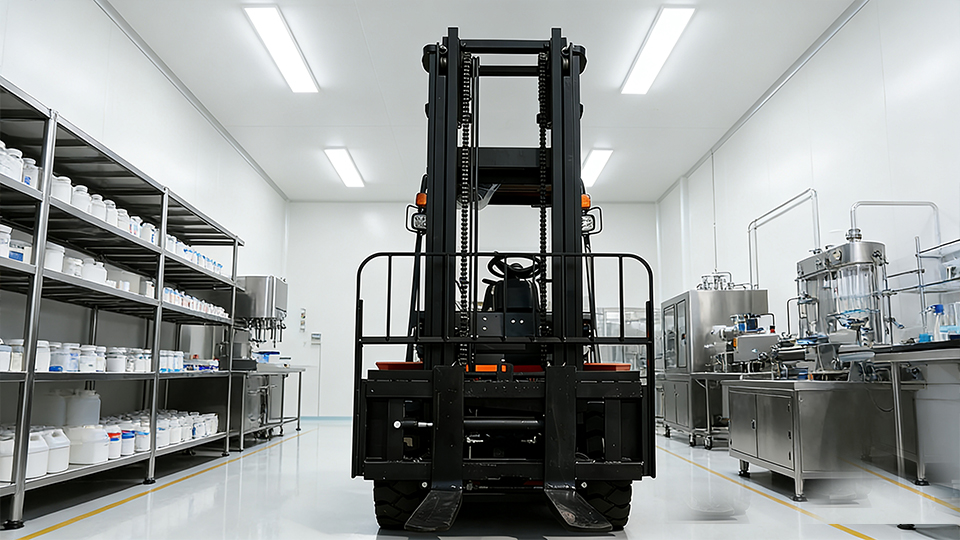
These are the workhorses of the indoor warehouse.3 Powered by large industrial batteries, they produce zero emissions and operate quietly.4
Design: Available in 3-wheel (tighter turning) or 4-wheel (more stable) configurations.5
Key Feature: The battery serves a dual purpose: providing energy and acting as a primary part of the counterweight.6
Applications: Food storage, pharmaceutical plants, and general indoor warehousing where air quality is a priority.7
Class II: Electric Motor Narrow Aisle Trucks
As real estate costs rise, warehouses are getting taller and aisles are getting narrower. Class II trucks are engineered for these high-density environments.8
Subtypes: Reach trucks, order pickers, and turret trucks.9
Engineering: These often feature outriggers (stabilizing legs) to support the weight of the load without needing a massive rear counterweight.
Class III: Electric Motor Hand Trucks
Commonly known as "walkies" or "pallet jacks," these are designed for short-distance horizontal transport rather than high-level stacking.10
Operation: The operator either walks behind the unit or stands on a small platform (rider).
Applications: Loading docks, grocery store backrooms, and staging areas.
2. Internal Combustion (IC) and Outdoor Lifts
Class IV & V: Internal Combustion Engine Trucks
The primary difference between these two classes lies in the tires.
Class IV (Cushion Tires): Built with solid rubber tires pressed onto a metal band. These have a lower ground clearance and are meant for smooth, indoor concrete floors.11
Class V (Pneumatic Tires): Equipped with air-filled or solid-pneumatic tires (similar to tractor tires). These are designed for outdoor yards, gravel, and uneven surfaces.12
Class VII: Rough Terrain Forklifts
These are heavy-duty machines intended for unimproved natural terrain.13 They feature high ground clearance, massive treaded tires, and high-torque diesel engines.
Vertical Mast: Standard lift.14
Telescoping Boom (Telehandler): A hybrid between a forklift and a crane, allowing the operator to reach forward and upward to place loads on scaffolding or roofs.15
3. Specialized Industrial Forklifts
Beyond the standard OSHA classes, certain industries require highly specialized mechanical configurations.16
Reach Trucks
Specifically designed for Class II applications, reach trucks have a mast that can "reach" out into the racking.17 This allows the machine to stay in the aisle while the forks move deep into a double-deep pallet rack.
Order Pickers
Unlike standard forklifts where the operator stays on the ground, an order picker lifts the operator platform along with the forks.18 This allows a worker to hand-pick individual items (cases or units) from high shelves for fulfillment.19
Side Loaders and Multidirectional Lifts
Traditional forklifts struggle with long loads like timber, PVC pipes, or steel beams.
Side Loader: The forks are mounted on the side, allowing the vehicle to carry long items parallel to the direction of travel.20
Multidirectional (e.g., Combilift): These machines can change the direction of their wheels by 90 degrees while stationary, moving sideways, forwards, or diagonally.21
VNA (Very Narrow Aisle) Turret Trucks
In a VNA warehouse, the truck never turns. Instead, the turret head (the fork assembly) rotates 180 degrees to pick from either the left or right side of the aisle. This allows for aisles as narrow as 5.5 feet.
4. Summary Table of Forklift Types
|
Class |
Power Source |
Tire Type |
Primary Environment |
|
I |
Electric |
Cushion/Pneumatic |
Indoor/Clean environments |
|
II |
Electric |
Solid Polyurethane |
Narrow Aisle Warehousing |
|
III |
Electric |
Solid |
Loading Docks/Retail |
|
IV |
IC (Gas/LPG) |
Cushion |
Indoor Industrial/Factories |
|
V |
IC (Gas/Diesel) |
Pneumatic |
Outdoor Yards/Lumber |
|
VI22 |
Electric/IC23 |
Variable24 |
Towing (Tractors)25 |
|
VII26 |
Diesel27 |
Large Pneumatic28 |
Construction/Rough Terrain29 |
Conclusion
Selecting the right forklift is a balance of power, space, and terrain.30 An electric Class I is perfect for a food warehouse, but it would fail instantly on a muddy construction site where a Class VII telehandler thrives. As automation increases, we are seeing the rise of AGVs (Automated Guided Vehicles) which operate within these same physical classes but remove the human element to increase safety and precision.
Name: selena
Mobile:+86-13176910558
Tel:+86-0535-2090977
Whatsapp:8613181602336
Email:vip@mingyuforklift.com
Add:Xiaqiu Town, Laizhou, Yantai City, Shandong Province, China
