
vip@mingyuforklift.com
+86-0535-2090977

Introduction
Diesel forklifts remain the workhorses of heavy material handling across warehouses, construction sites, lumber yards, and manufacturing facilities worldwide. While electric forklifts have gained significant market share in recent years, diesel-powered models continue to dominate applications requiring high torque, outdoor operation, and extended run times without recharging infrastructure. For fleet managers, procurement officers, and operations directors, understanding the true fuel costs associated with diesel forklift operation is not merely an accounting exercise—it is a critical component of total cost of ownership (TCO) analysis and operational budgeting.
Fuel costs represent one of the largest variable expenses in diesel forklift operations, often second only to labor. Yet these costs are frequently underestimated because they extend far beyond the simple price-per-gallon at the pump. This article provides a detailed technical examination of diesel forklift fuel costs, encompassing consumption rates, pricing dynamics, influencing factors, and strategies for optimization.
Understanding Diesel Forklift Fuel Consumption Rates
The foundation of fuel cost calculation lies in understanding consumption rates, which vary significantly based on forklift specifications and operating conditions.
Engine Size and Load Capacity
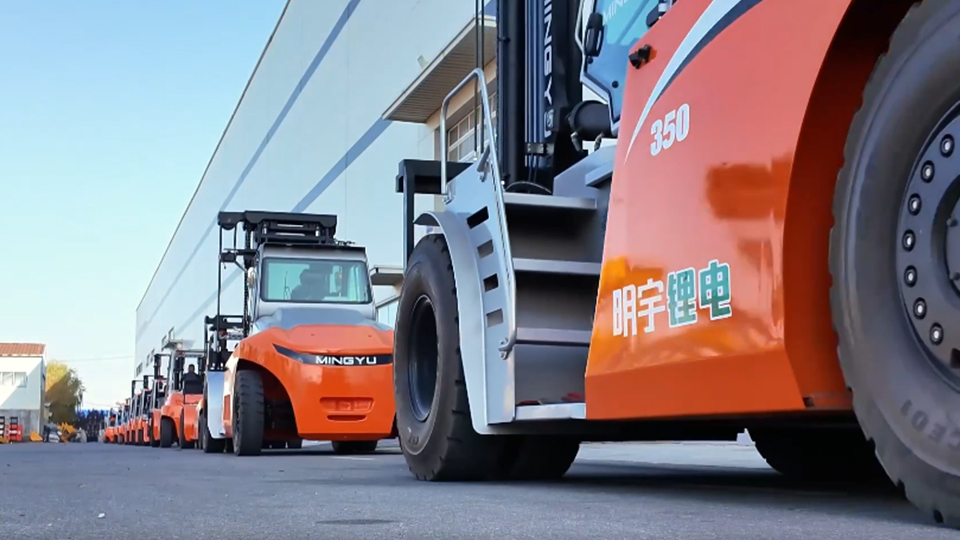
Diesel forklifts typically range from 3,000-pound capacity models suitable for standard warehouse operations to 35,000-pound heavy-duty units designed for container handling and steel yards. Engine displacement correlates directly with fuel consumption:
Light-duty forklifts (3,000–5,000 lb capacity): Equipped with 2.0L to 2.5L diesel engines, these units generally consume 1.5 to 2.5 liters per operating hour under normal load conditions.
Medium-duty forklifts (6,000–10,000 lb capacity): Featuring 3.0L to 4.5L engines, consumption typically falls between 2.5 and 4.0 liters per hour.
Heavy-duty forklifts (12,000–35,000 lb capacity): With engines exceeding 5.0L displacement, these machines can consume 4.0 to 8.0 liters per hour, with extreme applications pushing consumption even higher.
These figures assume operation at approximately 60–70% of rated load capacity. Operating at maximum rated load continuously can increase fuel consumption by 25–40% above baseline estimates.
Duty Cycle Impact
The duty cycle—the pattern of work versus idle time—dramatically affects fuel consumption. A forklift operating in a high-intensity application with constant lifting, transporting, and lowering cycles will consume significantly more fuel than one performing intermittent tasks with substantial idle periods. Industry studies indicate that idle time can account for 30–50% of total engine runtime in typical warehouse environments, during which fuel consumption continues at 15–25% of full-load rates.
Modern diesel forklifts increasingly incorporate auto-idle shutdown systems and variable engine speed controls to mitigate excessive fuel consumption during idle periods. These technologies can reduce annual fuel costs by 10–20% in operations with significant idle time.
Current Diesel Pricing Landscape
Diesel fuel pricing is subject to substantial volatility driven by crude oil markets, refining capacity, regional taxation, and seasonal demand fluctuations.
Price Components
The retail price of diesel fuel comprises several distinct elements:
Crude oil cost: Typically represents 50–60% of the final price, subject to global supply and demand dynamics.
Refining costs and margins: Account for 15–25% of pricing, varying with refinery utilization rates and the crack spread between crude and refined products.
Distribution and marketing: Represents 5–10% of retail pricing.
Taxes: Federal, state, and local taxes can constitute 15–30% of the pump price, with significant regional variation.
As of mid-2026, diesel prices in the United States have experienced considerable volatility following global energy market disruptions. Current retail prices typically range from $3.50 to $4.80 per gallon depending on geographic location, with industrial and fleet customers often securing discounts of $0.10 to $0.30 per gallon through volume purchasing agreements.
Off-Road Diesel Considerations
Forklift operators should be aware that off-road diesel (dyed red diesel) is available for equipment not operated on public highways. This fuel variant is exempt from federal highway taxes, resulting in cost savings of approximately $0.24 per gallon at the federal level, plus additional state tax exemptions where applicable. However, strict regulations govern its use, and penalties for misuse in on-road applications can be severe. For pure material handling operations, off-road diesel represents a legitimate and economically advantageous fuel option.
Calculating Annual Fuel Costs: A Practical Framework
To determine annual fuel expenditures, operators must synthesize consumption rates, fuel prices, and utilization data into a coherent calculation model.
Basic Calculation Formula
Annual Fuel Cost = (Operating Hours per Year) × (Fuel Consumption per Hour) × (Fuel Price per Unit)
Consider a medium-duty diesel forklift operating 2,000 hours annually with a consumption rate of 3.0 liters per hour and diesel priced at $4.00 per gallon (approximately $1.06 per liter):
Annual Fuel Cost = 2,000 hours × 3.0 liters/hour × $1.06/liter = $6,360
For a fleet of ten such forklifts, annual fuel costs reach $63,600—a substantial operational expense requiring careful management.
Real-World Variations
Actual costs frequently deviate from theoretical calculations due to:
Operator behavior: Aggressive acceleration, excessive travel speeds, and harsh braking increase fuel consumption by 10–20%.
Terrain: Operating on inclines, rough surfaces, or in soft ground conditions increases resistance and fuel demand.
Environmental conditions: Extreme cold increases fuel viscosity and engine warm-up requirements, while high ambient temperatures can reduce air density and combustion efficiency.
Maintenance status: Poorly maintained engines with dirty air filters, worn injectors, or incorrect valve timing can experience 15–30% fuel economy degradation.
Hidden and Ancillary Fuel-Related Costs
Beyond direct fuel purchases, several ancillary costs impact the total economic burden of diesel forklift fuel consumption.
Fuel Storage and Handling
Operations maintaining on-site fuel storage incur capital costs for tanks, pumps, and containment systems, plus ongoing expenses for fuel quality monitoring, water separation, and contamination prevention. Regulatory compliance for above-ground storage tanks (ASTs) and underground storage tanks (USTs) involves inspection fees, insurance requirements, and potential remediation liabilities. Annual storage and handling costs typically add $200–$500 per forklift to total fuel-related expenditures.
Fuel System Maintenance
Diesel fuel systems require regular maintenance to prevent costly failures. Fuel filters require replacement every 250–500 operating hours at a cost of $15–$40 per service. Fuel injectors, subjected to high pressures and precise tolerances, may require cleaning or replacement every 4,000–6,000 hours, with injector sets costing $800–$2,500 depending on engine configuration. Water and particulate contamination in stored fuel accelerates wear on injection components and can cause catastrophic pump failures exceeding $5,000 in repair costs.
Emissions Compliance and Aftertreatment
Modern diesel forklifts incorporate sophisticated emissions control systems including diesel oxidation catalysts (DOCs), diesel particulate filters (DPFs), and selective catalytic reduction (SCR) systems utilizing diesel exhaust fluid (DEF). DEF consumption averages 2–4% of diesel fuel consumption by volume, adding $0.08–$0.15 per operating hour to fuel-related costs. DPF regeneration cycles consume additional fuel, while ash accumulation necessitates periodic filter cleaning or replacement at costs of $1,500–$3,000 per event.
Carbon Footprint and Environmental Costs
While not always directly monetized in operational budgets, diesel fuel consumption carries environmental costs increasingly subject to regulatory frameworks. Each gallon of diesel fuel combusted generates approximately 22.4 pounds of CO₂. A single forklift consuming 1,500 gallons annually produces roughly 16.8 tons of CO₂ emissions. In jurisdictions with carbon pricing mechanisms or emissions trading schemes, these environmental externalities may translate to direct costs affecting operational economics.
Comparative Analysis: Diesel Versus Alternative Power Sources
Understanding diesel fuel costs requires contextual comparison with alternative forklift power systems.
Electric Forklifts
Electric forklifts eliminate direct fuel costs but introduce electricity expenses for battery charging. Industrial electricity rates in the United States average $0.08–$0.15 per kilowatt-hour. A typical 48V, 700Ah battery requires approximately 37 kWh for a full charge, costing $3.00–$5.50 per charge cycle. For equivalent operating hours, electricity costs typically run 40–60% lower than diesel fuel expenses. However, battery replacement costs ($3,000–$8,000 every 5–7 years) and charging infrastructure investments must be factored into total cost comparisons.
LPG (Propane) Forklifts
Propane-powered forklifts offer an intermediate option with fuel costs generally comparable to or slightly lower than diesel. Current propane prices range from $2.00 to $3.50 per gallon, with consumption rates approximately 10–15% higher than equivalent diesel models on a volume basis. Propane systems eliminate particulate filter maintenance but require tank exchange logistics and produce lower torque output for heavy-duty applications.
Hydrogen Fuel Cells
Emerging hydrogen fuel cell technology offers zero-emission operation with refueling times comparable to diesel. However, current hydrogen costs ($10–$16 per kilogram) make fuel expenses substantially higher than diesel, limiting adoption to applications where emissions constraints or operational requirements justify premium pricing.
Strategies for Fuel Cost Optimization
Proactive management can significantly reduce diesel forklift fuel expenditures without compromising operational capability.
Operator Training Programs
Comprehensive operator training emphasizing smooth acceleration, optimal travel speeds, and efficient load handling can reduce fuel consumption by 10–15%. Certification programs incorporating fuel efficiency metrics create accountability and incentivize conservation behaviors.
Preventive Maintenance Optimization
Strict adherence to manufacturer maintenance schedules ensures engines operate at peak efficiency. Key maintenance items affecting fuel economy include:
Air filter replacement (every 250–500 hours)
Fuel filter replacement (every 500 hours)
Valve adjustment (every 2,000 hours)
Injection timing verification (annual)
Turbocharger inspection (every 4,000 hours)
Telematics and Fleet Management Systems
Modern telematics platforms provide real-time fuel consumption monitoring, idle time tracking, and operator behavior analysis. Data-driven insights enable targeted interventions, route optimization, and utilization balancing across fleet assets. Organizations implementing comprehensive telematics systems typically achieve 8–12% fuel cost reductions within the first year.
Fuel Quality Management
Implementing rigorous fuel quality protocols—including water monitoring, particulate filtration, biocide treatment for long-term storage, and periodic fuel polishing—prevents contamination-related engine damage and maintains combustion efficiency. Bulk fuel storage should incorporate water separators and filtration systems rated to ISO cleanliness standards.
Right-Sizing Equipment
Deploying appropriately sized forklifts for specific applications prevents over-consumption associated with oversized equipment. A 10,000-pound capacity forklift performing 3,000-pound tasks wastes fuel, increases wear, and elevates operating costs unnecessarily.
Future Outlook and Considerations
The diesel forklift fuel cost landscape continues evolving in response to regulatory pressures, technological advancement, and market dynamics.
Biofuel Integration
Biodiesel blends (B5, B20) offer modest emissions reductions with minimal infrastructure modification. While B20 pricing typically aligns with petroleum diesel, cold weather performance and material compatibility require evaluation. Renewable diesel (hydrotreated vegetable oil) provides drop-in replacement capability with superior cold-flow properties and lifecycle emissions benefits, though availability remains limited in certain markets.
Electrification Pressures
Stringent emissions regulations in urban areas and indoor applications are accelerating electric forklift adoption. Organizations should evaluate transition timelines considering total cost of ownership, operational requirements, and infrastructure readiness. For applications retaining diesel power, Tier 4 Final and emerging Stage V compliance engines incorporate efficiency improvements partially offsetting higher technology costs.
Fuel Price Volatility Management
Fuel hedging strategies, fixed-price supply contracts, and fuel surcharge mechanisms in customer agreements can mitigate price volatility risks. Organizations with significant diesel consumption should explore these financial instruments to stabilize operational budgeting.
Conclusion
Diesel forklift fuel costs represent a complex, multifaceted expense category extending far beyond simple pump prices. For a typical medium-duty forklift operating 2,000 hours annually, direct fuel costs range from $5,000 to $8,000, with ancillary expenses for storage, maintenance, emissions compliance, and environmental considerations adding 20–40% to total fuel-related expenditures. Effective cost management requires comprehensive understanding of consumption drivers, rigorous maintenance protocols, operator training, and strategic deployment of monitoring technologies.
As the material handling industry navigates the transition toward electrification and alternative fuels, diesel forklifts will maintain relevance in heavy-duty, outdoor, and extended-operation applications for the foreseeable future. Organizations operating these machines must develop sophisticated fuel cost management capabilities to maintain competitive operational economics while preparing for an evolving energy landscape. The difference between average and excellent fuel cost management can represent annual savings of thousands of dollars per unit—savings that compound across fleet scale and operational lifespan to deliver substantial competitive advantage.
Name: selena
Mobile:+86-13176910558
Tel:+86-0535-2090977
Whatsapp:8613181602336
Email:vip@mingyuforklift.com
Add:Xiaqiu Town, Laizhou, Yantai City, Shandong Province, China
