
vip@mingyuforklift.com
+86-0535-2090977

Introduction
Forklifts are the backbone of modern material handling operations, powering warehouses, manufacturing plants, ports, and construction sites worldwide. Among the most critical operational metrics for fleet managers and procurement professionals is fuel consumption—specifically, the typical diesel burn rate for a forklift. This figure directly impacts operating costs, environmental compliance, and overall fleet efficiency. Understanding the diesel burn rate of a forklift requires examining multiple variables, including the machine's load capacity, engine type, operating conditions, and maintenance status. This article provides a detailed technical analysis of forklift diesel burn rates, drawing on industry data and manufacturer specifications to offer practical guidance for businesses seeking to optimize their material handling operations.
Understanding Diesel Forklift Burn Rate Profiles
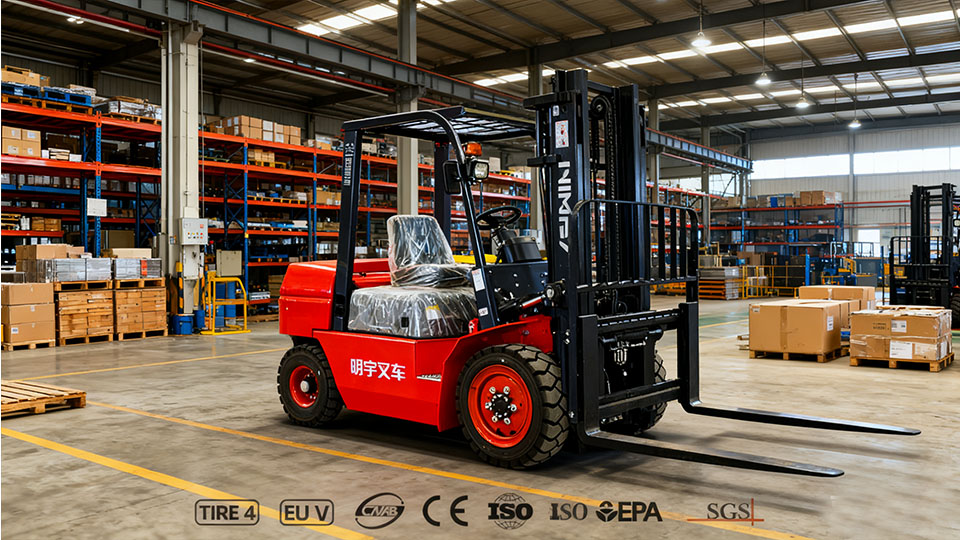
Diesel-powered forklifts remain the dominant choice for outdoor and heavy-duty applications due to their robust torque, long operating range, and durability in harsh environments. Diesel forklifts are classified by load capacity, and fuel burn rates scale proportionally with the machine's size and power output. According to industry data, light-duty diesel forklifts (2–3 ton capacity) typically exhibit burn rates between 2 and 4 liters per hour under standard operating conditions. Medium-duty models (3–5 ton capacity) generally burn 4–6 liters per hour, while heavy-duty forklifts (5+ ton capacity) can exhibit burn rates of 6–10 liters or more per hour, depending on the intensity of the work cycle.
A 3-ton diesel forklift, one of the most common configurations in industrial settings, typically exhibits a burn rate of 1.8 to 2.2 liters per hour at rated load, according to TCM specifications. However, other industry sources suggest a broader range of 2.5 to 3.5 liters per hour for 3-ton models, reflecting variations in engine efficiency, transmission design, and operating intensity. For 5-ton diesel forklifts, burn rates typically fall between 4.5 and 6.0 liters per hour, while 7-ton heavy-duty models can exhibit burn rates of 5–7 liters per hour or even 6.5–8.0 liters per hour under demanding conditions.
Factors Influencing Diesel Burn Rates
The diesel burn rate of a forklift is not a static figure but rather a dynamic variable influenced by numerous operational and environmental factors. Understanding these variables is essential for accurate cost forecasting and operational optimization.
Load Weight and Handling Intensity
The most significant factor affecting the typical diesel burn rate is the weight of the loads being handled. Heavier loads require greater engine power to lift and transport, directly increasing fuel burn rates. A forklift operating at 80–100% of its rated capacity will consume substantially more fuel than one handling loads at 40–50% capacity. Additionally, the frequency of lifting cycles—how often the forklift must accelerate, lift, travel, and lower loads—plays a critical role. Continuous heavy-duty cycles with frequent stops and starts can increase the burn rate by 20–30% compared to steady-state travel with minimal lifting.
Terrain and Operating Environment
Operating conditions significantly impact fuel efficiency and thus the diesel burn rate. Forklifts operating on smooth, paved surfaces with minimal gradients consume less fuel than those navigating rough terrain, gravel, or inclines. Outdoor applications in construction sites or unpaved yards typically result in higher burn rates due to increased rolling resistance and the need for greater traction. Conversely, indoor warehouse operations on polished concrete floors generally yield optimal fuel efficiency. Ambient temperature also affects consumption: cold weather increases fuel density and requires more energy for combustion, while hot weather increases cooling demands and reduces air density, both of which can negatively impact fuel economy.
Engine Technology and Emission Standards
Modern diesel forklifts are subject to stringent emission regulations such as EPA Tier 4 Final and EU Stage V standards. While these regulations reduce harmful pollutants, the aftertreatment systems required—diesel particulate filters (DPFs), selective catalytic reduction (SCR), and exhaust gas recirculation (EGR)—can impact fuel efficiency. Some manufacturers have managed to offset these efficiency losses through advanced electronic engine controls, optimized combustion chambers, and variable geometry turbochargers. Newer models generally offer 10–15% better fuel efficiency than legacy units due to these technological advancements.
Operator Behavior and Training
Operator behavior is often an overlooked but critical determinant of the diesel burn rate. Aggressive acceleration, abrupt braking, excessive idling, and improper load handling can increase fuel usage by 15–25%. Properly trained operators who practice smooth acceleration, maintain consistent travel speeds, and minimize idle time can significantly reduce hourly diesel consumption. Many modern forklifts are equipped with telematics systems that monitor operator behavior and provide feedback to encourage fuel-efficient driving habits.
Maintenance and Equipment Condition
Regular maintenance is fundamental to maintaining optimal fuel efficiency and a consistent burn rate. Clogged air filters, worn fuel injectors, dirty oil, and underinflated tires all increase fuel consumption. A poorly maintained forklift can consume 10–20% more fuel than a well-maintained equivalent. Tire pressure is particularly important: underinflated tires increase rolling resistance, forcing the engine to work harder and burn more fuel. Scheduled maintenance—including oil changes, filter replacements, fuel system checks, and tire pressure monitoring—is essential for minimizing the diesel burn rate.
Transmission and Hydraulic System Efficiency
Most modern forklifts utilize hydrostatic transmissions, which offer smooth operation and precise control but can be less fuel-efficient than mechanical transmissions in certain applications. The overall efficiency of the hydraulic system—which powers lifting, tilting, and attachment functions—also affects fuel consumption. Leaks, worn seals, or inefficient hydraulic pumps can increase the engine load and, consequently, the burn rate.
Calculating and Monitoring Diesel Burn Rates
Accurate measurement of the diesel burn rate is essential for cost management and operational optimization. The basic formula for calculating fuel efficiency is:
Fuel Efficiency (liters/hour) = Fuel Consumed (liters) / Operating Hours (hours)
To obtain representative data, measurements should be taken over a typical operating period that includes varied load conditions and work cycles. For example, a 3-ton diesel forklift consuming 25.6 liters over an 8-hour shift would have an average hourly burn rate of 3.2 liters per hour. At a diesel price of $1.20 per liter, this translates to a daily fuel cost of $30.72, or approximately $675.84 per month based on 22 working days.
Modern fleet management increasingly relies on telematics systems to monitor fuel consumption in real time. These systems track operating hours, fuel levels, idle time, and operator behavior, providing data-driven insights for optimization. By analyzing telematics data, fleet managers can identify inefficient operators, detect maintenance issues early, and implement targeted training programs to reduce overall fuel consumption.
Comparative Analysis: Diesel Burn Rates by Forklift Class
To provide a practical reference for procurement and operational planning, the following table summarizes typical diesel burn rates across different forklift classes and capacities:
表格
Forklift Capacity Fuel Type Typical Burn Rate Primary Applications
1.5–2.5 tons Diesel 1.5–2.5 L/hour Light warehouse, retail
3 tons Diesel 1.8–3.5 L/hour General warehousing, logistics
3.5 tons Diesel 3.0–5.0 L/hour Medium-duty manufacturing
5 tons Diesel 4.5–6.0 L/hour Heavy manufacturing, ports
7 tons Diesel 5.0–8.0 L/hour Heavy construction, shipping
10+ tons Diesel 6.0–10.0+ L/hour Heavy industry, container handling
1.5–3 tons Electric 3.0–5.0 kWh/hour Indoor warehousing, food processing
2–5 tons LPG Comparable to diesel (energy-equivalent) Mixed indoor/outdoor use
These figures represent typical ranges under standard operating conditions. Actual burn rates will vary based on the factors discussed previously. For heavy-duty forklifts, such as 20-ton capacity models used in ports and heavy construction, diesel remains the preferred fuel due to its high energy density and reliability, though electric alternatives are gaining traction for applications where emissions reduction is prioritized.
Strategies for Optimizing Diesel Burn Rates
Given that fuel represents one of the largest ongoing operating expenses for forklift fleets, implementing fuel efficiency strategies can yield substantial cost savings and environmental benefits.
Right-Sizing the Fleet
Using an oversized forklift for light-duty tasks results in unnecessary fuel consumption. Matching the forklift's capacity to the actual operational requirements ensures optimal efficiency. For example, deploying a 5-ton forklift for tasks that could be handled by a 2.5-ton model wastes fuel and increases wear on the larger machine.
Operator Training Programs
Comprehensive operator training focused on fuel-efficient techniques—smooth acceleration, minimal idling, proper load balancing, and route optimization—can reduce fuel consumption by 10–20%. Many organizations have implemented incentive programs that reward operators for achieving fuel efficiency targets, further driving behavioral change.
Idle Reduction Initiatives
Extended idling wastes fuel and contributes to unnecessary emissions. Encouraging operators to shut down engines during breaks, loading waits, or extended periods of inactivity can significantly reduce the diesel burn rate. Some modern forklifts are equipped with automatic idle shutdown systems that turn off the engine after a preset period of inactivity.
Preventive Maintenance Schedules
Adhering to manufacturer-recommended maintenance intervals ensures that engines, fuel systems, and hydraulic components operate at peak efficiency. Regular oil changes, air filter replacements, fuel injector cleaning, and tire pressure checks are relatively low-cost measures that prevent the fuel consumption increases associated with deferred maintenance.
Alternative Fuels and Technologies
As sustainability concerns grow, many organizations are exploring alternative fuel options. Biodiesel and hydrotreated vegetable oil (HVO) can reduce carbon emissions by up to 90% compared to conventional diesel while maintaining compatibility with existing diesel engines. Electric forklifts continue to advance in capability, with lithium-ion batteries offering faster charging and longer lifespans than traditional lead-acid batteries. For applications requiring extended operating hours, fuel cell-powered forklifts provide refueling times comparable to diesel while eliminating emissions.
Telematics and Data Analytics
Implementing telematics systems enables real-time monitoring of fuel consumption, operating patterns, and equipment health. Data analytics can identify trends, predict maintenance needs, and benchmark performance across the fleet. Organizations that leverage telematics data typically achieve 5–15% improvements in fuel efficiency through targeted interventions.
Environmental and Regulatory Considerations
Fuel consumption is increasingly linked to environmental compliance and corporate sustainability goals. Diesel forklifts emit carbon dioxide (CO₂), nitrogen oxides (NOₓ), and particulate matter, all of which are subject to regulatory limits in many jurisdictions. The EPA Tier 4 Final and EU Stage V emission standards have driven manufacturers to develop cleaner engines, but these technologies often come with increased complexity and maintenance requirements.
For indoor applications, diesel forklifts are generally prohibited unless equipped with advanced exhaust scrubbers and operating in well-ventilated facilities. LPG forklifts offer lower emissions than diesel and are suitable for partially enclosed spaces, while electric forklifts provide zero emissions at the point of use, making them ideal for food processing, pharmaceuticals, and other sensitive environments.
Organizations must balance the higher fuel consumption and emissions of diesel forklifts against their superior performance in outdoor and heavy-duty applications. Lifecycle cost analyses that incorporate fuel costs, maintenance expenses, emission compliance costs, and residual values are essential for making informed procurement decisions.
Conclusion
The typical diesel burn rate for a forklift is a multifaceted metric that depends on the machine's capacity, engine technology, operating conditions, and maintenance status. Light-duty diesel forklifts may exhibit burn rates as low as 1.5 liters per hour, while heavy-duty models can burn 10 liters or more under demanding conditions. For the most common 3-ton diesel forklifts, the typical burn rate ranges from 1.8 to 3.5 liters per hour, translating to significant operational costs over the equipment's lifespan.
For fleet managers and procurement professionals, understanding these burn rate patterns is essential for accurate budgeting, environmental compliance, and operational optimization. By implementing right-sizing strategies, operator training programs, preventive maintenance schedules, and telematics-based monitoring, organizations can reduce fuel consumption by 10–25% while maintaining productivity. As the material handling industry continues to evolve, the integration of alternative fuels, electric technologies, and data-driven fleet management will further reshape the landscape of forklift fuel efficiency, offering new opportunities for cost savings and sustainability.
Name: selena
Mobile:+86-13176910558
Tel:+86-0535-2090977
Whatsapp:8613181602336
Email:vip@mingyuforklift.com
Add:Xiaqiu Town, Laizhou, Yantai City, Shandong Province, China
