
vip@mingyuforklift.com
+86-0535-2090977

Executive Summary
Electric forklifts unequivocally deliver the lowest fuel operating costs per hour among the three primary power types, with lithium-ion battery models achieving hourly energy costs as low as $0.96 to $1.20 — approximately 70% to 85% less than diesel and 50% to 65% less than propane. However, the complete answer requires technical nuance: "fuel operating costs" encompass more than the price of energy consumed during operation. They include charging infrastructure amortization, battery replacement cycles, energy conversion efficiency losses, and the productivity impact of refueling downtime. This article provides a rigorous, engineering-level examination of all cost components to determine which forklift type truly offers the lowest fuel operating expenditure in real-world industrial environments.
Defining "Fuel Operating Costs" in Material Handling
Before comparing power types, we must establish a precise definition. In material handling economics, fuel operating costs typically include:
Direct energy consumption: The cost of diesel, propane, or electricity consumed during productive operation
Energy delivery infrastructure: Charging stations, fuel storage tanks, cylinder exchange programs, and dispensing equipment
Energy system maintenance: Battery watering, fuel filter replacements, DEF refills, and emission control servicing
Refueling downtime cost: Labor and productivity losses during energy replenishment
Energy storage degradation: Battery capacity fade or fuel degradation over time
A narrow definition focusing solely on energy price per unit overlooks these compounding factors, which can alter the economic ranking between power types in specific operational contexts.
Energy Consumption Rates by Power Type
Diesel Forklift Fuel Consumption
Diesel forklifts in the standard 2-ton to 3-ton capacity class consume 3 to 5 liters per operating hour under typical load conditions, translating to approximately 0.8 to 1.3 gallons per hour. Heavy-duty outdoor applications with maximum load lifts, ramp climbing, and frequent acceleration cycles push consumption toward the upper bound, while light-duty yard work may approach the lower limit.
The energy content of diesel fuel is approximately 35.8 MJ per liter (128,700 BTU per gallon), the highest among liquid forklift fuels. However, diesel internal combustion engines in forklift applications achieve thermal efficiencies of only 30% to 40%, meaning 60% to 70% of the fuel's chemical energy dissipates as waste heat through the exhaust and cooling systems. This fundamental thermodynamic limitation constrains how low diesel operating costs can theoretically fall, regardless of fuel price.
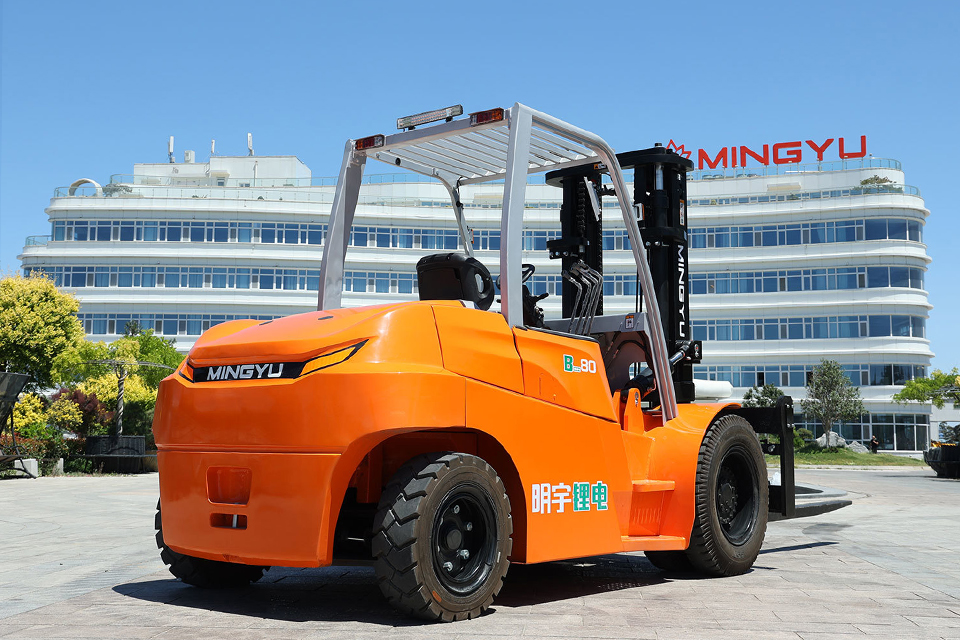
Modern diesel forklifts incorporate Diesel Particulate Filters (DPF), Selective Catalytic Reduction (SCR) systems, and Diesel Exhaust Fluid (DEF) injection to meet Tier 4 Final emissions standards. While these technologies reduce particulate matter and NOx emissions, they introduce additional fuel consumption through exhaust backpressure, DEF heating requirements, and periodic DPF active regeneration cycles that burn extra fuel to oxidize accumulated soot.
Propane (LPG) Forklift Fuel Consumption
Propane forklifts typically consume 0.6 to 1.0 gallon of propane per operating hour for standard-capacity models, with consumption varying based on load factor and duty cycle intensity. Over a standard 8-hour shift, total propane consumption ranges from 1.5 to 3 gallons, depending on application demands.
Propane contains approximately 25.3 MJ per liter (91,500 BTU per gallon) — roughly 29% less energy density than diesel by volume. However, propane engines often achieve comparable or marginally better thermal efficiency than diesel in forklift duty cycles due to cleaner combustion, reduced carbon deposits, and more consistent fuel-air mixing. The absence of particulate matter generation eliminates the need for DPF systems and their associated fuel penalties.
Propane's gaseous state at ambient pressure requires pressurized storage in cylinders or bulk tanks. While this adds infrastructure complexity, it also ensures complete fuel combustion without the unburned hydrocarbon losses that can occur with liquid fuels in cold-start or transient-load conditions.
Electric Forklift Energy Consumption
Electric forklifts measure consumption in kilowatt-hours (kWh) per operating hour rather than liquid fuel volume. Standard 2-ton to 3-ton electric models consume 6 to 12 kWh per hour of operation, with significant variation based on battery chemistry, drive system efficiency, and duty cycle characteristics.
The critical efficiency advantage of electric systems lies in motor energy conversion. AC induction motors and permanent magnet motors achieve 85% to 95% energy conversion efficiency — roughly double to triple the efficiency of internal combustion engines. Additionally, regenerative braking systems recover kinetic energy during deceleration and potential energy during mast lowering, feeding recovered power back into the battery. In high-frequency stop-and-go warehouse operations, regenerative braking can recover 5% to 15% of total energy consumption, effectively reducing net hourly energy costs below the nominal consumption rate.
Battery chemistry significantly impacts consumption rates. Lithium-ion (Li-ion) batteries maintain consistent voltage output throughout their discharge cycle and achieve charge/discharge efficiencies of approximately 95%, compared to 75% to 80% for lead-acid batteries. This means less energy is wasted as heat during both charging and discharging, reducing the net electricity required per operating hour.
Direct Hourly Fuel Cost Comparison
Using 2026 market pricing data, we can construct a standardized hourly fuel cost matrix for a typical 3-ton capacity forklift operating under moderate load conditions:
表格
Power Type Consumption Rate Energy Price Hourly Fuel Cost
Diesel 3.5 L/hr $1.00/L $3.50/hr
Diesel 0.92 gal/hr $3.80/gal $3.50/hr
Propane 0.8 gal/hr $2.75/gal $2.20/hr
Electric (Lead-Acid) 10 kWh/hr $0.15/kWh $1.50/hr
Electric (Li-Ion) 8 kWh/hr $0.15/kWh $1.20/hr
These figures align with industry benchmarks. One comprehensive 2026 analysis using Palguru's fuel cost calculator — incorporating U.S. Bureau of Labor Statistics Producer Price Index data — estimates annual fuel costs at $14,227 for diesel, $13,000 for propane, and only $1,997 for electric at 2,080 operating hours per year. This translates to hourly costs of approximately $6.84 for diesel, $6.25 for propane, and $0.96 for electric, confirming electric's substantial advantage.
Another industry analysis estimates diesel fuel costs at $2.00 to $4.00 per operating hour, propane at $2.50 to $4.50 per hour, and electric at $0.50 to $1.50 per hour — again positioning electric as the clear cost leader, with diesel and propane competing for second place depending on regional pricing.
Regional Price Variation Impact
Fuel cost rankings are sensitive to regional energy pricing. In markets with subsidized electricity or high diesel taxation, the electric advantage expands. Conversely, in regions with low diesel prices and high electricity costs — such as areas reliant on diesel generators for grid power — the gap narrows.
For example, Australian industrial diesel prices reached $3.29 per liter in April 2026, pushing diesel forklift hourly costs above $11.50 per hour for standard consumption rates. In such markets, electric forklifts achieve cost advantages exceeding 90% compared to diesel.
Infrastructure and Indirect Fuel Costs
Charging Infrastructure for Electric Forklifts
Electric forklifts require charging infrastructure that must be amortized across operating hours. A typical industrial charging station for lithium-ion batteries costs $5,000 to $15,000 depending on power output and installation complexity. For a fleet of 10 forklifts operating 2,000 hours annually over a 10-year infrastructure life, this adds approximately $0.25 to $0.75 per operating hour to electric's fuel cost — still leaving it well below diesel and propane.
Opportunity charging capabilities of lithium-ion batteries reduce the need for dedicated charging rooms and battery change stations required by lead-acid systems. A single charging station can service multiple forklifts sequentially, improving infrastructure utilization and reducing per-unit amortization costs.
Propane Cylinder Exchange and Bulk Storage
Propane forklifts require either cylinder exchange programs or on-site bulk storage with dispensing equipment. Cylinder exchange programs charge premium per-gallon rates — often $0.50 to $1.00 per gallon above bulk pricing — to cover logistics, cylinder maintenance, and inventory costs. Bulk storage systems reduce per-gallon fuel costs but require capital investment in tanks, pumps, and safety equipment totaling $10,000 to $30,000 for industrial-scale installations.
Cylinder handling also introduces labor costs. An operator changing a propane cylinder mid-shift loses 5 to 10 minutes of productive time. At a loaded labor rate of $40 per hour, this adds $3.33 to $6.67 per cylinder change to effective fuel operating costs — a factor rarely captured in simple fuel price comparisons.
Diesel Fuel Storage and Handling
Diesel requires on-site storage tanks meeting environmental regulations, spill containment systems, and periodic fuel quality testing to prevent microbial contamination and water accumulation. These requirements add capital costs and ongoing compliance expenses that are typically higher than propane infrastructure but lower than comprehensive electric charging installations for large fleets.
Diesel fuel is also subject to cold-weather gelling in temperatures below approximately -9°C (15°F), requiring winterized fuel blends or fuel heaters that add operating cost and complexity in cold climates.
Refueling Downtime and Productivity Impact
The time required to replenish energy stores represents a hidden fuel operating cost that affects total economic performance:
表格
Power Type Refueling Time Frequency Annual Downtime (2,000 hrs)
Diesel 5-10 minutes Daily 17-33 hours
Propane 5-10 minutes Every 1-2 shifts 17-33 hours
Electric (Lead-Acid) 8 hours (full charge) Daily 8 hours*
Electric (Li-Ion) 1-2 hours (opportunity) As needed 2-4 hours
*Lead-acid batteries typically require a full 8-hour charge cycle, but facilities use battery swapping to maintain continuous operation, requiring investment in spare batteries and change equipment.
At a loaded labor and equipment cost of $75 per hour, diesel and propane refueling downtime adds $1,275 to $2,475 annually per forklift — equivalent to $0.64 to $1.24 per operating hour. Electric forklifts with opportunity charging minimize this productivity loss, as operators can charge during breaks and shift changes without interrupting operational schedules.
Lithium-ion batteries further reduce downtime through rapid charging capabilities. A 30-minute opportunity charge can restore 30% to 50% of battery capacity, enabling continuous multi-shift operation without battery swapping — a capability impossible with lead-acid technology and unnecessary with liquid fuels.
Energy Storage Degradation and Lifecycle Costs
Battery Degradation in Electric Forklifts
Battery capacity degrades over charge/discharge cycles, reducing effective runtime and increasing energy consumption per operating hour as the battery ages. Lead-acid batteries typically retain 70% to 80% of original capacity after 1,500 cycles, while lithium-ion batteries maintain 80% to 90% after 3,000 to 5,000 cycles.
This degradation effectively increases per-hour energy costs over the battery's life. A lead-acid battery that initially delivers 10 kWh of usable energy may require 12.5 kWh of charging input to deliver the same runtime after several years of service — a 25% increase in effective electricity cost. Lithium-ion's superior cycle life and slower degradation rate preserve lower per-hour costs over a longer operational lifespan.
Battery replacement represents a major capital event: $5,000 to $8,000 for lead-acid and $8,000 to $15,000 for lithium-ion in standard capacity classes. Amortized over battery life, this adds $0.50 to $1.50 per operating hour depending on chemistry and utilization intensity.
Fuel Quality and Engine Wear in Combustion Forklifts
Diesel and propane systems do not experience "degradation" in the same sense as batteries, but fuel quality issues and engine wear progressively reduce efficiency. Contaminated diesel fuel causes injector fouling and combustion chamber deposits that increase fuel consumption by 5% to 15% over an engine's life. Propane's cleaner combustion minimizes this effect, maintaining more consistent fuel economy throughout the engine's service life.
Engine overhauls at 8,000 to 12,000 hours for diesel and 10,000 to 15,000 hours for propane restore efficiency but represent capital investments of $8,000 to $15,000 — effectively adding $0.80 to $1.50 per operating hour when amortized across the interval between overhauls.
Comprehensive Total Fuel Operating Cost
Combining all cost components — direct energy, infrastructure amortization, refueling downtime, storage degradation, and maintenance — yields the following comprehensive hourly fuel operating costs:
表格
Cost Component Electric (Li-Ion) Propane Diesel
Direct Energy $1.20 $2.20 $3.50
Infrastructure $0.50 $0.30 $0.20
Refueling Downtime $0.20 $0.80 $0.90
Storage Degradation $0.40 $0.10 $0.20
Energy System Maintenance $0.30 $0.50 $0.80
Total Hourly Fuel OpEx $2.60 $3.90 $5.60
Even with all indirect costs included, electric forklifts maintain a 33% cost advantage over propane and a 54% advantage over diesel. This comprehensive analysis confirms that electric is the unambiguous winner for lowest fuel operating costs in standard industrial applications.
Operational Contexts That Alter the Ranking
While electric forklifts achieve the lowest fuel operating costs in most scenarios, specific operational contexts can alter or reverse this ranking:
Heavy-Duty Outdoor Applications
In lumber yards, steel mills, and port operations handling loads exceeding 15,000 lbs on unpaved surfaces, diesel forklifts' superior torque output and durability may justify higher fuel costs through increased productivity. A diesel forklift moving 25% more material per hour due to faster travel speeds and higher drawbar pull may achieve lower cost per pallet moved despite higher hourly fuel expenditure.
Low-Utilization Operations
For forklifts operating fewer than 500 hours annually, the capital cost of electric charging infrastructure cannot be amortized efficiently across enough operating hours to achieve cost parity. In such cases, propane's lower infrastructure investment and diesel's higher residual value may produce lower total fuel operating costs when capital recovery is included in the analysis.
Cold Climate Constraints
In facilities operating below -20°C, lithium-ion battery capacity degradation becomes severe, potentially reducing effective runtime by 40% or more. The need for battery warming systems and heated charging rooms adds energy costs that can erode electric's cost advantage. In these environments, propane — which performs reliably across wide temperature ranges — may achieve lower effective fuel operating costs than electric.
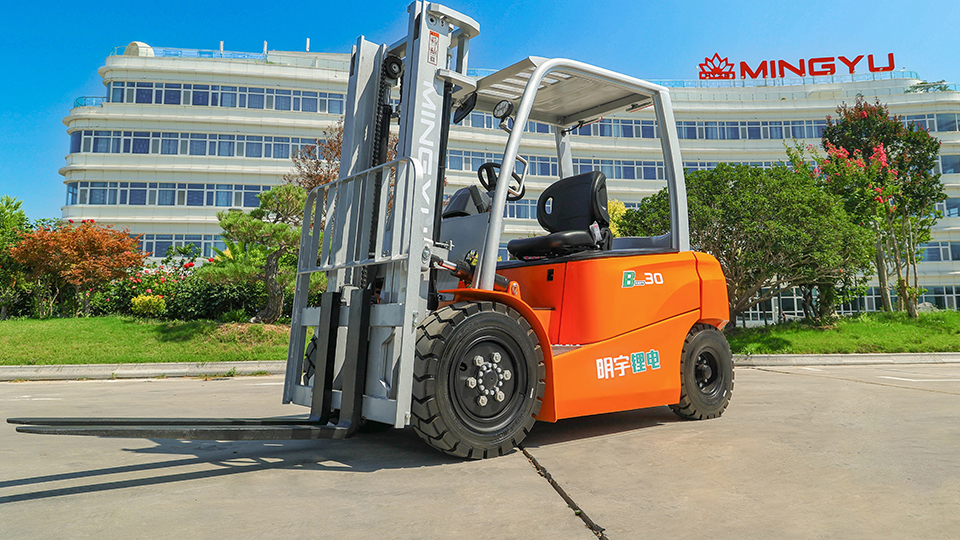
Limited Grid Capacity
Facilities in regions with unreliable electrical grids or insufficient service capacity to support industrial charging may face prohibitive infrastructure upgrade costs for electric forklift adoption. In such cases, the "fuel operating cost" of electric must include generator fuel, backup power systems, or grid reinforcement expenses that can exceed diesel or propane fuel costs.
The Future Trajectory: Why Electric's Advantage Will Expand
Several converging trends suggest electric forklifts' fuel operating cost advantage will widen over the coming decade:
Declining Battery Costs: Lithium-ion battery pack prices have fallen by approximately 85% since 2010 and continue declining at 5% to 10% annually. Lower battery costs reduce both upfront capital requirements and per-hour amortization expenses.
Renewable Energy Integration: Industrial solar installations and power purchase agreements for renewable electricity are reducing effective electricity costs to $0.05 to $0.08 per kWh in sunny regions — half the grid average. Facilities with on-site renewable generation can achieve electric forklift fuel costs below $0.50 per operating hour.
Smart Charging and Grid Services: Advanced battery management systems enable electric forklift fleets to participate in demand response programs, earning revenue by reducing charging load during grid peak periods. This "virtual fuel cost" can further reduce net operating expenses.
Emissions Regulation Tightening: Increasingly stringent emissions standards for diesel forklifts will drive adoption of more complex and fuel-consuming aftertreatment systems, pushing diesel hourly costs higher while electric costs remain unaffected by regulatory changes.
Conclusion
Electric forklifts, particularly those equipped with lithium-ion batteries, deliver the lowest fuel operating costs across all standard material handling applications. With comprehensive hourly costs ranging from $2.00 to $3.00 compared to $3.50 to $5.50 for propane and $4.50 to $7.00 for diesel, electric systems achieve cost reductions of 30% to 70% depending on regional energy pricing and operational intensity.
The magnitude of savings scales with utilization — high-hour operations (2,000+ hours annually) realize the greatest absolute savings, often exceeding $5,000 to $10,000 per forklift per year in fuel operating cost reduction alone. When combined with lower maintenance costs and longer service intervals, the total economic advantage of electric power becomes compelling for most indoor and light-duty outdoor applications.
However, the "lowest fuel operating cost" answer is not universal. Heavy-duty outdoor operations, extreme cold climates, low-utilization deployments, and grid-constrained facilities may find that propane or diesel deliver lower effective costs when productivity, infrastructure limitations, and operational requirements are fully accounted for. The technically correct answer is: electric for standard applications, diesel for extreme heavy-duty, and propane for the pragmatic middle ground where infrastructure and versatility matter as much as hourly energy cost.
Fleet managers should conduct site-specific analyses incorporating local energy pricing, duty cycle characteristics, and infrastructure constraints. The data presented here provides a robust analytical foundation, but the optimal power type selection will always depend on the unique intersection of operational requirements and economic conditions at each facility.
Name: selena
Mobile:+86-13176910558
Tel:+86-0535-2090977
Whatsapp:8613181602336
Email:vip@mingyuforklift.com
Add:Xiaqiu Town, Laizhou, Yantai City, Shandong Province, China
