
vip@mingyuforklift.com
+86-0535-2090977

1. The Chemistry of Failure: Sulfation
The most common reason a lead-acid forklift battery loses its ability to hold a charge is sulfation.1
The Process
In a healthy discharge cycle, lead sulfate (2$PbSO_4$) forms on the battery plates.3 During a proper recharge, this sulfate is converted back into lead, lead dioxide, and sulfuric acid. However, if a battery is left in a discharged state for too long or is consistently undercharged, the lead sulfate crystallizes.4
Why It Prevents Charging:
Surface Barrier: These hard crystals coat the lead plates, creating a physical barrier that prevents the electrolyte from interacting with the active material.
Increased Resistance: Sulfation increases the internal resistance of the battery.5 The charger may "think" the battery is full because the voltage spikes quickly due to this resistance, causing the charger to shut off prematurely when the battery is actually only partially charged.
2. Electrolyte Imbalance and Stratification
Industrial batteries rely on a precise mixture of sulfuric acid and water.6 When this balance is disrupted, the battery’s capacity plummets.7
Acid Stratification
If a battery is never given an equalization charge (a deliberate overcharge to stir the electrolyte), the heavier sulfuric acid settles at the bottom of the cell, while the lighter water stays at the top.8

The Result: The bottom of the plates suffers from intense sulfation due to high acid concentration, while the top of the plates corrodes because of low acid concentration. Neither half can hold energy effectively.
Improper Watering
Watering is the most misunderstood part of forklift maintenance.
Under-watering: If the electrolyte level drops below the top of the plates, the lead is exposed to air, leading to permanent oxidation and loss of capacity.9
Over-watering: If you add water before charging, the electrolyte expands during the heat of the charge and overflows. This "boil-over" loses actual acid from the system, permanently reducing the battery’s voltage potential.
3. The "Dead Cell" Phenomenon
A forklift battery is not one single unit; it is a series of individual 2-volt cells (e.g., a 48V battery has 24 cells). If just one of these cells fails, it creates a "bottleneck" for the entire battery.
Causes of Cell Failure:
Internal Short Circuit: Over time, "moss" (lead particles) or sediment can build up at the bottom of the cell. If this sediment reaches the bottom of the plates, it creates a bridge between the positive and negative plates, causing the cell to self-discharge rapidly.
Separator Failure: The thin porous sheets that keep plates apart can wear out, leading to a direct internal short.
Diagnosis Tip: Use a hydrometer to check the specific gravity of each cell.10 If one cell has a significantly lower reading than the others after a full charge, that cell is likely defective.
4. Parasitic Drains and Electrical Faults
Sometimes the battery is healthy, but the forklift is "stealing" its energy.
Ground Faults: If acid has spilled onto the top of the battery (due to over-watering), it can create a conductive path between the terminals and the steel battery case. This causes a slow, constant "trickle" of power out of the battery even when the forklift is turned off.
Accessory Draw: Faulty telematics, aging LED displays, or aftermarket attachments (like scales or cameras) can develop shorts that drain the battery overnight.
5. Charger Incompatibility and "Ghost" Charges
In many cases, the battery won't hold a charge because it was never actually charged in the first place.
The Mismatched Charger
Every battery has an Amp-Hour (Ah) rating.11 If you use a charger designed for a 600Ah battery on a 1000Ah battery, the charger may time out before the battery is saturated.
Blown Fuses or Damaged Cables
Forklift charging cables endure massive wear. A frayed cable or a corroded connector increases resistance.12 This generates heat and "fools" the charger's sensors into ending the cycle early because the voltage curve looks irregular.
Summary of Troubleshooting Steps
|
Symptom |
Probable Technical Cause |
Solution |
|
Quick Voltage Drop |
Sulfation or Acid Stratification |
Perform an equalization charge (12+ hours). |
|
Battery Gets Very Hot |
Internal Short or Overcharging |
Check individual cell voltages; replace bad cells. |
|
Rotten Egg Smell |
Overheating / Boiling Electrolyte |
Check charger settings; inspect for "dry" cells. |
|
Low Power After Weekend |
Ground Fault / Parasitic Drain |
Clean battery top with neutralizing wash. |
Next Generation: Lithium-Ion (Li-ion)
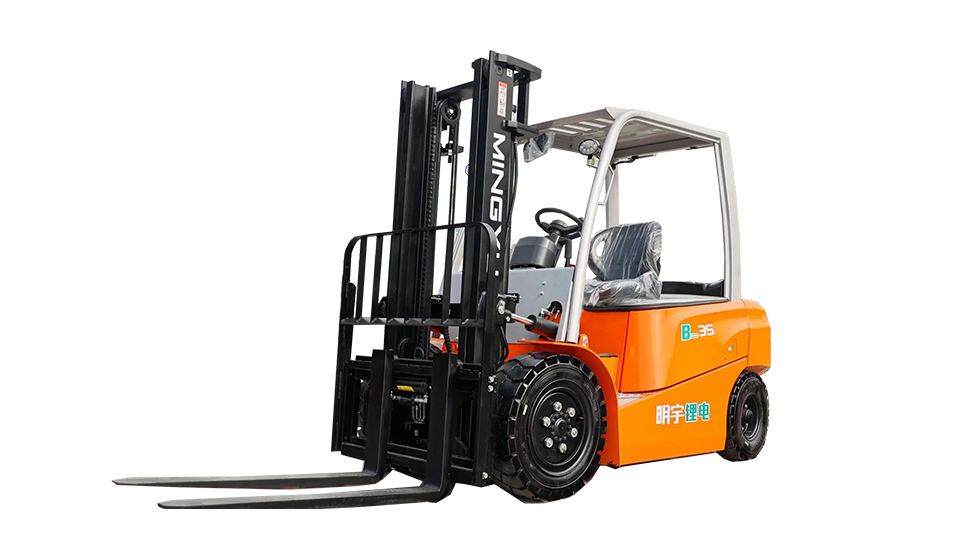
It is worth noting that modern Lithium-ion forklift batteries do not suffer from sulfation or stratification. If a Li-ion battery isn't holding a charge, the issue is usually a failure in the Battery Management System (BMS) or cell imbalance within the module, which requires professional diagnostic software to fix.
Name: selena
Mobile:+86-13176910558
Tel:+86-0535-2090977
Whatsapp:8613181602336
Email:vip@mingyuforklift.com
Add:Xiaqiu Town, Laizhou, Yantai City, Shandong Province, China
