
vip@mingyuforklift.com
+86-0535-2090977

Forklift and pedestrian interaction remains one of the most important safety challenges in warehouses, factories and distribution centers. In 2026, artificial-intelligence cameras, proximity sensors, telematics dashboards and automatic speed-control systems are receiving growing attention because they can help safety teams identify blind spots and measure near-miss patterns. Technology alone, however, cannot create a safe site. The strongest approach combines suitable equipment, a clear traffic plan, trained operators, disciplined pedestrians and regular review of real operating data.
Shandong Zhuogong Machinery Equipment Co.,Ltd, manufacturer of material handling equipment under the ZGLOADER and MYZG brands, recommends treating pedestrian-detection technology as one layer within a complete warehouse safety system. This guide explains how warehouses can evaluate new safety tools without overstating their capabilities or ignoring fundamental operating controls.
Modern warehouses are handling more orders, more product variations and tighter delivery schedules. Forklifts may share space with pedestrians, pallet trucks, cleaning equipment and delivery vehicles. At aisle intersections, dock doors and production hand-off points, visibility can change quickly. A driver may have a clear route one moment and face an unexpected pedestrian movement the next.
AI camera systems are designed to distinguish a person from shelves, pallets or other background objects. Proximity systems may use cameras, radar, ultra-wideband tags or other sensors to warn when a pedestrian enters a defined zone. Telematics can record events so managers can find repeated high-risk locations. These functions can support better decisions, but their effectiveness depends on correct installation, calibration and site-specific rules.
Before adding detection equipment, a warehouse should confirm that each forklift suits its assigned work. Rated capacity, load-center distance, mast height, aisle width, tire type, visibility and braking performance all affect risk. A compact truck may improve maneuverability in a tight area, while a larger truck may be required for a heavier load. Selecting the wrong machine can create hazards that electronic warnings cannot solve.
For indoor logistics, buyers can review the MYZG electric forklift range and the normal electric forklift category. Electric forklifts offer quiet operation and no tailpipe emissions during use, which can improve the working environment and make audible warning design more deliberate.
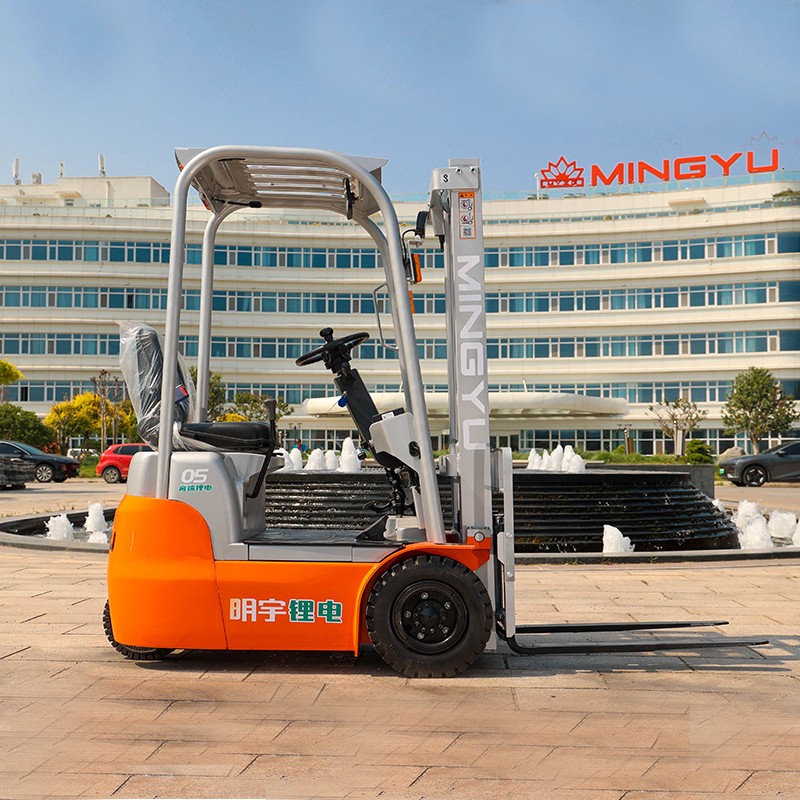
An AI camera typically monitors one or more zones around the forklift. When a person is recognized inside a configured area, the system may issue an audible alert, a visual signal or a vibration warning. Some integrated systems can also request speed reduction. The purpose is to give the operator earlier awareness, especially where the mast, load, rear counterweight or warehouse structure creates a blind spot.
Detection performance should be evaluated in the actual facility. Lighting, reflective clothing, doorways, temperature, dust, camera angle and pedestrian density can affect results. Safety teams should test people approaching from different directions and at different speeds. They should also define what happens after an alert: the driver must know whether to stop, slow down, sound the horn or wait for the pedestrian to move into a protected area.
A warning system that activates constantly can lose its value. Operators may begin to ignore alerts if detection zones are too large or if the system repeatedly responds to people who are safely separated by a barrier. During commissioning, the warehouse should map vehicle routes, walking paths, intersections, loading areas and waiting zones. Warning distances can then be adjusted for speed, visibility and local risk.
Sites may use different alert levels. A wider awareness zone can provide an early visual signal, while a smaller critical zone can produce a stronger alarm. High-risk intersections may also need fixed warning lights, mirrors, gates or automatic speed limits. The goal is a clear and consistent response, not the largest possible number of notifications.
Traditional safety reviews often depend on reported incidents. Near misses may remain invisible because nobody is injured and no property is damaged. A connected detection system can record the time, location and frequency of warning events. Managers can compare shifts, identify repeated conflict points and decide whether a route, rack end or doorway needs improvement.
Data should be used for coaching and system improvement rather than automatic blame. A cluster of alerts may indicate poor layout, unclear right-of-way rules, insufficient lighting or unrealistic productivity targets. The warehouse should review events with operators and pedestrians, then measure whether corrective action actually reduces exposure.
Where practical, forklifts and pedestrians should not share the same travel lane. Barriers, marked walkways, controlled crossing points and separate entrances reduce dependence on individual reaction time. At unavoidable crossings, the site can use stop lines, gates, warning lights, mirrors and restricted visibility controls. Floor markings must remain visible, and temporary pallets or waste must not block protected routes.
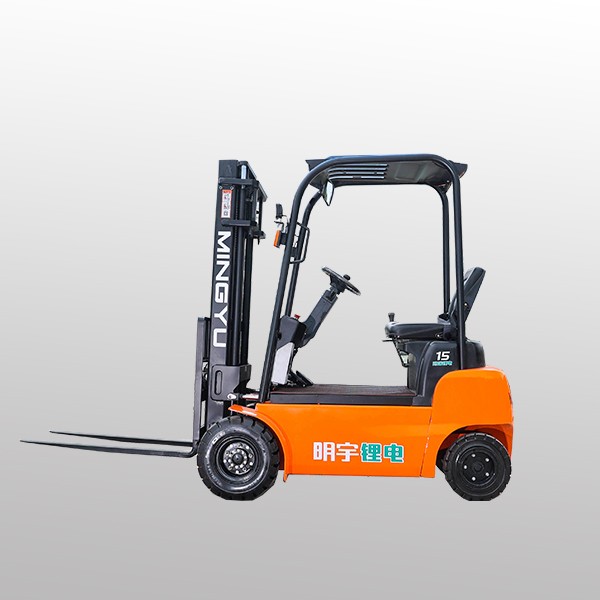
The CPD05B electric forklift is an example of a compact material handling machine that can be evaluated for light indoor applications. For higher-capacity tasks, buyers can review the CPD15B electric forklift. Model selection should always reflect the real load, lift height, floor condition and working cycle.
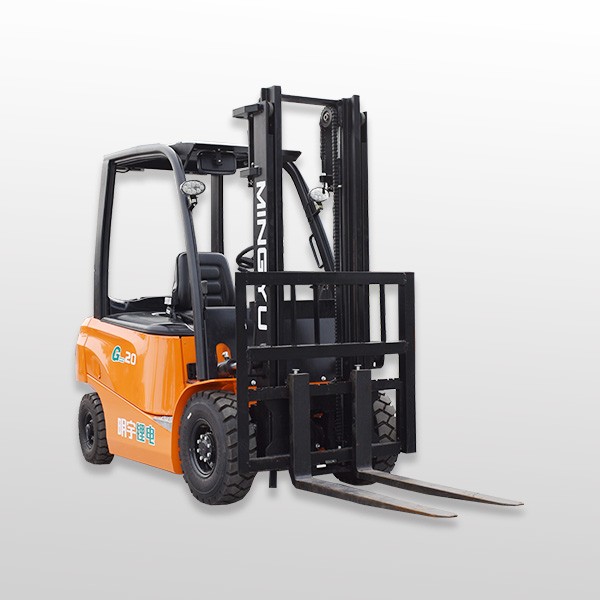
Even an advanced warning system does not replace trained operation. Drivers must inspect the truck before each shift, wear the required restraint, travel with the load low, slow down at intersections and keep a clear view in the direction of travel. If a load blocks forward visibility, site rules should define the correct travel direction or use of a trained spotter.
Pedestrians also need specific instruction. They should use marked routes, make eye contact with the operator before crossing, never walk under raised forks and avoid entering the truck's turning area. Mobile-phone distraction and headphones can reduce awareness. Visitors and contractors need a simple briefing before entering an active material handling zone.
A reliable forklift supplier should ask about the application rather than recommending a machine from capacity alone. ZGLOADER and MYZG can support customers in evaluating power type, load capacity, mast, tires, attachment needs and working conditions. The final safety system may also include locally sourced detection or telematics equipment selected according to regional standards and the customer's risk assessment.
For equipment selection, technical information and international cooperation, please contact Shandong Zhuogong Machinery Equipment Co.,Ltd.
Shandong Zhuogong Machinery Equipment Co.,Ltd
Address: Xiaqiu Town, Laizhou, Yantai City, Shandong Province, China
Mobile: +86-13176910558
Email: vip@mingyuforklift.com
Website: https://www.vavforklift.com/
In 2026, AI pedestrian detection is best understood as a practical decision-support tool. When it is combined with appropriate MYZG or ZGLOADER equipment, clear traffic separation, trained people and measurable follow-up, it can help warehouses build a safer and more disciplined mixed-traffic operation.
Name: selena
Mobile:+86-13176910558
Tel:+86-0535-2090977
Whatsapp:8613181602336
Email:vip@mingyuforklift.com
Add:Xiaqiu Town, Laizhou, Yantai City, Shandong Province, China