
vip@mingyuforklift.com
+86-0535-2090977

Cold-chain warehouses protect food, pharmaceuticals and other temperature-sensitive products, but the low-temperature environment places unusual demands on every forklift. Batteries deliver less usable energy, hydraulic response can change, seals become less flexible, visibility can be affected by condensation, and operators work under greater physical stress. In 2026, cold-storage equipment selection is a growing logistics topic because reliable material flow is essential to preserving both product quality and warehouse throughput.
Shandong Zhuogong Machinery Equipment Co.,Ltd supplies material-handling equipment through the ZGLOADER and MYZG brands. Cold-storage suitability must be reviewed for each application. A standard warehouse forklift should not be assumed suitable for freezer service simply because it can enter the room.
Buyers should record the minimum, typical and maximum temperatures in every operating zone. Chilled rooms, frozen rooms, loading docks and ambient staging areas create different conditions. The duration of exposure is as important as the lowest temperature: a truck that enters a freezer briefly has a different duty from one that remains there for an entire shift.
Frequent transitions between cold and warm zones can create condensation on electrical connectors, controls, mast components and visibility surfaces. Route planning should reduce unnecessary transitions and provide a controlled process for warming, drying and inspection where required by the equipment instructions.
Cold conditions can reduce available battery capacity and affect charging performance. The battery chemistry, battery-management system, charger and temperature limits must be compatible. Operators should follow the approved charging procedure and never use an unapproved charger or improvised heating method.
Energy planning should use the real shift profile: travel time, lifting cycles, idle periods and temperature exposure. A battery that supports an ambient-temperature shift may not provide the same runtime in a freezer. Charging areas must meet local electrical, ventilation and fire-safety requirements.
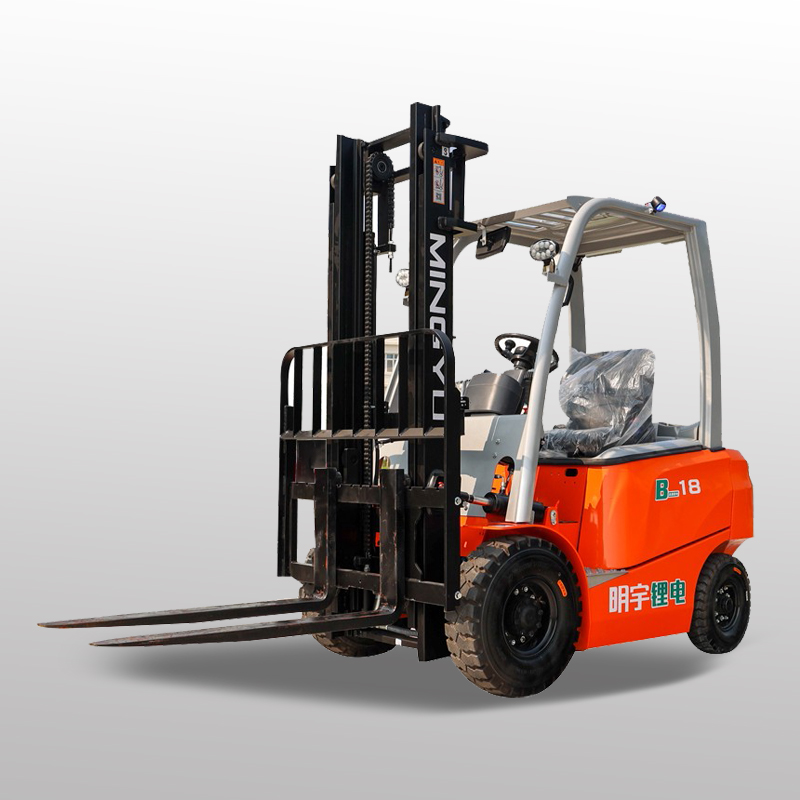
Low temperatures can increase fluid viscosity and slow hydraulic functions. Oils, greases, hoses and seals should be selected according to manufacturer guidance for the intended temperature range. Substituting a fluid without approval can affect lubrication, response and component life.
Operators should report delayed lifting, unusual noise, leakage or stiff controls. The truck should be allowed to stabilize according to its operating procedure rather than being placed under maximum load immediately after a temperature change.
Moisture can form when a cold truck enters warmer, humid air. Repeated cycles may contribute to corrosion or electrical problems and can create slippery areas on the floor. Connectors, enclosures and wiring protection should be reviewed for the application, while maintenance inspections should look for trapped moisture and corrosion.
Visibility is also important. Fogged windows, mirrors, cameras or lights can reduce awareness. Operators must stop if they cannot see the travel path clearly. Wiping a surface is not a complete solution when condensation immediately returns; the transition process and equipment configuration require review.
Ice, moisture and damaged flooring can reduce traction. Tire choice must be approved for the forklift and matched to the surface, load and temperature. Facility housekeeping, drainage and door management are equally important. No tire can make an untreated icy route safe.
Speed should be reduced before turns and transition points. Sudden acceleration, braking or steering can shift the load, especially when the surface offers inconsistent grip. Pallets may also become brittle or slippery in cold conditions and should be inspected before lifting.
Cold exposure can reduce dexterity, reaction speed and concentration. Clothing and gloves must protect the operator without interfering with controls, restraint systems or visibility. Breaks and warm-up periods should follow local occupational-safety requirements and the facility's cold-stress program.
Supervisors should treat shivering, numbness, confusion or unusual driving behavior as warning signs. Production targets must allow safe travel, complete inspections and recovery time.
Customers can review the ZGLOADER and MYZG electric forklift range. Product examples include the CPD18B electric forklift, CPDJ20 lead-acid forklift and CPD25 lead-acid forklift.
These links are product references, not a claim that every standard configuration is freezer-rated. The required low-temperature options, battery system and operating limits must be confirmed in a current written technical proposal.
Provide the supplier with temperature zones, exposure time, pallet dimensions, maximum load, lift height, aisle width, floor condition, shift length and charging plan. Include photographs or drawings of transition doors, ramps and racks. Complete data helps avoid buying a truck that meets capacity requirements but fails the environmental duty.
Training must cover model-specific controls, cold-room routes, reduced traction, battery rules and emergency procedures. The workplace risk assessment and legal compliance remain the owner's responsibility.
For cold-chain forklift selection and international cooperation, please contact Shandong Zhuogong Machinery Equipment Co.,Ltd.
Shandong Zhuogong Machinery Equipment Co.,Ltd
Address: Xiaqiu Town, Laizhou, Yantai City, Shandong Province, China
Mobile: +86-13176910558
Email: vip@mingyuforklift.com
Website: https://www.vavforklift.com/
Reliable cold-storage handling in 2026 comes from matching equipment, energy, maintenance and people to the real temperature profile. With a complete application review, suitable ZGLOADER or MYZG equipment can support safer and more consistent cold-chain operations.
Name: selena
Mobile:+86-13176910558
Tel:+86-0535-2090977
Whatsapp:8613181602336
Email:vip@mingyuforklift.com
Add:Xiaqiu Town, Laizhou, Yantai City, Shandong Province, China
