
vip@mingyuforklift.com
+86-0535-2090977

Loading docks connect warehouses with road transport, but they also concentrate vehicles, pedestrians, height differences and changing trailer conditions in one small area. A forklift or pallet truck may cross from a fixed building floor onto a trailer several times each hour. In 2026, dock safety remains a high-priority material-handling topic because a single trailer movement, failed dockboard or unprotected edge can have severe consequences.
Shandong Zhuogong Machinery Equipment Co.,Ltd supplies forklifts and warehouse equipment under the ZGLOADER and MYZG brands. Safe dock operation depends on more than the truck. The trailer, restraint, dock leveler or board, floor, lighting, communication and loading procedure must work as one controlled system.
The trailer or truck must be prevented from moving according to site rules and applicable local requirements. Depending on the facility, controls may include a vehicle restraint, wheel chocks, brakes, a tractor connection or another approved method. Drivers and warehouse staff need a clear signal showing when entry is permitted.
A verbal assumption is not enough. The dock worker should verify the restraint condition before powered equipment enters. Procedures must address uncoupled trailers, trailers with landing gear, unusual rear-impact guards and vehicles that cannot use the normal restraint system.
Repeated forklift movement can cause an unsecured trailer to move gradually away from the dock. A driver may also depart before loading is complete if communication fails. Both situations can create a gap large enough for equipment to fall.
Facilities should use a consistent red-light/green-light or equivalent communication process, with responsibility clearly assigned. The truck driver should know when keys, paperwork or other controls will be released. Bypass procedures require supervisor authorization and equivalent protection.
The bridging device must be rated for the combined weight of the loaded equipment and operator, not only the pallet. It should be secured against movement and provide adequate overlap and run-off protection where required. Bent plates, cracked welds, damaged hinges, slippery surfaces or missing restraints require immediate attention.
Portable dockboards should be handled using the approved method. Workers should not place hands beneath a heavy board or improvise supports. Fixed levelers require inspection and maintenance according to the manufacturer's instructions.
A trailer floor that looks acceptable from the dock may be weakened by rot, corrosion, previous impacts or concentrated loads. The warehouse should have a method to assess floor condition before entry. Equipment weight, load distribution and wheel loading must be considered.
Uncoupled trailers may need additional support to prevent tipping or landing-gear failure. The required supports depend on trailer type and local procedure. Never enter when the trailer position or structural condition is uncertain.
An empty dock position creates a fall hazard for trucks and people. Doors, barriers, chains or other approved guards should control access. Floor markings alone do not physically stop equipment. Operators should approach dock edges only as required by the task and at controlled speed.
Lighting must reveal the edge, trailer interior and any gap. Glare from daylight or a dark trailer can hide hazards. A damaged dock light should be repaired before loading continues if visibility is insufficient.
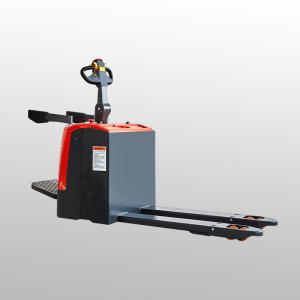
Equipment dimensions, turning radius, capacity and grade ability must suit the trailer and dock. A large counterbalance forklift may be unsuitable for a lightweight trailer floor or confined interior. An electric pallet truck may support horizontal movement where lift height is not required, provided capacity and pallet compatibility are correct.
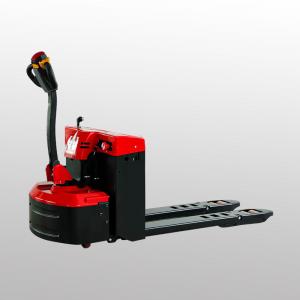
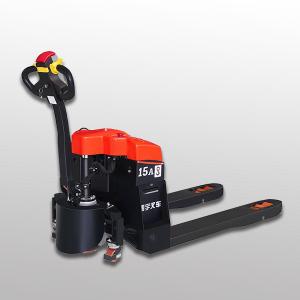
Customers can review the ZGLOADER and MYZG pallet truck range, including the MYCBD-B electric pallet truck, standing electric pallet truck and MYCBD15 electric pallet truck.
Drivers, pickers and visitors should not walk through an active loading path. Marked routes, barriers and designated waiting areas reduce conflict. Communication should account for language differences, hearing protection and noisy dock environments.
Pedestrians must never stand between a moving truck and a fixed object or inside a trailer while powered equipment is operating unless an approved procedure specifically controls the task. Reversing alarms and warning lights support awareness but do not replace separation.
The loading plan should maintain trailer stability and comply with transport requirements. Heavy loads, concentrated wheel loads and uneven distribution can affect both the floor and vehicle. Operators should know where pallets belong before entering rather than making repeated turns inside a confined trailer.
Damaged pallets, unstable stacks and protruding wrapping should be corrected before travel. Loads must remain within the truck's capacity and be handled in the approved travel position.
Operators should cross dockboards squarely and at controlled speed. Abrupt steering or braking on a slope can shift the load. The transition may become slippery from rain, ice, oil or condensation and should be cleaned or isolated before use.
Repeated impacts at a dock joint can damage wheels, loads and equipment. If the transition is excessively steep or uneven, the facility should correct the dock configuration rather than expecting operators to overcome it with speed.
Training should cover the specific restraint and signal system, dockboard inspection, trailer-floor checks, pedestrian rules and emergency response. Supervisors should observe real loading cycles, including unusual vehicles and peak periods.
If equipment begins to fall, operators should follow their training and remain with the restraint system as directed by the truck manufacturer; jumping can expose them to crushing hazards. Site emergency procedures should address rescue, isolation and reporting.
For pallet trucks, forklift selection and international cooperation, please contact Shandong Zhuogong Machinery Equipment Co.,Ltd.
Shandong Zhuogong Machinery Equipment Co.,Ltd
Address: Xiaqiu Town, Laizhou, Yantai City, Shandong Province, China
Mobile: +86-13176910558
Email: vip@mingyuforklift.com
Website: https://www.vavforklift.com/
Safe loading docks in 2026 depend on verified restraints, sound bridging equipment, controlled traffic and suitable ZGLOADER or MYZG material-handling equipment. A disciplined pre-entry check can prevent a routine transfer from becoming a serious incident.
Name: selena
Mobile:+86-13176910558
Tel:+86-0535-2090977
Whatsapp:8613181602336
Email:vip@mingyuforklift.com
Add:Xiaqiu Town, Laizhou, Yantai City, Shandong Province, China