
vip@mingyuforklift.com
+86-0535-2090977

Warehouse automation is no longer confined to the space between four indoor walls. In 2026, one of the most important material-handling trends is the creation of a connected operating network that begins in the outdoor yard, continues through the loading dock, and finishes inside high-density storage. This change matters to manufacturers, construction-material distributors, agricultural processors, ports, and logistics centers that must move loads across uneven ground before transferring them to automated conveyors, pallet shuttles, or narrow-aisle storage equipment. ZGFORKLIFT and MYZG provide practical equipment choices that help operators connect rugged outdoor handling with precise indoor flow.
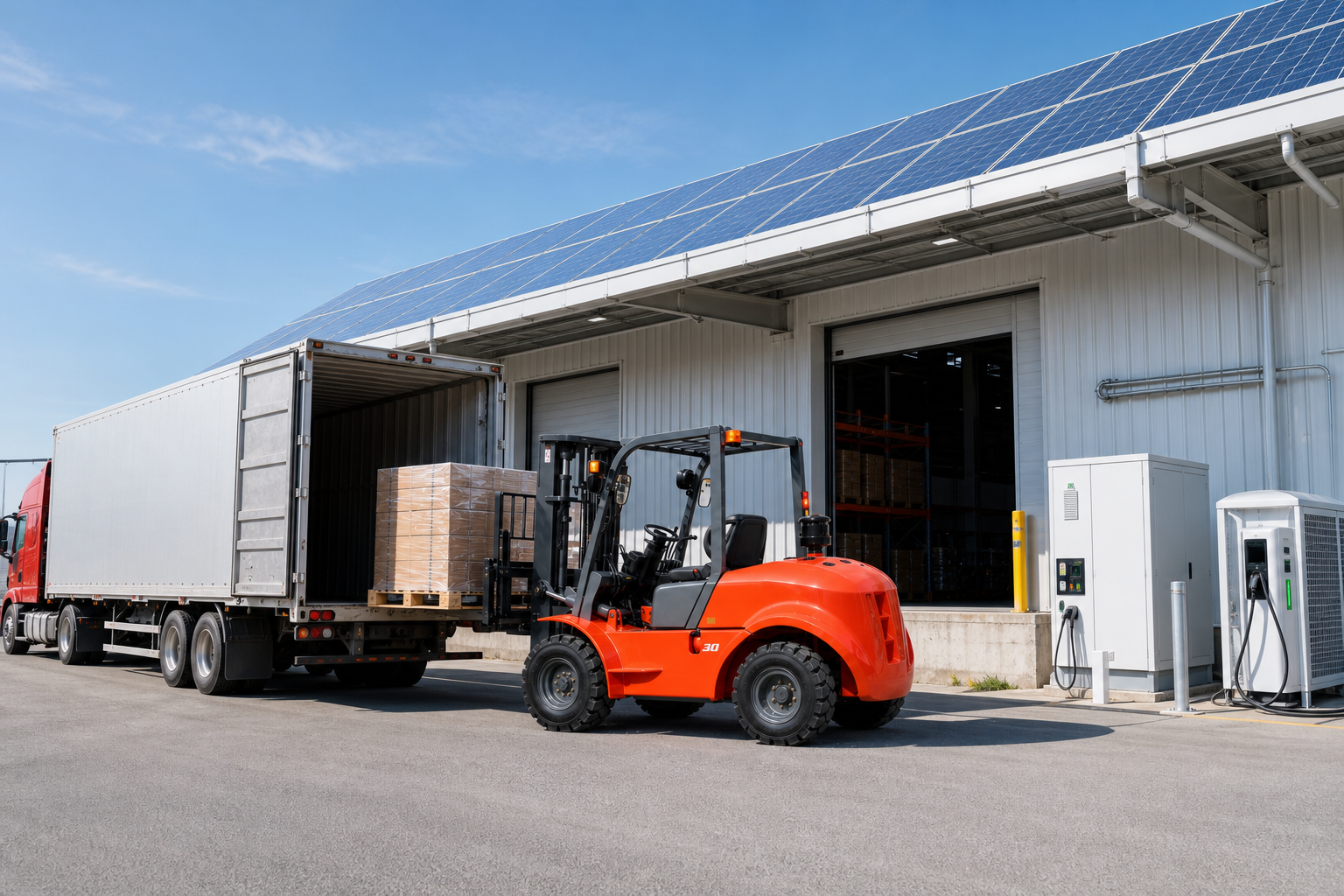
The first step is selecting the correct machine for each environment. A conventional indoor truck may lose traction, ground clearance, or stability on gravel and broken pavement. By contrast, the CPC30SY 3 Ton Diesel Off-Road Forklift uses a robust chassis, pneumatic tires, strong engine power, and a 4x4 drive layout for demanding outdoor transfer work. It can receive materials at a remote storage zone, move them through a yard, and position the pallet accurately at the dock interface. This reduces double handling and gives the automated part of the warehouse a reliable supply of loads.
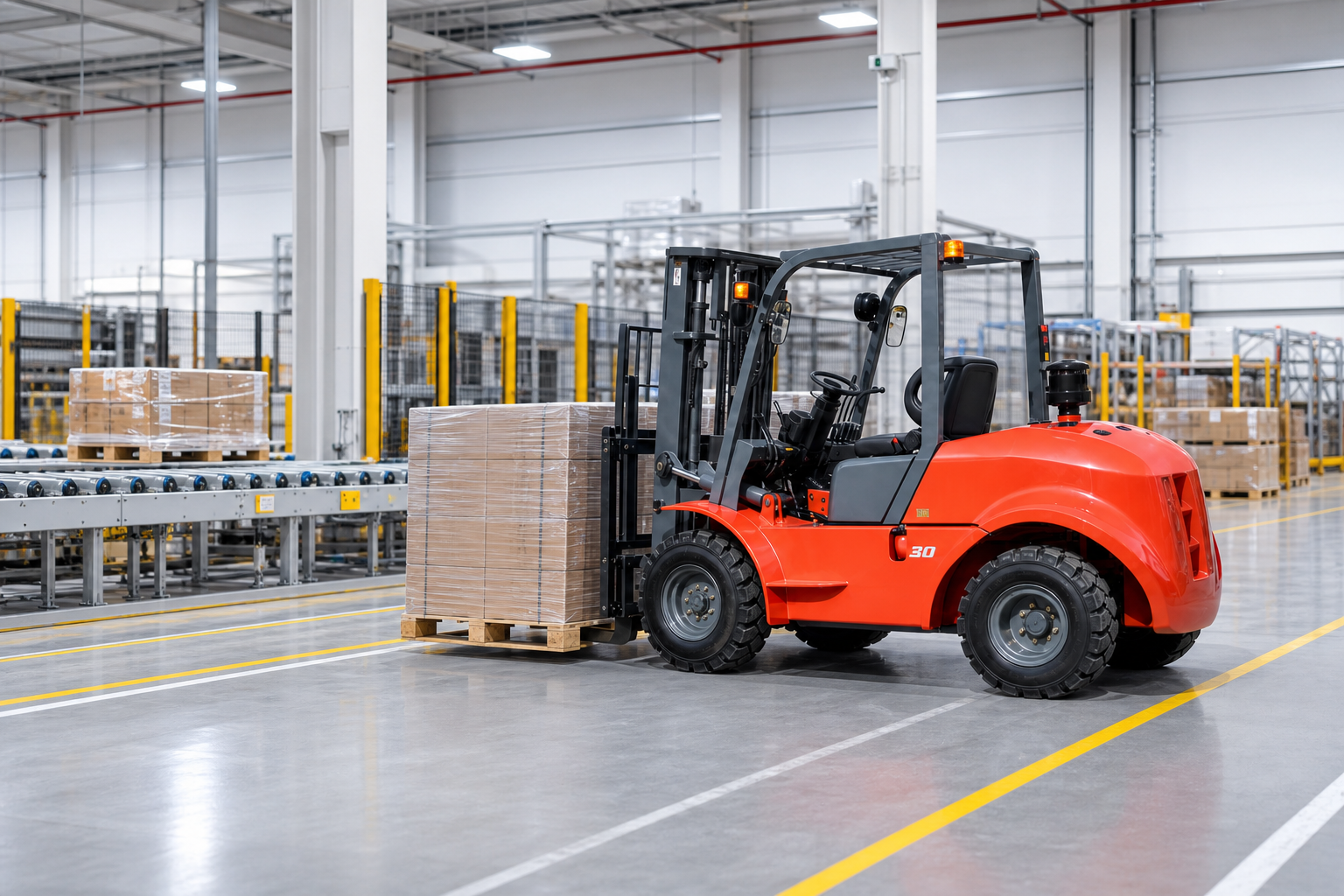
E-commerce growth, shorter delivery windows, labor availability, and energy-management targets are encouraging companies to automate repetitive travel and storage tasks. Automation delivers the best result only when inbound pallets arrive at the correct location, orientation, and time. An off-road forklift can act as the flexible first-mile machine within the site. It handles unpredictable surfaces and variable loads, while warehouse software coordinates the handoff point. Barcode, RFID, or warehouse-management-system data can identify the pallet before it crosses the dock, allowing conveyors or indoor forklifts to continue the journey without delay.
This hybrid approach avoids the unrealistic expectation that every movement must be fully automated. Instead, the fleet manager assigns each machine to the work it performs best. For controlled indoor areas, the compact CPD10 electric forklift offers quiet operation, zero local exhaust emissions, and responsive control. It supports production lines, small warehouses, and staging areas where space is limited. Outdoor transfer remains assigned to equipment designed for traction and durability. The result is a balanced network with fewer bottlenecks.
Connected fleet management is another major 2026 topic. Hour meters, maintenance records, pre-shift inspection results, fuel or battery consumption, and task completion times can be reviewed together. The goal is not to collect data for its own sake. The goal is to identify waiting time, excessive travel, charging conflicts, abnormal fuel consumption, repeated impacts, and service needs before they interrupt production. A mixed fleet containing diesel rough-terrain trucks and electric indoor forklifts can use one operating dashboard when equipment identity and task data are standardized.
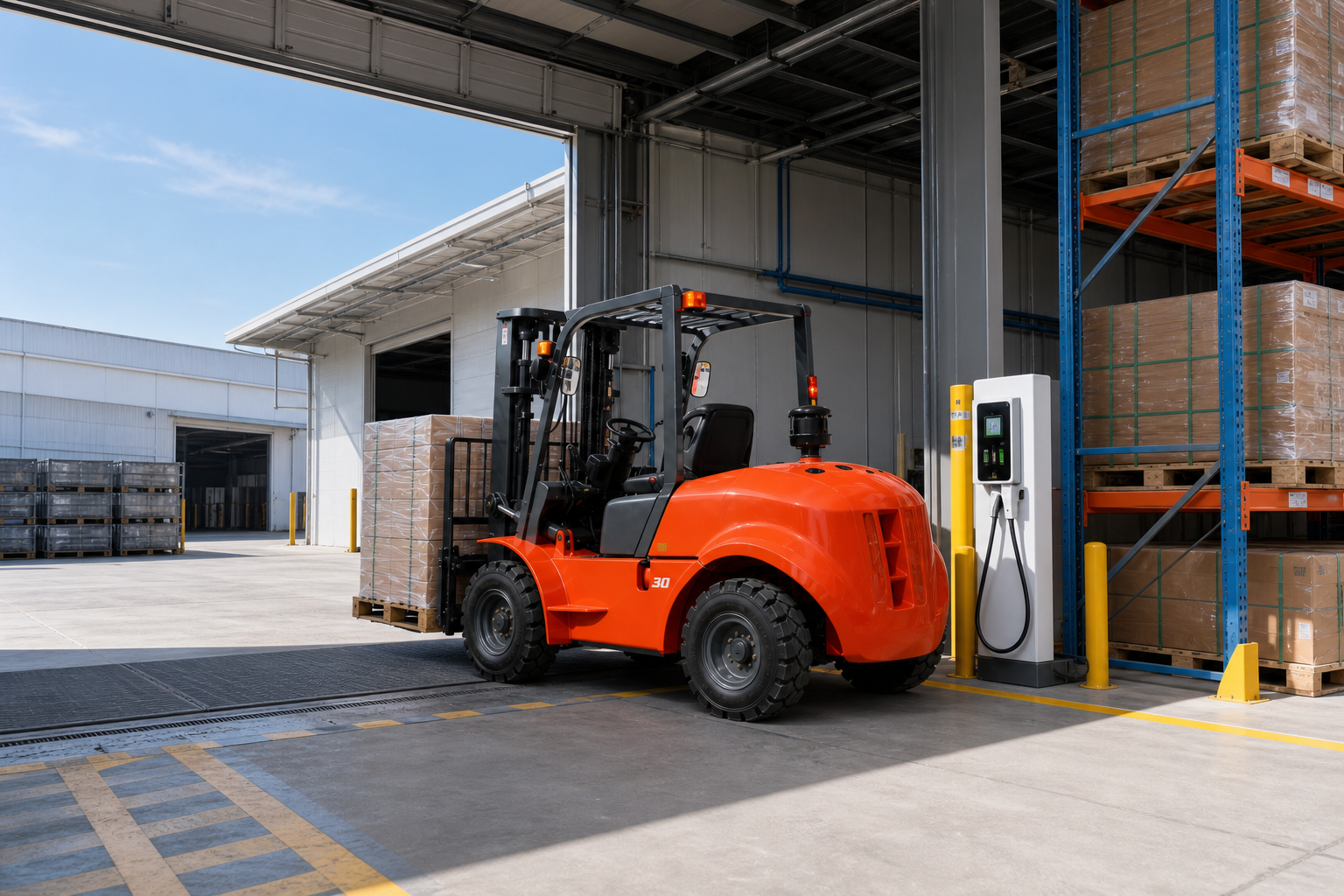
Energy planning also benefits from this coordinated view. Electric trucks can be charged during low-demand periods or scheduled breaks, while outdoor diesel units can be dispatched to jobs where their power and terrain capability provide a genuine advantage. Managers should compare cost per completed pallet movement rather than looking only at fuel or electricity price. Travel distance, idle time, load weight, gradient, surface condition, and maintenance demand all influence the true cost.
A successful hybrid network needs a clearly designed transfer point. The ground should be level, drainage controlled, pedestrian routes separated, and trailers secured before loading begins. Pallet condition must be checked before the load is handed to automated equipment. Damaged deck boards, unstable wrapping, or an incorrect load center can create problems later in the process. Lighting, mirrors, warning beacons, speed limits, and marked stop positions help operators approach the dock consistently.
For higher-capacity indoor work, buyers can review the CPD30-B electric forklift. Matching capacity to the real load is essential: the truck must be evaluated not only by nominal capacity but also by load center, lift height, attachments, aisle width, ramp conditions, and duty cycle. Shandong Zhuogong Machinery equipment Co.,Ltd can help customers compare these factors so that the selected ZGFORKLIFT or MYZG solution fits the complete workflow rather than one isolated task.
Companies can begin with a simple process map. Record where every pallet enters the site, where it waits, how often it is touched, and which surface each machine crosses. Next, separate tasks into outdoor transfer, dock interface, indoor transport, and vertical storage. Choose equipment for each zone, then define the handoff standard. Finally, measure travel time, idle time, damage, energy use, and completed moves for several weeks. These measurements reveal whether the new fleet layout is improving throughput.
Training remains critical. Operators need equipment-specific instruction, knowledge of rated capacity, familiarity with the operating surface, and clear right-of-way rules. Supervisors should verify daily inspections and remove unsafe equipment from service. Automated systems also require disciplined maintenance because a failed sensor, damaged pallet, or blocked transfer point can stop downstream flow. Technology improves visibility, but safe performance still depends on correct procedures and accountable people.
For global buyers, the value of a hybrid material-handling network is flexibility. A facility can modernize in stages, preserve useful existing equipment, and introduce electric or automated assets where they deliver the strongest return. Rough-terrain forklifts continue essential work outside, while electric forklifts and smart warehouse systems improve indoor precision. This is a practical path toward higher productivity without forcing every application into a single power source or vehicle design.
For specifications, quotations, and application advice, contact ZGFORKLIFT / MYZG.
Website: https://www.vavforklift.com/
Email: vip@mingyuforklift.com
Tel: +86-0535-2090977
WhatsApp: +86 131 8160 2336
Address: Xiaqiu Town, Laizhou, Yantai City, Shandong Province, China
Name: selena
Mobile:+86-13176910558
Tel:+86-0535-2090977
Whatsapp:8613181602336
Email:vip@mingyuforklift.com
Add:Xiaqiu Town, Laizhou, Yantai City, Shandong Province, China