
vip@mingyuforklift.com
+86-0535-2090977

Introduction
Forklift safety standards constitute the foundational regulatory framework protecting workers, equipment, and operational environments across global material handling industries. While the fundamental hazards associated with forklift operation—tip-overs, pedestrian collisions, falling loads, and mechanical failures—are universal, the regulatory approaches, technical requirements, and enforcement mechanisms vary substantially across jurisdictions. Understanding these differences is essential for multinational corporations operating standardized fleet equipment across multiple countries, manufacturers seeking global market access, and safety professionals benchmarking organizational practices against regulatory baselines.
This technical article provides a systematic comparison of major forklift safety standards, examining the International Organization for Standardization (ISO) framework, the United States Occupational Safety and Health Administration (OSHA) regulations, China's national standards (GB), the European Union's machinery directives and harmonized standards, and supplementary standards from Japan and Australia. The analysis encompasses design requirements, operator qualification, operational protocols, inspection regimes, and enforcement characteristics, identifying convergence trends and persistent divergences that shape global forklift safety performance.
1. International Organization for Standardization (ISO) Framework
1.1 ISO/TC 110 Scope and Structure
The ISO Technical Committee 110 (Industrial Trucks) develops international standards that serve as reference frameworks for national adoption. ISO forklift standards are voluntary unless adopted by reference into national regulations, but they exert substantial influence through incorporation into EU harmonized standards, mutual recognition agreements, and manufacturer design practices.
Key Standards:
ISO 3691-1:2011: Safety requirements and verification for industrial trucks—Part 1: Self-propelled industrial trucks (except driverless trucks, variable-reach trucks, and burden carrier trucks)
ISO 3691-4:2023: Safety requirements and verification for driverless industrial trucks and their systems
ISO 5053-1:2015: Fork-lift trucks—Vocabulary
ISO 12100:2010: Safety of machinery—General principles for design (horizontal standard applicable to forklifts)
1.2 Technical Requirements
ISO 3691-1 establishes comprehensive safety requirements organized by hazard category:
Stability Requirements: Stability tests specify minimum overturning moment resistance under defined load, mast position, and travel conditions. The stability triangle concept—requiring the combined center of gravity to remain within the front drive axle and rear steer axle contact points—is codified with specific test protocols for counterbalance, reach, and narrow-aisle configurations.
Operator Protection: Overhead guards must withstand falling object impacts of 1,000 kg from 2,500 mm height, with energy absorption criteria preventing operator compartment intrusion. Operator restraint systems are recommended but not universally mandated across all truck categories.
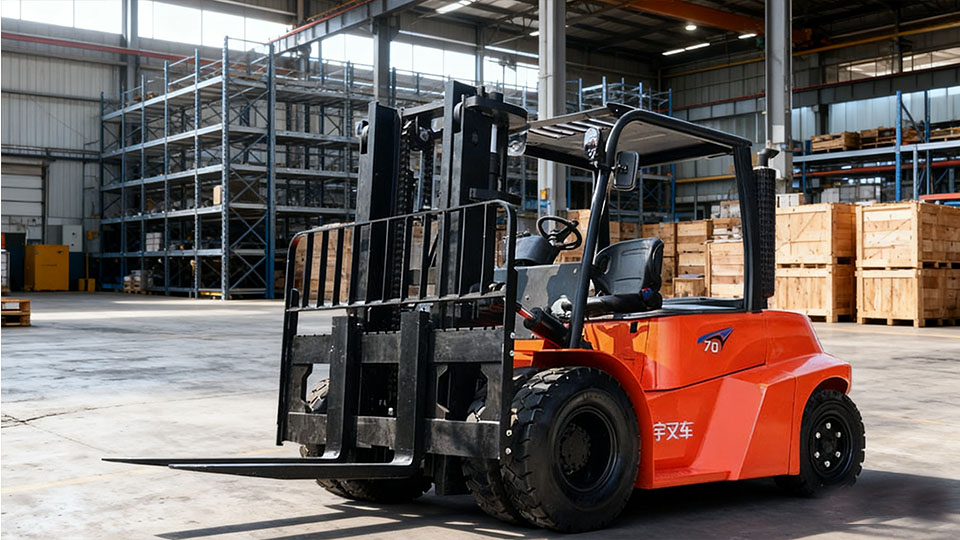
Visibility and Lighting: Minimum fields of vision are specified for forward, rearward, and upward directions. Lighting requirements include headlamps, tail lamps, brake lights, and direction indicators with photometric performance criteria.
Control Systems: Ergonomic requirements for control placement and force, emergency stop functionality, and automatic speed limiting on grades are established.
1.3 Limitations and Adoption Patterns
ISO standards represent consensus documents that may lag technological advancement. The 2011 revision of ISO 3691-1 predates widespread autonomous forklift deployment, necessitating the separate ISO 3691-4 standard. Adoption varies: EU member states incorporate ISO standards through harmonized EN ISO designations with mandatory effect; other jurisdictions reference ISO standards as acceptable compliance pathways without exclusive requirement.
2. United States Occupational Safety and Health Administration (OSHA)
2.1 Regulatory Architecture
OS forklift safety is governed by 29 CFR 1910.178 (Powered Industrial Trucks), issued in 1975 with limited substantive revision. This regulation exemplifies performance-based standards—specifying required outcomes rather than prescriptive technical methods—contrasting with the design-focused approach of ISO and EU standards.
2.2 Operator Qualification Requirements
OSHA's most distinctive and influential provision is the operator training and evaluation requirement (1910.178(l)), mandated in 1999:
Formal Instruction: Classroom or computer-based training covering forklift-related topics (operating instructions, warnings, precautions; differences from automobiles; steering and maneuvering; visibility; fork and attachment adaptation; vehicle capacity and stability; vehicle inspection and maintenance; refueling/charging; operating limitations)
Practical Training: Demonstrated performance under direct supervision in actual or simulated workplace conditions
Evaluation: Employer certification of operator competence through workplace-specific performance assessment, renewable every three years
This performance-based approach delegates substantial discretion to employers regarding training content and delivery methods, subject to OSHA inspection and citation for inadequate programs.
2.3 Operational Requirements
OSHA 1910.178 specifies operational controls without prescriptive design standards:
Speed limitations appropriate for stopping distance and operating environment
Prohibition of stunt driving and horseplay
Requirement for seatbelts when provided by manufacturer
Load engagement, transport, and stacking protocols
Prohibition of passengers unless seats provided
Maintenance of safe distances from platform edges
2.4 Enforcement and Penalties
OSHA enforcement relies on workplace inspections triggered by complaints, fatalities, or programmed targeting of high-hazard industries. Penalties for serious violations reached $15,625 per violation in 2024, with willful violations subject to $156,259 maximum penalties. Criminal prosecution is possible for willful violations causing fatalities.
2.5 Limitations and Criticism
Critics note OSHA 1910.178's age—predating modern forklift technologies including lithium-ion batteries, autonomous operation, and advanced stability control systems. The performance-based structure provides flexibility but creates compliance uncertainty, particularly for emerging technologies not contemplated in 1975. The American National Standards Institute (ANSI) B56 series provides supplementary technical guidance, but ANSI standards are voluntary unless adopted by reference into OSHA regulations or state laws.
3. China National Standards (GB)
3.1 Regulatory Framework
China's forklift safety standards operate within a hierarchical system: mandatory national standards (GB), recommended national standards (GB/T), and industry standards (JB/T, QC/T). The Standardization Administration of China (SAC) oversees development, with increasing harmonization toward international standards to facilitate trade and technology transfer.
Key Standards:
GB 10827-2014: Safety rules for construction and manufacture of industrial trucks (modified adoption of ISO 3691-1:2011)
GB/T 27542-2011: Safety requirements for battery-powered industrial trucks
GB/T 30029-2013: Safety requirements for driverless industrial trucks (modified adoption of ISO 3691-4)
TSG N0001-2017: Safety technical supervision regulations for special equipment—forklifts (administrative regulation)
3.2 Design and Manufacturing Requirements
GB 10827-2014 adopts ISO 3691-1 with modifications reflecting Chinese industrial conditions:
Stability Testing: Enhanced requirements for high-lift trucks operating on uneven surfaces, reflecting common Chinese warehouse conditions with less refined floor infrastructure.
Electrical Safety: GB/T 27542-2011 specifies battery charging room ventilation requirements (hydrogen concentration below 1% by volume), fire prevention measures, and insulation resistance testing protocols exceeding ISO requirements.
Structural Integrity: Additional fatigue testing requirements for mast and carriage assemblies under repetitive loading cycles, addressing concerns about component longevity in high-utilization environments.
3.3 Special Equipment Regulatory Regime
China's distinctive contribution to forklift safety governance is the special equipment (特种设备) classification under TSG N0001-2017:
Manufacturing License: Forklift manufacturers must obtain special equipment manufacturing licenses with facility inspections and product type testing
Registration: All forklifts must be registered with local market regulation departments before operation
Inspection: Mandatory periodic safety inspections at 1-year intervals by certified inspection agencies
Operator Certification: National unified special equipment operator certificates (特种设备作业人员证) with theoretical and practical examinations, renewable every 4 years
Scrapping Standards: Mandatory retirement at 15 years for general forklifts, with extension possible following comprehensive inspection
This administrative licensing approach provides comprehensive lifecycle oversight but imposes substantial compliance burden and potential bureaucratic delays.
3.4 Market Transition and International Harmonization
China's forklift market—exceeding 1 million units annually—drives standard evolution. Increasing export orientation motivates GB standard alignment with ISO and EU requirements. The 2024 draft revision of GB 10827 incorporates autonomous forklift provisions and lithium-ion battery safety requirements reflecting technological advancement.
4. European Union Regulatory Framework
4.1 Machinery Directive and Harmonized Standards
EU forklift safety is governed by the Machinery Directive 2006/42/EC (transitioning to Machinery Regulation 2023/1230), which establishes essential health and safety requirements (EHSRs) with compliance demonstrated through harmonized standards:
EN ISO 3691-1:2011+A1:2020: Safety requirements for self-propelled industrial trucks (harmonized under Machinery Directive)
EN 1175:2020: Safety requirements for electrical/battery-powered trucks
EN 16307:2013: Safety requirements for operator restraint systems
4.2 CE Marking and Conformity Assessment
Forklifts marketed in the EU must bear CE marking, with manufacturers or authorized representatives assuming conformity responsibility. The conformity assessment procedure typically involves:
Internal production control (Module A) for standard industrial trucks
EU-type examination (Module B) plus production quality assurance (Module D) for novel designs or higher-risk configurations
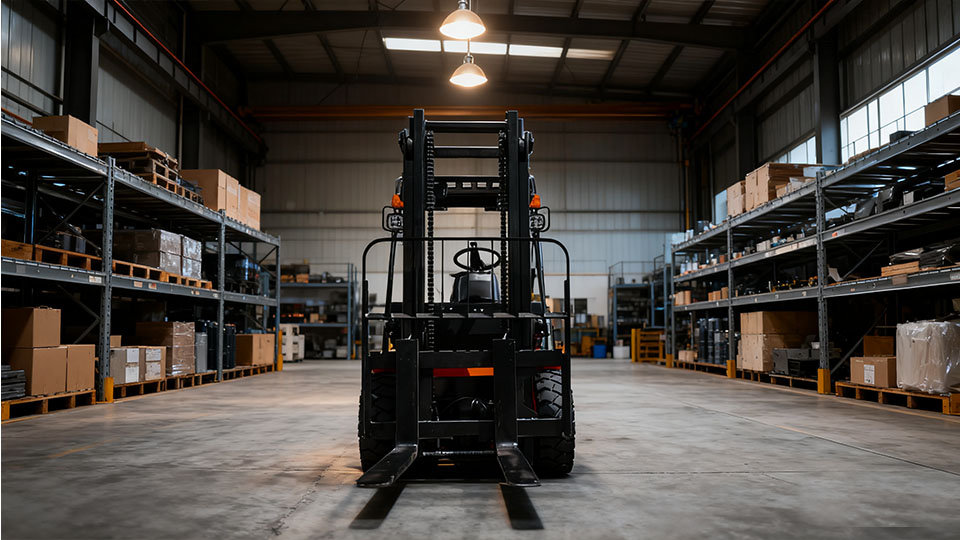
Notified bodies (e.g., TÜV, DEKRA, Bureau Veritas) conduct independent verification for Module B procedures and market surveillance.
4.3 Distinctive EU Requirements
Vibration Exposure: EN 13059:2002 specifies whole-body vibration measurement and limitation requirements for forklift operators, with action values triggering employer mitigation obligations under Directive 2002/44/EC.
Electromagnetic Compatibility: EN 12895:2015 mandates EMC testing for battery-powered and electronically controlled forklifts, ensuring non-interference with other equipment and immunity to external electromagnetic disturbances.
Noise Emission: Machinery Directive EHSRs require noise level measurement and declaration, with values exceeding 85 dB(A) triggering employer hearing conservation obligations under Directive 2003/10/EC.
Autonomous Operation: EN 1525:1997 (Safety of industrial trucks—Driverless trucks and their systems) and EN ISO 3691-4:2023 establish comprehensive requirements for AGV deployment, including safety-rated navigation, personnel detection, and emergency stop functionality.
4.4 Worker Protection Integration
EU forklift safety extends beyond equipment standards to workplace directives:
Directive 89/391/EEC: Framework Directive on occupational safety and health, requiring risk assessment and preventive measures
Directive 2009/104/EC: Minimum safety and health requirements for work equipment, mandaining inspection and maintenance
Directive 89/654/EEC: Workplace minimum safety requirements, including traffic route design
This integrated approach—combining equipment safety, workplace design, and worker health surveillance—represents the most comprehensive regulatory framework globally.
5. Comparative Analysis: Convergence and Divergence
5.1 Areas of Substantial Convergence
Stability Requirements: ISO 3691-1 stability testing protocols are universally adopted, with minor national variations. The stability triangle concept and dynamic testing procedures provide consistent baseline protection.
Operator Visibility: Minimum visibility fields and mirror requirements are harmonized across ISO, OSHA (through ANSI reference), GB, and EN standards, reflecting universal ergonomic requirements.
Load Capacity Plates: Mandatory capacity indication with load center specifications is consistent, though formatting and language requirements vary by jurisdiction.
5.2 Persistent Divergences
Regulatory Philosophy: OSHA's performance-based approach contrasts with the design-focused prescriptive requirements of EU and Chinese standards. Performance standards offer flexibility but create compliance uncertainty; prescriptive standards provide clarity but may impede innovation.
Operator Qualification: China's special equipment licensing system provides the most rigorous operator oversight, with national examination and certificate management. OSHA's employer-based certification offers flexibility but variable quality assurance. EU member states implement divergent national requirements under Framework Directive obligations.
Autonomous Vehicle Regulation: The EU leads in comprehensive AGV standards (EN 1525, EN ISO 3691-4), while OSHA has not issued specific autonomous forklift guidance, relying on general duty clause interpretation. China's GB/T 30029 provides foundational requirements but lacks the implementation infrastructure of EU notified body systems.
Inspection Regimes: China's mandatory annual inspection by certified agencies contrasts with OSHA's employer-responsible inspection regime. EU requirements vary by member state, with some requiring third-party periodic inspection and others relying on employer competence.
5.3 Enforcement Disparities
Enforcement intensity varies substantially. OSHA conducted approximately 31,000 inspections in 2023 across all industries, with forklift-specific violations representing a small fraction. China's market regulation departments maintain extensive inspectorates but face resource constraints relative to fleet scale. EU market surveillance relies on member state authorities with variable capacity and prioritization.
6. Emerging Challenges and Standard Evolution
6.1 Lithium-Ion Battery Safety
Current standards developed for lead-acid battery systems inadequately address lithium-ion thermal runaway risks. Revision efforts across ISO, GB, and EN frameworks incorporate cell-level testing (UN 38.3), battery management system requirements, and fire suppression provisions. Harmonization remains incomplete, with Chinese standards generally more prescriptive regarding charging infrastructure design.
6.2 Autonomous Operation Standards
Autonomous forklift deployment outpaces standard development. ISO 3691-4:2023 and EN harmonized versions provide foundational requirements, but performance validation methodologies, safety integrity level determination, and mixed-traffic operational protocols require further elaboration. OSHA's silence on autonomous systems creates regulatory uncertainty in the US market.
6.3 Cybersecurity
Connected forklift systems—telemetics, remote diagnostics, over-the-air updates—introduce cybersecurity risks not addressed in existing safety standards. EU machinery regulation 2023/1230 incorporates cybersecurity essential requirements, representing regulatory innovation. ISO/IEC 27001 integration into forklift-specific standards remains under development.
Conclusion
Global forklift safety standards exhibit substantial convergence in fundamental technical requirements—stability, visibility, operator protection—while diverging significantly in regulatory philosophy, implementation mechanisms, and adaptation to emerging technologies. The ISO framework provides valuable international reference, but national and regional regulations determine actual compliance obligations.
Organizations operating multinational forklift fleets must navigate this complex landscape through systematic regulatory mapping, equipment specification alignment with most stringent applicable requirements, and operator qualification programs satisfying multiple jurisdiction standards. Manufacturers seeking global market access benefit from designing to EU harmonized standards as the most comprehensive baseline, with supplemental verification for OSHA performance requirements and Chinese special equipment licensing.
The trajectory of standard evolution suggests continued convergence driven by international trade, technology transfer, and shared safety objectives, but persistent divergence in regulatory philosophy—performance versus prescriptive, employer-based versus administrative licensing—will maintain compliance complexity. Proactive engagement in standard development processes, through trade association participation and regulatory consultation, offers organizations opportunity to shape future requirements aligned with operational realities and technological capabilities.
Name: selena
Mobile:+86-13176910558
Tel:+86-0535-2090977
Whatsapp:8613181602336
Email:vip@mingyuforklift.com
Add:Xiaqiu Town, Laizhou, Yantai City, Shandong Province, China