
vip@mingyuforklift.com
+86-0535-2090977

Purchasing a forklift is one of the most consequential capital decisions in material handling operations. Yet procurement teams frequently default to sticker-price comparisons, overlooking the technical specifications that determine whether a machine will deliver value or become an expensive liability. The purchase price of a forklift represents only about 20% of its total cost of ownership over a typical five-year lifespan. The remaining 80% is determined by how well the equipment's specifications align with operational demands.
This article examines the seven most critical specifications that should drive forklift selection decisions. These are not abstract engineering parameters—they are the operational variables that separate productive fleets from costly mistakes.
1. Load Center Distance: The Hidden Capacity Killer
The most dangerous misconception in forklift procurement is equating rated load capacity with operational capability. A forklift's nameplate capacity—say, 5,000 pounds—is only valid at a specific load center distance, typically 500mm (20 inches) for counterbalance trucks and 600mm (24 inches) for reach trucks.
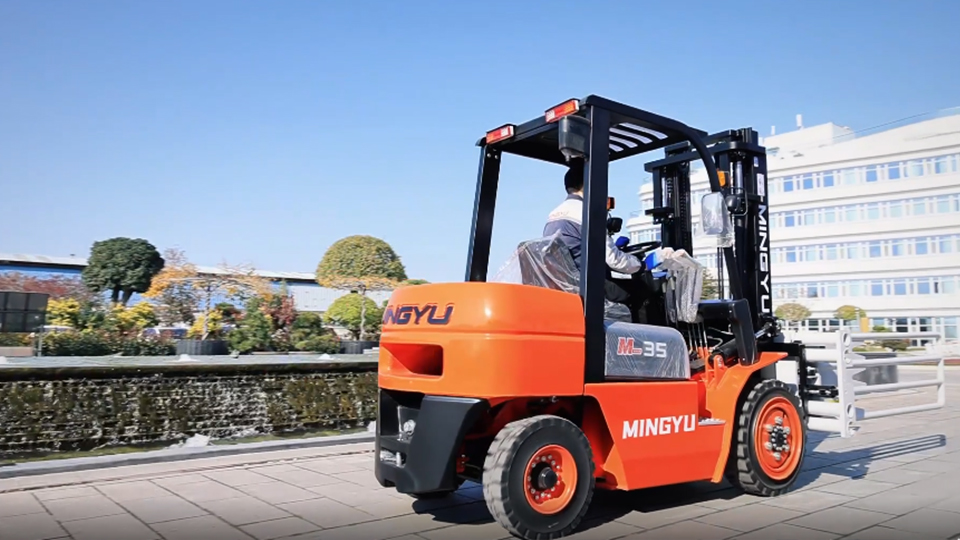
Load center measures the horizontal distance from the vertical face of the fork carriage to the center of gravity of the load. Standard pallets loaded uniformly will align with the rated load center. But non-standard loads—long steel bars, irregular machinery, or double-stacked pallets—shift the center of gravity forward, dramatically reducing safe capacity. A 3-tonne forklift rated at 500mm load center may only handle 2.1 tonnes at 750mm load center—a 30% derating that transforms an apparently adequate machine into an overloaded hazard.
Every forklift carries a load capacity chart on its data plate. This chart plots capacity against both lift height and load center, revealing the true operational envelope. At maximum lift height, most forklifts retain only 60–70% of their ground-level capacity. Procurement teams must map their actual load profiles—including the heaviest loads, longest load dimensions, and highest storage locations—against this chart before committing to any model.
The specification to verify is not simply "rated capacity" but "capacity at maximum lift height with your actual load center." If your operation handles 48-inch-long loads on a truck rated at a 24-inch load center, you are operating with a built-in safety margin erosion that will eventually produce incidents, rack damage, or premature equipment failure.
2. Mast Configuration: The Geometry of Vertical Storage
The mast is the most operationally consequential component of any forklift, yet it receives surprisingly little scrutiny during procurement. Mast specification determines not just how high you can lift, but whether you can operate in your facility at all.
There are four primary mast configurations, each with distinct spatial implications. Single-stage (simplex) masts have no telescoping action—the mast must be taller than the maximum lift height even when lowered. They are mechanically simple and robust for outdoor applications but unsuitable for indoor environments with overhead clearance constraints. Two-stage (duplex) masts telescope to provide moderate lift heights with a more compact collapsed profile. Three-stage (triplex) masts are the industry standard for warehousing, offering lift heights from 4 to 7.5 meters while maintaining a collapsed height that clears standard door openings. Four-stage (quad) masts achieve extreme heights exceeding 7 meters but sacrifice operator visibility due to additional rails and hydraulic hoses.
Three critical height measurements must be verified against facility dimensions. Overall Lowered Height (OALH) determines whether the forklift can pass through doorways, under mezzanines, or beneath sprinkler systems. Overall Raised Height (OARH) defines the maximum vertical envelope and must clear ceiling utilities, HVAC equipment, and lighting fixtures. Free Lift Height (FFH) measures how far forks can rise before the mast begins extending—critical for operations inside semi-trailers or containers where overhead clearance is minimal.
The specification trap here is assuming that "maximum lift height" is the only height that matters. A forklift with a 6-meter lift height but insufficient free lift cannot unload double-stacked trailers without damaging the container ceiling. A triplex mast with excellent lift height but excessive collapsed height cannot access certain warehouse zones. The correct specification to demand is the complete height envelope: collapsed height, free lift height, maximum fork height, and overall raised height—each verified against your facility's dimensional constraints.
3. Power Source and Energy Infrastructure: The 5-Year Cost Determinant
The power source debate—electric versus internal combustion—has shifted dramatically in recent years. What was once an environmental preference has become an economic imperative for many operations.
For a standard 2.5-tonne forklift operating 2,000 hours annually, the five-year total cost of ownership comparison reveals stark differences. Diesel forklifts typically range from $18,000 to $22,000 in initial purchase price, with five-year energy costs of approximately $45,000 (at $4.50 per gallon), maintenance and parts costs of $15,000, and significant downtime for engine servicing. Lithium-ion electric equivalents cost $28,000 to $35,000 upfront but consume only $12,000 in electricity over five years, require roughly $4,000 in maintenance, and experience minimal downtime. Total five-year TCO for diesel approaches $78,000; for electric, $44,000 to $51,000.
The ROI breakeven for electric forklifts typically occurs within 18 to 24 months. However, this calculation assumes adequate charging infrastructure. Standard lead-acid batteries require 8 hours of charging plus 8 hours of cooling—effectively removing a forklift from service for an entire shift. Lithium-ion batteries support opportunity charging during breaks and shift changes, but require higher initial investment in charging stations and electrical capacity.
Diesel and LPG forklifts retain advantages for specific applications: continuous multi-shift operations without charging infrastructure, outdoor rough-terrain work, and facilities with inadequate electrical service. But with stricter Tier 5 emission standards and carbon border adjustment mechanisms increasing the hidden costs of internal combustion, the economic calculus is tilting decisively toward electrification for indoor warehousing and manufacturing applications.
The specification to evaluate is not "electric or diesel" but "total energy cost over the equipment lifecycle, including infrastructure, maintenance, and downtime." Operations running single shifts with predictable downtime may tolerate lead-acid charging cycles. Multi-shift operations with high throughput demands should evaluate lithium-ion systems with opportunity charging protocols.
4. Tire Specification: The Interface Between Machine and Floor
Tire selection is frequently delegated to dealer recommendations or default configurations, yet tires fundamentally determine where a forklift can operate, how stable it remains under load, and what maintenance costs the fleet will incur.
There are three primary tire categories. Cushion tires—solid rubber bonded to a metal band—are designed for smooth indoor surfaces like concrete warehouse floors. They provide a tight turning radius, lower center of gravity for enhanced stability, and minimal maintenance. However, they offer poor shock absorption and are unsuitable for uneven terrain.
Pneumatic tires come in two variants. Air pneumatic tires, filled with compressed air, provide superior shock absorption and traction on rough surfaces but are susceptible to punctures and require pressure monitoring. Solid pneumatic tires, constructed entirely of rubber around a steel core, are puncture-proof while maintaining outdoor capability. They are the standard for lumber yards, scrap facilities, and construction sites where debris hazards are prevalent.
The specification error is treating tire selection as a secondary concern. A warehouse forklift equipped with pneumatic tires will experience accelerated wear on smooth concrete, reduced maneuverability in narrow aisles, and higher rolling resistance that increases energy consumption. Conversely, a cushion-tire forklift forced onto rough outdoor surfaces risks tire damage, operator discomfort, and stability compromises.
Modern facilities with mixed indoor-outdoor operations—common in distribution centers with outdoor loading docks—face a genuine specification dilemma. Solid pneumatic tires offer a hybrid solution, providing indoor operability with outdoor durability, though at a higher initial cost. The correct specification to define is not "tire type" but "operational surface profile"—documenting every surface type, transition point, and debris condition the forklift will encounter.
5. Turning Radius and Aisle Width Compatibility: The Density Equation
Turning radius is the specification that directly translates into storage density or operational congestion. A smaller turning radius enables narrower aisles, which means more racking rows, which means greater pallet capacity within the same warehouse footprint.
Standard counterbalance forklifts require aisle widths of 3.5 to 4.0 meters. Reach trucks reduce this to 2.6 to 3.2 meters. Three-wheel electric forklifts can achieve turning radii as tight as 1.6 meters, enabling aisle widths of 2.4 to 2.7 meters.
The specification to calculate is not the manufacturer's published turning radius in isolation, but the minimum aisle width required for your specific pallet dimensions and load handling procedures. This requires measuring the "right-angle stack" dimension—the minimum aisle width needed to turn 90 degrees and position a pallet in racking. This measurement incorporates not just the truck's turning circle, but fork length, load overhang, and operator clearance margins.
Facilities planning narrow-aisle configurations must also evaluate the interaction between turning radius and mast collapsed height. A forklift with an excellent turning radius but excessive mast height may clear the aisle width requirement while failing the overhead clearance constraint at aisle intersections or under mezzanine structures.
6. Ergonomic Design: The Productivity Multiplier
Ergonomics is frequently dismissed as a comfort consideration rather than a performance specification. This is a costly error. Operator fatigue directly correlates with accident rates, throughput velocity, and employee retention. When operators are uncomfortable or fatigued, reaction times slow, decision quality degrades, and musculoskeletal injuries increase—creating costs in downtime, medical expenses, and turnover that far exceed any ergonomic feature premium.
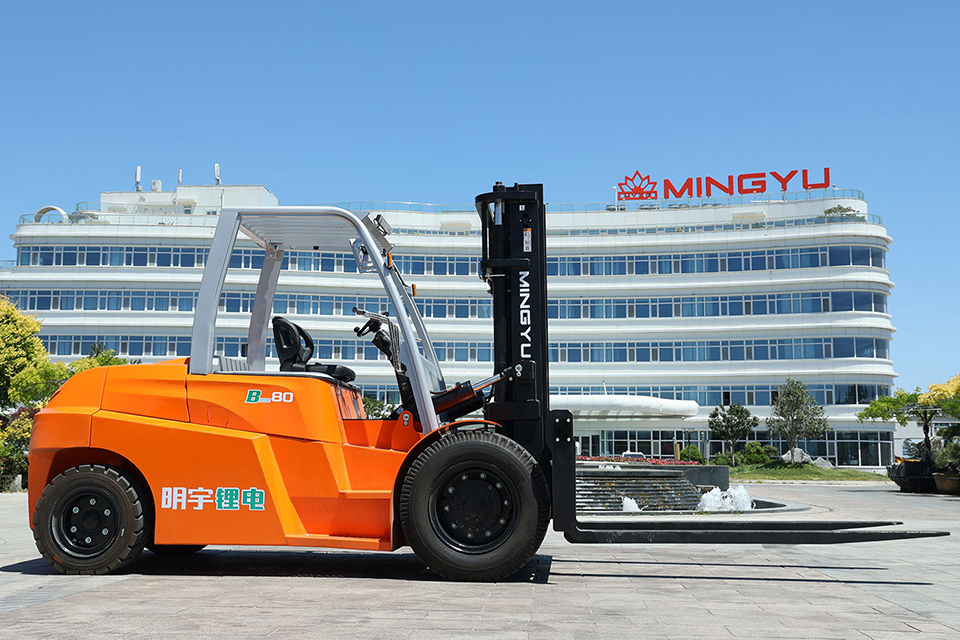
Critical ergonomic specifications include seat design, control layout, and visibility architecture. Full-suspension seats with lumbar support and vibration damping protect operators from the spinal compression and circulatory issues caused by prolonged vibration exposure. Adjustable steering columns and fingertip hydraulic controls minimize repetitive strain and awkward reaching.
Visibility specifications are equally consequential. Slim mast profiles reduce forward blind spots. Large glass panels and low-dashboard designs expand the operator's field of view. Camera systems and sensor-based assistance become essential at lift heights exceeding 4.5 meters, where direct visual alignment with top-tier racking becomes impossible.
The specification to evaluate is not the presence of individual ergonomic features but the integrated operator experience during a full shift. This requires operator trials or demonstrations under actual working conditions. A seat that feels comfortable during a 15-minute demonstration may produce back strain during an eight-hour shift with 200 lift cycles. Controls that seem intuitive in an empty warehouse become cumbersome when the operator is managing load positioning, pedestrian awareness, and travel path optimization simultaneously.
7. Safety Systems and Operator Assist Technology: The Risk Mitigation Layer
Modern forklift safety extends far beyond the overhead guards and seat belts required by OSHA and ANSI standards. Advanced safety systems are now available that actively prevent incidents rather than merely protecting operators when incidents occur.
Operator presence detection systems use seat switches, sensor mats, or dead-man pedals to disable travel and lifting functions when the operator is not properly positioned. This prevents unintended movement during entry/exit or loss-of-balance situations. Load weight sensors estimate the weight on the forks and alert operators when approaching capacity limits—addressing the most common cause of forklift tipping incidents.
Proximity assist systems employ Lidar sensors to scan for pedestrians, other forklifts, and fixed objects, actively slowing the vehicle when hazards are detected. Geo-fencing technology uses location-based tracking to automatically reduce travel speed in designated zones—near pedestrian crossings, at aisle intersections, or under low-clearance areas.
Dynamic stability systems (DSS) monitor load weight, lift height, travel speed, and steering angle in real time, automatically limiting travel speed or restricting mast tilt when stability thresholds are approached. These systems do not replace operator training but provide a critical safety net during the high-risk moments that account for the majority of forklift accidents.
The specification to prioritize is not the quantity of safety features but their integration with operational workflows. A proximity detection system that generates excessive false alarms will be disabled by operators within weeks. A speed-limiting system that cannot be temporarily overridden for emergency maneuvers will create operational friction. The correct approach is to specify safety systems that complement, rather than conflict with, productive operating patterns.
The Specification-First Procurement Process
Translating these seven specifications into an effective procurement process requires a structured methodology:
Step 1: Operational Audit
Document actual load profiles—including maximum weight, load dimensions, load center distances, and lift height requirements. Map facility dimensions including aisle widths, door heights, overhead clearances, and floor surface conditions. Record shift patterns, throughput requirements, and environmental conditions (temperature, humidity, ventilation).
Step 2: Specification Mapping
Match operational requirements against manufacturer specifications for each candidate model. Do not rely on published "typical" specifications—request the complete specification sheet including load capacity charts, height envelopes, turning radius diagrams, and energy consumption data.
Step 3: Demonstration Under Operating Conditions
Conduct operator trials with actual loads in actual aisles. Evaluate ergonomic comfort over extended periods, visibility at full lift height, and maneuverability at aisle intersections. Test safety systems under realistic pedestrian and traffic conditions.
Step 4: Total Cost of Ownership Modeling
Calculate five-year TCO incorporating purchase price, energy costs, maintenance projections, downtime estimates, and residual value. Include infrastructure costs for charging stations, ventilation systems, or floor modifications.
Step 5: Vendor Evaluation
Assess dealer service capabilities, parts availability, warranty terms, and training support. A forklift with optimal specifications but inadequate service infrastructure will generate higher lifecycle costs than a slightly less optimal model with superior dealer support.
Conclusion
The forklift market offers an overwhelming array of models, configurations, and feature sets. Procurement teams that default to price comparisons are outsourcing their operational performance to chance. The seven specifications examined here—load center compatibility, mast geometry, power source economics, tire specification, turning radius, ergonomic design, and safety systems—are the determinants of whether a forklift investment generates returns or creates liabilities.
The disciplined approach is to treat price as the final variable, not the first. Define operational requirements with precision. Map those requirements against technical specifications with rigor. Evaluate candidate models under actual working conditions. Only then should price enter the decision calculus—and even then, as a component of total cost of ownership rather than a standalone metric.
In material handling, the cheapest forklift to purchase is frequently the most expensive to own. The specification-first methodology inverts this relationship, ensuring that capital investment aligns with operational reality and delivers measurable returns over the equipment's full lifecycle.
Name: selena
Mobile:+86-13176910558
Tel:+86-0535-2090977
Whatsapp:8613181602336
Email:vip@mingyuforklift.com
Add:Xiaqiu Town, Laizhou, Yantai City, Shandong Province, China
