
vip@mingyuforklift.com
+86-0535-2090977

Introduction
Forklifts represent substantial capital investments for industrial operations, with typical service lifespans spanning 10,000 to 20,000 operating hours depending on application intensity, maintenance practices, and operating environment. However, the decision to continue operating, overhaul, or retire a forklift involves far more than simple cost accounting. Structural degradation, component wear, and evolving safety standards create complex risk profiles that demand systematic assessment frameworks. This article examines the technical standards governing forklift periodic inspection, the methodologies for evaluating equipment condition, and the criteria that should trigger scrapping decisions.
The economic stakes are considerable. A new internal combustion forklift ranges from $20,000 to $50,000, while electric models and specialized configurations can exceed $100,000. Premature scrapping wastes capital, but extended operation of compromised equipment risks catastrophic failure, operator injury, and operational disruption. Establishing rigorous inspection protocols and evidence-based scrapping criteria enables organizations to optimize equipment lifecycle management while maintaining uncompromising safety standards.
Regulatory Framework for Forklift Inspection
OSHA Standards and Requirements
The Occupational Safety and Health Administration's 29 CFR 1910.178 standard for powered industrial trucks establishes the foundational requirements for forklift inspection in the United States. The standard mandates two distinct inspection categories: pre-operational inspections conducted by operators at the beginning of each shift, and periodic inspections performed by qualified maintenance personnel at defined intervals.
Pre-operational inspections focus on immediate operational safety: tire condition, fluid levels, horn functionality, brake operation, steering response, fork condition, and visible structural damage. These inspections, typically requiring 5-10 minutes, serve as the first line of defense against operating equipment with obvious deficiencies.
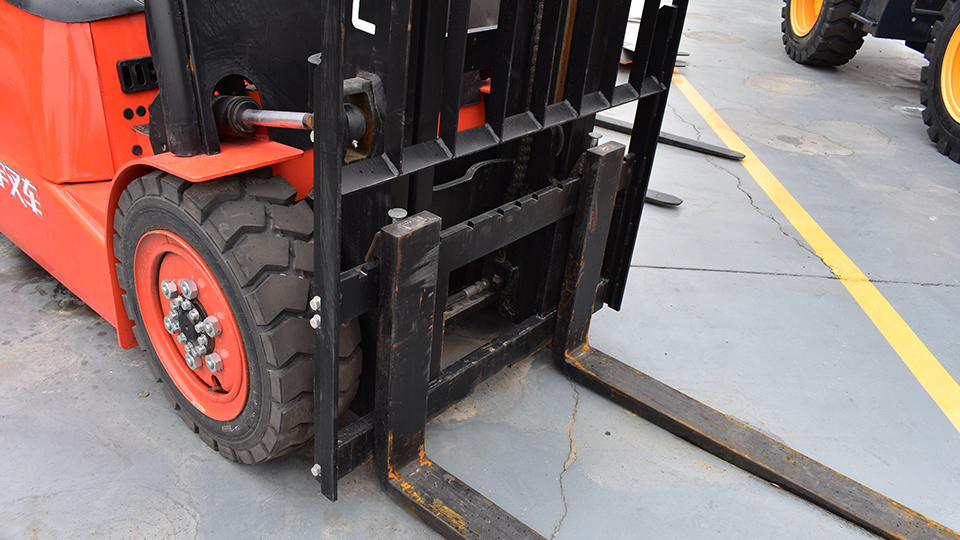
Periodic inspections extend beyond operational readiness to comprehensive condition assessment. OSHA requires that all forklifts be examined "at least daily," but this minimum frequency increases based on operational intensity. Equipment operating multiple shifts daily, in severe service conditions, or with high utilization rates require more frequent examination. The standard specifically requires that "defects shall be corrected before the truck is returned to service," establishing a zero-tolerance approach to operating equipment with identified deficiencies.
ANSI/ITSDF Standards
The American National Standards Institute (ANSI), through the Industrial Truck Standards Development Foundation (ITSDF), provides more granular technical guidance in the B56 series of standards. ANSI B56.1, the Safety Standard for Low Lift and High Lift Trucks, specifies detailed inspection criteria and establishes the framework for comprehensive maintenance programs.
These standards distinguish between frequent inspections (daily to weekly, focusing on operational systems) and periodic inspections (monthly to annual, encompassing structural and mechanical deep assessment). The ANSI framework provides the technical specificity that OSHA's performance-based standard intentionally leaves to employer discretion, offering organizations a defensible benchmark for program design.
International Standards
Beyond U.S. frameworks, international standards provide additional reference points. The European EN 1459 standard for rough-terrain trucks and EN 1755 for operation in potentially explosive atmospheres establish inspection protocols aligned with the EU Machinery Directive. ISO 3691-1 provides international consensus on safety requirements and verification methods for industrial trucks. For multinational operations, harmonizing inspection programs with the most stringent applicable standard ensures compliance across jurisdictions while establishing consistent safety baselines.
Pre-Operational Inspection Protocols
Daily Inspection Checklists
Effective pre-operational inspection follows standardized checklists that eliminate reliance on operator memory and ensure consistent coverage. Comprehensive checklists typically encompass four domains: exterior condition, operational systems, safety devices, and documentation verification.
Exterior condition assessment examines tires for cuts, bulges, and adequate tread depth; forks for cracks, bends, and heel wear; chains for damaged links and proper tension; mast channels for wear and damage; and the overhead guard for structural integrity. Operators visually inspect the counterweight, battery compartment, and fuel systems for damage or leaks.
Operational system checks verify brake functionality (service and parking brakes), steering response, hydraulic lift and tilt operation, horn and warning devices, lights and reflectors, and instrument panel indicators. Safety device verification confirms backup alarms, seatbelts, fire suppression systems (where equipped), and load capacity data plate legibility.
Documentation verification ensures the forklift bears current inspection stickers, operator certification is current, and maintenance records indicate no overdue service items. This administrative checkpoint prevents operation of equipment with lapsed periodic inspections.
Deficiency Response Protocols
Inspection programs fail without clear deficiency response procedures. Organizations must establish criteria distinguishing conditions requiring immediate equipment removal from service versus those permitting continued operation with scheduled correction. Critical deficiencies—brake failure, structural cracks, overhead guard damage, fork defects—require immediate red-tagging and equipment quarantine. Less critical deficiencies may permit operation with documented repair scheduling, though conservative approaches increasingly favor removing equipment until correction.
Documentation of daily inspections creates the audit trail necessary for regulatory compliance and liability defense. Digital inspection systems using mobile applications streamline this process, automatically timestamping inspections, photographing deficiencies, and routing repair requests to maintenance departments.
Periodic Inspection Methodologies
Structural Assessment
Periodic inspections extend to structural components inaccessible during daily checks. The mast assembly requires detailed examination for channel wear, roller condition, and lift cylinder integrity. Wear in mast channels beyond manufacturer specifications compromises load stability and requires channel replacement or mast rebuilding. Lift cylinder rod scoring, seal leakage, and mounting integrity demand assessment.
The overhead guard, designed to protect operators from falling objects, requires structural integrity verification. Impact damage, corrosion, and weld integrity must be evaluated against manufacturer specifications. Any deformation or damage compromising protective capability necessitates replacement—overhead guards cannot be repaired in a manner restoring original strength characteristics.
Frame and chassis inspection examines for cracks, particularly at stress concentration points around mounting brackets, axle attachments, and counterweight interfaces. Corrosion assessment evaluates material thickness reduction, particularly in outdoor or corrosive environments. Structural repairs require engineering evaluation to ensure restored integrity meets original design specifications.
Mechanical System Deep Assessment
Engine and drivetrain inspection encompasses compression testing, exhaust emission analysis, cooling system pressure testing, and transmission operational assessment. For electric forklifts, battery condition testing evaluates specific gravity, cell balance, and capacity retention. Charger functionality and cable condition require verification.
Brake system assessment extends beyond operational checks to component condition: brake pad/shoe thickness, drum/disc wear, hydraulic system integrity, and parking brake mechanism adjustment. Brake system performance must meet manufacturer specifications; degradation beyond specified limits requires comprehensive rebuild or component replacement.
Hydraulic system evaluation examines pump condition, valve operation, hose integrity, and cylinder performance. Hydraulic hoses require replacement at manufacturer-specified intervals regardless of apparent condition, as internal degradation is not externally visible. Filter condition and fluid analysis provide indicators of system health and contamination levels.
Electrical System Evaluation
Electrical system inspection verifies wiring integrity, connector condition, and insulation resistance. Corroded connections, chafed wiring, and compromised insulation create fire hazards and operational failures. For electric forklifts, controller functionality, motor brush condition (where applicable), and contactor operation require assessment.
Instrumentation accuracy verification ensures operators receive reliable information regarding battery charge status, hydraulic system pressure, engine temperature, and other critical parameters. Inaccurate instrumentation creates dangerous operational decisions based on false data.
Wear Measurement and Tolerance Standards
Fork Condition Assessment
Forks represent the most failure-critical components subject to routine wear. ANSI B56.1 specifies that forks must be replaced when heel wear exceeds 10% of original thickness, when blade height reduction exceeds manufacturer specifications, or when any crack, bend, or weld repair is identified. Heel wear measurement requires specialized calipers at defined measurement points, as visual estimation proves unreliable.
Fork angle verification ensures the blade maintains proper relationship to the shank. Excessive angle deviation compromises load stability and indicates overloading history or structural fatigue. Fork hooks and positioning locks require wear assessment to ensure secure carriage attachment.
Tire Wear Criteria
Tire condition directly impacts stability, traction, and operator comfort. Solid pneumatic and cushion tire wear limits are defined by manufacturer specifications, typically involving minimum tread depth and overall diameter reduction. Polyurethane tires common in warehouse applications exhibit different wear patterns requiring specialized assessment criteria.
Chunking, tearing, and separation indicate replacement necessity before wear limits are reached. For pneumatic tires, casing integrity, bead condition, and repair history influence replacement decisions. Tire replacement must maintain matched sets on drive axles to prevent differential stress and traction imbalance.
Chain and Roller Wear
Lift chains experience significant wear at articulation points and require measurement against manufacturer specifications. Chain elongation beyond 3% of original length indicates replacement necessity. Individual link condition, pin wear, and plate deformation require assessment. Chain anchor points and adjustment mechanisms must maintain proper tension to prevent derailment and uneven loading.
Mast rollers and bearings exhibit wear patterns that compromise smooth operation and load stability. Excessive play in the mast assembly indicates roller or channel wear requiring correction.
Maintenance Record Systems and Predictive Analytics
Documentation Requirements
Comprehensive maintenance records serve multiple purposes: regulatory compliance demonstration, warranty claim support, failure pattern analysis, and lifecycle cost tracking. Required documentation includes inspection reports with identified deficiencies and corrective actions, maintenance and repair records with parts and labor detail, component replacement history, and modification records.
Digital maintenance management systems have largely replaced paper-based records, enabling automated scheduling, parts inventory integration, and cost tracking. These systems generate compliance reports for regulatory inspections and provide the data foundation for predictive maintenance programs.
Predictive Maintenance Integration
Advanced maintenance programs leverage operational data to predict component failures before they occur. Oil analysis identifies wear metal accumulation indicating internal component degradation. Vibration analysis detects bearing and gear anomalies. Thermal imaging identifies electrical connection deterioration and brake drag conditions.
Predictive maintenance transitions organizations from reactive repair to proactive intervention, reducing unexpected failures and optimizing maintenance resource allocation. Integration of telematics data—operating hours, duty cycles, impact events—enables condition-based maintenance scheduling rather than arbitrary calendar intervals.
Scrapping Decision Frameworks
Economic Analysis
The decision to scrap versus repair or rebuild requires comprehensive economic analysis. Direct costs include estimated repair expense, parts availability, and downtime duration. These must be weighed against replacement cost, trade-in value, and financing considerations. However, economic analysis must incorporate safety risk valuation that pure financial modeling may underweight.
Lifecycle cost tracking provides the foundation for informed decisions. Cumulative maintenance cost as a percentage of replacement value serves as a common benchmark; when annual maintenance exceeds 30-40% of replacement cost, scrapping becomes economically favorable. However, this threshold varies based on equipment criticality, replacement lead times, and operational requirements.
Safety-Based Scrapping Criteria
Certain conditions mandate scrapping regardless of economic considerations. Structural frame cracks in high-stress areas, particularly those repaired multiple times, compromise fundamental integrity. Mast assemblies with channel wear beyond rebuilding limits or with repair histories indicating chronic overloading present unacceptable risks. Electrical system deterioration creating fire hazards may be uneconomical to comprehensively address in aged equipment.
Equipment involved in serious accidents requires structural integrity assessment by qualified engineers. Even when damage appears superficial, latent structural compromise may exist. When assessment cannot definitively confirm restored integrity, conservative scrapping protects against catastrophic failure.
Technological Obsolescence
Forklift technology evolves continuously, and aged equipment may lack safety features now considered essential. Operator presence systems, load weight indicators, stability control, and telematics integration improve safety and operational efficiency. While retrofit is sometimes possible, integration complexity and cost may favor replacement.
Emission standards evolution particularly affects internal combustion forklifts. Equipment predating Tier 4 Final emission standards may face operational restrictions in certain jurisdictions or indoor environments. The cost of emission system retrofit or engine replacement often approaches replacement value.
Component Availability
As equipment ages, manufacturer support diminishes and parts availability becomes problematic. When critical component lead times extend to weeks or months, operational reliability suffers. Obsolescence of electronic control systems in modern forklifts particularly accelerates parts availability challenges, as proprietary controllers and displays become unsupported.
Scrapping Process and Documentation
Environmental Compliance
Forklift scrapping involves environmental compliance obligations. Battery disposal for electric forklifts requires adherence to hazardous waste regulations; lead-acid batteries must be recycled through approved processors. Hydraulic fluid, engine oil, and coolant require proper collection and disposal or recycling. Refrigerant recovery from air conditioning systems demands certified technician involvement.
Organizations must maintain documentation of proper disposal, including waste manifests and recycling certificates, to demonstrate regulatory compliance and protect against future liability.
Asset Disposition
Scrapping decisions should include evaluation of alternative disposition options. Equipment with remaining operational capability may find secondary market application in less demanding environments. Auction or dealer trade-in recovers residual value. Parts harvesting from retired equipment supports remaining fleet maintenance.
When disposition involves sale or transfer, accurate disclosure of equipment condition and known deficiencies protects against liability and maintains ethical standards. Representing equipment as operational when structural or safety deficiencies exist creates unacceptable risk for subsequent operators.
Replacement Planning
Effective scrapping programs integrate with replacement planning to minimize operational disruption. Lead times for new equipment, particularly specialized configurations, may extend to months. Fleet standardization strategies reduce parts inventory complexity and maintenance training requirements. Capital budgeting processes must anticipate scrapping timelines based on equipment age, utilization, and condition trends.
Conclusion
Forklift periodic inspection and scrapping standards represent critical elements of industrial safety and asset management programs. The transition from reactive maintenance to systematic inspection and evidence-based lifecycle management requires organizational commitment, technical expertise, and integrated information systems.
Pre-operational inspections by operators, supplemented by comprehensive periodic assessments by qualified maintenance personnel, create multiple defensive layers against equipment failure. Wear measurement against defined tolerances, predictive maintenance analytics, and thorough documentation provide the objective foundation for maintenance and replacement decisions.
Scrapping decisions ultimately balance economic optimization against safety imperatives. While lifecycle cost analysis provides valuable guidance, certain conditions—structural compromise, technological obsolescence, parts availability—mandate retirement regardless of pure financial calculation. Organizations that establish clear scrapping criteria, integrated with replacement planning and environmental compliance, optimize both safety performance and capital efficiency.
As forklift technology continues evolving toward greater automation, electrification, and connectivity, inspection and scrapping standards must adapt accordingly. The fundamental principles—systematic assessment, defined tolerances, conservative safety margins, and evidence-based decision-making—remain constant even as specific technical requirements evolve. Equipment that has served faithfully through years of productive operation deserves retirement with the same systematic care that characterized its operational life, protecting the operators who depended upon it and the organizations that invested in its service.
Name: selena
Mobile:+86-13176910558
Tel:+86-0535-2090977
Whatsapp:8613181602336
Email:vip@mingyuforklift.com
Add:Xiaqiu Town, Laizhou, Yantai City, Shandong Province, China
