
vip@mingyuforklift.com
+86-0535-2090977

Introduction: The Physics of Lifting
Forklift operation represents one of the most mechanically complex tasks in industrial material handling, governed by principles that remain invisible to untrained observers yet absolutely critical to safe and efficient operation. At the heart of these principles lies the load centre distance—a measurement that fundamentally determines a forklift's lifting capacity, stability characteristics, and operational safety margins. Understanding this concept requires examining the intersection of mechanical engineering, physics, and practical workplace safety.
The load centre distance refers to the horizontal distance from the vertical face of the forks (or the front face of the fork carriage) to the center of gravity of the load being lifted. Standard forklifts are rated with a 24-inch (600mm) load centre, meaning the manufacturer calculates maximum capacity assuming the load's center of gravity sits 24 inches from the fork face. This seemingly simple measurement creates cascading effects throughout forklift design, operation, and safety protocols that every operator, supervisor, and safety engineer must comprehend.
Fundamental Physics: Moments and Stability Triangles
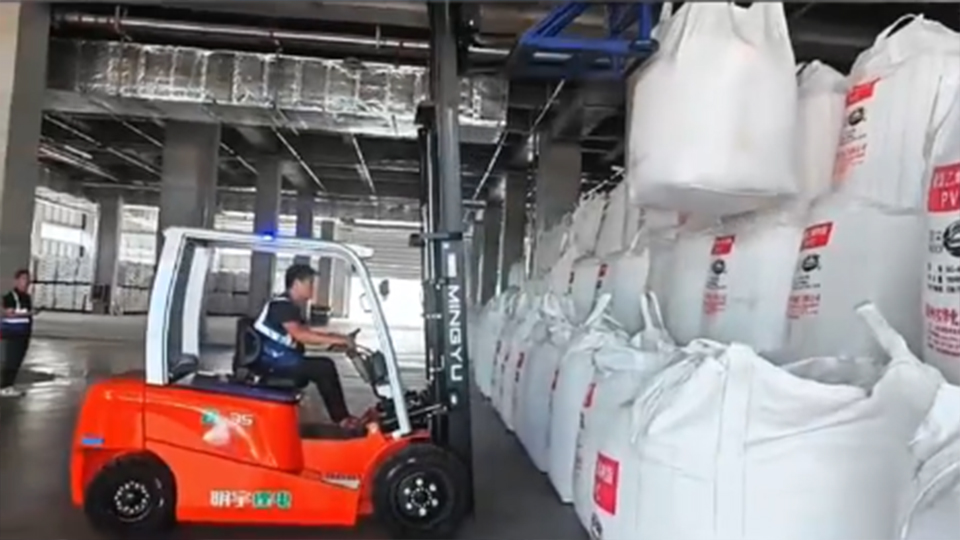
To understand why load centre distance matters, we must examine the physics of forklift stability through the lens of moment forces and the stability triangle concept.
The Stability Triangle Explained
A forklift maintains stability through a three-point suspension system: the two front wheels (which bear the primary load) and the pivot point of the rear steering axle. These three points form an imaginary triangle on the floor. As long as the combined center of gravity of the forklift and its load remains within this triangle, the vehicle stays stable. When the center of gravity shifts beyond the triangle's boundaries, the forklift tips—typically rearward when unloaded (due to the counterweight) or forward when overloaded.
The load centre distance directly influences where the combined center of gravity falls within this triangle. As load moves further from the mast (increasing load centre distance), the center of gravity shifts forward toward the front wheels. This forward shift reduces the stability margin and increases the risk of forward tip-over, particularly during braking, acceleration, or travel on inclines.
Moment Force Calculations
Engineers calculate forklift stability using moment forces, where Moment = Force × Distance. The forklift's capacity rating assumes specific moment equilibrium:
Load Moment = Load Weight × Load Centre Distance
Stability Moment = Forklift Weight × Distance to Stability Limit
When load moment exceeds stability moment, tip-over becomes inevitable. Consider a 5,000-pound capacity forklift rated at 24-inch load centre. The maximum allowable moment is 120,000 inch-pounds (5,000 × 24). If an operator places a 4,000-pound load with its center of gravity 36 inches from the fork face, the moment becomes 144,000 inch-pounds—exceeding the stability limit despite the load weighing less than the rated capacity.
This calculation demonstrates why load centre distance often proves more critical than absolute weight in determining safe operation.
Capacity Degradation: The Hidden Cost of Distance
Forklift manufacturers provide load capacity charts that reveal dramatic reductions in safe lifting capacity as load centre distance increases. These charts follow inverse proportional relationships where capacity decreases as distance increases.
Mathematical Relationships
The fundamental relationship follows:
Reduced Capacity = (Rated Capacity × Standard Load Centre) ÷ Actual Load Centre
For our 5,000-pound, 24-inch load centre forklift:
At 30-inch load centre: (5,000 × 24) ÷ 30 = 4,000 pounds maximum
At 36-inch load centre: (5,000 × 24) ÷ 36 = 3,333 pounds maximum
At 48-inch load centre: (5,000 × 24) ÷ 48 = 2,500 pounds maximum
These calculations reveal that doubling the load centre distance halves the safe lifting capacity—a relationship that surprises many operators who assume the rated plate capacity applies universally.
Real-World Capacity Implications
Practical scenarios frequently violate standard load centre assumptions:
Non-standard Pallets: Euro pallets (1200mm × 800mm) versus North American pallets (48" × 40") position loads differently on forks. Longitudinal loading of Euro pallets extends load centre beyond 24 inches even with proper fork spacing.
Irregular Loads: Machinery, pipe bundles, or oversized containers often have centers of gravity significantly offset from the fork face. A 2,000-pound machine with its center of gravity 48 inches forward due to protruding components generates the same tipping moment as a 4,000-pound standard pallet.
Attachment Effects: Side shifters, fork positioners, and carton clamps add weight to the carriage and extend the effective load centre. A side shifter weighing 400 pounds mounted 12 inches forward of the standard carriage position effectively increases load centre distance for all operations.
Manufacturers account for these variables through derating calculations, but operators must recognize when actual load centres exceed standard assumptions.
Dynamic Stability: Movement Amplifies Risk
Static stability calculations provide baseline safety margins, but forklift operation involves dynamic forces that amplify load centre effects. Understanding these dynamic factors explains why conservative load centre management saves lives.
Acceleration and Deceleration
When a forklift accelerates forward, inertial forces shift the effective center of gravity rearward, increasing rear axle loading and reducing front traction. Conversely, braking shifts the center of gravity forward—directly toward the stability triangle's forward edge. Heavy braking with extended load centres can generate moment forces exceeding static stability limits by 30-50%.
The load height compounds this effect. Raised loads (even within rated capacity) position mass higher in the stability triangle, creating longer moment arms. A load raised to maximum fork height experiences amplified forward shift during braking compared to the same load at ground level.
Grade and Surface Effects
Incline operation dramatically alters stability calculations. Traveling up or down slopes with the load downgrade creates vector forces that effectively increase load centre distance relative to the stability triangle. Industry standards typically recommend:
Never turn on inclines with elevated loads
Travel upgrade when loaded (keeping load uphill)
Reduce speeds by 50% on grades exceeding 5%
These recommendations directly address load centre distance effects under dynamic conditions.
Mast Tilt and Side-Shifting
Mast tilt mechanisms (typically 5-15 degrees forward/backward) create subtle load centre variations. Forward tilt extends load centre distance while lowering load height; backward tilt reduces load centre while increasing height. Operators must balance these factors, particularly when stacking at height where backward tilt provides stability but forward tilt enables pallet entry.
Side-shifting attachments, while convenient, introduce lateral load centre variations that affect side stability. Off-center loads create asymmetric moment forces that reduce overall stability margins.
Structural Integrity: Beyond Stability
Load centre distance affects more than tip-over stability—it directly impacts structural components and long-term equipment integrity.
Mast and Carriage Stress
The mast assembly experiences bending moments proportional to load weight multiplied by load centre distance. A 5,000-pound load at 36-inch load centre generates 50% higher bending stress at the mast base compared to the same load at 24 inches. This increased stress accelerates:
Roller and bushing wear
Mast channel deformation
Chain elongation and fatigue
Carriage structural cracking
Manufacturers design masts for rated load centres; consistent operation beyond these parameters voids warranties and creates catastrophic failure risks.
Axle and Frame Loading
Front axles bear the combined weight of the load plus the moment-induced downforce. Extended load centres increase front axle loading disproportionately, affecting:
Tire wear and failure modes
Wheel bearing life
Frame stress cracking
Drive unit durability
Counterbalanced forklifts rely on rear axle as the stability fulcrum; excessive forward loading can lift the rear wheels entirely, causing loss of steering control even before forward tip-over occurs.
Measurement and Assessment: Practical Applications
Accurate load centre assessment separates safe operations from accidents. Operators and supervisors must develop systematic evaluation procedures.
Load Centre Calculation Methods
Uniform Loads: For rectangular pallets with evenly distributed weight, the geometric center approximates the center of gravity. A 48" deep pallet's center sits 24" from either edge; positioned against the fork backrest, load centre equals approximately 24" plus any fork thickness.
Irregular Loads: Asymmetric or concentrated loads require estimation or calculation. Machinery with offset components, liquids in partial containers, or bundled materials need center of gravity determination through:
Manufacturer specifications
Suspension testing (lifting slightly and observing balance point)
Calculation by component weights and positions
Nested Loads: Stacking multiple pallets extends load centre for the aggregate unit. Two 24" load centre pallets stacked and secured together create a 36" effective load centre for the combined mass.
Pre-Operation Assessment Protocol
Comprehensive load centre management requires:
Visual Inspection: Identify load dimensions, weight markings, and center of gravity indicators
Weight Verification: Confirm actual weight against forklift capacity derated for estimated load centre
Stability Testing: Lift loads slightly and observe mast deflection, tire compression, and rear axle lift
Route Planning: Identify grades, turns, and stopping requirements that amplify load centre effects
Continuous Monitoring: Recognize that load centre changes during operation (liquid slosh, load shifting) affect stability
Training and Regulatory Framework
Occupational safety regulations increasingly emphasize load centre understanding in forklift certification programs.
OSHA and ANSI Standards
The Occupational Safety and Health Administration (OSHA) 29 CFR 1910.178 requires operator training covering "the capacity, stability, and load composition" of forklifts. The American National Standards Institute (ANSI) B56.1 standard mandates capacity plates displaying load centre ratings and requires operators to understand derating principles.
Modern certification programs include:
Stability triangle demonstrations with variable load centres
Capacity calculation exercises
Simulator training showing tip-over progression with extended loads
Hands-on assessment with non-standard load configurations
Incident Analysis
Investigation of forklift tip-overs consistently reveals load centre miscalculations as primary causative factors. Common accident patterns include:
Forward Tip-Over: Exceeding derated capacity due to extended load centre, often during braking or downhill travel
Lateral Tip-Over: Off-center loading combined with turning, where effective load centre shifts sideways
Dropped Loads: Structural failures from chronic overload at extended centres
Pedestrian Strikes: Extended loads creating larger swing radii than operators anticipate
These incidents prove particularly costly given that load centre-related accidents typically involve maximum capacity operations, resulting in severe injuries and substantial equipment damage.
Technological Mitigations: Engineering Solutions
Modern forklift design incorporates technological interventions addressing load centre challenges.
Load Moment Indicators (LMI)
Advanced systems calculate actual moment forces using pressure sensors in the hydraulic system, weighing load cells, and mast position sensors. These systems provide real-time feedback when approaching stability limits, regardless of load centre variations. LMI systems prove particularly valuable for variable load operations where pre-calculation proves impractical.
Stability Control Systems
Electronic stability control monitors forklift attitude through accelerometers and wheel speed sensors. When sensors detect conditions predictive of tip-over (rapid deceleration with elevated load, excessive lean angle), systems automatically limit travel speed, reduce hydraulic flow, or apply individual wheel braking to restore stability.
Telematics and Monitoring
Fleet management systems track operator behavior patterns indicating load centre management issues: frequent mast stress events, stability control activations, or travel speeds inconsistent with load heights. This data enables targeted training interventions and identifies equipment receiving chronic overload stress.
Conclusion: The Centrality of Load Centre Awareness
Load centre distance represents the invisible variable governing forklift safety, yet it remains poorly understood across much of the material handling industry. The physics are unforgiving: small increases in distance create proportional decreases in capacity, while dynamic operations amplify static risks exponentially.
Safe forklift operation requires moving beyond rated capacity plate numbers to genuine understanding of moment forces, stability triangles, and derating principles. Organizations must invest in training that builds intuitive load centre assessment skills, engineering controls that provide real-time feedback, and supervision that enforces conservative operational practices.
As warehouses adopt higher density storage, larger load configurations, and faster throughput requirements, load centre management becomes increasingly critical. The forklifts of tomorrow—automated, guided, and remotely operated—will require even more sophisticated load centre algorithms to replace human judgment. Yet the fundamental physics remain constant: the distance from forks to center of gravity determines whether operations proceed safely or catastrophically.
Understanding why load centre distance matters isn't merely academic compliance—it's the difference between productive material handling and workplace tragedy. Every operator who internalizes these principles contributes to a safety culture where physics serve production rather than punish ignorance.
Name: selena
Mobile:+86-13176910558
Tel:+86-0535-2090977
Whatsapp:8613181602336
Email:vip@mingyuforklift.com
Add:Xiaqiu Town, Laizhou, Yantai City, Shandong Province, China