
vip@mingyuforklift.com
+86-0535-2090977

Introduction
The material handling industry stands at a pivotal technological crossroads. For decades, internal combustion (IC) forklifts dominated warehouse floors, loading docks, and outdoor yards, powered by gasoline, diesel, or liquid propane gas (LPG). Today, electric forklifts—powered by lead-acid or increasingly lithium-ion battery systems—command a rapidly expanding market share, driven by environmental regulations, operational cost pressures, and advancing battery technology. Yet the transition is neither universal nor straightforward. The optimal power source depends on a complex interplay of operational demands, environmental conditions, infrastructure constraints, and total cost of ownership considerations.
This article provides a comprehensive technical comparison of internal combustion and electric forklifts across diverse application scenarios, examining performance characteristics, economic factors, environmental impacts, and operational constraints to inform evidence-based procurement and fleet management decisions.
Powertrain Architecture and Fundamental Characteristics
Internal Combustion Systems
Internal combustion forklifts employ engines fundamentally similar to automotive powertrains, adapted for industrial duty cycles. Diesel engines offer maximum torque output and fuel efficiency, making them dominant in heavy-capacity outdoor applications. Gasoline engines, increasingly rare in new equipment, provide lower capital cost but inferior fuel efficiency and emissions profiles. LPG (propane) engines represent the most common IC configuration for indoor-outdoor hybrid operations, offering cleaner combustion than gasoline or diesel while maintaining the operational flexibility of liquid fuel.
IC powertrains deliver power through mechanical transmissions—automatic torque converters or hydrostatic drives—to drive axles. Engine power also drives hydraulic pumps for mast operation and steering assist. This architecture provides inherent advantages: rapid refueling (5-10 minutes), established service infrastructure, and operation independent of electrical grid connectivity. However, IC engines generate substantial heat, noise, and exhaust emissions, require more frequent maintenance intervals, and exhibit lower energy conversion efficiency than electric systems.
Electric Powertrains
Electric forklifts replace the combustion engine with an electric motor—typically AC induction or permanent magnet synchronous designs—powered by onboard battery storage. Early electric forklifts utilized DC motors and lead-acid batteries, but modern systems predominantly employ AC motors with electronic controllers offering regenerative braking, precise speed control, and adaptive performance characteristics.
Battery technology represents the critical differentiator in electric forklift capability. Traditional lead-acid batteries, while proven and relatively inexpensive, impose significant operational constraints: 8-hour charging cycles, watering maintenance requirements, substantial weight (which contributes beneficially to counterbalance), and limited cycle life. Lithium-ion batteries, increasingly prevalent in new equipment and retrofit applications, offer rapid charging (opportunity charging during breaks), maintenance-free operation, extended cycle life, and higher energy density. However, lithium-ion systems command premium pricing and require sophisticated battery management systems.
The electric powertrain eliminates direct emissions, reduces noise output dramatically, and converts electrical energy to mechanical motion with approximately 85-90% efficiency versus 30-35% for internal combustion engines. Maintenance requirements focus on battery management, motor brush inspection (where applicable), and controller diagnostics rather than engine tune-ups, oil changes, and exhaust system maintenance.
Indoor Warehouse Applications
High-Density Racking Operations
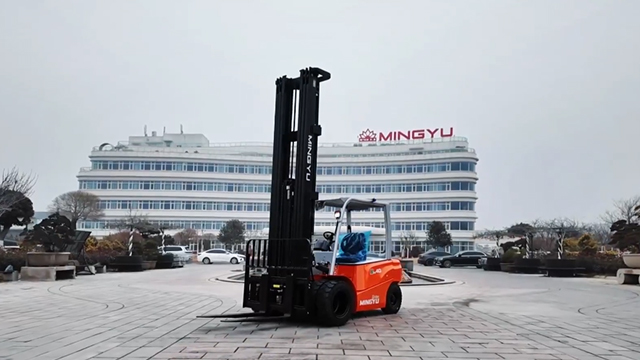
Electric forklifts demonstrate decisive advantages in high-density indoor warehouse environments. Zero direct emissions eliminate ventilation requirements and air quality concerns, particularly critical in facilities without sophisticated HVAC systems. Noise reduction—electric forklifts operate at 60-65 decibels versus 85-95 decibels for IC equivalents—improves communication safety and reduces operator fatigue during extended shifts.
The compact design typical of electric three-wheel and four-wheel counterbalance models excels in narrow aisle applications. Precise speed control via electronic modulation enables safer operation in confined spaces with pedestrian traffic. Regenerative braking reduces brake wear and provides smooth deceleration that minimizes load disturbance during frequent start-stop cycles characteristic of order picking and put-away operations.
For facilities operating multiple shifts, lithium-ion opportunity charging infrastructure enables continuous operation without battery change-out procedures. Lead-acid battery operations require either spare battery inventory with change-out equipment or dedicated charging rooms with ventilation and spill containment infrastructure.
Cold Storage Environments
Cold storage applications present unique challenges that historically favored IC forklifts. Lead-acid battery performance degrades significantly below freezing, reducing runtime and requiring battery warming strategies. However, lithium-ion batteries with appropriate chemistry selections maintain performance across broader temperature ranges. Modern electric forklifts designed for cold storage incorporate heated battery compartments and insulated components that address historical limitations.
IC forklifts in cold storage create condensation issues during temperature transitions, requiring warm-up periods to prevent engine intake icing and exhaust system corrosion. Electric systems avoid these complications, though condensation on electrical components requires appropriate sealing standards. The absence of exhaust emissions in cold storage eliminates ventilation energy costs that can represent substantial operational expenses in maintained freezer environments.
Outdoor and Rough-Terrain Applications
Construction and Lumber Yards
Outdoor applications with uneven terrain, dust exposure, and weather variability traditionally favor internal combustion forklifts. Diesel engines deliver the high torque necessary for rough-terrain operation and provide the robustness to withstand environmental exposure. Pneumatic tires on IC rough-terrain forklifts navigate unpaved surfaces that would damage cushion-tired electric models.
Diesel fuel energy density enables extended operation without refueling infrastructure constraints. In remote construction sites or lumber operations without electrical infrastructure, IC forklifts operate independently of grid connectivity. The higher ground clearance and robust construction of rough-terrain IC models accommodate applications where electric forklift designs would experience undercarriage damage.
However, this conventional advantage is eroding. Electric rough-terrain forklifts are emerging with sealed electrical systems, enhanced ground clearance, and battery configurations adapted for outdoor duty. For operations with established electrical infrastructure and moderate terrain demands, electric alternatives increasingly merit consideration.
Port and Maritime Operations
Port operations present extreme duty cycles with near-continuous utilization and heavy load handling. Historically, diesel forklifts dominated container handling and stevedoring applications. However, port authorities worldwide are implementing emission reduction mandates that accelerate electric adoption. Shore power infrastructure at modern terminals provides charging capability without additional grid investment.
The high capital cost of port equipment extends payback periods for electric conversion, but operational fuel savings and maintenance reduction accumulate substantially over equipment lifespans exceeding 20,000 hours. Battery thermal management in marine environments requires corrosion-resistant enclosures and enhanced sealing, but these engineering challenges are increasingly addressed in specialized equipment designs.
Load Capacity and Duty Cycle Considerations
Heavy-Capacity Applications
For capacities exceeding 15,000 pounds, internal combustion forklifts maintain dominance, though the threshold is rising. Diesel engines deliver the sustained power necessary for heavy load acceleration and lifting without the battery mass penalties that would compromise electric forklift design efficiency. Large capacity electric forklifts exist but require substantial battery systems that increase overall weight and reduce maneuverability.
The duty cycle intensity influences power source selection independently of capacity. Applications with intermittent utilization—sporadic loading dock operations, seasonal agricultural handling—may favor IC forklifts that avoid battery maintenance overhead during idle periods. Conversely, high-utilization operations with predictable schedules maximize electric forklift economic advantages through energy cost savings and reduced maintenance downtime.
Multi-Shift Continuous Operations
Three-shift operations present the classic battery management challenge for electric forklifts. Lead-acid battery systems require 8-hour charging plus cool-down periods, necessitating either multiple battery sets with change-out infrastructure or fleet redundancy to accommodate charging cycles. Battery change-out operations require dedicated equipment, trained personnel, and floor space that reduce operational efficiency.
Lithium-ion opportunity charging fundamentally transforms this calculus. Charging stations at staging areas, break rooms, and shift transitions enable battery replenishment in 15-30 minute intervals that maintain state-of-charge throughout operational periods. This capability eliminates battery change-out requirements and enables electric forklift deployment in continuous operations previously reserved for IC equipment.
Total Cost of Ownership Analysis
Capital Cost Comparison
Initial acquisition cost favors internal combustion forklifts in most capacity ranges. A standard 5,000-pound capacity IC forklift typically costs 20-30% less than an equivalent electric model with lead-acid battery, and 40-50% less than lithium-ion configurations. This capital cost differential influences procurement decisions, particularly for organizations with constrained capital budgets or high discount rates.
However, capital cost represents only the initial component of total cost of ownership. Comprehensive analysis must incorporate operating costs, maintenance expenses, infrastructure investment, and residual value over the equipment lifecycle.
Energy and Fuel Cost Analysis
Energy cost comparison requires normalization to equivalent work output. Electric forklifts convert energy with approximately three times the efficiency of IC engines, but electricity and fuel pricing varies dramatically by region and contract structure. At typical North American energy prices, electric operation costs 60-80% less per operating hour than propane or diesel equivalent.
Lithium-ion batteries enhance this advantage through improved charge acceptance and reduced energy waste during charging. Lead-acid batteries exhibit energy conversion losses of 15-20% during charging, while lithium-ion systems achieve 95%+ charge efficiency. Additionally, lead-acid batteries require watering labor and distilled water procurement that add hidden operational costs.
Maintenance Cost Differential
Maintenance cost represents a significant electric forklift advantage. IC engines require periodic oil and filter changes, spark plug replacement, fuel system maintenance, exhaust system inspection, and cooling system service. Engine rebuilds or replacements at mid-life add substantial costs. Typical IC forklift maintenance runs $1.50-$2.50 per operating hour.
Electric forklifts eliminate engine-related maintenance. Maintenance focuses on battery care (minimal for lithium-ion), brake inspection (reduced wear due to regenerative braking), and hydraulic system service. Typical electric forklift maintenance runs $0.75-$1.25 per operating hour, with lithium-ion configurations at the lower end of this range.
Battery replacement represents the major electric forklift maintenance variable. Lead-acid batteries require replacement every 1,500-2,000 cycles (approximately 5 years in single-shift operation) at costs representing 20-30% of initial equipment investment. Lithium-ion batteries offer 3,000-5,000 cycle lifespans, often exceeding the equipment's operational life and effectively eliminating battery replacement from the ownership cost equation.
Infrastructure Investment
Electric forklift deployment requires charging infrastructure investment that IC forklifts avoid. Lead-acid charging installations demand dedicated rooms with ventilation, acid spill containment, eye wash stations, and fire suppression systems. Electrical service upgrades may be necessary to support multiple high-amperage chargers. These infrastructure costs can range from $5,000 to $50,000 depending on fleet size and facility electrical capacity.
Lithium-ion opportunity charging reduces infrastructure requirements through distributed lower-amperage charging stations rather than centralized high-capacity systems. However, facility electrical assessment remains essential to ensure adequate service capacity. Organizations evaluating electric conversion must incorporate infrastructure costs into total cost of ownership models and capital planning.
Environmental and Regulatory Considerations
Emissions and Indoor Air Quality
The most compelling argument for electric forklift adoption lies in emissions elimination. IC forklifts operating indoors generate carbon monoxide, nitrogen oxides, hydrocarbons, and particulate matter that degrade air quality and pose health risks. OSHA's permissible exposure limit for carbon monoxide is 50 parts per million over an 8-hour period, a threshold that poorly maintained IC forklifts can approach or exceed in inadequately ventilated spaces.
Even well-maintained LPG forklifts in proper ventilation generate emissions that accumulate in enclosed spaces. Electric forklifts eliminate this exposure entirely, improving workplace health outcomes and reducing ventilation energy costs. Facilities pursuing LEED certification or corporate sustainability commitments find electric forklifts essential to environmental objectives.
Regulatory Trends and Incentives
Regulatory pressure on IC forklift operation intensifies globally. California's CARB regulations impose stringent emission standards that effectively mandate electric or alternative fuel equipment in many applications. European Union Stage V emission standards for non-road mobile machinery increase IC engine complexity and cost. Urban indoor operation restrictions on diesel equipment expand annually.
Conversely, incentives for electric equipment adoption proliferate. Utility rebates for charging infrastructure, federal tax credits for clean equipment investment, and grant programs for fleet electrification improve electric forklift economics. Organizations must monitor evolving regulatory landscapes to optimize procurement timing and capture available incentives.
Carbon Footprint Analysis
Lifecycle carbon footprint analysis requires examination beyond direct operational emissions. Electric forklift carbon intensity depends on grid generation mix—equipment charged from coal-heavy grids carries substantial upstream emissions, while renewable-powered charging approaches zero carbon operation. IC forklifts generate direct emissions plus upstream fuel production and distribution impacts.
As electrical grids decarbonize globally, electric forklift lifecycle emissions decrease correspondingly. Organizations with renewable energy procurement or on-site generation can achieve near-zero material handling emissions with electric fleets—a strategic advantage as supply chain carbon accounting becomes standard practice.
Operator Experience and Productivity
Ergonomic and Comfort Factors
Electric forklifts offer substantial ergonomic advantages. Vibration transmission from IC engines contributes to operator fatigue and musculoskeletal disorders. Electric motor smoothness reduces whole-body vibration exposure. Noise reduction enables communication without shouting, improving safety culture and reducing hearing conservation program requirements.
Heat generation from IC engines elevates cabin temperatures, particularly problematic in warm climates or confined spaces. Electric forklifts generate minimal operational heat, reducing HVAC demands and improving operator comfort. The absence of exhaust fumes eliminates odor exposure that contributes to workplace dissatisfaction.
Operational Responsiveness
Electric motor torque characteristics provide superior operational responsiveness. Maximum torque is available from zero RPM, enabling rapid acceleration and precise load handling. IC engines require RPM buildup to reach peak torque, creating slight delays in power delivery that reduce operational precision in delicate handling applications.
Electronic control systems enable programmable performance characteristics—acceleration curves, maximum speeds, lift speeds—that can be customized to application requirements or operator skill levels. This adaptability supports safety programs by limiting performance for new operators while enabling full capability for experienced personnel.
Hybrid and Emerging Technology Considerations
Fuel Cell Forklifts
Hydrogen fuel cell forklifts represent an emerging alternative that combines electric drivetrain advantages with rapid refueling capability. Fuel cells generate electricity through electrochemical reaction, producing only water vapor as exhaust. Refueling requires 3-5 minutes, comparable to LPG tank exchange, eliminating battery charging or change-out requirements.
Current limitations include hydrogen infrastructure scarcity, fuel cell stack cost, and hydrogen production carbon intensity. Fuel cell forklifts find application in large-scale distribution centers with dedicated hydrogen supply and high-utilization duty cycles where battery management complexity offsets fuel cell premium costs. As hydrogen infrastructure expands and production decarbonizes, fuel cell adoption may accelerate.
Autonomous and Semi-Autonomous Systems
Automation trends influence power source selection. Electric forklifts integrate more readily with autonomous navigation systems due to precise electronic control interfaces and predictable power consumption profiles. Battery state-of-charge monitoring enables accurate range prediction essential for autonomous route planning. IC fuel level monitoring introduces additional complexity and variability that complicates autonomous operation.
Strategic Fleet Planning Recommendations
Application-Driven Selection Framework
Optimal fleet composition requires application-specific analysis rather than universal electrification. Decision frameworks should evaluate: operating environment (indoor/outdoor mix, temperature extremes, terrain), duty cycle characteristics (utilization hours, shift structure, predictability), load requirements (capacity, attachment variety, handling precision), infrastructure constraints (electrical capacity, charging space, ventilation capability), and regulatory environment (emission restrictions, incentive availability, carbon accounting requirements).
Organizations with diverse operations may benefit from mixed fleets—electric forklifts for indoor warehouse operations, IC equipment for outdoor yard and rough-terrain applications. Fleet standardization within operational categories simplifies maintenance training, parts inventory, and operator familiarization while optimizing each application for appropriate technology.
Transition Planning
Organizations transitioning from IC to electric fleets require systematic planning. Pilot programs in favorable applications build operational experience and validate economic models before large-scale commitment. Infrastructure assessment and electrical service upgrades must precede equipment delivery. Operator and maintenance training programs require development to address battery management, charging procedures, and new maintenance protocols.
Phased transitions allow organizational learning and risk mitigation while capturing early benefits in optimal applications. Attempting universal immediate conversion risks operational disruption and economic underperformance if application analysis proves incomplete.
Conclusion
The internal combustion versus electric forklift decision has evolved from a simple technology choice to a strategic operational optimization requiring comprehensive analysis. Electric forklifts have achieved technical maturity that enables deployment across expanding application scenarios, while IC forklifts retain advantages in specific heavy-duty, remote, and extreme environment applications.
Economic analysis increasingly favors electric alternatives when total cost of ownership replaces initial capital cost as the decision criterion. Environmental regulations and corporate sustainability commitments accelerate this transition by imposing costs on IC operation and incentivizing electric adoption. Advancing battery technology—particularly lithium-ion systems—addresses historical electric forklift limitations of charging time, maintenance burden, and cold-weather performance.
Yet the optimal solution remains application-specific. Organizations must resist both reflexive electrification enthusiasm and defensive attachment to established IC fleets. Rigorous analysis of operational requirements, infrastructure constraints, duty cycle characteristics, and total cost of ownership enables evidence-based fleet composition that optimizes safety, productivity, and economic performance.
The material handling industry will continue transitioning toward electrification, but internal combustion technology will retain niche applications for the foreseeable future. Success lies not in universal technology adoption but in matching power source capabilities to operational demands with the analytical rigor that these substantial capital investments deserve.
Name: selena
Mobile:+86-13176910558
Tel:+86-0535-2090977
Whatsapp:8613181602336
Email:vip@mingyuforklift.com
Add:Xiaqiu Town, Laizhou, Yantai City, Shandong Province, China