
vip@mingyuforklift.com
+86-0535-2090977

Introduction
Fuel cost represents one of the most significant ongoing operational expenses for facilities utilizing diesel-powered material handling equipment. Unlike electric forklifts with their predictable utility-based charging costs, diesel forklift fuel expenses fluctuate with market prices, operational intensity, and equipment efficiency variations. This technical analysis examines the multifaceted cost structure of diesel forklift fueling, providing facility managers, fleet operators, and procurement professionals with the quantitative frameworks necessary for accurate budgeting, cost optimization, and strategic decision-making.
Understanding daily fuel costs requires moving beyond simple per-gallon price quotes to comprehensive analysis encompassing consumption rates, operational parameters, maintenance impacts, and comparative economics against alternative power sources. The following examination provides detailed cost calculations, efficiency optimization strategies, and total cost of ownership considerations essential for informed fleet management.
Fuel Consumption Fundamentals: Quantifying the Burn Rate
The foundation of daily fuel cost calculation lies in establishing accurate consumption rates. Diesel forklift fuel usage varies significantly based on equipment specifications, operational demands, and environmental conditions.
Standard Consumption Metrics
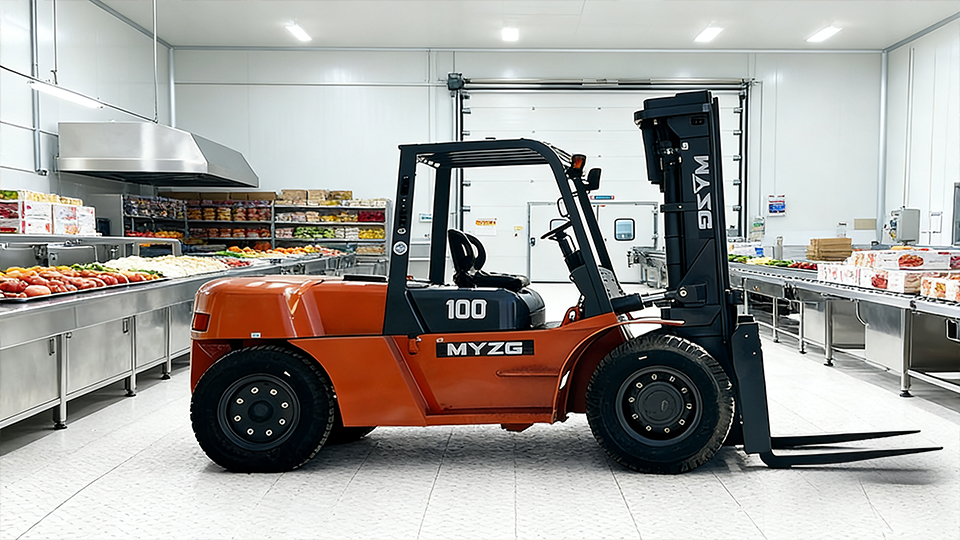
Industry data establishes baseline consumption ranges across forklift capacity categories. Compact diesel forklifts with 2,000-3,500 pound lift capacities typically consume 0.8 to 1.5 gallons per hour under normal operating conditions . Mid-range units handling 4,000-6,000 pounds—the most common commercial category—demonstrate consumption rates of 1.5 to 2.5 gallons per hour . Heavy-duty models exceeding 8,000 pounds capacity can consume 2.5 to 4+ gallons hourly, with extreme applications reaching higher rates .
A standard 3-ton (6,000-pound) capacity diesel forklift, representative of typical warehouse and construction applications, averages 2 to 3 liters (approximately 0.5 to 0.8 gallons) per hour under normal conditions, though manufacturer specifications and operational factors significantly influence this baseline . For calculation purposes, a conservative 2 gallons per hour consumption rate provides realistic planning estimates for mid-range equipment.
The Load Factor Impact
Fuel consumption does not remain constant across operational intensity levels. Operating at or near maximum rated capacity increases fuel usage by 20-40% compared to handling lighter loads . The engine works substantially harder to generate hydraulic pressure for heavy lifting and to accelerate laden masses, directly increasing diesel burn rates.
Duty cycle intensity similarly affects consumption. Continuous operation with frequent lifting, transporting, and positioning cycles consumes significantly more fuel than intermittent use with idle periods between tasks. A forklift operating at 75% duty cycle (45 minutes of actual work per hour) burns approximately 1.5 gallons hourly, while 90% duty cycle operations approach 2.5 gallons hourly for equivalent equipment.
Daily Cost Calculation Framework
Calculating precise daily fuel costs requires integrating consumption rates with operational schedules and current fuel pricing.
Single-Shift Operations
For a standard single-shift operation—eight hours total with six hours of actual forklift runtime—a mid-range diesel forklift consuming 2 gallons per hour generates daily fuel consumption of 12 gallons. At current U.S. diesel prices averaging $3.40-$4.20 per gallon , daily fuel costs range from $40.80 to $50.40 per forklift.
However, this calculation assumes consistent consumption rates. Real-world operations demonstrate significant variation. A forklift handling maximum capacity loads on inclined surfaces might consume 3 gallons hourly, generating $100.80 daily costs at upper price ranges. Conversely, light-load operations on level surfaces with optimized driving techniques might reduce consumption to 1.5 gallons hourly, yielding $37.80 daily costs.
Multi-Shift and High-Utilization Operations
Facilities operating multiple shifts face compounded fuel expenses. A diesel forklift running 16 hours daily across two shifts consumes approximately 32 gallons, generating $108.80-$134.40 daily fuel costs. Three-shift continuous operations (22-24 hours) approach 48 gallons daily consumption, with costs exceeding $200 at peak fuel pricing.
These calculations assume consistent operational intensity. In practice, second and third shifts often demonstrate reduced intensity due to lower throughput requirements, potentially moderating consumption rates. However, continuous operation eliminates cooling periods that improve efficiency, potentially increasing per-hour consumption compared to intermittent single-shift usage.
Weekly and Monthly Projections
Extending daily calculations enables operational budgeting. A single-shift operation at $45.60 daily average (2 gallons/hour × 6 hours × $3.80/gallon) generates weekly fuel costs of $228 and monthly expenses of $912 assuming five-day operations. High-utilization scenarios—six-day weeks with extended shifts—can escalate monthly fuel costs beyond $1,500 per forklift.
Fleet operations amplify these figures. A ten-unit diesel forklift fleet operating single shifts generates $9,120 monthly fuel costs, while twenty units approach $20,000 monthly. These substantial operational expenditures drive many facilities toward electric alternatives despite higher acquisition costs.
Comparative Fuel Economics: Diesel vs. Alternatives
Understanding diesel fuel costs requires contextual comparison against propane and electric alternatives to inform strategic fleet decisions.
Diesel vs. Propane Cost Analysis
Propane forklifts typically consume 1.0 to 1.5 gallons (6-8 pounds) of liquid petroleum gas per hour . At current propane prices averaging $2.50-$3.50 per gallon , a propane forklift operating six hours daily consumes 6-9 gallons, generating $15.00-$31.50 daily fuel costs—substantially lower than diesel equivalents.
However, consumption rate comparisons prove misleading without considering operational differences. Propane forklifts generally handle lighter-duty applications than comparable-capacity diesel units. Heavy-duty operations requiring diesel torque cannot substitute propane equipment without capacity reductions or productivity compromises.
Total cost analysis must incorporate infrastructure expenses. Diesel requires storage tanks, spill containment, and ventilation systems—capital investments ranging $5,000-$15,000 depending on capacity and regulatory requirements . Propane requires cylinder storage and potential tank rental fees, generally lower infrastructure costs but ongoing cylinder management expenses.
Diesel vs. Electric Economic Comparison
Electric forklifts demonstrate dramatically different cost structures. Consumption ranges from 6-10 kWh per operating hour , with lithium-ion systems demonstrating higher efficiency than lead-acid alternatives. At average commercial electricity rates of $0.12 per kWh, a 10 kWh/hour electric forklift operating six hours daily consumes 60 kWh, generating $7.20 daily electricity costs—approximately 84% lower than diesel equivalents .
Annual projections reinforce this disparity. A diesel forklift operating 2,000 hours annually consumes 4,000 gallons, generating $13,600-$16,800 fuel costs at current pricing . The comparable electric forklift consumes 20,000 kWh, costing $2,400 annually—an $11,200-$14,400 annual savings per unit.
However, electric infrastructure costs complicate this comparison. Battery charging stations require $2,000-$8,000 capital investment per station, and facilities lacking adequate electrical capacity face additional panel upgrades and wiring expenses . These upfront costs must be amortized across operational savings to determine true economic viability.
Operational Factors Affecting Daily Fuel Costs
Multiple operational variables influence actual daily fuel expenditures beyond baseline consumption rates.
Maintenance Condition Impact
Poorly maintained diesel forklifts exhibit substantially elevated fuel consumption. Clogged air filters restrict airflow, forcing richer fuel mixtures and increasing consumption by 10-15% . Worn fuel injectors deliver suboptimal spray patterns, reducing combustion efficiency and increasing fuel requirements for equivalent work output. Old or contaminated engine oil increases internal friction, requiring additional fuel to maintain performance.
A diesel forklift with neglected maintenance might consume 2.5 gallons hourly rather than 2.0 gallons—a 25% increase generating $11.40 additional daily costs at $3.80/gallon pricing. Across a 250-day operational year, this maintenance deficit adds $2,850 annual fuel expense per unit.
Operator Behavior Effects
Operator technique significantly influences fuel economy. Aggressive acceleration, rapid braking, and excessive idling increase consumption by up to 25% . Trained operators utilizing smooth acceleration, maintaining steady travel speeds, and eliminating unnecessary idling optimize fuel efficiency.
Cold-start operations similarly elevate consumption. Diesel engines operate inefficiently until reaching optimal temperature, with fuel consumption potentially doubling during initial warm-up periods. Facilities in cold climates face systematically higher daily fuel costs during winter months due to extended warm-up requirements and reduced combustion efficiency.
Environmental and Terrain Conditions
Operating environment substantially affects fuel economy. Rough terrain, soft surfaces, and inclined travel increase rolling resistance and power requirements, elevating consumption by 30-50% compared to smooth, level concrete surfaces . Outdoor operations in adverse weather—mud, snow, ice—further reduce efficiency through traction losses and increased power demands.
Ambient temperature extremes impact fuel costs. Cold weather increases fuel viscosity, requiring richer mixtures and longer warm-up periods. Hot weather reduces air density, marginally decreasing combustion efficiency. These environmental factors might add $5-$15 daily fuel costs depending on severity and operational exposure.
Tank Capacity and Refueling Logistics
Practical fuel cost management requires understanding tank capacities and refueling frequency.
Standard Tank Configurations
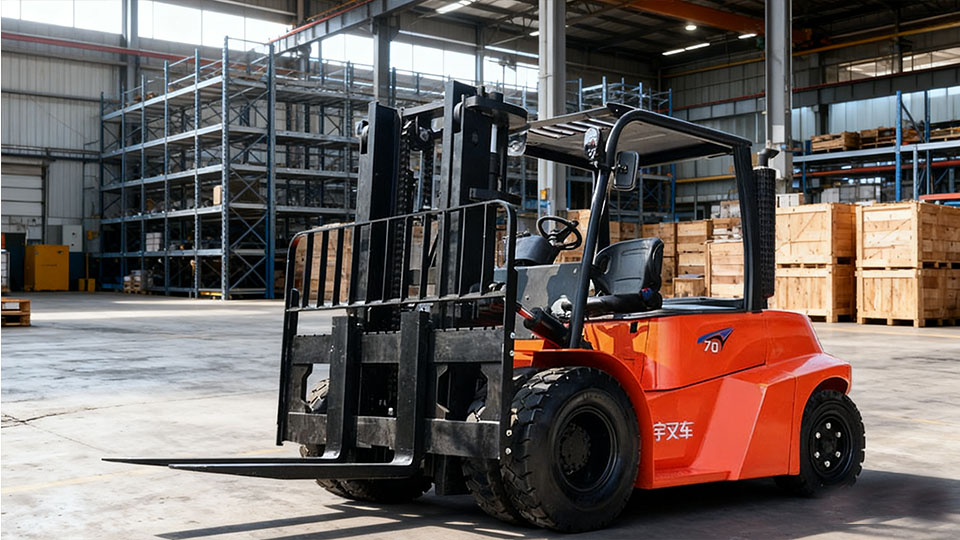
Diesel forklift fuel tanks vary by manufacturer and model. Toyota's compact 8FDU series typically holds 18-20 gallons, while heavy-duty 8FDN series accommodates 25-30 gallons . Caterpillar DP series models range 20-22 gallons for smaller units to 30-35 gallons for industrial applications . Hyster compact models feature 16-20 gallon tanks, with heavy-duty H-Series units holding 28-33 gallons .
Tank capacity directly influences operational continuity. A 20-gallon tank supporting 2 gallons/hour consumption enables 10 hours of operation—adequate for single-shift coverage with reserve capacity. High-utilization operations require larger tanks or mid-shift refueling, introducing operational inefficiencies and potential productivity losses.
Refueling Cost Considerations
Bulk diesel purchasing reduces per-gallon costs compared to retail pricing. Facilities with on-site storage tanks can negotiate commercial fuel contracts, potentially reducing costs by $0.30-$0.50 per gallon. For a fleet consuming 1,000 gallons monthly, this reduction generates $300-$500 monthly savings.
However, bulk storage introduces regulatory compliance costs. Spill prevention, containment, and reporting requirements under EPA regulations necessitate ongoing compliance investments. These administrative costs must be factored into total fuel cost calculations, potentially offsetting bulk purchase savings for smaller operations.
Total Cost of Ownership Integration
Daily fuel costs represent only one component of diesel forklift operational economics. Comprehensive cost analysis requires integration with maintenance, depreciation, and productivity factors.
Maintenance Cost Correlation
Diesel forklifts require more frequent maintenance than electric alternatives, with annual maintenance averaging $3,500-$5,000 compared to $1,800-$2,500 for electric units . However, this maintenance preserves fuel efficiency; neglected maintenance elevates both repair costs and fuel consumption simultaneously.
Oil changes, filter replacements, and emission system maintenance (DEF fluid, particulate filters) for Tier 4 Final compliant engines add $1,200-$2,000 annually . These maintenance investments maintain fuel efficiency, preventing the consumption increases associated with degraded engine condition.
Depreciation and Residual Value
Diesel forklifts typically demonstrate higher residual values than propane or electric alternatives, partially offsetting higher operational costs . This depreciation advantage proves particularly relevant for high-utilization operations where equipment cycles rapidly. The higher fuel costs may be justified by extended service life and stronger resale markets for well-maintained diesel units.
Cost Optimization Strategies
Facilities can implement multiple strategies to reduce daily diesel fuel costs without equipment substitution.
Operational Efficiency Programs
Operator training programs focusing on fuel-efficient driving techniques—smooth acceleration, minimized idling, optimal travel routing—can reduce consumption by 15-25% . For a forklift consuming $45.60 daily, this reduction saves $6.84-$11.40 daily, or $1,710-$2,850 annually.
Route optimization reduces travel distances and acceleration cycles. Warehouse layout modifications minimizing travel between pick and deposit locations decrease total engine runtime for equivalent material handling volumes, directly reducing fuel consumption.
Maintenance Optimization
Strict adherence to manufacturer maintenance schedules preserves fuel efficiency. Air filter replacement intervals, fuel injection system cleaning, and engine tuning maintain optimal combustion efficiency. Preventive maintenance investments typically generate fuel savings exceeding maintenance costs through consumption reduction.
Fuel quality management similarly affects costs. Water-contaminated or degraded diesel reduces combustion efficiency and risks engine damage. Proper fuel storage, filtration, and periodic quality testing prevent efficiency losses associated with poor fuel condition.
Conclusion
The cost to fuel a diesel forklift for daily operations ranges from approximately $30 to $100+ per day depending on equipment capacity, operational intensity, fuel pricing, and efficiency factors. Single-shift operations with mid-range equipment typically generate $40-$55 daily fuel costs at current pricing, while high-utilization heavy-duty applications can exceed $150 daily.
These costs substantially exceed propane and electric alternatives, with diesel fuel expenses typically 2-3× higher than propane and 6-8× higher than electricity for equivalent operational hours. However, diesel maintains advantages in heavy-duty applications, outdoor operations, and utilization scenarios requiring maximum torque and continuous operation without recharging constraints.
Effective fuel cost management requires comprehensive understanding of consumption factors, maintenance impacts, and operational optimization opportunities. Facilities utilizing diesel forklifts must balance the power and durability advantages of diesel power against significant ongoing fuel expenses, potentially justifying higher acquisition costs of electric alternatives through operational savings in appropriate applications. For operations where diesel remains essential, rigorous maintenance protocols and operator training programs provide the most effective mechanisms for controlling daily fuel costs within manageable parameters.
Name: selena
Mobile:+86-13176910558
Tel:+86-0535-2090977
Whatsapp:8613181602336
Email:vip@mingyuforklift.com
Add:Xiaqiu Town, Laizhou, Yantai City, Shandong Province, China
