
vip@mingyuforklift.com
+86-0535-2090977

The Invisible Boundaries of Safe Repair
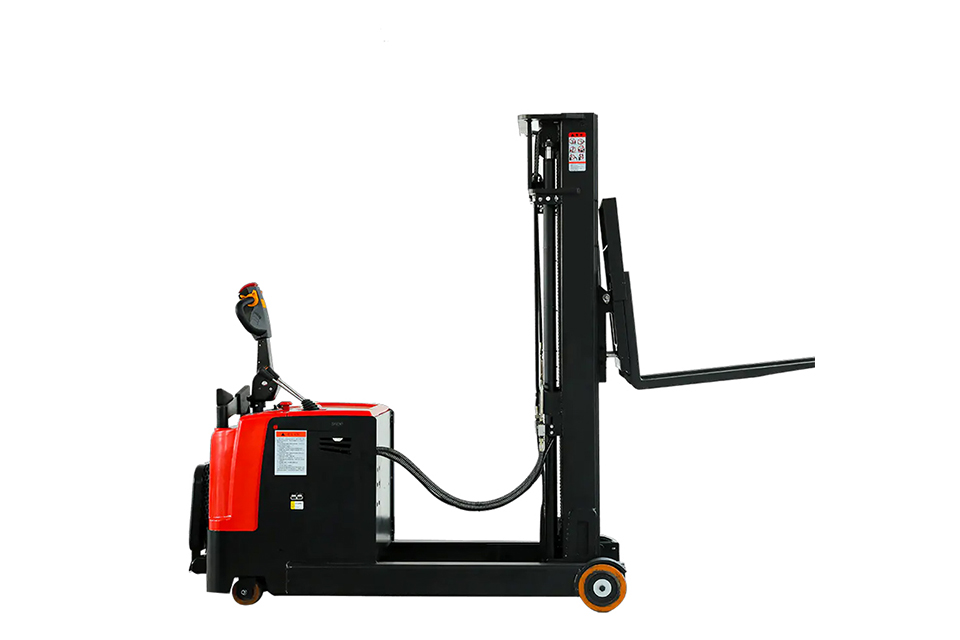
Every piece of industrial equipment has boundaries—physical, electrical, and procedural lines that separate routine maintenance from catastrophic failure. Electric stackers, with their compact footprints and seemingly simple designs, obscure these boundaries better than most machinery. Their unassuming size lures technicians into complacency. After all, how dangerous can a walk-behind pallet stacker really be? The answer, documented in thousands of incident reports and insurance claims, is devastatingly clear: stackers kill and maim with the same mechanical indifference as their larger forklift counterparts. The difference is that stacker accidents often happen because technicians didn't recognize where the danger began.
This article defines the non-negotiable no-go zones of stacker maintenance. These aren't suggestions or guidelines. They are absolute prohibitions rooted in physics, electrochemistry, and biomechanics. Cross these lines, and you are no longer performing maintenance—you are gambling with your life.
No-Go Zone 1: Never Work on Energized Electrical Systems
The most dangerous word in stacker maintenance is "probably." As in, "It's probably fine to check this connector without disconnecting the battery." It is never fine. Electric stackers operate on DC battery systems ranging from 24 volts in light-duty walkie units to 80 volts in heavy-duty rider stackers. While these voltages fall below the threshold that triggers immediate physiological response in dry skin conditions, they more than compensate with available current. A fully charged industrial lead-acid battery pack can deliver hundreds of amperes instantaneously. When that current finds a path through a technician's body—typically via a metal tool bridging terminals or a ring contacting both poles—the result is not a mild tingle. It is tissue destruction, cardiac disruption, and potentially death.
The no-go principle here is absolute: never perform maintenance on any electrical component while the battery remains connected. This includes controller inspections, motor brush replacements, wiring harness repairs, switch adjustments, and even seemingly benign tasks like cleaning corroded terminals. The key switch does not constitute disconnection. Key switches fail. Contactors weld. Control circuits maintain live potential for memory retention and hour-meter functions. Only physical removal of the battery connector or extraction of the main fuse/link satisfies the energy isolation requirement.
Beyond the battery, motor controllers contain large electrolytic capacitors that retain lethal charge for minutes after power removal. Never open a controller enclosure without first disconnecting the battery and then verifying zero voltage across the DC bus terminals with a properly rated multimeter. Manufacturer specifications typically mandate a minimum five-minute waiting period after battery disconnection to allow capacitor discharge through bleed resistors. Treat every capacitor as charged until proven otherwise. The no-go zone extends to any assumption that "it's been off long enough."
No-Go Zone 2: Never Enter the Mast Envelope Without Mechanical Securing
The mast envelope—that three-dimensional space occupied by the telescoping mast sections, carriage, chains, and forks—represents the most concentrated mechanical hazard on any stacker. Within this envelope, multiple lethal mechanisms operate simultaneously. Hydraulic cylinders suspend thousands of pounds of steel against gravity. Roller chains or leaf chains transmit lifting force through sprockets and sheaves. Mast channels slide against each other with minimal clearance. Carriage rollers bear concentrated loads. Any of these components can fail without warning.
The absolute prohibition is this: never place any part of your body inside the mast envelope unless the carriage and all mast sections are fully lowered to mechanical stops and secured with rated jack stands or approved blocking devices. Hydraulic systems fail. Seals rupture. Hoses burst. Check valves leak. The only thing preventing a multi-ton carriage from descending onto a technician's skull is mechanical intervention that does not depend on fluid integrity.
This no-go zone has subtleties that kill experienced technicians. A carriage lowered to the bottom does not necessarily mean a safe mast. Intermediate mast sections may remain partially extended. Some stackers feature free-lift stages where the inner mast rises before the carriage moves. Technicians have been crushed when they reached into what appeared to be a fully collapsed mast, only to contact a partially elevated inner section. The rule is comprehensive: verify full collapse, engage all mechanical stops, position stands, and only then enter.
Chain replacement introduces additional no-go complexity. Chains under tension store enormous mechanical energy. Never disconnect a chain without first securing it with a chain holder, come-along, or temporary mechanical lock. A released chain can whip with sufficient force to break bones or sever limbs. The no-go zone includes any assumption that "I can hold it with one hand while I undo the fastener with the other."
No-Go Zone 3: Never Bypass or Disable Safety Systems
Stackers incorporate multiple layers of safety engineering: emergency stop buttons, belly switches, load height limit switches, tilt interlocks, speed reducers at elevation, and anti-rollback systems on ramps. These aren't conveniences. They are engineered controls designed to prevent specific failure modes that historical accident data identified as probable. When a technician bypasses a safety system to "get the job done" or "test something quickly," they are not demonstrating ingenuity. They are dismantling protective architecture.
The no-go prohibition is categorical: never install jumpers across safety switches, never disconnect interlock circuits, never tape down emergency stops, and never modify software parameters to disable safety functions. If a safety system prevents operation during maintenance, the correct response is to identify and repair the underlying fault, not to circumvent the protection. Technicians who bypass a belly switch to test traction functions while standing beside a stacker have created a situation where the machine can move unexpectedly with no operator present to control it. Those who disable load height limiters to "see if the motor works" have enabled the mast to over-travel, potentially pulling hoses, breaking chains, or destabilizing the stacker.
Software-based safety systems in modern stackers present particular temptation. Diagnostic tablets and manufacturer software allow parameter adjustments that can disable travel speed limiting, remove acceleration ramps, or eliminate regenerative braking. These functions exist for calibration and troubleshooting under controlled conditions. Using them to override safety systems during unsupervised maintenance crosses into the no-go zone. If you cannot complete a diagnostic procedure with all safety systems active, you do not understand the procedure well enough to perform it.
No-Go Zone 4: Never Mix Battery Electrolyte or Use Tap Water
Lead-acid battery maintenance seems straightforward: check levels, add water, keep terminals clean. But this apparent simplicity masks precise electrochemical requirements that, when violated, destroy expensive battery packs and create serious safety hazards. The no-go zone here is specific and non-negotiable.
Never add sulfuric acid or pre-mixed electrolyte to a battery that has not physically lost electrolyte through spillage or casing breach. During normal operation, batteries consume only water through electrolysis during charging. The acid does not disappear. Adding electrolyte to cells that merely need water raises the specific gravity beyond design parameters, accelerating grid corrosion, damaging separators, and reducing cycle life. The only fluid that belongs in a normally operating lead-acid battery is distilled or deionized water with conductivity below 10 microsiemens per centimeter.
Never use tap water, spring water, or filtered drinking water. Municipal water contains dissolved minerals—calcium, magnesium, iron, chlorine—that participate in destructive side reactions. These contaminants increase self-discharge, promote mossing (dendritic growth between plates), and elevate internal resistance. Over months, mineral accumulation can render a battery unrecoverable. The prohibition extends to "purified" bottled water that lacks verified conductivity specifications. If you cannot confirm the water meets battery-grade standards, it does not go in the battery.
Never smoke, use open flames, or create sparks near charging batteries. Charging produces hydrogen gas through electrolysis. Hydrogen accumulates in explosive concentrations in poorly ventilated areas. A single spark from a dropped tool, a static discharge, or an unsealed electrical enclosure can trigger a detonation that ruptures battery cases and sprays sulfuric acid across the workspace.
No-Go Zone 5: Never Work Under Unsupported or Improperly Supported Loads
Gravity is patient, consistent, and unforgiving. A raised carriage, an elevated mast section, or a suspended component represents stored potential energy awaiting conversion into kinetic energy. The no-go zone is the space beneath any load that lacks redundant mechanical support.
Never rely solely on hydraulic cylinders to maintain position. Hydraulic seals degrade. Valves leak. Temperature changes alter fluid volume. The only acceptable support is mechanical: jack stands rated for at least 150% of the anticipated load, positioned on stable ground, contacting structural members designed to bear weight. Never place stands on hydraulic hoses, electrical conduits, sheet metal covers, or uneven surfaces. Never use wooden blocks, cinder bricks, or improvised materials as substitutes for engineered stands.
The prohibition includes working beneath stackers elevated on lifts or pits. A stacker raised for undercarriage work must be secured with mechanical locks on the lift mechanism, with wheel chocks preventing movement, and with stands positioned to catch the frame if the lift fails. Technicians have been crushed when hydraulic vehicle lifts lost pressure during stacker undercarriage inspections. The no-go zone encompasses any assumption that "it looks stable enough."
No-Go Zone 6: Never Perform Maintenance Without Proper PPE
Personal protective equipment is not a fashion statement or a regulatory checkbox. It is the last line of defense when other controls fail. The no-go zone for PPE is any maintenance task performed without equipment matched to the specific hazards.
Never work on batteries or electrical systems without face shields and acid-resistant gloves. Sulfuric acid in stacker batteries concentrates to approximately 37% by weight. A single droplet in an eye causes permanent vision damage. A splash on unprotected skin produces severe chemical burns within seconds. Standard cotton work gloves absorb acid and hold it against skin, worsening injury. Only neoprene or rubber gloves rated for sulfuric acid exposure are acceptable.
Never wear conductive jewelry during electrical work. Rings, watches, necklaces, and metal-framed glasses create low-resistance paths across battery terminals. A gold wedding ring bridging 48 volts can reach 1,000 degrees Celsius in seconds, welding to the terminal and causing third-degree burns that typically require finger amputation. The prohibition extends to conductive tools in pockets, metal belt buckles, and steel-toe boots with exposed hardware.
Never work on hydraulic systems without eye protection rated for high-velocity impact. Hydraulic pinhole leaks inject fluid at pressures exceeding 2,000 PSI, capable of penetrating safety glasses and injecting fluid through skin into underlying tissue. This injury—hydraulic injection—often appears minor initially but requires emergency surgical debridement and can result in amputation or death if untreated.
No-Go Zone 7: Never Work Alone on High-Risk Maintenance
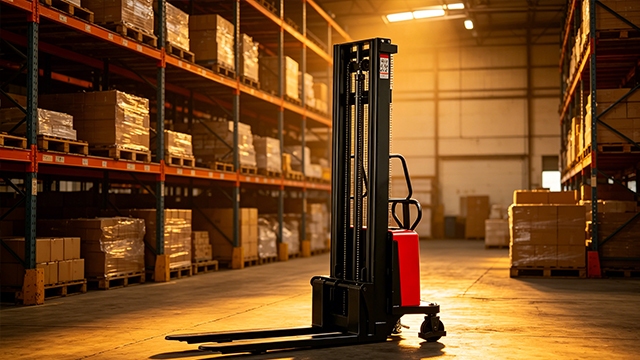
The buddy system isn't childish precaution—it is survival strategy. Many stacker maintenance tasks involve confined spaces, heavy lifting, exposure to hazardous energy, or positions where a technician cannot extricate themselves if injured. The no-go zone is performing these tasks without another qualified person present.
Never enter a mast envelope, battery compartment, or pit alone. If a stand fails, a hydraulic line bursts, or a technician becomes trapped, seconds matter. A lone technician pinned beneath a carriage may succumb to positional asphyxia or bleeding before anyone discovers them. A second person provides immediate assistance, emergency communication, and rescue capability.
Never perform battery extraction or installation alone. Industrial stacker batteries weigh hundreds of pounds. Even with mechanical assistance, the maneuvering space is tight, and a dropped battery can crush feet, hands, or legs. A spotter ensures clearances, verifies attachment integrity, and can summon help if the extraction device fails.
The prohibition extends to tasks that seem manageable solo. Replacing a drive wheel, adjusting brakes, or bleeding hydraulics can all result in sudden movements or component releases that injure a lone technician. If a task cannot be safely performed by one person, do not attempt it alone.
No-Go Zone 8: Never Ignore Manufacturer Service Intervals and Specifications
Stacker manufacturers establish maintenance intervals, torque specifications, fluid types, and component replacement schedules based on engineering analysis, accelerated wear testing, and field failure data. These specifications represent the boundary between reliable operation and accelerated degradation. The no-go zone is improvisation.
Never extend oil change intervals beyond manufacturer recommendations. Hydraulic oil degrades through heat cycling, oxidation, and contamination. Extended intervals allow acid buildup, viscosity breakdown, and particulate accumulation that destroy pumps, valves, and cylinders. The cost of premature hydraulic component replacement far exceeds the cost of scheduled fluid changes.
Never substitute generic fluids or fasteners for specified components. Hydraulic systems require specific viscosity grades and additive packages. Using automotive hydraulic fluid in an industrial stacker may provide inadequate anti-wear protection or incompatible seal compatibility. Similarly, substituting Grade 5 bolts for Grade 8 fasteners in structural applications creates failure points under shock loading.
Never ignore chain wear limits. Chain elongation beyond 3% of original length indicates pin and bushing wear that progresses nonlinearly. A chain that appears merely "stretched" can fail catastrophically under load, dropping the carriage. The no-go zone includes visual guesses about chain condition. Measure elongation with a precision tool, and replace chains that exceed specifications.
No-Go Zone 9: Never Rush the Preparation Phase
Time pressure is the enemy of safety. Maintenance tasks performed under production pressure, during shift changes, or against arbitrary deadlines suffer from skipped steps, incomplete inspections, and hazardous shortcuts. The no-go zone is beginning physical work before all preparatory steps are complete and verified.
Never begin disassembly without completing a full energy isolation checklist. This includes battery disconnection, capacitor discharge verification, hydraulic depressurization, and mechanical securing. Each step must be physically verified, not assumed. A technician who skips discharge verification because "the battery's been out for ten minutes" has entered the no-go zone.
Never skip the pre-work inspection. Before touching a tool, inspect the stacker for obvious damage, fluid leaks, cracked welds, and abnormal wear. A leaking hydraulic fitting identified during inspection prevents an unexpected spray during disassembly. A cracked mast channel spotted early prevents a catastrophic collapse during testing.
Conclusion: Respect the Boundaries
The no-go zones of stacker maintenance are not arbitrary restrictions invented to slow technicians down. They are the accumulated wisdom of decades of accidents, injuries, and fatalities, translated into absolute prohibitions. Each zone addresses a specific failure mode that has killed or maimed someone who believed they could handle the risk.
The electric stacker does not care about your experience, your schedule, or your confidence. It operates according to physical laws that are immune to human persuasion. Hydraulic pressure will find weak seals. Gravity will convert potential energy to kinetic energy. Electrical current will follow conductive paths. The only variable under human control is whether the technician respects the boundaries.
Maintenance excellence is not defined by speed or complexity. It is defined by the discipline to stop, verify, secure, and protect—every single time, without exception. The no-go zones are your map. Stay outside them, and you return home intact. Cross them, and you become a statistic in someone else's safety briefing. The choice is binary, and the consequences are permanent.
Name: selena
Mobile:+86-13176910558
Tel:+86-0535-2090977
Whatsapp:8613181602336
Email:vip@mingyuforklift.com
Add:Xiaqiu Town, Laizhou, Yantai City, Shandong Province, China