
vip@mingyuforklift.com
+86-0535-2090977

Forklifts are the backbone of modern material handling operations, serving warehouses, manufacturing plants, ports, and construction sites worldwide. Yet one of the most frequently asked—and most complex—questions in fleet management is deceptively simple: What is the fuel consumption rate of a forklift per hour? The answer is not a single number but a dynamic variable shaped by engineering design, operational demands, and environmental conditions. This article provides a rigorous technical examination of hourly fuel consumption across diesel, LPG, and electric forklift platforms, exploring the methodologies for measurement, the factors that drive variance, and the strategies for optimization.
Understanding Fuel Consumption Metrics
Before examining specific consumption rates, it is essential to establish how fuel efficiency is measured and reported in the material handling industry. Unlike passenger vehicles, which are rated by distance traveled per unit of fuel (miles per gallon or liters per 100 kilometers), forklifts are stationary work machines. Their productivity is measured in cycles completed, pallets moved, or tonnage lifted—not distance covered. Consequently, forklift fuel consumption is standardized as a temporal metric: liters or gallons per operating hour.
The industry frequently references the VDI 60 duty cycle, a German engineering standard that measures fuel consumption over 60 intensive lifting and transport cycles within a single hour. This provides a standardized baseline for comparing manufacturer specifications. However, real-world operations rarely sustain VDI 60 intensity consistently. Light-duty cycles (retail stock replenishment) may achieve only 40–60% of VDI 60 intensity, while heavy-duty port operations may exceed it. Understanding this distinction is critical because a forklift rated at 4.0 L/h under VDI 60 conditions may consume only 2.0–2.5 L/h in actual light-duty operation, or significantly more under sustained maximum load.
Diesel Forklift Fuel Consumption
Diesel forklifts remain the dominant choice for outdoor and heavy-duty applications due to their high torque output, durability, and energy density. Their fuel consumption is directly correlated with engine displacement, rated load capacity, and the intensity of hydraulic demands.
Consumption Rates by Capacity Class
Industry benchmarks provide the following general guidelines for diesel consumption under standard working conditions:
Light-duty forklifts (1.5–2.5 ton capacity): 2.0–3.8 liters per hour (0.5–1.0 gallon/h)
Medium-duty forklifts (3.0–3.5 ton capacity): 2.5–5.0 liters per hour, with modern turbocharged engines achieving the lower end of this spectrum
Heavy-duty forklifts (5.0–7.0 ton capacity): 4.5–8.0 liters per hour
Industrial forklifts (10+ ton capacity): 10–15+ liters per hour, with some extreme applications approaching 20 L/h
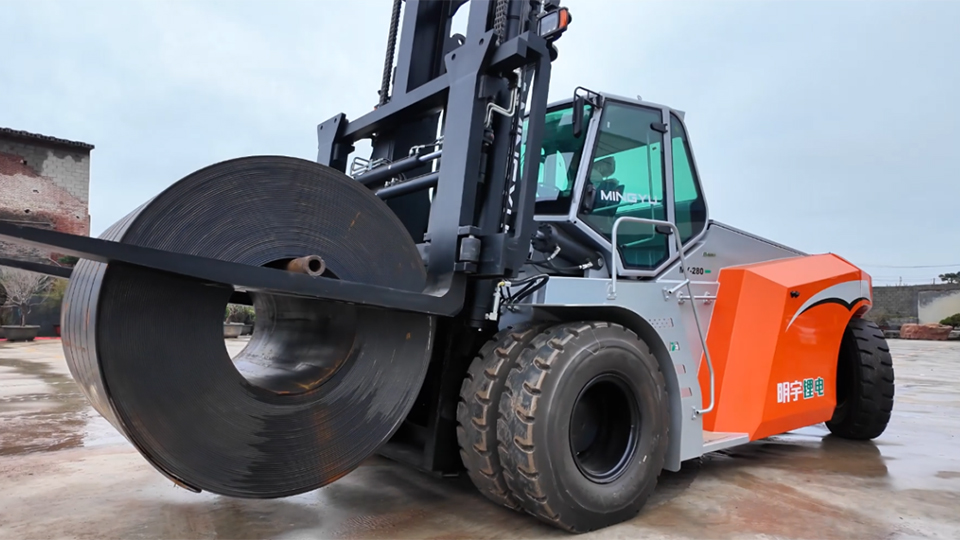
For example, a standard 3-ton diesel forklift operating under moderate conditions typically consumes approximately 3.2 liters per hour. Over an 8-hour shift with 6 productive hours, this translates to roughly 19 liters per shift. At a diesel price of $1.20 per liter, the daily fuel cost for this unit would be approximately $30.72, or $675.84 monthly (assuming 22 working days).
Theoretical Calculation Methodology
For engineering estimation, fuel consumption can be derived from engine specifications using the following formula:
Hourly Consumption (liters) = HP × Specific Fuel Consumption (lb/HP/hr) × 0.173
Where:
HP = Engine horsepower
Specific Fuel Consumption = Typically 0.3–0.4 lb/HP/hr for diesel engines
0.173 = Conversion factor from pounds of diesel to liters (1 liter ≈ 5.76 lbs)
Applying this to a 100 HP diesel forklift: 100 × 0.35 × 0.173 = 6.055 liters per hour under ideal steady-state conditions. This theoretical baseline serves as a starting point, though real-world consumption will diverge based on operational factors.
LPG (Liquid Propane Gas) Forklift Consumption
LPG forklifts occupy a critical middle ground, offering cleaner combustion than diesel with the quick refueling capability that electric systems lack. Their fuel consumption is typically measured in kilograms or gallons of propane per hour.
Consumption Benchmarks
LPG consumption varies significantly by forklift size and operational intensity:
1.5–2.5 ton forklifts: 1.5–2.5 kg per hour (approximately 0.7–1.0 gallons/h)
3–5 ton forklifts: 2.0–4.0 kg per hour, with standard 3-ton models consuming roughly 3.5–5.5 liters equivalent per hour
Heavy-duty industrial forklifts: 4.0–6.0+ kg per hour
An 8-gallon (33 lb) propane tank typically lasts 6–8 hours under normal operating conditions for a standard 5,000 lb capacity forklift. This means an average consumption rate of approximately 1.0–1.5 gallons (4–6 lbs) per hour.
LPG forklifts maintain consistent power output until the tank depletes, a significant operational advantage over electric alternatives that experience voltage sag as batteries discharge. However, LPG generally exhibits higher per-hour fuel costs than diesel in regions where diesel pricing is favorable, though this equation shifts based on local energy markets and emission regulation compliance costs.
Electric Forklift Energy Consumption
Electric forklifts, powered by lead-acid or lithium-ion batteries, represent a fundamentally different energy paradigm. Rather than liquid fuel, their consumption is measured in kilowatt-hours (kWh) per hour of operation or per charging cycle.
Energy Efficiency Characteristics
Electric forklifts offer the lowest "fuel" cost per hour and zero localized emissions, making them ideal for indoor environments with ventilation constraints. However, their energy metrics are less intuitive:
Lead-acid battery forklifts: Typically consume 3–6 kWh per hour of intensive operation, depending on load and travel distance
Lithium-ion forklifts: Generally 15–20% more energy-efficient than lead-acid equivalents due to lower internal resistance and better discharge characteristics
Energy cost comparison: At an electricity rate of $0.12/kWh, a 4 kWh/hour electric forklift costs $0.48 per hour to operate—substantially less than diesel or LPG alternatives
The critical limitation is not hourly consumption but energy storage capacity and recharge time. A lead-acid battery may require 8 hours of charging plus an 8-hour cooling period, effectively removing the forklift from service for extended periods. Lithium-ion technology reduces this window to 1–2 hours for opportunity charging, but the upfront capital cost for batteries and charging infrastructure remains significantly higher.
Critical Factors Influencing Hourly Fuel Consumption
Regardless of fuel type, multiple interacting variables determine actual hourly consumption. Treating fuel efficiency as a fixed specification rather than a managed variable leads to substantial cost overruns.
1. Load Weight and Lifting Dynamics
Load size and weight represent the most significant determinants of fuel consumption. A forklift lifting its maximum rated capacity requires substantially more engine power and hydraulic flow than one handling partial loads. Continuous operation at 80–100% of rated capacity can increase fuel consumption by 25–40% compared to light-duty cycling. Lifting height and frequency compound this effect—high-bay operations with frequent full-height lifts demand greater hydraulic energy expenditure.
2. Operating Environment and Terrain
Surface conditions dramatically affect consumption. Smooth, level concrete allows optimal efficiency, while rough terrain, loose gravel, or soft ground increases rolling resistance and requires additional traction power. Steep inclines further amplify demand. Extreme ambient temperatures also impact efficiency: cold starts increase fuel consumption due to higher fuel density and vaporization energy requirements, while hot conditions necessitate additional engine cooling energy.
3. Idle Time and Operational Discipline
Idle time is one of the most underestimated contributors to hourly fuel consumption. A diesel forklift at idle consumes 0.5–1.5 liters per hour depending on engine displacement—fuel burned with zero productive output. In poorly managed operations where a forklift idles for 2 hours within an 8-hour shift, idle consumption adds 2 liters to the shift total, representing a 10–15% increase over productive-only consumption. Modern forklifts increasingly incorporate auto-idle shutdown systems that stop the engine after 3–5 minutes of idling, reducing per-shift consumption by 8–15%.
4. Hydraulic System Efficiency
The architecture of the hydraulic system significantly influences fuel draw. Older forklifts with fixed-flow hydraulic pumps operate at full capacity continuously, wasting energy during light maneuvers. Modern load-sensing hydraulic systems deliver only the precise flow and pressure required for each operation, reducing unnecessary energy expenditure. Attachment usage—such as clamps, rotators, or specialized buckets—draws additional hydraulic power and increases fuel consumption proportionally.
5. Maintenance Condition
A poorly maintained forklift can consume 15–25% more fuel than a well-maintained equivalent. Critical maintenance factors include:
Air filters: Clogged filters restrict airflow, forcing richer fuel mixtures
Tire pressure: Underinflated tires increase rolling resistance; a 20% pressure deficit can increase consumption by 3–5%
Fuel system integrity: Contaminated fuel filters and improper injection timing reduce combustion efficiency
Engine tuning: Proper valve timing, compression ratios, and electronic control mappings ensure optimal fuel conversion
6. Operator Behavior
Human factors profoundly influence consumption rates. Aggressive acceleration, abrupt braking, excessive travel speed, and unnecessary lifting height all increase fuel burn. Conversely, trained operators who practice smooth acceleration, minimize travel distances, optimize load positioning, and shut down during breaks can achieve 10–20% reduction in per-shift consumption compared to untrained counterparts.
Comparative Analysis: Total Cost of Ownership
When evaluating fuel consumption, the metric must be contextualized within total cost of ownership (TCO). Diesel forklifts exhibit higher hourly fuel costs but lower initial capital expenditure and longer runtime between refueling. LPG offers operational flexibility with quick cylinder changes, making it advantageous for 24/7 operations. Electric forklifts demonstrate the lowest energy cost per hour but require substantial upfront investment in batteries and charging infrastructure, along with operational downtime for charging.
The optimal choice depends on duty cycle intensity, shift patterns, local energy pricing, emission regulations, and facility infrastructure. A facility with high indoor ventilation requirements and short shift durations may favor electric systems despite higher capital costs, while an outdoor lumber yard with 16-hour shifts may find diesel economics unbeatable.
Measurement and Monitoring Strategies
Accurate fuel consumption management requires systematic measurement rather than reliance on manufacturer specifications. The fundamental calculation remains:
Fuel Consumption Rate = Total Fuel Consumed (liters or kg) ÷ Total Operating Hours
For enhanced accuracy, organizations should:
Track consumption over representative periods (weeks or months) rather than single shifts
Distinguish between clock hours and productive operating hours
Implement telematics systems to monitor real-time consumption, idle time, and operator behavior
Apply operating condition coefficients (typically 1.0 for standard conditions, 1.2 for severe duty) to baseline specifications
Optimization Strategies for Fleet Managers
Reducing hourly fuel consumption requires a multi-faceted approach:
Right-Sizing Equipment: Using a 5-ton forklift for 1.5-ton tasks results in substantial fuel waste. Matching rated capacity to actual load requirements ensures the engine operates in its optimal efficiency band.
Preventive Maintenance Programs: Scheduled maintenance of air filters, fuel systems, tires, and hydraulic components preserves designed efficiency levels.
Operator Training: Comprehensive training on fuel-efficient driving techniques—including route planning, smooth acceleration, and idle reduction—delivers measurable consumption reductions.
Facility Design: Optimized warehouse layouts that minimize travel distances, reduce lifting heights, and eliminate congestion directly reduce the mechanical work required per cycle.
Technology Adoption: Auto-idle shutdown systems, load-sensing hydraulics, and telematics-driven performance monitoring transform fuel consumption from an unmanaged variable into a controlled KPI.
Conclusion
The fuel consumption rate of a forklift per hour is not a static specification but a dynamic output of engineering design, operational context, and management discipline. Diesel forklifts typically range from 2.5 liters per hour for compact models to 15+ liters per hour for heavy-duty industrial machines. LPG systems generally consume 1.5–4.0 kg per hour depending on capacity, while electric forklifts operate at 3–6 kWh per hour with substantially lower energy costs.
The critical insight for fleet managers is that these baseline figures represent starting points, not destinies. Through right-sized equipment selection, rigorous maintenance, operator training, and technology deployment, organizations can shift their consumption toward the lower bounds of each range—achieving reductions of 15–25% that translate directly to bottom-line savings and reduced environmental impact. In material handling operations where fuel represents a significant portion of operating expenditure, treating hourly consumption as a controlled performance metric rather than an accepted cost is the hallmark of operational excellence.
Name: selena
Mobile:+86-13176910558
Tel:+86-0535-2090977
Whatsapp:8613181602336
Email:vip@mingyuforklift.com
Add:Xiaqiu Town, Laizhou, Yantai City, Shandong Province, China
