
vip@mingyuforklift.com
+86-0535-2090977

The CPC20 diesel forklift can serve suitable outdoor and ventilated industrial routes, but compact dimensions do not remove pedestrian risk. This 2026 guide explains how separation, visibility engineering and validated detection aids can work together around a two-ton class truck.
Busy yards now combine forklifts, delivery drivers, contractors and automated equipment. Camera, radar and proximity systems can improve awareness, but the strongest CPC20 safety plan begins with route separation, controlled crossings, suitable speed and trained behavior rather than relying on one electronic device.
For every CPC20 traffic plan, ZGFORKLIFT and MYZG recommend using the equipment manual, applicable law, site risk assessment and qualified personnel. Detection is an operator-assistance layer only; pedestrians must remain separated and the operator must maintain observation and control.
Walk the site by shift and observe doors, blind corners, loading bays, parking, break routes and temporary work. Record where pedestrians enter a CPC20 path, where loads block sight lines and where the rear swing can approach a walkway. Use the map to remove conflicts before specifying technology.
For every CPC20 traffic plan, ZGFORKLIFT and MYZG recommend using the equipment manual, applicable law, site risk assessment and qualified personnel. Detection is an operator-assistance layer only; pedestrians must remain separated and the operator must maintain observation and control.
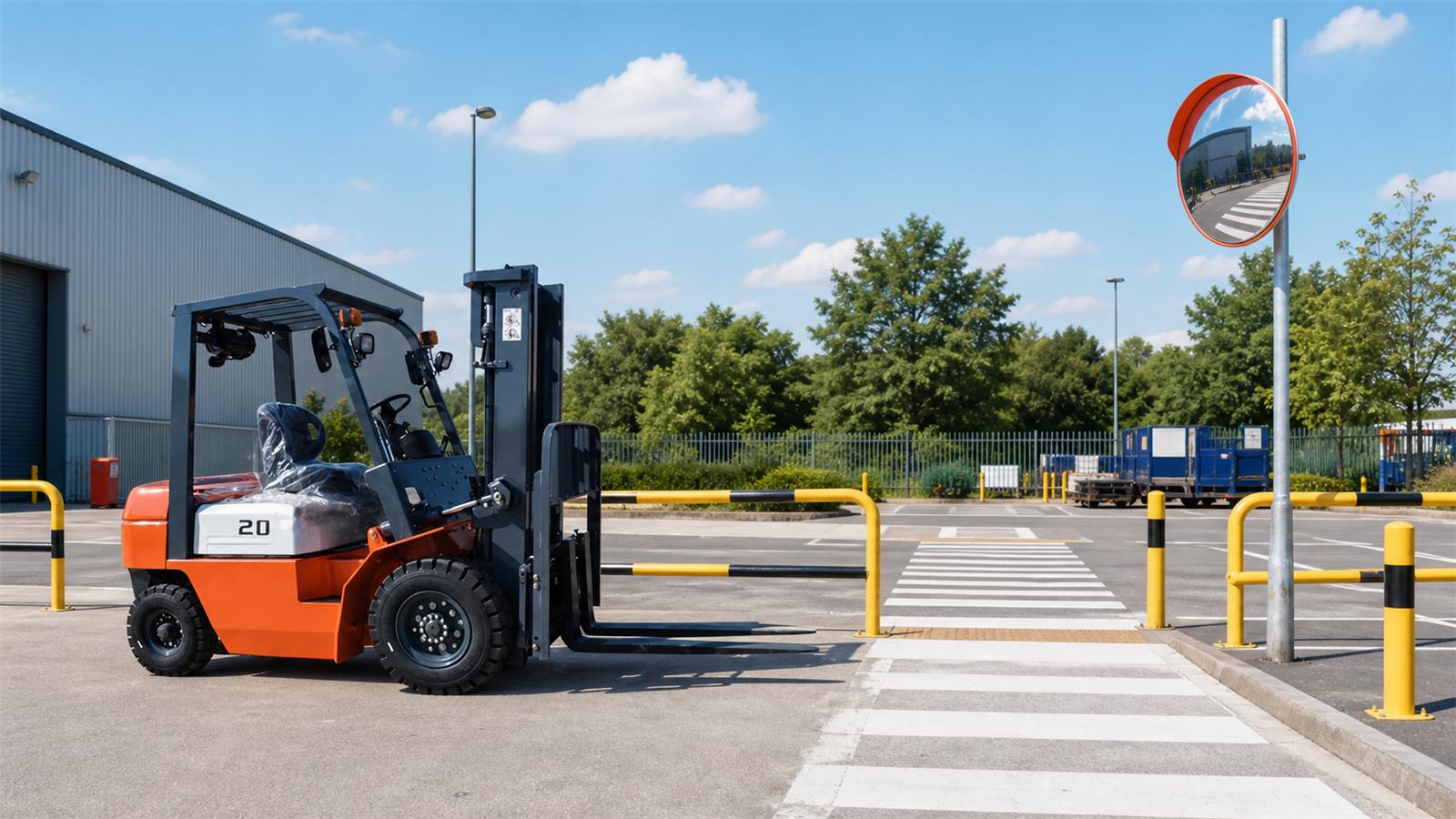
Eliminate unnecessary shared routes, then use fixed barriers, dedicated walkways, gates, protected waiting areas and controlled crossings. Administrative rules, signs and alarms support these controls. Detection technology is an additional layer and should not be treated as a substitute for physical separation.
For every CPC20 traffic plan, ZGFORKLIFT and MYZG recommend using the equipment manual, applicable law, site risk assessment and qualified personnel. Detection is an operator-assistance layer only; pedestrians must remain separated and the operator must maintain observation and control.
Related product: CPC20 Diesel Forklift - view specifications and request application support.
Keep stacked goods, parked vehicles and waste containers away from approaches. Provide enough stopping distance, lighting and mirrors where appropriate. Mark pedestrian and truck routes clearly, but verify that markings remain visible in rain, dust, glare and night operation.
For every CPC20 traffic plan, ZGFORKLIFT and MYZG recommend using the equipment manual, applicable law, site risk assessment and qualified personnel. Detection is an operator-assistance layer only; pedestrians must remain separated and the operator must maintain observation and control.
A pedestrian-detection camera may classify people and issue an alert, but performance depends on mounting, field of view, lighting, dirt, clothing, posture and occlusion. Review the supplier specification, latency, environmental rating and failure indication before installation on a CPC20.
For every CPC20 traffic plan, ZGFORKLIFT and MYZG recommend using the equipment manual, applicable law, site risk assessment and qualified personnel. Detection is an operator-assistance layer only; pedestrians must remain separated and the operator must maintain observation and control.
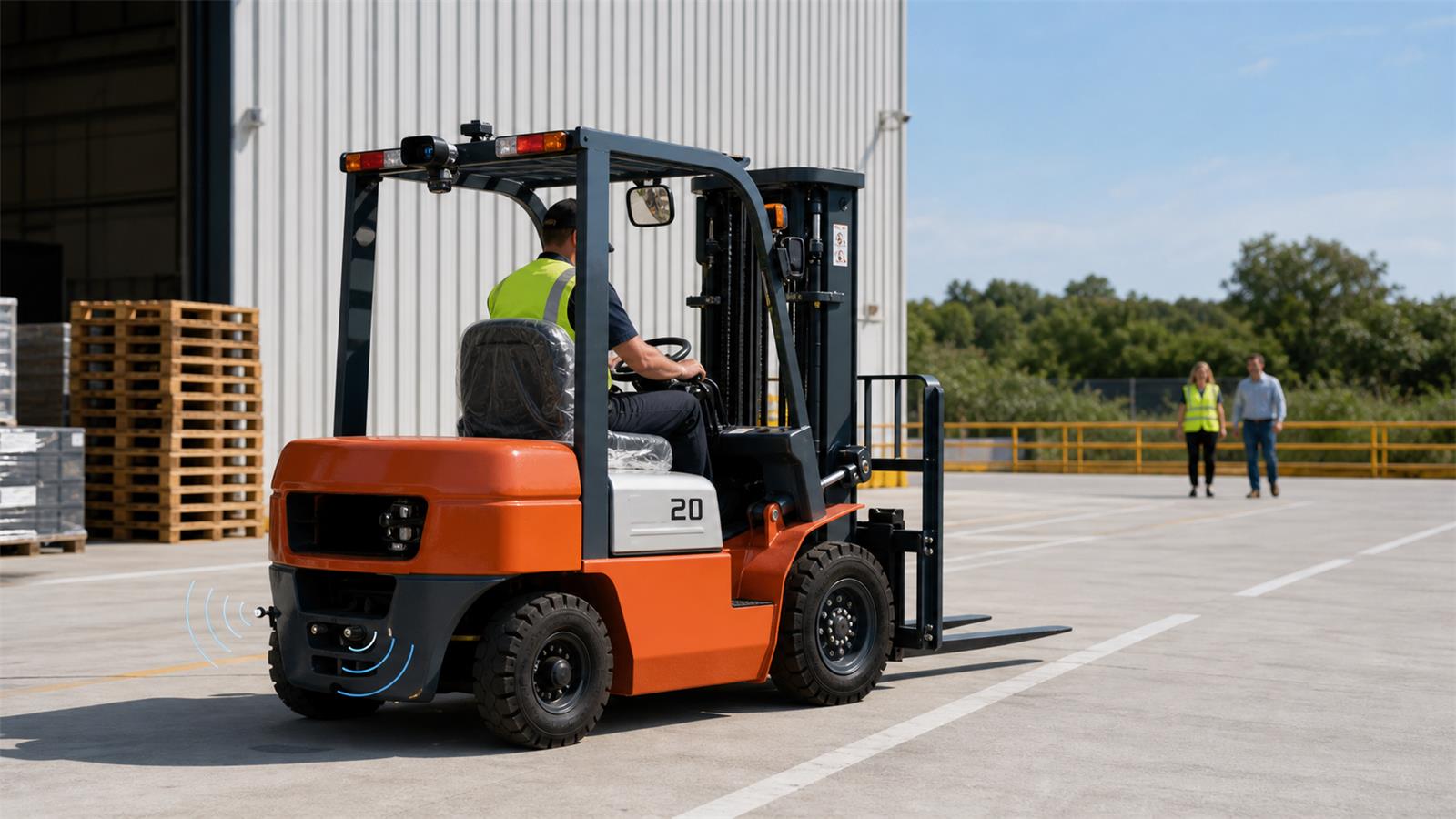
Radar may perform well in dust or poor light, while LiDAR can provide accurate ranging and tags can support identified-worker alerts. Each technology has blind areas and nuisance-alert risks. Select by documented hazard, environment and response requirement, not by marketing labels.
For every CPC20 traffic plan, ZGFORKLIFT and MYZG recommend using the equipment manual, applicable law, site risk assessment and qualified personnel. Detection is an operator-assistance layer only; pedestrians must remain separated and the operator must maintain observation and control.
Set warning distances using speed, stopping distance, approach angle, load, surface and reaction time. Separate information zones from urgent alert zones where supported. Avoid a configuration that alarms continuously, because frequent irrelevant warnings can reduce operator attention.
For every CPC20 traffic plan, ZGFORKLIFT and MYZG recommend using the equipment manual, applicable law, site risk assessment and qualified personnel. Detection is an operator-assistance layer only; pedestrians must remain separated and the operator must maintain observation and control.
Related product: CPC25 Diesel Forklift - view specifications and request application support.
Assistance systems do not grant right of way and do not replace looking in the direction of travel. Operators must slow, stop, sound the horn where required and proceed only with a clear route. Automatic intervention must be engineered and validated to avoid abrupt instability.
For every CPC20 traffic plan, ZGFORKLIFT and MYZG recommend using the equipment manual, applicable law, site risk assessment and qualified personnel. Detection is an operator-assistance layer only; pedestrians must remain separated and the operator must maintain observation and control.
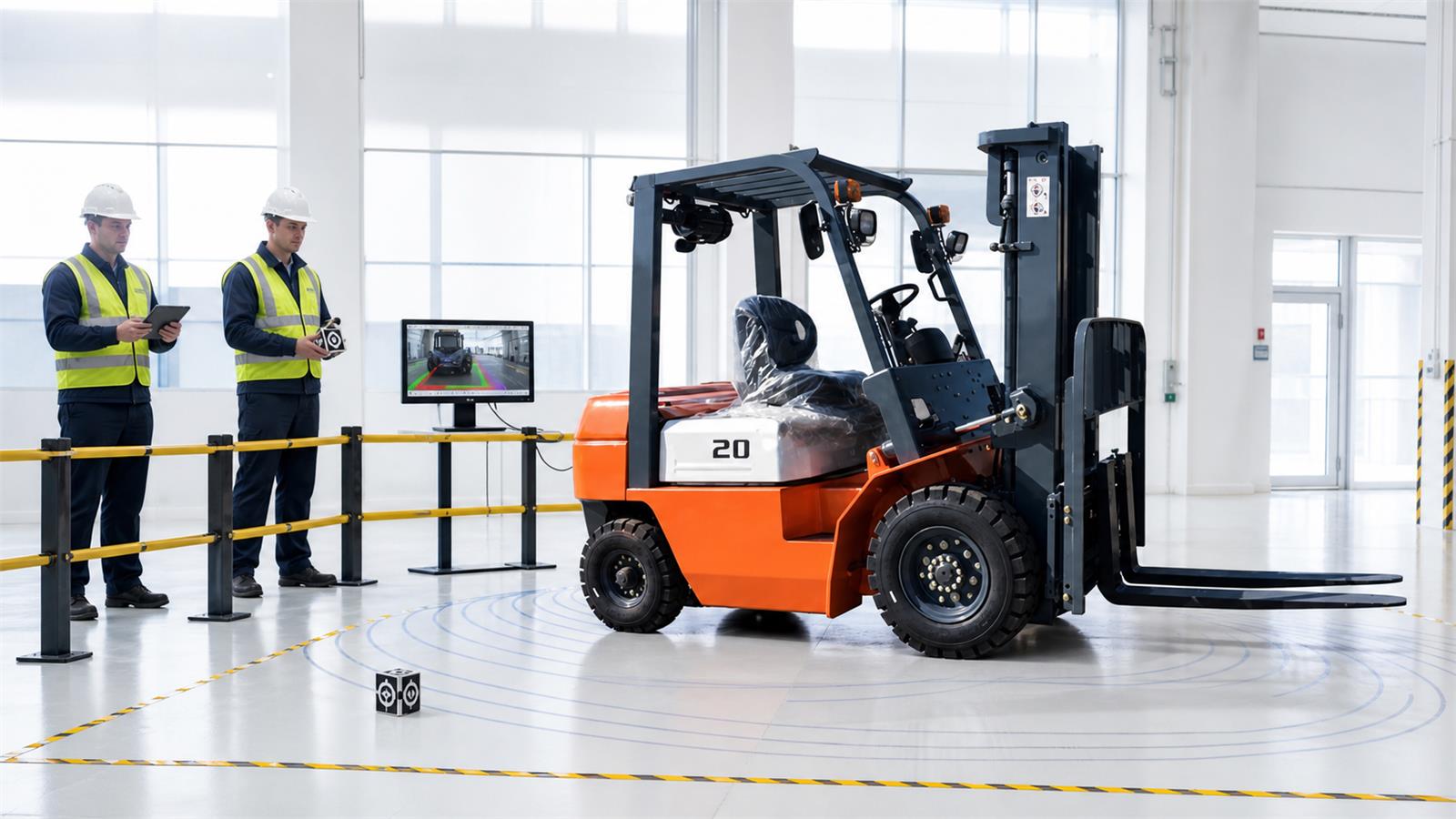
Test an installed system in a controlled area with representative lighting, clothing, weather, vehicle direction, load geometry and approach speeds. Include partial occlusion and boundary approaches without placing people at risk. Document detection points, alerts, latency and any missed or nuisance events.
For every CPC20 traffic plan, ZGFORKLIFT and MYZG recommend using the equipment manual, applicable law, site risk assessment and qualified personnel. Detection is an operator-assistance layer only; pedestrians must remain separated and the operator must maintain observation and control.
Where reversing cannot be eliminated, provide adequate visibility, controlled areas and a trained spotter when required by the risk assessment. Pedestrians must remain outside the operating envelope. A rear camera or sensor is an aid and never permission to move without a clear path.
For every CPC20 traffic plan, ZGFORKLIFT and MYZG recommend using the equipment manual, applicable law, site risk assessment and qualified personnel. Detection is an operator-assistance layer only; pedestrians must remain separated and the operator must maintain observation and control.
Include lenses, sensors, brackets, cables, displays, alarms, mirrors, lights and cleanliness in the approved pre-use check. A fault or blocked view must trigger the site response. Never defeat or reposition a device without authorization and a recorded verification test.
For every CPC20 traffic plan, ZGFORKLIFT and MYZG recommend using the equipment manual, applicable law, site risk assessment and qualified personnel. Detection is an operator-assistance layer only; pedestrians must remain separated and the operator must maintain observation and control.
Related product: CPC40 Diesel Forklift - view specifications and request application support.
Review alert location, time, direction and recurring conditions. A cluster may reveal a poorly located doorway, shortcut, staging problem or unrealistic schedule. Correct the process and environment instead of using alerts only to assign blame to operators or pedestrians.
For every CPC20 traffic plan, ZGFORKLIFT and MYZG recommend using the equipment manual, applicable law, site risk assessment and qualified personnel. Detection is an operator-assistance layer only; pedestrians must remain separated and the operator must maintain observation and control.
Revalidate after camera replacement, mast or attachment changes, software updates, layout changes or new traffic patterns. Limit configuration access and keep an audit trail. Define safe degraded behavior when a sensor, display, network or positioning source is unavailable.
For every CPC20 traffic plan, ZGFORKLIFT and MYZG recommend using the equipment manual, applicable law, site risk assessment and qualified personnel. Detection is an operator-assistance layer only; pedestrians must remain separated and the operator must maintain observation and control.
Separate, control, detect, verify, train and improve. Shandong Zhuogong Machinery equipment Co.,Ltd supports ZGFORKLIFT and MYZG users in matching CPC20 applications, while each owner remains responsible for risk assessment, route engineering, operator authorization, maintenance and local compliance.
For every CPC20 traffic plan, ZGFORKLIFT and MYZG recommend using the equipment manual, applicable law, site risk assessment and qualified personnel. Detection is an operator-assistance layer only; pedestrians must remain separated and the operator must maintain observation and control.
Shandong Zhuogong Machinery equipment Co.,Ltd
Website: https://www.vavforklift.com/
Email: vip@mingyuforklift.com
Tel: +86-0535-2090977
WhatsApp: +86 131 8160 2336
Address: Xiaqiu Town, Laizhou, Yantai City, Shandong Province, China.
Name: selena
Mobile:+86-13176910558
Tel:+86-0535-2090977
Whatsapp:8613181602336
Email:vip@mingyuforklift.com
Add:Xiaqiu Town, Laizhou, Yantai City, Shandong Province, China