
vip@mingyuforklift.com
+86-0535-2090977

The CPCY50/CPY50 LPG forklift can serve heavy mixed indoor-outdoor routes, where risk changes from open yards to doors, ramps and pedestrian zones. This 2026 guide connects geofenced speed control with surface mapping, stable deceleration and verified procedures.
A single fleet-wide speed limit cannot reflect the difference between an open travel lane, blind doorway, dock approach, ramp and pedestrian crossing. Geofenced controls can apply location-specific limits, but safe CPCY50 operation still depends on route engineering, training and verified system behavior.
For every CPCY50 route, ZGFORKLIFT and MYZG recommend following the equipment manual, site risk assessment, ramp instructions and applicable law. Geofencing is an assistive control: operators must still observe conditions, maintain control and stop whenever the route is unsafe.
Survey gradients, surface transitions, drainage, visibility, pedestrian routes, doorways, intersections, loading activity and wireless coverage. Observe real traffic by shift and weather. A virtual zone should reflect a documented hazard and safe operating response, not an arbitrary shape on a map.
For every CPCY50 route, ZGFORKLIFT and MYZG recommend following the equipment manual, site risk assessment, ramp instructions and applicable law. Geofencing is an assistive control: operators must still observe conditions, maintain control and stop whenever the route is unsafe.
Outdoor yards may use satellite positioning while indoor areas may require beacons, UWB, Wi-Fi or other methods. Accuracy, latency, signal loss and boundary overlap matter. Test worst-case approach direction and speed before allowing the system to influence truck behavior.
For every CPCY50 route, ZGFORKLIFT and MYZG recommend following the equipment manual, site risk assessment, ramp instructions and applicable law. Geofencing is an assistive control: operators must still observe conditions, maintain control and stop whenever the route is unsafe.
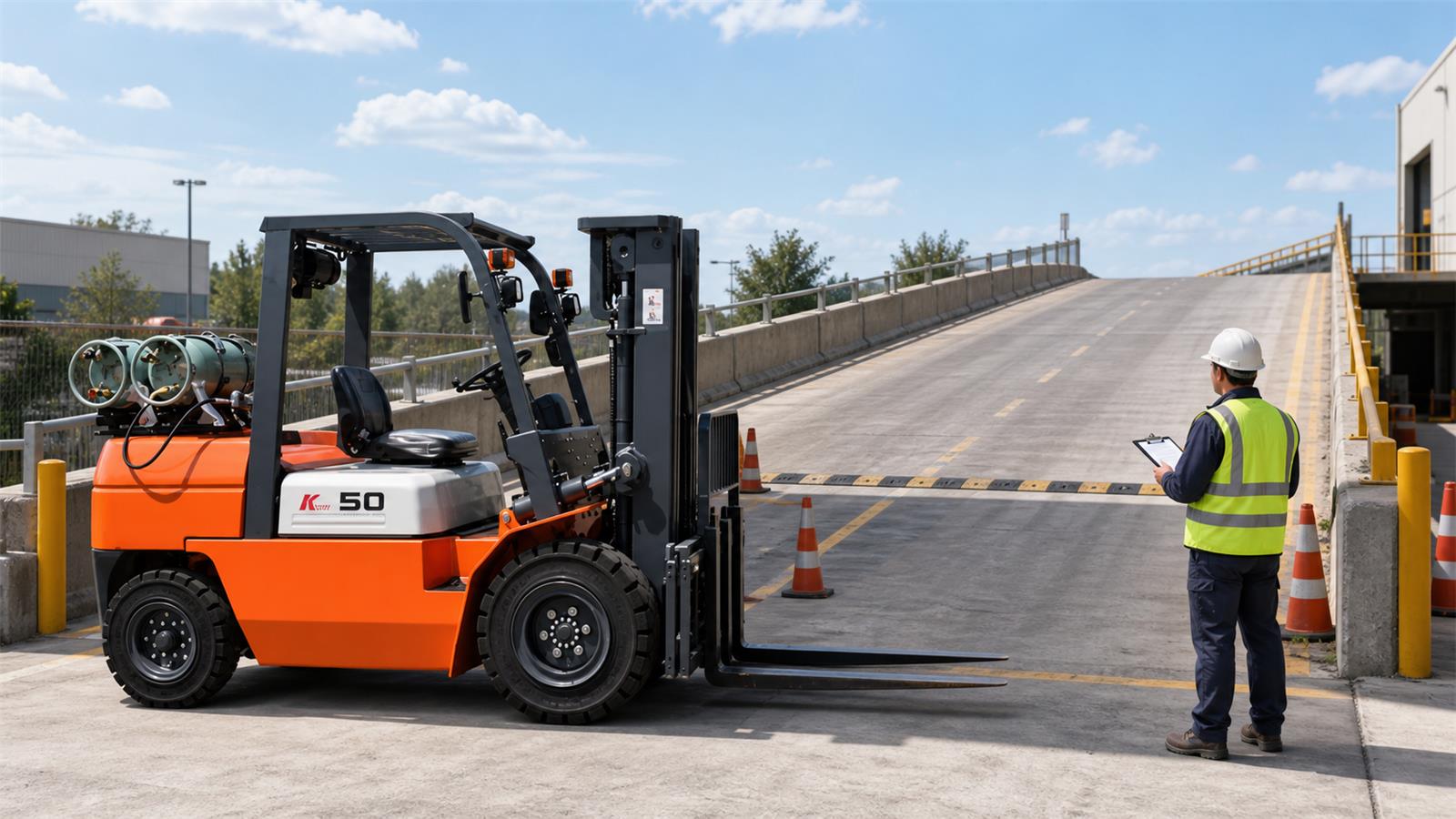
Related product: CPY50 LPG Forklift - view specifications and request application support.
Define speed by truck mass, load, stopping distance, surface, visibility and mixed traffic. The safest value must comply with site rules, equipment instructions and applicable law. Geofencing should not encourage higher speed outside controlled zones or substitute for operator judgment.
For every CPCY50 route, ZGFORKLIFT and MYZG recommend following the equipment manual, site risk assessment, ramp instructions and applicable law. Geofencing is an assistive control: operators must still observe conditions, maintain control and stop whenever the route is unsafe.
A late abrupt speed reduction can destabilize a heavy load. Provide enough distance for smooth deceleration, clear visual cues and predictable behavior. Test loaded and unloaded CPCY50 approaches under controlled conditions, including direction changes near the boundary.
For every CPCY50 route, ZGFORKLIFT and MYZG recommend following the equipment manual, site risk assessment, ramp instructions and applicable law. Geofencing is an assistive control: operators must still observe conditions, maintain control and stop whenever the route is unsafe.
Confirm ramp capacity, gradient, width, edge protection, traction, drainage and transitions. Follow the manufacturer and site rules for load orientation, travel direction and stopping. Avoid turning on a grade and keep loads stable and low while moving slowly and smoothly.
For every CPCY50 route, ZGFORKLIFT and MYZG recommend following the equipment manual, site risk assessment, ramp instructions and applicable law. Geofencing is an assistive control: operators must still observe conditions, maintain control and stop whenever the route is unsafe.
Concrete, asphalt, steel, gravel patches, water, ice and debris change grip and vibration. Inspect routes before operation and close unsafe areas. A speed cap cannot make a damaged, contaminated or inadequately designed surface suitable for a heavy counterbalanced forklift.
For every CPCY50 route, ZGFORKLIFT and MYZG recommend following the equipment manual, site risk assessment, ramp instructions and applicable law. Geofencing is an assistive control: operators must still observe conditions, maintain control and stop whenever the route is unsafe.
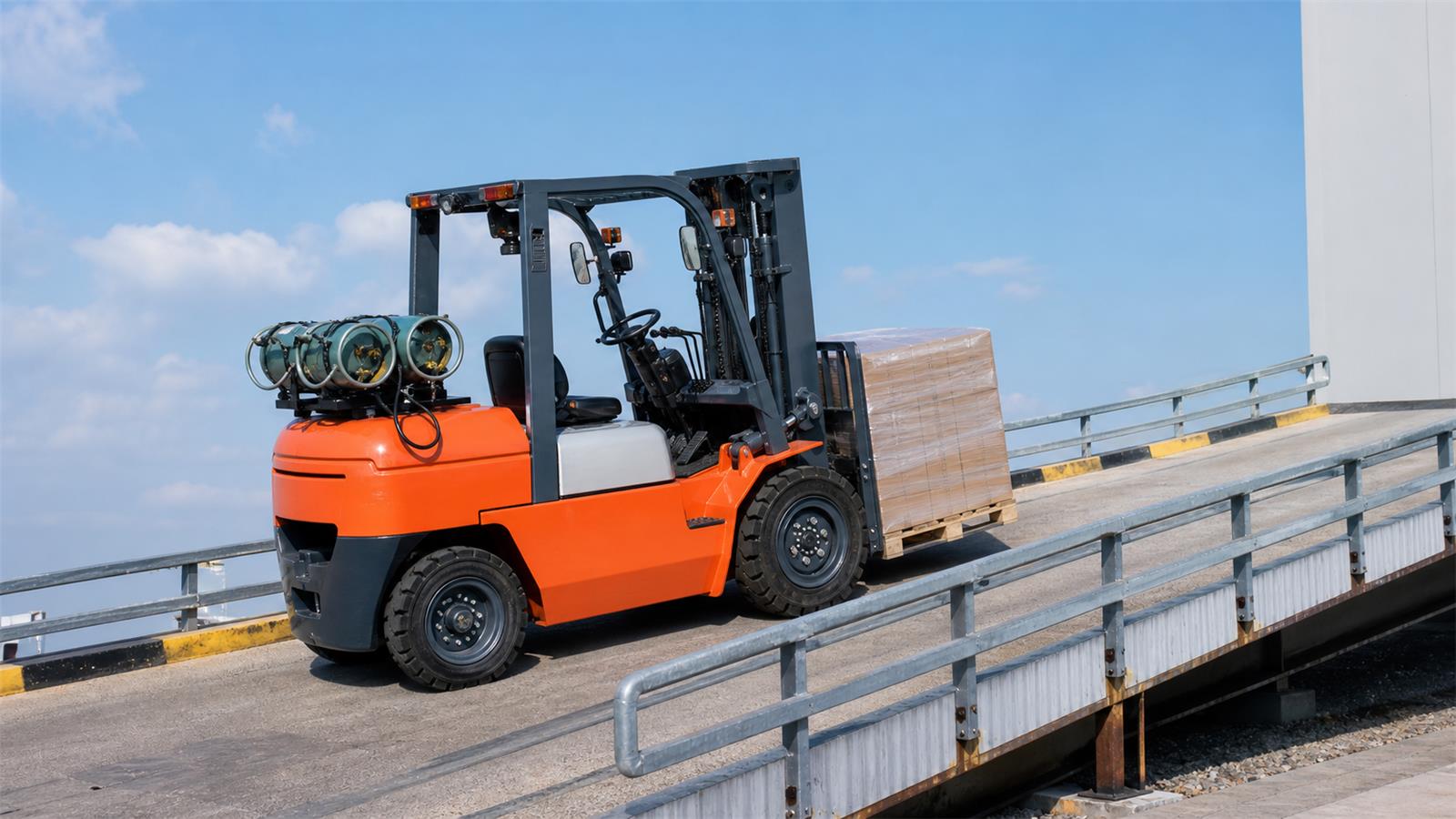
Related product: CPY40 LPG Forklift - view specifications and request application support.
Document what happens when position is lost, sensors disagree, communications fail or a map is unavailable. The system should provide a clear indication and conservative response without creating sudden instability. Overrides require authorization, time limits, logging and a defined safe use case.
For every CPCY50 route, ZGFORKLIFT and MYZG recommend following the equipment manual, site risk assessment, ramp instructions and applicable law. Geofencing is an assistive control: operators must still observe conditions, maintain control and stop whenever the route is unsafe.
Combine speed zones with physical separation, barriers, crossing rules, warning devices and right-of-way procedures. Wearables or proximity detection may add information, but people should never depend solely on an invisible boundary to protect them from a moving CPCY50.
For every CPCY50 route, ZGFORKLIFT and MYZG recommend following the equipment manual, site risk assessment, ramp instructions and applicable law. Geofencing is an assistive control: operators must still observe conditions, maintain control and stop whenever the route is unsafe.
Re-test zones after layout, racking, doors, ramps, software, vehicle parameters or positioning hardware change. Use a controlled protocol, document actual activation points and confirm smooth recovery when leaving the zone. Prevent unauthorized map edits through access control.
For every CPCY50 route, ZGFORKLIFT and MYZG recommend following the equipment manual, site risk assessment, ramp instructions and applicable law. Geofencing is an assistive control: operators must still observe conditions, maintain control and stop whenever the route is unsafe.
Review entries, overspeed warnings, hard braking, impacts and near misses by location and shift. Investigate why events cluster and correct route design, scheduling, visibility or training. Do not use isolated telemetry records as automatic proof of operator fault.
For every CPCY50 route, ZGFORKLIFT and MYZG recommend following the equipment manual, site risk assessment, ramp instructions and applicable law. Geofencing is an assistive control: operators must still observe conditions, maintain control and stop whenever the route is unsafe.
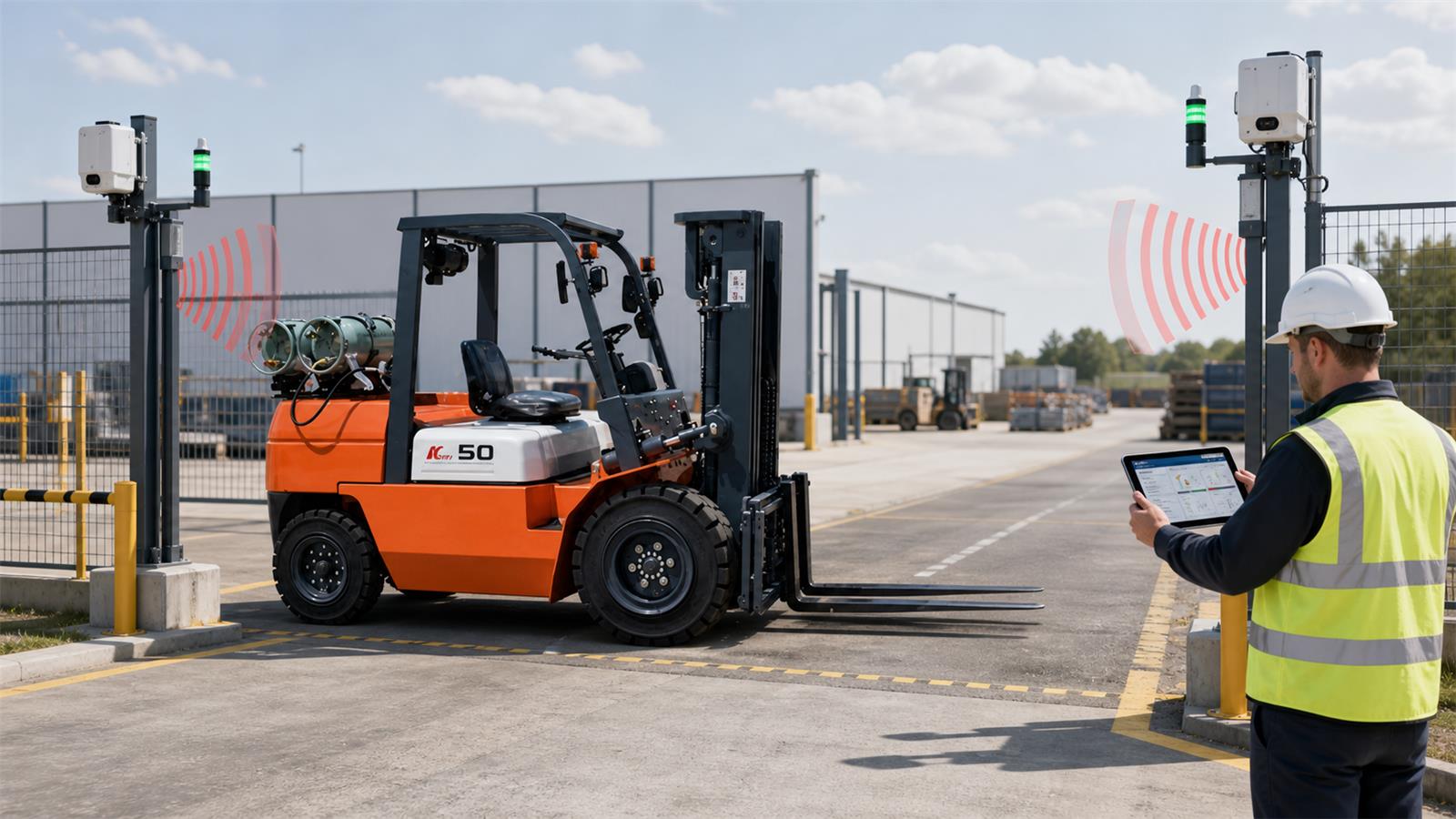
Related product: CPY30 LPG Forklift - view specifications and request application support.
Operators need to know zone locations, expected truck response, fault indications, ramp procedures and emergency actions. They remain responsible for observation and safe control. Supervisors and technicians need separate training for configuration, testing and change management.
For every CPCY50 route, ZGFORKLIFT and MYZG recommend following the equipment manual, site risk assessment, ramp instructions and applicable law. Geofencing is an assistive control: operators must still observe conditions, maintain control and stop whenever the route is unsafe.
Assess, map, configure, test, train, monitor and revise. Shandong Zhuogong Machinery equipment Co.,Ltd supports ZGFORKLIFT and MYZG users in matching CPY50 applications, while owners remain responsible for route design, safety systems, authorization and legal compliance.
For every CPCY50 route, ZGFORKLIFT and MYZG recommend following the equipment manual, site risk assessment, ramp instructions and applicable law. Geofencing is an assistive control: operators must still observe conditions, maintain control and stop whenever the route is unsafe.
Shandong Zhuogong Machinery equipment Co.,Ltd
Website: https://www.vavforklift.com/
Email: vip@mingyuforklift.com
Tel: +86-0535-2090977
WhatsApp: +86 131 8160 2336
Address: Xiaqiu Town, Laizhou, Yantai City, Shandong Province, China.
Name: selena
Mobile:+86-13176910558
Tel:+86-0535-2090977
Whatsapp:8613181602336
Email:vip@mingyuforklift.com
Add:Xiaqiu Town, Laizhou, Yantai City, Shandong Province, China