
vip@mingyuforklift.com
+86-0535-2090977

The short answer is yes. In almost every regulated industrial environment worldwide—most notably under OSHA in the United States—operating a forklift without valid certification is illegal.
However, "certification" in the world of Material Handling Equipment (MHE) isn't a one-and-done driver’s license. It is a rigorous, site-specific, and equipment-specific process designed to mitigate one of the highest risks in the modern workplace.
1. The Legal Framework: OSHA Standard 29 CFR 1910.178
In the United States, the Occupational Safety and Health Administration (OSHA) governs the use of Powered Industrial Trucks (PITs). According to standard 1910.178(l), the employer is responsible for ensuring that every operator is competent to operate a forklift safely, as demonstrated by the successful completion of a training and evaluation program.
Key Legal Requirements:
Employer Mandated: You cannot simply buy a "forklift license" at a kiosk. Your employer must certify that you have been trained for the specific environment and machine you are using.
Age Requirement: In most jurisdictions, you must be at least 18 years old to operate a forklift.
Non-Transferability: If you move from Company A to Company B, your new employer must evaluate your skills and "recertify" you for their specific facility and equipment.
2. The Mechanics of Stability: Why Training Matters
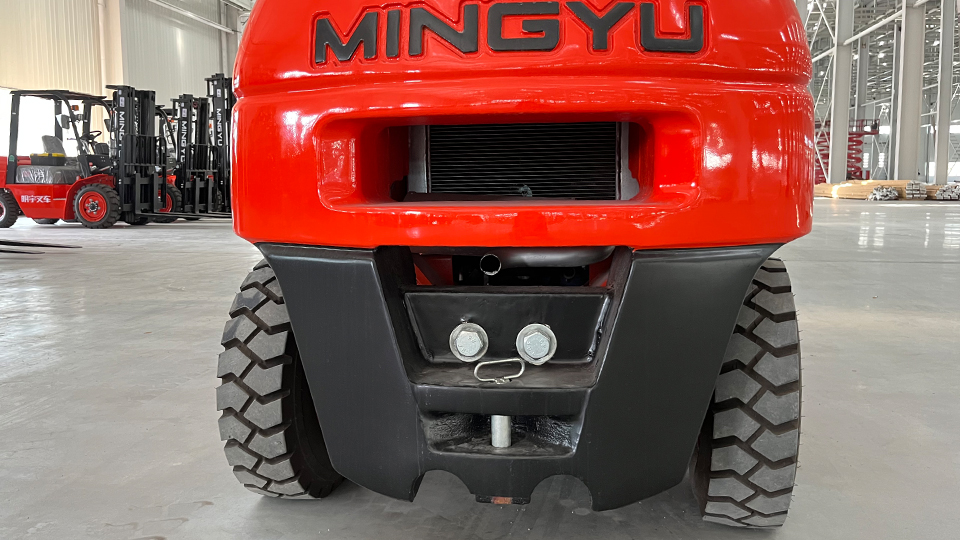
A forklift is not a car. While a car uses a four-point suspension and has a low center of gravity, a forklift operates on a three-point suspension system, often referred to as the Stability Triangle.
The Physics of the Load
To understand why certification is technical, one must understand the math of the "Moment." A forklift acts as a longitudinal lever. The front wheels act as a fulcrum.
$$M = F \times d$$
Where:
$M$ is the Moment (the tendency of the load to rotate the vehicle).
$F$ is the weight of the load.
$d$ is the distance from the fulcrum (the front axle).
If the combined center of gravity of the truck and the load moves outside the boundaries of the stability triangle (due to speed, uneven terrain, or an overloaded mast), the forklift will tip. Certification ensures an operator understands these variables instinctively.
3. The Three Pillars of Certification
A valid forklift certification consists of three distinct phases. If you skip one, you are not legally certified.
Phase 1: Formal Instruction
This is the "classroom" portion. It can be delivered via lectures, interactive computer learning, or videos. Topics must include:
Differences between a car and a forklift.
Engine or motor operation.
Steering and maneuvering.
Vehicle capacity and stability.
Visibility and load manipulation.
Phase 2: Practical Training
This is hands-on time. Under the supervision of a qualified trainer, the trainee performs maneuvers without a load, then progresses to picking, stacking, and unstacking loads in a controlled environment.
Phase 3: Evaluation
The final step is a performance check. The trainer watches the operator perform their actual job duties in the actual workplace. If the operator demonstrates they can navigate the specific warehouse aisles and hazards of that facility, the employer signs the certificate.
4. Different Classes, Different Certifications
"Forklift" is a broad term. Being certified on a standard counterbalance truck does not legally allow you to operate a reach truck or a telehandler. OSHA recognizes seven primary classes:
|
Class |
Description |
Common Use Case |
|
Class I |
Electric Motor Rider Trucks |
Indoor warehouses, food processing. |
|
Class II |
Electric Motor Narrow Aisle Trucks |
High-density storage (Reach trucks). |
|
Class III |
Electric Motor Hand Trucks |
Pallet jacks and "walkies." |
|
Class IV |
Internal Combustion (Cushion Tires) |
Smooth, dry indoor floors. |
|
Class V |
Internal Combustion (Pneumatic Tires) |
Rough outdoor terrain, lumber yards. |
|
Class VI |
Electric/IC Tractors |
Towing loads in airports or factories. |
|
Class VII |
Rough Terrain Forklift Trucks |
Construction sites and agriculture. |
5. When Does Certification Expire?
Certification is not "for life." In the U.S., OSHA requires a formal evaluation of every operator at least once every three years. However, refresher training is required immediately if:
The operator is observed operating the vehicle in an unsafe manner.
The operator is involved in an accident or "near-miss" incident.
The operator receives an evaluation that reveals unsafe operation.
The operator is assigned to drive a different type of truck.
Condition in the workplace changes (e.g., new racking system, narrower aisles).
6. The Consequences of Non-Compliance
Operating without certification isn't just a safety risk; it's a massive financial and legal liability.
Fines: OSHA fines for "serious" violations can exceed $15,000 per instance. "Willful" violations—where an employer knows an operator isn't certified but lets them drive anyway—can exceed $150,000.
Insurance: Most workers' compensation and general liability insurance policies have clauses that void coverage if the operator was uncertified at the time of an accident.
Criminal Liability: In cases of gross negligence resulting in death, supervisors and business owners can face manslaughter charges in certain jurisdictions.
7. How to Get Certified: The Path Forward
If you are an individual looking for work, or an employer looking to onboard staff, here is the standard workflow:
Find a Training Provider: You can use third-party safety consultants or online portals for the "Formal Instruction" phase.
On-Site Verification: Ensure the training includes a practical component on the specific equipment used at the job site.
Documentation: The employer must keep a record that includes the name of the operator, the date of training, the date of evaluation, and the identity of the person performing the training/evaluation.
Conclusion
Certification is more than a card in your wallet; it is a technical verification of a specialized skill set. Given that forklifts weigh thousands of pounds—often three times as much as a standard passenger car—the physics of their operation requires a level of respect that only formal training can provide.
Name: selena
Mobile:+86-13176910558
Tel:+86-0535-2090977
Whatsapp:8613181602336
Email:vip@mingyuforklift.com
Add:Xiaqiu Town, Laizhou, Yantai City, Shandong Province, China
