
vip@mingyuforklift.com
+86-0535-2090977

Forklift productivity is often measured in pallets moved per hour, yet the person operating the truck remains central to every safe and efficient shift. In 2026, forklift ergonomics and operator fatigue are receiving greater attention as warehouses face longer operating hours, tighter delivery schedules and a growing need to retain skilled drivers. A comfortable workstation cannot remove every risk, but good equipment selection, correct adjustment and sensible work planning can help operators maintain control and awareness throughout the day.
Shandong Zhuogong Machinery Equipment Co.,Ltd supplies material handling equipment through the ZGLOADER and MYZG brands. The company recommends evaluating operator comfort together with rated capacity, lift height, load center, aisle space, surface condition and duty cycle. Ergonomics should be treated as part of the operating system—not as a decorative feature or a substitute for training.
Forklift driving combines repeated head and shoulder movement, steering, pedal operation, vibration exposure and continuous attention to pedestrians, loads and rack clearances. Fatigue may develop gradually, especially during long shifts or repetitive travel cycles. An uncomfortable posture can encourage an operator to twist, lean or reposition frequently, while poor visibility can increase the mental effort required for every approach.
Fatigue does not have a single cause. Shift length, sleep, temperature, noise, floor condition, workload, hydration and equipment setup can all contribute. For that reason, a warehouse should avoid relying on one feature as a complete solution. The strongest approach combines suitable forklifts, traffic management, work-rest planning, inspection and operator feedback.
Before moving the truck, the operator should adjust the seat so the pedals can be used without stretching and the steering controls can be reached with relaxed shoulders. The restraint system must be used according to the operating instructions. Mirrors, if fitted, should support awareness but never replace a direct check of the travel path. Controls and warning devices should be tested during the pre-shift inspection.
Different operators may share the same forklift across shifts. A setting that is comfortable for one person may be unsuitable for another. A short adjustment routine helps each driver establish a stable posture before work begins. If a control is difficult to operate, a seat will not lock, or visibility is obstructed by damage, the issue should be reported rather than accepted as normal.
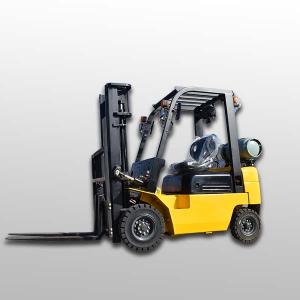
Operators regularly look toward fork tips, load edges, rack openings and nearby people. Clear sight lines can reduce unnecessary leaning and repeated repositioning. Mast configuration, load dimensions, overhead guards, hoses and attachments may all influence what the driver can see. The evaluation should therefore use the customer's real pallets and operating route.
When a load blocks the forward view, the operator must follow the site procedure and the forklift operating instructions, which may require traveling in reverse when safe to do so. Cameras or sensors can provide additional information where properly installed, but the driver remains responsible for observing the direction of travel. Pedestrian separation, lighting, mirrors and marked intersections are equally important.
Seat comfort alone cannot correct a damaged floor. Joints, potholes, debris and abrupt dock transitions can transmit repeated shocks to the truck and operator. Facilities should inspect travel routes and repair defects promptly. Speed should match the surface, load and visibility, and operators should never use excessive speed to compensate for a demanding schedule.
Tire selection affects stability, traction and ride characteristics. The correct tire depends on the environment and the manufacturer's approved configuration. Tire condition and pressure, where applicable, belong in routine inspection. Uneven wear, missing material or damage can change handling and increase vibration.
Frequently used controls should be identifiable and operable without excessive reach. Operators need training on the specific model because control direction and response can differ between trucks. Smooth use of steering, pedals and hydraulic functions reduces abrupt movement of both the driver and the load.
Repetition is especially important in high-throughput applications. A motion that seems minor may be performed hundreds of times during a shift. Managers can observe work cycles and ask operators where strain occurs. Changes to pallet placement, staging height, route design or task rotation may improve the job without modifying the forklift.
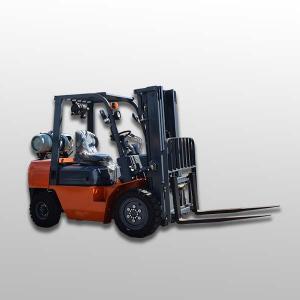
An ergonomic evaluation must not compromise safety or capacity. Buyers should provide the actual maximum load weight, load-center distance, required lift height, attachment details and aisle dimensions. A truck that is too small may be overloaded, while an unnecessarily large truck can restrict maneuverability and increase travel effort.
Customers can review the ZGLOADER and MYZG gasoline/LPG forklift range. Examples include the CPY15 gasoline/LPG forklift, CPY30 gasoline/LPG forklift and CPY40 gasoline/LPG forklift. Product suitability and available configuration should always be confirmed for the intended market and workplace.
Even a well-designed workstation cannot eliminate fatigue from excessive hours or insufficient recovery. Supervisors should plan breaks according to local requirements and the physical and mental demands of the work. Task rotation may reduce prolonged exposure to one posture, provided each worker is trained and authorized for the assigned task.
Production targets should allow safe travel, careful load engagement and complete pre-shift checks. If operators feel pressured to skip inspection or drive aggressively, the problem is organizational rather than ergonomic. Near-miss reports, discomfort reports and maintenance requests should be treated as useful information instead of inconvenience.
Hot, cold or noisy environments can increase fatigue and reduce concentration. Indoor combustion-engine use requires a ventilation and emissions assessment under applicable rules. Electric equipment may be preferable for some indoor environments, while gasoline/LPG or diesel trucks may suit other duties. The correct choice depends on local standards, ventilation, load and operating conditions.
Personal protective equipment must be compatible with safe truck operation. Clothing or gloves should not interfere with controls, and hearing protection must be selected so required alarms and communication remain effective. Site specialists should evaluate these factors under local occupational safety requirements.
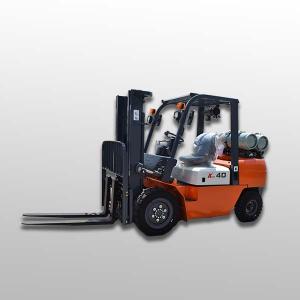
Operators need model-specific instruction, supervised practice and authorization as required by local rules. Training should include mounting and dismounting, adjustment, restraint use, visibility limits, load handling, parking and emergency procedures. A comfortable truck can still be used unsafely if an operator turns abruptly, travels with an elevated load or ignores pedestrian controls.
Refresher training should respond to observed behavior, incidents, changes in equipment or workplace conditions. Supervisors should also understand what the forklift can and cannot do. Clear expectations make it easier for an operator to stop and report an unsafe condition without pressure to continue.
Shandong Zhuogong Machinery Equipment Co.,Ltd works with international customers to review operating needs before equipment selection. Useful information includes material type, load dimensions, maximum weight, lift height, aisle width, ramp gradient, floor surface, daily hours and power preference. This application-first process helps buyers compare suitable ZGLOADER and MYZG models.
Options and specifications vary by product and market, so customers should request current technical documents instead of assuming that every feature is standard. The final workplace risk assessment, operator training and legal compliance remain the responsibility of the equipment owner and local professionals.
For product information, forklift selection and international cooperation, please contact Shandong Zhuogong Machinery Equipment Co.,Ltd.
Shandong Zhuogong Machinery Equipment Co.,Ltd
Address: Xiaqiu Town, Laizhou, Yantai City, Shandong Province, China
Mobile: +86-13176910558
Email: vip@mingyuforklift.com
Website: https://www.vavforklift.com/
In 2026, effective forklift ergonomics means aligning equipment, workplace and schedule around safe human performance. With careful application review, suitable ZGLOADER or MYZG equipment, trained operators and continuous feedback, businesses can reduce avoidable strain while supporting consistent material handling productivity.
Name: selena
Mobile:+86-13176910558
Tel:+86-0535-2090977
Whatsapp:8613181602336
Email:vip@mingyuforklift.com
Add:Xiaqiu Town, Laizhou, Yantai City, Shandong Province, China
