
vip@mingyuforklift.com
+86-0535-2090977

Introduction
Lifting a diesel engine is one of the most demanding tasks in automotive repair, heavy equipment maintenance, and industrial manufacturing. Diesel engines are exceptionally heavy components, with even smaller automotive units weighing 500-800 pounds and larger industrial or marine engines exceeding 5,000 pounds. When combined with their irregular shapes, sensitive external components, and high center of gravity, diesel engines present unique rigging challenges that require careful planning and execution.
Using chains with a forklift provides a robust, versatile lifting solution that offers superior strength, adjustability, and durability compared to synthetic slings or rope-based systems. This technical guide examines the complete process of safely lifting diesel engines using chain rigging on forklift equipment, covering equipment selection, rigging configuration, safety protocols, and operational procedures.
Understanding the Equipment
Forklift Considerations
Before attempting any engine lift, the forklift must be properly evaluated for the task. The rated capacity, indicated on the data plate, must exceed the total load weight by a substantial safety margin—typically 25% above the engine's dry weight to account for rigging hardware and dynamic forces. For example, lifting a 2,000-pound diesel engine requires a forklift rated for at least 2,500 pounds at the specific load center and lift height required.
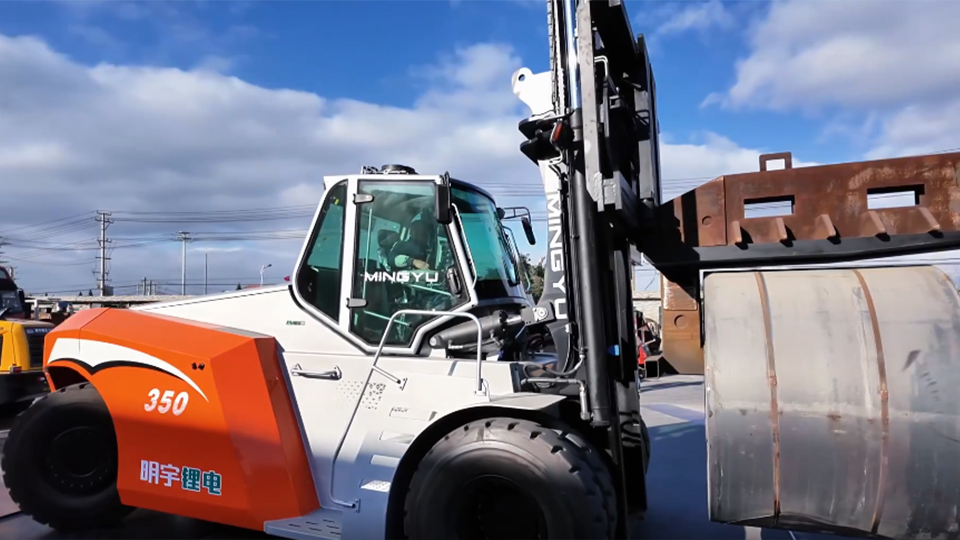
The mast configuration significantly affects lifting capability. As the load is raised, the forklift's capacity decreases due to the shifting center of gravity. High-lift applications require careful consultation of the capacity chart to ensure safe operation at the required height. Additionally, the forklift must be equipped with appropriate carriage and fork configuration—either standard forks for pallet-based lifting or a dedicated lifting beam attachment for direct chain connection.
Chain and Rigging Hardware Selection
Grade 80 or Grade 100 alloy steel chains are the industry standard for engine lifting applications. These chains offer excellent strength-to-weight ratios, with Grade 80 providing a 4:1 safety factor and Grade 100 offering 25% greater strength for the same nominal size. For diesel engine applications, 3/8-inch or 1/2-inch chain is typically appropriate, with working load limits of 7,100 and 12,000 pounds respectively.
The rigging assembly requires several specialized components beyond the chain itself. Oblong master links connect the chain assembly to the lifting point, while clevis grab hooks or sling hooks provide adjustable connection points along the chain length. For engine lifting, engine lift brackets or load-leveling beams distribute forces across multiple lifting points on the engine block.
Critical hardware includes certified lifting eyes or brackets specifically designed for the engine model. Factory-installed lifting eyes on cylinder heads or intake manifolds provide the most secure attachment points. When these are unavailable or damaged, engine-specific lift brackets that bolt to the block using existing threaded holes offer a reliable alternative.
Rigging Configuration and Setup
Engine Preparation
Proper engine preparation prevents damage and ensures safe lifting. Begin by draining all fluids—oil, coolant, and fuel—to reduce weight and prevent spillage. Remove external components that might interfere with rigging or create imbalance: alternators, air conditioning compressors, turbochargers, and large exhaust components should be detached and lifted separately when possible.
Inspect the engine block for suitable lifting points. Most diesel engines feature threaded holes on the cylinder heads, intake manifold, or block sides specifically designed for lifting eyes. These threaded connections typically require metric or SAE bolts sized according to the engine manufacturer's specifications—commonly M10, M12, or 3/8-inch to 1/2-inch diameters with coarse threads.
Clean all lifting point threads thoroughly using a tap or thread chaser to ensure full engagement of lifting hardware. Partial thread engagement dramatically reduces lifting capacity and presents catastrophic failure risks. Minimum engagement depth should equal 1.5 times the bolt diameter—approximately 18mm for a 12mm bolt.
Chain Sling Configuration
The most common configuration for diesel engine lifting is the two-legged bridle sling, which provides stability and load distribution across two primary lifting points. For engines with four-corner lifting capability, a four-legged sling offers superior stability but requires careful length adjustment to prevent unequal loading.
To construct a two-legged bridle, attach one end of each chain leg to the master link using clevis connections. The opposite ends connect to the engine lifting points. The included angle between the two chain legs critically affects the forces applied to each leg—as the angle increases from vertical, tension in each leg increases significantly. At a 60-degree included angle, each leg carries 58% of the load; at 90 degrees, this increases to 71%; and at 120 degrees, each leg carries the full load weight.
For most diesel engine applications, maintaining an included angle between 45 and 60 degrees provides optimal stability without overloading individual legs. This typically requires chain leg lengths of 4 to 6 feet for standard engine dimensions.
Load Leveling and Balance
Achieving proper balance is crucial for safe engine lifting. Diesel engines have asymmetric weight distribution, with heavier components—crankshaft, flywheel, and transmission mounting flange—concentrated at the rear. The center of gravity typically sits 60-70% of the way back from the front of the engine and slightly above the crankshaft centerline.
Before the full lift, perform a preliminary rigging check by applying slight tension to the chains while the engine remains supported. Observe the engine's orientation—if the front tilts downward, the forward chain leg is too long or the forward attachment point is too high. Adjust chain lengths using grab hooks or position the master link offset toward the heavier end to achieve level suspension.
For engines with significant front-to-rear weight imbalance, a load-leveling beam offers superior control. This rigid steel beam spans the engine width with adjustable chain connection points. By positioning the forklift connection point offset from the beam center, operators can fine-tune balance without adjusting chain lengths.
Lifting Operations
Pre-Lift Safety Protocol
Establish a clear safety perimeter around the lift zone, extending at least 1.5 times the maximum reach of the load in all directions. Ensure all personnel wear appropriate personal protective equipment: hard hats, steel-toed boots, safety glasses, and high-visibility vests. Designate a single signal person to communicate with the forklift operator using standardized hand signals or radio communication.
Inspect all rigging components immediately before use. Check chains for stretched links, cracks, or visible wear exceeding 10% of the original cross-section. Examine hooks for throat opening deformation or latch damage. Verify that all connection pins and cotter keys are properly installed and secured.
Position the forklift on firm, level ground capable of supporting the combined weight of the vehicle and load. For outdoor operations, consider ground conditions—soft soil, gravel, or slopes may require cribbing or matting to prevent tipping. Engage the parking brake and lower the outriggers if equipped.
The Lift Sequence
Begin with the engine securely supported on appropriate stands, blocks, or a rolling cart at a height that allows chain attachment without excessive stretching or bending. Connect the chain assembly to the forklift carriage or lifting beam, ensuring the master link sits squarely in the fork pockets or attachment point without binding.
Attach the chain legs to the engine lifting points, verifying that hooks are properly seated and safety latches are closed. Double-check that all connections use the correct hardware—clevis pins with cotter keys for clevis connections, proper thread engagement for bolt-on lifting eyes.
Initiate the lift slowly, raising the load just enough to transfer weight from the supports to the chains—typically 1-2 inches of clearance. Pause immediately and assess: Is the engine level? Do any chains show signs of twisting or binding? Are attachment points holding securely? Are there any unusual sounds indicating structural stress?
If the engine hangs level and all connections appear secure, continue lifting to the required height, maintaining slow, steady mast movement. Avoid sudden starts, stops, or directional changes that create dynamic loading. When transporting the load, keep the engine as close to the ground as practicable—generally below 6 inches for horizontal travel—to minimize potential drop energy and maintain low center of gravity.
Positioning and Placement
Precision placement requires careful coordination between the forklift operator and ground personnel. For engine installation into vehicles or equipment, guide the engine using tag lines—ropes attached to the engine that allow ground workers to control rotation and fine positioning without placing hands under the load.
When lowering the engine onto mounting points or stands, ensure the receiving structure can support the weight and that alignment pins or studs are properly engaged before releasing tension. Lower the engine slowly, watching for any binding or interference that might indicate misalignment.
Once the engine is securely supported and weight is fully transferred to the new location, remove rigging hardware in reverse order of installation. Disconnect chain legs from the engine first, then remove the assembly from the forklift. Store all rigging components properly to prevent damage or corrosion.

Advanced Considerations
Special Configurations
Some diesel engines present unique challenges requiring specialized rigging approaches. V-block engines with significant width may benefit from a spreader bar to prevent chain legs from contacting valve covers or intake manifolds. Long inline-six engines often require three-point lifting configurations to prevent sagging or flexing of the block during suspension.
For engines without accessible lifting points due to component configuration or damage, chain wraps around structural elements may be necessary. When wrapping chains around engine blocks or frames, use protective padding to prevent chain damage and ensure the wrap configuration prevents slipping. Avoid wrapping chains around crankshafts, camshafts, or other rotating assemblies.
Environmental and Situational Factors
Temperature extremes affect both equipment and procedures. In cold environments, steel chains become brittle and require gradual loading to prevent shock failure. Hot engine components from recent operation require heat-resistant rigging materials or adequate cooling time before lifting.
Confined spaces or overhead obstructions may necessitate alternative lifting configurations. Low-clearance situations might require horizontal engine orientation during lifting, achieved through specialized tilt rigs or by repositioning lifting points to shift the center of gravity.
Maintenance and Inspection
Proper care of lifting equipment ensures continued safety and reliability. After each use, clean chains of dirt, oil, and debris that might mask defects during inspection. Store chains in dry conditions to prevent corrosion that reduces strength and creates stress risers.
Implement a regular inspection schedule following OSHA and manufacturer guidelines. Document all inspections, noting any wear, damage, or repairs. Retire chains from service when wear exceeds 10% of the original cross-sectional area, when stretch exceeds 3% of the original length, or when any cracks, nicks, or heat damage is detected.
Conclusion
Lifting diesel engines with chains on forklifts combines the strength and durability of alloy steel rigging with the versatility and mobility of forklift equipment. Success requires thorough understanding of load characteristics, proper equipment selection, meticulous rigging configuration, and disciplined adherence to safety protocols.
By mastering these technical elements—evaluating forklift capacity, selecting appropriate chain and hardware, achieving proper load balance, and executing controlled lifting operations—technicians can safely handle diesel engines ranging from compact automotive units to massive industrial powerplants. The investment in proper training, quality equipment, and careful procedures pays dividends in accident prevention, equipment protection, and operational efficiency.
As diesel engines continue evolving with emissions controls, hybrid systems, and alternative fuels, the fundamental principles of safe lifting remain constant. Regular review of procedures, ongoing training, and commitment to safety culture ensure that engine lifting operations maintain the highest standards of professional practice.
Name: selena
Mobile:+86-13176910558
Tel:+86-0535-2090977
Whatsapp:8613181602336
Email:vip@mingyuforklift.com
Add:Xiaqiu Town, Laizhou, Yantai City, Shandong Province, China