
vip@mingyuforklift.com
+86-0535-2090977

Introduction
Fuel consumption represents one of the most significant operational costs for material handling operations, directly impacting profitability, environmental compliance, and fleet management decisions. Understanding the factors that influence forklift fuel consumption enables operators, fleet managers, and procurement professionals to optimize efficiency, reduce costs, and make informed equipment selection decisions.
Diesel forklifts remain the workhorses of heavy industry, offering superior torque, durability, and operational runtime compared to electric or LPG alternatives. However, their fuel consumption varies dramatically based on equipment specifications, application demands, operator behavior, and maintenance practices. This technical analysis examines the complete landscape of forklift fuel consumption, providing detailed consumption rates, influencing factors, measurement methodologies, and optimization strategies.
Baseline Fuel Consumption Rates
Standard Consumption Metrics
Diesel forklift fuel consumption typically ranges from 2 to 7 liters per hour for standard industrial applications. This broad range reflects the diversity of forklift sizes, engine technologies, and operational intensities found in material handling environments.
Compact forklifts with 1.5 to 2.5-ton lifting capacities generally consume 1.5 to 2.5 liters per hour during moderate operations. These smaller units, commonly found in warehousing and light manufacturing, feature efficient diesel engines ranging from 30 to 50 horsepower. When operating at consistent speeds with minimal hydraulic demands, consumption can drop to 1.2 liters per hour. Conversely, intensive operations involving frequent acceleration, heavy lifting, and extended idle periods may push consumption toward 3 liters per hour.
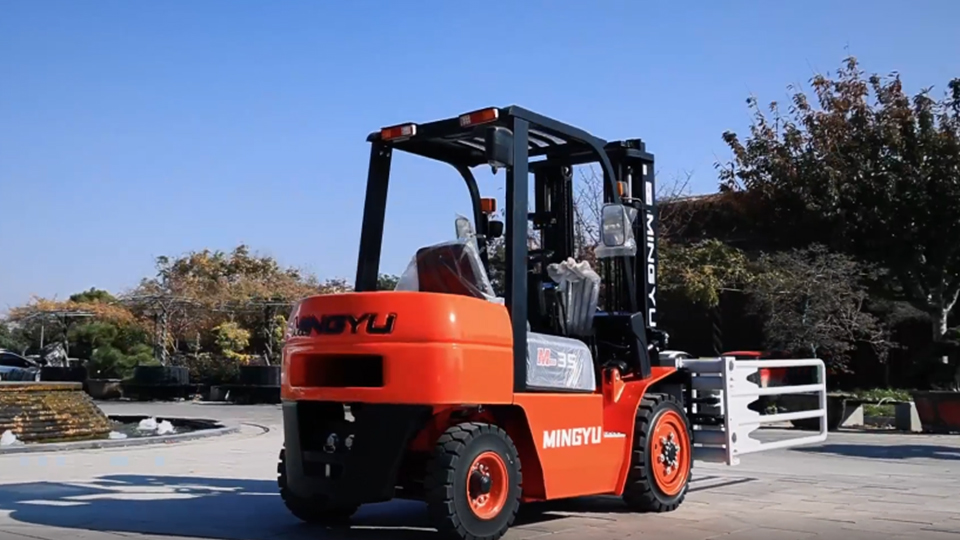
Standard industrial forklifts with 3 to 5-ton capacities represent the most common configuration in manufacturing, logistics, and construction applications. These units typically consume 2.5 to 4 liters per hour under normal operating conditions. The diesel engines in this class range from 50 to 75 horsepower, providing sufficient power for demanding loads while maintaining reasonable efficiency. Heavy-duty cycles with continuous lifting, frequent direction changes, and maximum load operations can increase consumption to 5 liters per hour or higher.
Heavy-duty forklifts exceeding 7-ton capacity, including container handlers and large industrial models, demonstrate significantly higher consumption rates. These machines, equipped with engines producing 100 to 150 horsepower, typically consume 5 to 7 liters per hour during standard operations. Specialized applications such as port operations, steel handling, or continuous heavy lifting may push consumption beyond 8 liters per hour.
Manufacturer Specifications and Variations
Original equipment manufacturers provide fuel consumption specifications based on standardized testing protocols, though real-world consumption often differs from laboratory conditions. Toyota's 8-series diesel forklifts, for example, advertise consumption rates of 2.2 to 3.8 liters per hour depending on model configuration. Hyster-Yale reports similar ranges, with their H40-70FT series consuming approximately 2.8 to 4.2 liters per hour under typical duty cycles.
European manufacturers often emphasize efficiency in their specifications. Linde's hydrostatic drive systems claim 10-15% fuel savings compared to conventional torque converter transmissions, reducing hourly consumption by 0.3 to 0.6 liters for equivalent capacity machines. Jungheinrich's latest diesel models incorporate common-rail fuel injection and exhaust gas recirculation, achieving consumption rates 8-12% lower than previous generation engines.
It's important to recognize that manufacturer specifications typically represent optimal conditions—new equipment, moderate ambient temperatures, standard load factors, and experienced operators. Actual consumption in demanding environments may exceed these figures by 20-40%.
Factors Influencing Fuel Consumption
Equipment Design and Technology
Engine technology fundamentally determines baseline fuel efficiency. Modern diesel forklifts utilize electronic fuel injection systems that precisely control injection timing, duration, and pressure based on real-time operating conditions. Common-rail systems operating at pressures exceeding 2,000 bar achieve superior atomization and combustion efficiency compared to older mechanical injection systems, typically reducing consumption by 10-15%.
Transmission type significantly impacts fuel efficiency. Traditional torque converter automatic transmissions experience inherent energy losses through fluid coupling, reducing efficiency by 15-20% compared to direct mechanical drive. Hydrostatic transmissions, while offering superior control and reduced wear, can increase fuel consumption by 5-10% in high-speed travel applications but improve efficiency in stop-and-start operations. Dual-clutch and automated manual transmissions, increasingly common in European forklift designs, bridge this efficiency gap.
Hydraulic system design affects consumption through pump efficiency and circuit configuration. Load-sensing hydraulic systems, which adjust pump output based on actual demand rather than constant full flow, reduce engine load during non-lifting periods. Variable displacement pumps further optimize efficiency by eliminating throttling losses. These technologies can reduce fuel consumption by 0.5 to 1 liter per hour in applications with intermittent hydraulic demands.
Tire selection and condition influence rolling resistance and, consequently, fuel consumption. Pneumatic tires, particularly those with aggressive tread patterns for outdoor use, increase resistance compared to cushion tires designed for smooth indoor surfaces. Underinflated tires can increase consumption by 3-5% through increased rolling resistance and reduced traction efficiency.
Operational Factors
Load factor—the ratio of actual load to rated capacity—directly correlates with fuel consumption. Operating at 80-100% of rated capacity increases engine load and fuel demand significantly compared to handling 40-50% loads. Studies indicate that increasing average load factor from 50% to 80% can raise hourly consumption by 25-35% for equivalent travel distances.
Duty cycle intensity profoundly affects consumption. The VDI 2198 standard defines duty cycles ranging from light (infrequent lifting, long travel distances) to heavy (continuous lifting, short travel, frequent direction changes). Heavy-duty cycles can increase fuel consumption by 50-100% compared to light-duty applications for the same equipment. Container handling operations, with their continuous lifting and precise positioning requirements, typically represent the most fuel-intensive duty cycles.
Travel patterns and speed profiles influence efficiency. Frequent acceleration and deceleration, common in congested warehouses or multi-stop delivery routes, increase fuel consumption compared to steady-state operation. Operating at maximum travel speed increases aerodynamic drag and engine load, though this factor is less significant for forklifts than highway vehicles due to lower absolute speeds.
Idle time represents a major source of fuel waste. Diesel engines consume 0.8 to 1.5 liters per hour at idle depending on engine size and ambient temperature. Operations with 30-40% idle time—common in applications with intermittent loading or waiting for instructions—effectively increase average hourly consumption by 25-35% compared to continuous productive work.
Environmental and Maintenance Factors
Ambient temperature affects diesel combustion efficiency and engine warm-up requirements. Cold starts in sub-zero conditions can increase fuel consumption by 15-25% during the initial operating period as the engine runs rich to achieve combustion stability. Extremely high temperatures reduce air density, slightly decreasing combustion efficiency and increasing cooling system loads.
Altitude impacts fuel consumption through reduced air density and oxygen availability. At 2,000 meters elevation, naturally aspirated diesel engines experience approximately 20% power reduction, requiring higher throttle positions and increased fuel delivery to maintain performance. Turbocharged engines mitigate but do not eliminate this effect.
Maintenance condition dramatically influences efficiency. Clogged air filters increase pumping losses and reduce combustion efficiency, potentially increasing consumption by 5-10%. Worn injectors produce poor fuel atomization, leading to incomplete combustion and increased fuel demand. Engine deposits, worn piston rings, and degraded lubricants all contribute to efficiency losses that compound over time if not addressed through preventive maintenance.
Measurement and Monitoring Methodologies
Direct Measurement Techniques
The most accurate fuel consumption measurement involves weighing fuel tanks before and after defined operating periods. This gravimetric method eliminates volume measurement errors caused by temperature variations and provides precision within 0.5%. For operational monitoring, installing calibrated flow meters in the fuel supply line enables real-time consumption tracking with accuracy of 1-2%.
Fuel tank dipstick measurements, while less precise, offer practical monitoring for routine operations. Standardizing measurement procedures—consistent temperature conditions, level surface positioning, and measurement timing—improves reliability. Digital fuel level sensors connected to telematics systems provide automated monitoring with 2-3% accuracy, enabling consumption tracking by operator, shift, or specific tasks.
Standardized Testing Protocols
The VDI 2198 standard provides a framework for comparable fuel consumption testing, defining standardized duty cycles that simulate real-world operations. These protocols specify travel distances, lift heights, load weights, and timing sequences that enable objective comparison between equipment models. However, actual consumption in specific applications may differ substantially from standardized test results.
ISO 2330 and EN 16796 standards address forklift energy consumption measurement, including fuel consumption for internal combustion engines. These standards specify test conditions, measurement equipment calibration, and reporting formats that enable manufacturer claims verification and fleet benchmarking.
Telematics and Data Analytics
Modern forklift telematics systems capture detailed operational data including engine hours, fuel consumption, travel distances, lift cycles, and idle time. Advanced analytics platforms process this data to identify consumption patterns, efficiency opportunities, and operator training needs. Machine learning algorithms can predict fuel consumption based on operational parameters, enabling proactive optimization.
Benchmarking against industry standards and peer fleets provides context for consumption evaluation. Fleet management associations publish anonymized consumption data by equipment type and application, enabling operators to assess their performance relative to industry norms.
Optimization Strategies
Equipment Selection and Configuration
Right-sizing equipment for specific applications prevents over-specification and associated fuel waste. Selecting a 3-ton forklift for 1.5-ton average loads increases capital costs and fuel consumption unnecessarily. Conversely, under-specified equipment working beyond its optimal range experiences accelerated wear and reduced efficiency.
Engine options within model ranges offer efficiency trade-offs. Lower-power engines optimized for specific applications often deliver better fuel economy than maximum-power configurations that rarely utilize full capability. Some manufacturers offer "eco-mode" settings that limit maximum engine speed and hydraulic flow, reducing consumption by 10-15% for applications where maximum performance isn't required.
Alternative fuel technologies merit consideration for appropriate applications. Electric forklifts eliminate direct fuel consumption entirely, though electricity costs and battery maintenance introduce different operational economics. LPG forklifts offer cleaner emissions than diesel with comparable consumption rates measured in kilograms per hour rather than liters.
Operational Improvements
Operator training represents the highest-impact, lowest-cost optimization opportunity. Trained operators achieve 10-20% better fuel economy through smooth acceleration, appropriate speed selection, minimized idle time, and efficient routing. Certification programs emphasizing energy-efficient operating techniques deliver measurable consumption reductions.
Route optimization and warehouse layout improvements reduce travel distances and associated fuel consumption. Consolidating storage locations, optimizing picking sequences, and minimizing cross-warehouse travel can reduce total travel distance by 20-30%, with proportional fuel savings.
Idle reduction initiatives address a major source of waste. Automatic engine shut-off systems, activated after 3-5 minutes of inactivity, eliminate unnecessary idle consumption. Operator incentives based on productive work time rather than total hours encourage active operation over idling.
Maintenance Optimization
Preventive maintenance schedules calibrated to actual operating conditions maintain efficiency over equipment life. Air filter replacement based on pressure differential monitoring rather than fixed intervals ensures optimal airflow without premature service. Fuel system cleaning and injector servicing at appropriate intervals maintain combustion efficiency.
Tire pressure monitoring and maintenance reduce rolling resistance. Nitrogen inflation, while controversial in some applications, maintains pressure more consistently than air, potentially improving efficiency by 1-2%.
Engine tuning and emission system maintenance ensure optimal combustion. Modern diesel engines with diesel particulate filters and selective catalytic reduction require specific maintenance procedures to maintain efficiency while meeting emissions standards. Neglected emission systems can trigger derate modes that significantly increase fuel consumption while reducing power.
Economic and Environmental Considerations
Cost Analysis
At 2026 fuel prices averaging €1.40 per liter in Europe and $4.00 per gallon (approximately €0.95 per liter) in North America, diesel represents a substantial operational cost. A forklift consuming 3 liters per hour operating 2,000 hours annually incurs fuel costs of €8,400 in Europe or $5,700 in the United States. Over a typical 10,000-hour equipment life, fuel costs can exceed the original equipment purchase price.
Total cost of ownership calculations must include fuel consumption alongside maintenance, depreciation, and operator costs. Fuel-efficient equipment commanding a 10% price premium may deliver superior lifetime economics through reduced consumption, particularly in high-utilization applications.
Environmental Impact
Diesel consumption directly correlates with greenhouse gas emissions, with each liter of diesel producing approximately 2.68 kilograms of CO2. A forklift consuming 3 liters per hour for 2,000 annual hours generates 16 tons of CO2—equivalent to approximately four passenger vehicles' annual emissions. Fuel reduction initiatives thus contribute to corporate sustainability goals alongside economic benefits.
Emissions regulations increasingly constrain diesel forklift operation in urban and indoor environments. Stage V and Tier 4 Final standards require sophisticated aftertreatment systems that, while reducing pollutants, add complexity and potential efficiency impacts. Understanding these trade-offs informs equipment selection for specific operating environments.
Conclusion
Forklift fuel consumption ranges from 1.5 to 7+ liters per hour depending on equipment specifications, operational demands, and management practices. This consumption variability creates significant opportunities for optimization through informed equipment selection, operator training, maintenance discipline, and operational improvements.
Accurate measurement and monitoring enable data-driven optimization, transforming fuel consumption from a fixed cost into a managed variable. As fuel prices fluctuate and environmental regulations tighten, the organizations that master fuel efficiency will achieve competitive advantages through lower operating costs and sustainable operations.
The transition toward electrification and alternative fuels will reshape material handling economics over the coming decade. However, diesel forklifts will remain essential for heavy-duty, outdoor, and continuous-operation applications where their power density and refueling speed prove unmatched. For these applications, the principles and practices outlined in this analysis will continue delivering operational and economic benefits through optimized fuel consumption.
Name: selena
Mobile:+86-13176910558
Tel:+86-0535-2090977
Whatsapp:8613181602336
Email:vip@mingyuforklift.com
Add:Xiaqiu Town, Laizhou, Yantai City, Shandong Province, China
