
vip@mingyuforklift.com
+86-0535-2090977

Introduction to Forklift Load Positioning Fundamentals
The question of whether forklift loads should be centered represents a fundamental inquiry into material handling safety, equipment stability, and operational efficiency. While seemingly straightforward, load positioning involves complex interactions between center of gravity dynamics, mast geometry, hydraulic systems, and stability triangles that determine safe operational envelopes. This technical analysis examines the multifaceted considerations governing load positioning, exploring when centering is essential, when offset positioning is permissible, and the engineering principles underlying safe forklift operation with various load configurations.
The Stability Triangle: Core Engineering Principle
Forklift stability engineering revolves around the stability triangle, an imaginary three-dimensional pyramid formed by lines connecting the front drive wheels and the rear steer axle pivot point. The forklift remains stable only when the combined center of gravity (forklift plus load) remains within this triangular base. Load positioning directly influences center of gravity location, making proper positioning critical for safety.
Center of Gravity Dynamics:
The load center represents the horizontal distance from the front face of the fork carriage to the load's center of gravity. Standard industrial forklifts are rated assuming a 24-inch load center (600mm), meaning the load's weight is concentrated 24 inches from the carriage face. Deviations from this standard dramatically affect lifting capacity and stability.
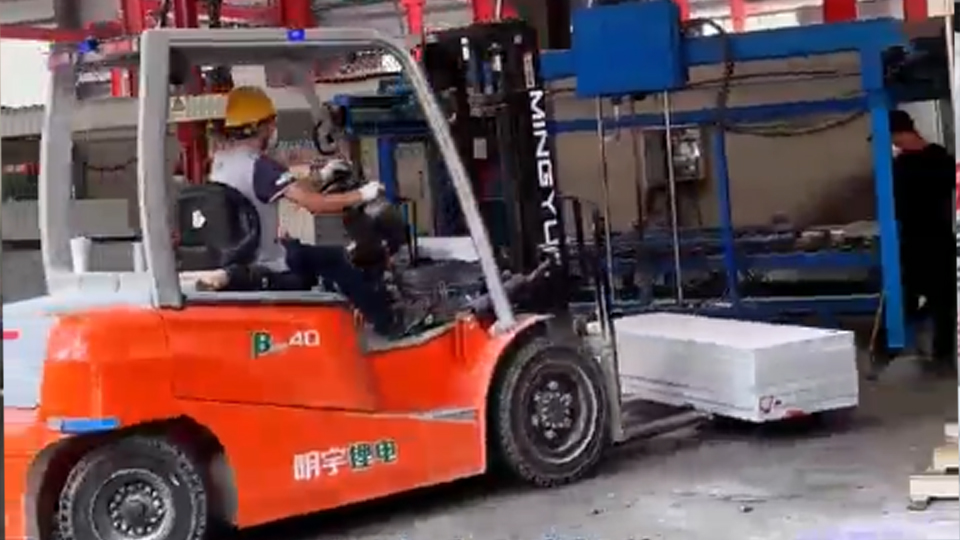
When a load is properly centered on the forks:
The load's center of gravity aligns with the forklift's longitudinal centerline
Lateral stability is maximized, with equal resistance to tipping in either direction
Rated capacity can be fully utilized (assuming load center distance matches rated assumptions)
Offset Load Consequences:
Loads positioned off-center create asymmetric center of gravity shifts, reducing stability margins on the offset side. Even modest lateral displacement significantly impacts stability:
1-inch lateral offset can reduce lateral stability margin by 5-10%
6-inch offset may reduce effective capacity by 15-25% depending on load height and forklift geometry
12-inch or greater offset creates critical instability risks, particularly during turns, braking, or uneven surface traversal
When Centering Is Absolutely Essential
Specific operational scenarios mandate strict load centering without exception, based on stability engineering and regulatory requirements.
Maximum Capacity Operations:
When approaching rated forklift capacity, precise centering is non-negotiable. The stability margin at maximum rated loads is minimal; any center of gravity deviation risks stability failure. OSHA regulations and manufacturer specifications universally require centered loads when operating at or near rated capacity.
Technical analysis reveals that a 5,000-pound capacity forklift with a 24-inch rated load center has approximately 15-20% stability margin when properly loaded. A 6-inch lateral offset reduces this margin to 5-8%, creating unacceptable risk given normal operational dynamics (braking, acceleration, minor surface irregularities).
High Lift Applications:
As loads elevate, the combined center of gravity rises proportionally, reducing the stability triangle's effective base. At maximum lift heights, even properly centered loads create marginal stability conditions. Offset positioning at elevation dramatically increases tipping risk.
The moment arm effect intensifies with elevation: a 1,000-pound load offset 6 inches laterally creates 500 lb-ft of overturning moment at ground level but 1,500+ lb-ft of moment at 15-foot elevation due to geometric leverage effects. Centering is therefore absolutely mandatory for high-reach operations.
Travel on Inclines or Uneven Surfaces:
Grade traversal creates inherent stability challenges as the stability triangle tilts relative to the load center of gravity. Centered loads maintain maximum stability margin for grade negotiation. Offset loads compound grade-related instability, particularly when traveling across slopes (rather than directly up or down).
Turning Operations:
Centrifugal forces during turning generate lateral overturning moments. The stability triangle effectively narrows in the turn direction as centrifugal force combines with gravitational force vectors. Centered loads provide maximum resistance to turn-induced tipping; offset loads in the turn direction create critical hazard conditions.
Permissible Offset Positioning: Engineering Constraints
While centering is generally preferred, specific operational scenarios permit controlled offset positioning when engineering constraints are rigorously observed.
Asymmetrical Load Geometry:
Certain loads (long pipes, structural steel, irregular machinery) cannot be physically centered on standard forks while maintaining secure attachment. In these cases:
Engineering assessment must calculate actual center of gravity location
Capacity derating is mandatory based on actual load center distance
Operational restrictions (reduced travel speed, no turning with elevated loads, grade limitations) must be implemented
Load securing requires additional measures (strapping, blocking) preventing load shift during transport
Double-Width Load Handling:
Wide loads exceeding fork carriage width may require offset positioning to maintain load support. However, this practice demands:
Extended load centers requiring substantial capacity reduction
Counterweight augmentation or specialized forklifts with enhanced stability
Restricted operational envelope (no elevation during travel, limited grade capability)
Spotter assistance ensuring pathway clearance given extended load dimensions
Attachment-Specific Considerations:
Specialized attachments (paper roll clamps, drum handlers, carton clamps) position loads at fixed offsets from the carriage centerline. These attachments are engineered with:
Rated capacities at specified load centers accounting for fixed offset geometry
Stability testing validating safe operation within defined parameters
Operational limitations restricting speed, grade, and elevation during travel
When using offset attachments, operators must understand that effective capacity is reduced compared to standard forks, and stability margins are inherently narrower.
Load Center Distance: Longitudinal Positioning
While lateral centering receives primary attention, longitudinal load center distance (distance from carriage face to load center of gravity) critically influences capacity and stability.
Standard 24-Inch Load Center:
Forklift capacity ratings assume 24-inch load centers. Loads with centers of gravity beyond 24 inches require capacity reduction following the moment balance principle:
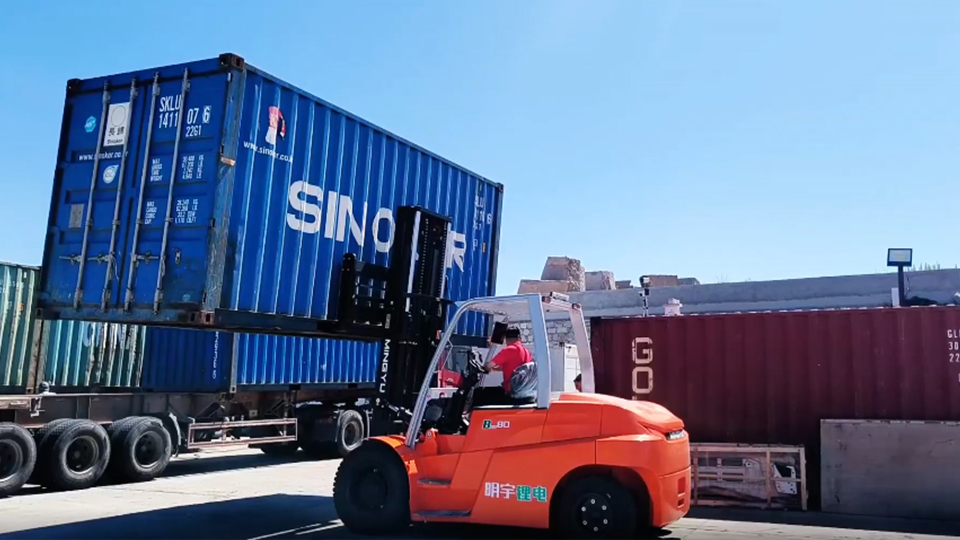
Actual Capacity = Rated Capacity × (Rated Load Center / Actual Load Center)
For example, a 5,000-pound forklift rated at 24-inch load center has effective capacity of only 3,000 pounds when handling a load with 40-inch load center (5000 × 24/40 = 3000).
Load Center Calculation Methods:
Determining actual load center requires either:
Manufacturer specifications for uniform loads (standard pallets, containers)
Center of gravity calculation for irregular loads based on weight distribution
Experimental determination using lift trials with reduced capacity and stability monitoring
Longitudinal Offset Consequences:
Loads positioned too far forward on forks (beyond rated load center) reduce rear axle loading, potentially causing rear wheel lift and loss of steering control. Loads positioned too far rearward reduce effective capacity and may interfere with mast operation or operator visibility.
Dynamic Stability Considerations
Static load centering analysis must be extended to dynamic operational conditions where inertial forces and transient loads affect stability.
Acceleration and Braking Effects:
Longitudinal load shift during acceleration and braking dynamically alters effective load center:
Hard braking shifts load forward, effectively increasing load center distance and reducing stability margin
Rapid acceleration shifts load rearward, potentially unloading front wheels and reducing traction
Centered loads minimize dynamic moment variations; offset loads amplify directional instability
Mast Tilt Dynamics:
Mast tilt angle affects effective load center and stability:
Forward tilt (downward) increases load center distance, reducing capacity
Backward tilt (rearward) decreases load center distance, increasing stability but potentially compromising load retention
Excessive backward tilt with high elevation may cause load contact with mast structure
Operational protocols generally specify minimal tilt during travel, with centered loads enabling consistent tilt angles. Offset loads require tilt adjustments that may compromise either stability or load security.
Vibration and Surface Irregularities:
Operational surfaces generate dynamic loads through vibration and impact. Centered loads distribute these dynamic effects symmetrically; offset loads create asymmetric stress concentrations and accelerated stability degradation.
Regulatory Framework and Standards
Forklift load positioning is governed by comprehensive regulatory requirements establishing minimum safety standards.
OSHA 1910.178 Standards:
The Occupational Safety and Health Administration's powered industrial truck standards mandate:
Load engagement, transporting, and placement must ensure load security and stability
Load centering within rated capacity is implied by capacity plate requirements
Training requirements include load handling, stability, and capacity limitations
Specific OSHA interpretations emphasize that loads must be centered as nearly as possible and that rated capacities must never be exceeded, effectively requiring centering for maximum load operations.
ANSI/ITSDF B56.1 Standards:
The American National Standards Institute and Industrial Truck Standards Development Foundation standards provide detailed technical specifications:
Stability testing protocols validating forklift performance with centered loads
Load center definitions establishing 24-inch standard and alternative ratings
Attachment rating requirements specifying capacity reductions for offset load handling
Manufacturer Specifications:
Individual forklift manufacturers provide:
Capacity plates specifying rated loads at defined load centers
Operator manuals detailing load positioning requirements
Warning decals emphasizing centering importance
Deviation from manufacturer specifications regarding load centering voids warranty protection and may create liability exposure.
Practical Load Centering Techniques
Achieving proper load centering requires operational techniques and verification methods.
Fork Positioning:
Fork spread adjustment to match load width, with forks positioned equidistant from centerline
Fork level verification ensuring horizontal alignment preventing load shift
Fork extension for deep-reach applications, with capacity derating for extended load centers
Load Engagement:
Approach alignment perpendicular to load face ensuring symmetrical fork entry
Elevation matching positioning forks at proper height for level load support
Penetration depth ensuring forks extend fully through load for balanced support
Centering Verification:
Visual alignment checking equal fork exposure on both sides
Tilt test confirming load stability with minimal mast tilt
Lift verification monitoring for mast deflection or uneven lifting indicating off-center loading
Load Securing:
Even centered loads require securing against dynamic shift:
Strapping or banding for irregular or loose loads
Load backrest utilization preventing rearward shift during braking
Attachment selection appropriate for load geometry and weight distribution
Advanced Stability Technologies
Modern forklift technologies enhance stability management, potentially modifying centering requirements in specific applications.
Active Stability Systems:
Tilt sensors monitoring stability triangle margins and restricting operation when thresholds approach
Load weight indicators providing real-time capacity utilization feedback
Stability control systems automatically limiting speed, acceleration, or lift height based on stability calculations
These systems provide enhanced safety margins but do not eliminate fundamental centering requirements. They serve as redundant protection rather than primary stability reliance.
Telematics and Monitoring:
Fleet management systems track:
Load weight histograms identifying capacity utilization patterns
Stability event logging recording near-tip conditions for training intervention
Operator compliance monitoring adherence to centering protocols
Training and Operational Culture
Effective load centering requires comprehensive training establishing operational discipline.
Operator Training Elements:
Stability triangle education ensuring conceptual understanding of center of gravity dynamics
Capacity plate interpretation relating rated specifications to actual operational requirements
Load assessment techniques determining weight distribution and center of gravity location
Practical centering skills through supervised operational experience
Management Responsibilities:
Load specification documentation providing weight and center of gravity information for routine materials
Facility design ensuring adequate aisle widths and surface conditions supporting stable operation
Maintenance programs preserving fork alignment, mast geometry, and hydraulic system performance affecting load handling
Conclusion: Centering as Fundamental Safety Practice
The technical analysis overwhelmingly supports load centering as the default and required practice for forklift operation. While specific engineered applications permit controlled offset positioning, general material handling demands precise centering to preserve stability margins, ensure regulatory compliance, and protect personnel safety.
The stability triangle engineering principle establishes that any offset reduces safety margins, with consequences intensifying at higher elevations, greater capacities, and dynamic operational conditions. Modern safety systems provide supplemental protection but cannot compensate for fundamental load positioning errors.
Organizations achieving operational excellence in material handling prioritize load centering through training, supervision, equipment specification, and operational discipline. The modest time investment required for proper load engagement and centering yields substantial returns in accident prevention, equipment longevity, and operational efficiency.
The question "should the load be centered?" is technically answered: Yes, absolutely, unless specifically engineered alternative positioning is documented, calculated, and controlled within defined safety parameters. This principle, consistently applied, forms the foundation of safe and productive forklift operation.
Name: selena
Mobile:+86-13176910558
Tel:+86-0535-2090977
Whatsapp:8613181602336
Email:vip@mingyuforklift.com
Add:Xiaqiu Town, Laizhou, Yantai City, Shandong Province, China
