
vip@mingyuforklift.com
+86-0535-2090977

Introduction
Forklifts—technically known as powered industrial trucks—represent one of the most significant engineering achievements in material handling history. These compact yet powerful machines can lift loads weighing up to 50,000 pounds to heights exceeding 35 feet, all while maneuvering in spaces barely wider than their own footprint. Understanding how forklifts work requires examining multiple integrated systems: the powertrain that generates motion, the hydraulic system that enables lifting, the mast and carriage assembly that handles loads, and the sophisticated controls that allow precise operation.
This technical analysis explores the complete operational mechanics of counterbalance forklifts—the most common type in industrial use—while touching on specialized variants and modern technological enhancements that have transformed these machines from simple lifting devices into intelligent, connected material handling solutions.
The Fundamental Principle: Counterbalance Physics
Before examining components, one must understand the core physics enabling forklift operation. Unlike cranes or elevators that rely on external support structures, forklifts must remain stable while supporting heavy loads at significant distances from their center of gravity. This challenge is solved through the counterbalance design.
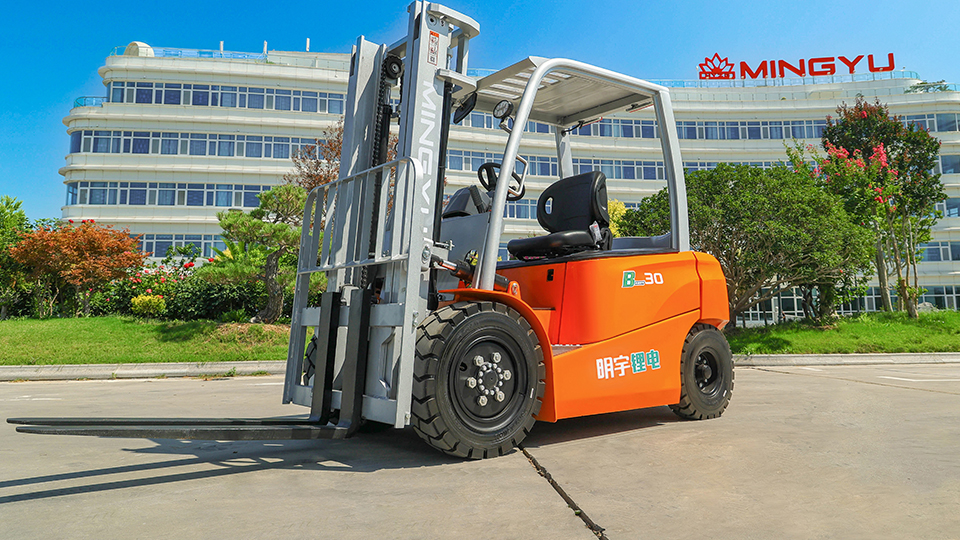
A forklift's rear section contains substantial mass—typically the battery in electric models or the engine and cast iron counterweight in internal combustion units. This counterweight creates a moment arm opposing the load's tendency to tip the truck forward. The combined center of gravity of the forklift and its load must remain within the "stability triangle," an imaginary area connecting the front drive wheels and the rear steer axle pivot point. Load capacity ratings stamped on every forklift data plate represent the maximum weight that maintains this stability margin under specified conditions.
This physics constraint explains why forklifts cannot lift their rated capacity to full height without risk of forward tip-over, and why attachments or unusual load configurations require derating calculations. Understanding counterbalance mechanics is essential for safe operation and explains many design features discussed below.
Powertrain Systems: Electric vs. Internal Combustion
Forklift powertrains fall into two primary categories, each with distinct operational characteristics.
Electric Forklift Systems
Electric forklifts utilize battery-powered DC or AC motors for propulsion and lifting. Modern units predominantly employ AC induction motors controlled by variable frequency drives (VFDs), offering precise speed control, regenerative braking, and reduced maintenance compared to older DC motor systems.
The battery—typically 24, 36, or 48 volts for standard forklifts, up to 80 volts for heavy-duty applications—serves as both energy storage and ballast. Lead-acid batteries remain common, though lithium-ion adoption accelerates due to faster charging, opportunity charging capability, and reduced maintenance. The battery connects to a controller unit that modulates power delivery to drive motors based on operator input and operational parameters.
Electric forklifts use separate motors for drive and hydraulic functions. The drive motor connects through a transaxle to the front wheels, while the pump motor powers the hydraulic system. Some designs integrate both functions with a single motor and clutch mechanism, though separate systems predominate in modern designs.
Internal Combustion Systems
Internal combustion forklifts utilize diesel, gasoline, liquid propane gas (LPG), or compressed natural gas (CNG) engines. These powerplants range from 20 horsepower in compact models to over 150 horsepower in heavy-duty container handlers. The engine drives both the transmission and the hydraulic pump through a power take-off (PTO) mechanism.
LPG-powered forklifts dominate indoor/outdoor applications due to cleaner combustion than diesel and convenient cylinder exchange. Diesel engines offer superior torque and runtime for outdoor heavy-lifting applications but produce emissions unsuitable for enclosed spaces. Gasoline and CNG variants serve niche applications where fuel infrastructure supports their use.
IC forklifts employ either automatic torque converter transmissions—similar to automotive automatics—or hydrostatic drives. Hydrostatic systems use variable displacement pumps and motors to provide infinite speed control without mechanical gears, offering superior control for precision placement tasks.
The Hydraulic System: Power Transmission for Lifting
Hydraulics form the muscular system of any forklift, converting engine or motor power into the immense force needed to lift heavy loads. Understanding hydraulic operation explains how relatively compact components generate thousands of pounds of lifting capacity.
Hydraulic Circuit Components
The hydraulic system comprises several key elements working in concert:
Reservoir: Stores hydraulic fluid, typically 10-30 gallons depending on forklift size, providing capacity for system expansion and contraction while allowing air separation.
Pump: Generates flow within the system. Engine-driven pumps in IC forklifts attach to the crankshaft via PTO; electric forklifts use dedicated pump motors. Pump displacement determines system flow rate, directly affecting lift speed.
Control Valves: Direct fluid flow to various circuits. The main control valve contains spools operated by the operator's hydraulic levers, directing flow to lift, tilt, and auxiliary functions. Modern systems use pilot-operated valves requiring minimal operator effort.
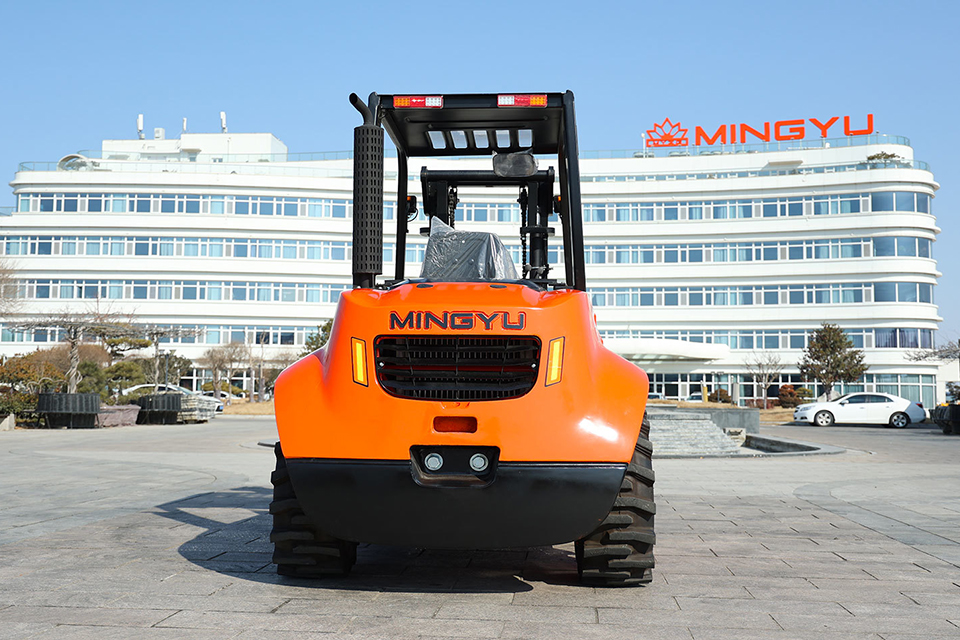
Actuators: Hydraulic cylinders convert fluid pressure into mechanical force. Lift cylinders raise the mast; tilt cylinders adjust mast angle; attachment cylinders power side-shifters, fork positioners, and other implements.
Filter and Conditioning Components: Maintain fluid cleanliness and temperature. High-pressure filters protect valves and cylinders from contamination that would cause premature wear and internal leakage.
Operating Principles
Hydraulic operation follows Pascal's principle: pressure applied to confined fluid transmits equally in all directions. The system creates pressure by restricting flow—when the operator commands a lift, the control valve restricts return flow to the reservoir, building pressure that forces the lift cylinder to extend.
System pressure typically ranges from 2,000 to 3,500 PSI in standard forklifts, with specialized high-reach models exceeding 4,000 PSI. The relationship between cylinder bore diameter, rod diameter, and pressure determines lifting force. A typical lift cylinder with 4-inch bore diameter operating at 2,500 PSI generates over 31,000 pounds of force—sufficient to lift a 10,000-pound load while overcoming mechanical inefficiencies and friction.
Flow rate, measured in gallons per minute (GPM), determines speed. Higher flow rates enable faster lifting but require larger pumps and more engine power. Modern forklifts balance flow rates to achieve typical lift speeds of 20-40 feet per minute loaded, with empty speeds often 50% faster due to reduced load on the hydraulic system.
The Mast and Carriage Assembly: Load Handling Mechanics
The mast represents the most visible and mechanically complex forklift component, comprising nested channel sections that telescope to achieve lift height while maintaining compact collapsed dimensions for maneuverability.
Mast Structural Design
Masts consist of nested steel channels—typically two or three stages in standard forklifts, up to six stages in specialized high-reach models. The outer fixed channel mounts to the forklift frame; inner channels move vertically via chains and hydraulic cylinders. Dual upright design provides lateral stability while allowing forward visibility through the mast structure.
Lift chains—typically two matched roller chains per mast side—transmit cylinder force to the carriage. These chains feature high tensile strength with safety factors exceeding 5:1 relative to rated load. Chain anchor points at the mast top and carriage bottom create a 2:1 mechanical advantage: the carriage rises two feet for every foot of cylinder extension.
The Carriage and Forks
The carriage is the sliding component that actually carries the load, mounting to the mast channels via roller or slider bearings. Standard carriages feature upper and lower hooks engaging the mast, with side thrust rollers maintaining alignment.
Forks mount to the carriage via heel pins or hook-type attachments. Standard forks are forged steel with tapered tips for pallet entry, rated for specific load capacities. Fork positioning—spread between forks—affects load stability and must match pallet dimensions.
The load backrest prevents loads from falling backward onto the operator or falling objects protective structure (overhead guard). This steel framework withstands impact forces and provides structural mounting for attachments.
Tilt Mechanism
Mast tilt—typically 6-15 degrees backward and 3-5 degrees forward—serves critical functions. Backward tilt stabilizes loads during transport, shifting the combined center of gravity rearward. Forward tilt aids pallet entry and deposit, allowing level fork alignment with slightly inclined loads or rack positions.
Tilt cylinders—usually dual single-acting cylinders mounted at the mast base—extend to tilt backward and retract (under load gravity) to tilt forward. The tilt mechanism pivots the entire mast assembly about trunnion pins at the mast base, with the counterweight mass providing reaction force against tilting moments.
Steering and Mobility Systems
Forklift steering differs fundamentally from automotive design, enabling the tight turning radius essential for warehouse maneuvering.
Rear-Wheel Steering
Forklifts steer via the rear wheels—the wheels farthest from the load—while driving through the front wheels. This configuration places the steering wheels in the least-loaded position, reducing tire wear and steering effort. More importantly, rear steering creates a tighter turning radius; the forklift pivots about the front drive wheels, swinging the counterweighted rear in a wide arc while the load remains relatively stationary.
Steering systems range from manual recirculating ball mechanisms in smaller forklifts to full hydraulic power steering in larger units. Some modern designs employ electric power steering, reducing engine load and improving energy efficiency.
Drive Axle and Tires
The front drive axle contains the differential and final drive reduction, transmitting motor or engine power to the drive wheels. Solid pneumatic or cushion tires—filled with rubber rather than air—provide the load support and traction necessary for industrial environments. These tires withstand punctures from debris and support heavy loads without risk of blowout.
Drive axle design varies by application. Heavy-duty forklifts use planetary final drives for torque multiplication; electric forklifts often integrate wheel motors directly into the hub, eliminating mechanical drivetrain components.
Control Systems: Operator Interface
Modern forklift controls integrate mechanical, hydraulic, and electronic systems to provide intuitive operation while maintaining safety.
Hydraulic Controls
Traditional forklifts use mechanical levers connected to hydraulic control valves via linkages. Three or four levers typically control lift, tilt, and auxiliary functions. The operator's lever movement mechanically shifts valve spools, directing hydraulic flow.
Contemporary designs increasingly use mini-levers or joystick controls with hydraulic pilot circuits. Small control levers operate pilot valves sending hydraulic pressure to shift main control valves. This "hydraulic over hydraulic" system reduces operator effort and enables more precise control, particularly for attachment operations.
Electronic Monitoring and Safety Systems
Modern forklifts incorporate sophisticated electronic systems monitoring operational parameters:
Controller Area Network (CAN bus) systems interconnect engine or motor controllers, transmission controllers, hydraulic controllers, and display units. This network enables real-time monitoring of temperatures, pressures, speeds, and diagnostic trouble codes.
Stability control systems monitor load weight, mast height, tilt angle, and travel speed, automatically limiting functions that would compromise stability. Some systems actively control lift and travel speeds based on real-time stability calculations.
Operator presence systems require seated or proper positioning before enabling hydraulic or drive functions, preventing inadvertent operation.
Telematics systems enable fleet managers to monitor utilization, impact events, maintenance schedules, and operator compliance remotely, transforming forklift management from reactive repair to predictive optimization.
Specialized Forklift Variants
While counterbalance forklifts dominate general applications, specialized designs address specific operational requirements.
Reach Trucks
Reach trucks operate in narrow aisles (as tight as 7-8 feet) using a telescoping mast mechanism that extends the load forward while the truck remains stationary. The base legs straddle the load, eliminating the counterbalance requirement. Outrigger legs provide front support, with the battery serving as rear ballast. Reach mechanisms enable storage heights exceeding 40 feet in high-density warehouses.
Order Pickers
Order pickers elevate the operator with the load, enabling manual case picking at height. These man-up designs incorporate safety platforms, guardrails, and travel speed restrictions based on platform height. The lifting mechanism typically uses a scissor or mast design with wire-guided or rail-guided aisle navigation.
Rough Terrain Forklifts
Outdoor construction and agricultural applications require forklifts with enhanced ground clearance, all-wheel drive, and flotation tires. These units feature articulated steering, differential locks, and reinforced frames for uneven surface operation. Load capacities often exceed 10,000 pounds with lift heights to 25 feet.
Automated Guided Vehicles (AGVs)
AGVs represent the convergence of forklift mechanics with autonomous navigation. These units incorporate laser guidance, vision systems, or magnetic tape following for unmanned operation. Mechanical systems mirror conventional forklifts, with electronic controls managing navigation, load handling, and fleet coordination through warehouse management system integration.
Maintenance and Operational Efficiency
Understanding forklift mechanics informs proper maintenance practices that ensure longevity and safety.
Hydraulic System Maintenance
Hydraulic fluid cleanliness critically affects component life. Contamination causes valve sticking, cylinder scoring, and pump wear. Regular fluid analysis monitors particle count and moisture content; filtration systems should maintain ISO cleanliness codes of 18/16/13 or better. Fluid replacement intervals typically range from 2,000 to 4,000 operating hours depending on application severity.
Mechanical Maintenance
Mast chains require lubrication and wear monitoring; elongation exceeding 3% indicates replacement need. Carriage rollers and mast channel bearings need inspection for flat spots or binding. Drive axle oil, differential fluid, and wheel bearings follow manufacturer-specified service intervals.
Battery and Electrical Maintenance
Electric forklift batteries require watering with deionized water, cleaning to prevent conductive paths between cells, and equalization charges to prevent stratification. Motor brush inspection (for DC motors) and controller cooling system maintenance prevent electronic failures.
Conclusion
Forklifts operate through the sophisticated integration of mechanical power transmission, hydraulic force multiplication, and electronic control systems. The counterbalance principle enables stable load handling; hydraulic circuits transform modest power inputs into immense lifting force; and the mast and carriage assembly provides the vertical reach and load manipulation essential for material handling.
From the operator's perspective, these complex systems respond to intuitive controls, masking the engineering sophistication beneath. Yet understanding the underlying mechanics—how pressure becomes force, how chains multiply motion, how rear steering enables maneuverability—empowers operators and maintenance personnel to work more safely and effectively.
As technology advances, forklifts incorporate increasing automation, electrification, and connectivity. Yet the fundamental physics and mechanical principles established over a century of industrial truck development remain unchanged. The modern forklift, whether powered by lithium-ion batteries or hydrogen fuel cells, guided by laser navigation or human operators, continues to apply these proven principles to move the materials that drive global commerce.
Name: selena
Mobile:+86-13176910558
Tel:+86-0535-2090977
Whatsapp:8613181602336
Email:vip@mingyuforklift.com
Add:Xiaqiu Town, Laizhou, Yantai City, Shandong Province, China